
High-Performance Cemented Carbide Stock & Components
Premium sintered blanks, cutting rods, inserts, and precision wear hardware engineered to stringent micromorphological standards for immediate EDM and CNC machining.

China Carbide Cutting Rods for Tungsten Alloy Cutting Tool Components Suppliers, Factories
View Specifications
Buy Wholesale SPUB63M30 tungsten carbide welding inserts square for needle holders Suppliers, Factory
View Specifications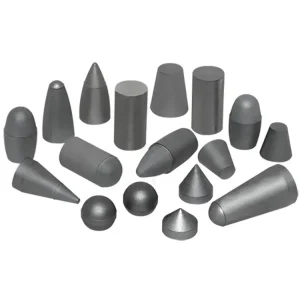
China Round billet metal for high strength cemented carbide tools Manufacturer, Supplier
View Specifications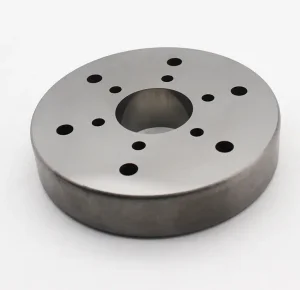
Buy Customized tungsten cemented carbide wear parts for roll crushing Manufacturer, Manufacturers
View Specifications
China Nickel non magnetic cemented carbide rods with Nickel binder Manufacturer, Manufacturers
View Specifications
Wholesale Customized tungsten cemented carbide hardware parts water jet nozzle seat valve Factory, Factories
View Specifications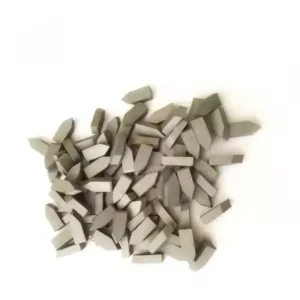
Wholesale Customized carbide welding tips for turning milling cutters Manufacturer, Manufacturers
View Specifications
China Best price YG8 tungsten carbide gripper inserts for chuck jaw Suppliers, Factories
View SpecificationsGlobal Market Dynamics & Commercial Landscape of Cemented Carbide Block Stock
A macroeconomic and metallurgic evaluation of global hardmetal consumption across progressive stamping, downhole drilling, ultra-precision die making, and aerospace tooling.
The Critical Role of Solid Tungsten Carbide Stock in Advanced Manufacturing
In contemporary industrial manufacturing, cemented carbide block stock—frequently categorized under sintered tungsten carbide plates, EDM blocks, rectangular blanks, and wear-resistant slab stock—represents the pinnacle of structural material integrity. Operating at the confluence of severe mechanical stress, abrasive particulate flow, thermal shock, and corrosive chemical environments, these blocks serve as foundational feedstocks for progressive tooling dies, semiconductor lead frame punching molds, rotor-stator laminations, shear blades, and high-pressure fluid control valves.
The worldwide consumption of cemented carbide preforms has undergone an irreversible structural pivot. Precision toolmakers and tooling designers are discarding traditional high-speed tool steels (HSS, D2, and CPM powder metallurgy steels) in favor of Sinter-HIP (Hot Isostatic Pressing) consolidated tungsten carbide (WC-Co and WC-Ni-Cr). The primary commercial driver is uptime economics. With modern high-speed stamping presses exceeding 1,200 strokes per minute, unscheduled downtime caused by edge chipping, spalling, or micro-fatigue yields crippling fiscal consequences. Premium carbide block stock extends maintenance intervals from tens of thousands of cycles to tens of millions of strokes, effectively redefining the total cost of ownership (TCO) across automotive, defense, battery cell packaging, and microelectronics supply chains.
Geographically, while North American and European tier-one manufacturers lead in complex progressive tool engineering, the supply side of cemented carbide blocks depends fundamentally on vertically integrated powder-to-finished-blank manufacturers capable of guaranteeing raw material purity, strict stoichiometric carbon balance, and micron-level dimensional repeatability. Jiangxi Zhongfu Cemented Carbide Co., Ltd. sits at the geographical nucleus of China's primary tungsten deposits in Jiangxi Province, ensuring unbroken, ethical access to virgin ammonium paratungstate (APT) and high-purity refractory cobalt binders.
Microstructural Uniformity
By enforcing 100% virgin submicron to coarse-grained WC powders with strict zero-porosity Sinter-HIP processing (under 60–100 bar argon), our block stock exhibits near-theoretical density (14.2 to 15.1 g/cm³), preventing microscopic pit formations during EDM wire cutting.
Residual Stress Equilibrium
Blocks undergo computer-controlled multi-stage isothermal annealing cycles. This releases macro-scale thermodynamic contraction stresses, eliminating warp or split risks during wire EDM slicing and high-feed diamond surface grinding.
Versatile Alloy Architectures
Spanning straight cobalt binder networks (YG6, YG8, YG11, YG15, YG20) to corrosion-resistant Nickel-Chromium matrices and non-magnetic submicron grades tailored specifically for semiconductor wire bonding and downhole telemetry housings.
Technological Roadmaps & Industry Evolutions (2025–2035)
Next-generation powder metallurgy is shifting from conventional mass-sintering to AI-governed phase diagram synthesis and ultra-tough dual-phase microstructures.
The Four Pillar Transformations in Cemented Carbide Stock Fabrication
The cemented carbide sector is experiencing four structural technological transformations that directly impact how mechanical design engineers specify raw block stock:
1. Nanocrystalline & Ultrafine Grain Restructuring (< 0.4 µm)
Traditional submicron blocks (0.5–0.8 µm) are being superseded by ultrafine and nano-structured WC formulations governed by VC (Vanadium Carbide) and Cr3C2 (Chromium Carbide) grain growth inhibitors. These grades solve the classic metallurgical trade-off between hardness and transverse rupture strength (TRS). Nanograin preforms achieve hardness levels above 92.5 HRA while preserving critical impact fracture toughness (> 11 MPa·m^(1/2)), eliminating chipping in precision silicon-steel slitting dies.
2. Smart Gas-Pressure Sinter-HIP Consolidation (Overpressure Metallurgy)
Standard vacuum sintering leaves micro-voids that trigger early mechanical failure under pulsating tensile loads. High-pressure Sinter-HIP furnaces utilize high-pressure Argon atmosphere (up to 10 MPa) during the liquid phase sintering window (1380°C–1440°C). This forces metallic cobalt to wet every individual facet of hexagonal tungsten carbide grains, collapsing all residual micropores down to zero-porosity classification (ASTM A00, B00, C00).
3. Cobalt-Depletion & Alternative Binder Architectures
Due to ethical raw material concerns, geopolitical volatility, and severe electrochemical leaching in deionized EDM water baths, the industry is transitioning to advanced Ni-Cr-Mo and Fe-Ni-Co-Cr ternary binder chemistries. These binder alloys deliver unprecedented corrosion resistance across acidic, alkaline, and petrochemical cavitation environments while demonstrating near-zero magnetic permeability (< 1.005 µ) for sensor housings and electromagnetic stamping systems.
4. Near-Net-Shape Isostatic Pre-Forming with Wire-EDM Optimization
Rough machining high-hardness solid carbide blocks is prohibitively expensive. Modern stock manufacturing combines cold isostatic pressing (CIP) with computer-guided green machining prior to final sintering. This allows buyers to source block preforms with core cutouts, start holes, and contoured perimeters, slashing diamond wheel grinding time and reducing wire EDM cycle duration by over 60%.
Comprehensive Metallurgical Grade Selection Matrix
Compare standard and custom formulation parameters to align tensile strength, fracture toughness, and hardness with your operating application.
| Alloy Grade | Binder Type & Wt% | Grain Size (µm) | Density (g/cm³) | Hardness (HRA) | TRS (MPa) | Primary Industrial Use-Case |
|---|---|---|---|---|---|---|
| ZF-YG6X | 6.0% Co | 0.4 – 0.8 (Submicron) | 14.95 | 92.8 | 2,400 | Precision EDM punches, silicon steel sheet stamping, carbide slitter knives |
| ZF-YG8 | 8.0% Co | 1.0 – 1.6 (Medium) | 14.75 | 90.0 | 2,800 | Standard wear plates, rock drilling tips, lathe welding cutters, gripper jaws |
| ZF-YG11C | 11.0% Co | 2.2 – 3.5 (Coarse) | 14.40 | 87.5 | 3,100 | Heavy-impact mining bits, roller crushing studs, cold heading die blocks |
| ZF-YG15 | 15.0% Co | 1.2 – 2.0 (Medium-Coarse) | 14.05 | 87.2 | 3,300 | Severe shock stamping dies, fastener heading inserts, structural blank preforms |
| ZF-YG20 | 20.0% Co | 1.5 – 2.5 (Coarse) | 13.55 | 85.5 | 3,600 | Extreme shock cold forging, thick steel plate punching, heavy swaging dies |
| ZF-N08 (Non-Mag) | 8.5% Ni-Cr | 0.8 – 1.4 (Fine-Medium) | 14.60 | 89.5 | 2,600 | Semiconductor encapsulation dies, downhole MWD tools, medical implants |
| ZF-CR12 (Corrosion) | 12.0% Ni-Cr-Mo | 1.0 – 1.8 (Medium) | 14.25 | 88.5 | 2,900 | Wet deionized wire-EDM plates, chemical slurry trim valves, marine homogenizers |
Real-World Deployment Scenarios for Cemented Carbide Blocks
Engineered to resolve acute wear, dynamic fatigue, and thermal corrosion across four cornerstone industrial sectors.
Semiconductor & Leadframe Progressive Dies
Operational Context: Stamping ultra-thin phosphor bronze, copper alloys, and nickel-plated ribbons at cycle speeds beyond 1,000 strokes/minute. The required clearance between punch and die matrix often falls below 0.003 mm.
The Zhongfu Solution: Submicron ZF-YG6X blocks exhibiting ultra-high transverse rupture strength and zero grain pull-out during wire EDM. Delivers pristine burr-free terminal cut edges over 50 million consecutive cycles.
EV Battery Electrode Slitting Knives
Operational Context: Continuous continuous slitting of lithium iron phosphate (LFP) and nickel manganese cobalt (NMC) coated aluminum and copper foil webs at line speeds up to 120 m/min.
The Zhongfu Solution: Sinter-HIP blocks formulated with optimized submicron WC-Co matrices that resist micro-chipping caused by ultra-abrasive ceramic lithium particles, eliminating edge burrs that trigger thermal runaway.
Severe Heavy Cold Heading & Fastener Forming
Operational Context: Severe repeated axial compressive stresses and hydraulic radial expansion forces during high-speed bolt, rivet, and ball-stud cold forming.
The Zhongfu Solution: High-binder ZF-YG15 and ZF-YG20 coarse-grained block stock. Possessing fracture toughness up to 14.5 MPa·m^(1/2), these preforms prevent axial cracking and fatigue spalling under shock loadings up to 2,500 MPa.
Downhole MWD/LWD Drilling & Choke Trim Valves
Operational Context: Harsh offshore environments where subsea flowlines encounter abrasive sand slurry, H2S acid gas, and intense magnetic interference from geological measurement tools.
The Zhongfu Solution: Non-magnetic nickel-bonded blocks (ZF-N08). These blocks are totally impervious to electrochemical pitting while preserving non-magnetic integrity (magnetic permeability < 1.002 µ) for downhole guidance electronics.
Enterprise Solutions: From Powder Synthesis to CNC Precision Grinding
How Zhongfu integrates metallurgical synthesis, pressure sintering, and multi-axis finishing into a unified quality lifecycle.
The Six-Phase Metallurgical Manufacturing & Testing Route
Unlike third-party distributors who merely broker generic pre-sintered blanks, Jiangxi Zhongfu operates as an integrated metallurgical manufacturer. Our 5,000 m² Nanchang production center governs every microstructural transformation across a strict six-stage protocol:
Phase 1: Doped Powder Synthesis
High-purity virgin Tungsten Carbide powder is wet-milled in attritor ball mills alongside high-grade cobalt or nickel powders, paraffin wax binder, and proprietary inhibitors (VC, Cr3C2, TaC) for up to 48 hours to ensure homogeneous grain wrapping.
Phase 2: Spray Granulation & Drying
Slurry is atomized in closed-cycle nitrogen spray drying towers. This creates spherical, free-flowing granules with exceptional bulk density uniformity, completely preventing internal voids or density gradients during subsequent compaction.
Phase 3: Multi-Axis & Isostatic Compaction
Granules are pressed into block preforms using high-tonnage CNC hydraulic presses or dry-bag Cold Isostatic Presses (CIP) at pressures exceeding 200 MPa, guaranteeing uniform green density across thick-section blocks up to 100 mm height.
Phase 4: Sinter-HIP Consolidation
Preforms undergo dewaxing and sintering in computerized overpressure Sinter-HIP furnaces. At 1400°C, 60–100 bar of ultra-pure argon is injected, collapsing internal micropores and achieving 99.99% theoretical structural density.
Phase 5: High-Precision Finishing
Equipped with high-precision CNC surface grinding machines, centerless grinders, and optical profile grinders, stock can be delivered as-sintered with standard machining allowance (+0.5/+1.5 mm) or precision ground to Ra 0.2 µm and ±0.005 mm parallelism.
Phase 6: Non-Destructive QA & Micro-Audit
Every batch is certified via ultrasonic flaw detection, magnetic saturation testing (Cobalt magnetic balance), coercive force measurement (Hc), metallographic grain size evaluation, and Rockwell HRA hardness verification prior to vacuum sealing.
Frequently Asked Questions: Cemented Carbide Block Stock
Technical guidance for tooling engineers, mold makers, and global procurement specialists regarding grade matching, EDM behaviors, and custom tolerances.
What metallurgical factors determine whether I should specify a straight WC-Co or a WC-Ni grade for block stock?
How does Sinter-HIP processing prevent cracking and pitting during Wire Electrical Discharge Machining (WEDM)?
What dimensional tolerances, squareness, and surface finish options can your factory supply for custom block stock?
1. Sintered As-Cast (Near-Net Blank): Tolerances conform to ISO standards, typically +0.5 mm to +1.5 mm on length/width and +0.3 mm to +0.8 mm on thickness, designed for economical stock keeping where mold shops handle final sizing in-house.
2. Precision 6-Side Diamond Ground: We utilize precision surface grinding to achieve dimensional tolerances of ±0.005 mm (±0.0002"), perpendicularity and parallelism within 0.005 mm per 100 mm, and surface finishes down to Ra 0.2 µm (or mirror lap down to Ra 0.05 µm upon custom request).
Why is 100% virgin tungsten carbide powder strictly necessary compared to recycled zinc-process powder?
Can you manufacture pre-formed internal coolant holes, start holes, or stepped geometries inside large block stock?
Industrial Cutting Inserts, Scarfing Blades & Wear Stock
Explore our extended series of CNC turning inserts, scarfing cutting tips, die plates, and heavy-duty pulverizing components.

China Wholesale SPUB63M30 tin coating scarfing insert carbide od scarfing insert Manufacturer, Factories
View Specifications
Wholesale Premium Tungsten Carbide Sheet for Stamping Dies Durable P30 Alloy Model 200x200x10mm Manufacturers, Suppliers
View Specifications
China High quality SPUB-63 series machine cutter carbide cnc cutting tools turning Manufacturer, Factories
View Specifications
Wholesale Factory direct sale tungsten carbide turning inserts Manufacturer, Factory
View Specifications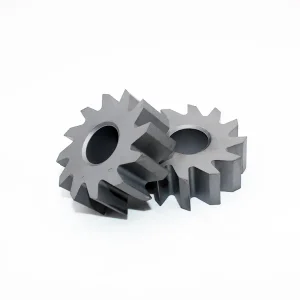
Buy Custom made transmission reverse idle gear starter gear spur gear set Manufacturer, Factory
View Specifications
Wholesale Custom 60 knife variable speed fixed gear cast iron truck large metal gear Manufacturers, Factory
View Specifications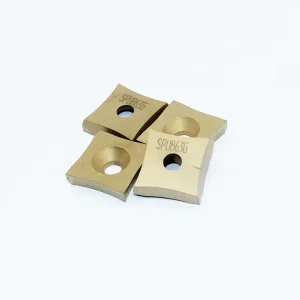
Buy Wear resistant SPUB 63G tool holder insert carbide cutting inserts turning tools Manufacturer, Supplier
View Specifications
Wholesale Factory sale customized carbide milling jar tungsten carbide bowl/ jar/mortar Manufacturer, Factory
View SpecificationsAccelerate Your Tooling Performance with Direct Factory Preforms
Submit your 2D/3D component blueprints (STEP, DWG, PDF) along with operating wear parameters. Our senior metallurgical engineering team provides rapid DFM feedback, grade optimization, and formal quotes within 8 hours.