
High-Performance Wolfram & Carbide Components (Catalog 01–08)
Direct factory supply of pressureless sintered ceramics, pipe scarfing inserts, micro-grain solid carbide rods, and railway maintenance tips machined to sub-micron tolerances.

High Hardness High Density Pressureless Sintered Silicon Carbide Plate Polished SiC Ceramic Plate
Configure & Quote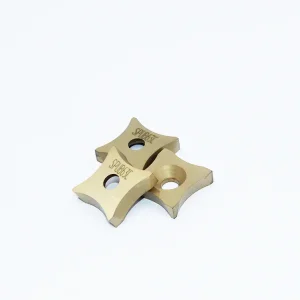
SPUB-63 External Scarfing Inserts for Tubes Machining and High Frequency Pipes
Configure & Quote
China Wholesale Carbide Insert Cutting Tools CNC Precision Turning
Configure & Quote
Wholesale Best Price Woodturning Tungsten Carbide Turning Tip Inserts & Cutter Railway
Configure & Quote
China SPUB63J CVD Coating Tungsten Carbide OD Scarfing Insert
Configure & Quote
China Best Price SPUB86J CVD Coating Woodworking Tungsten Carbide Button Insert
Configure & Quote
China Tungsten Carbide Round Rod H6 Ground Ø1–40mm Solid Carbide Blanks
Configure & Quote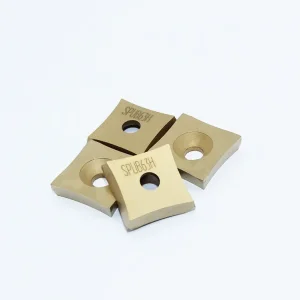
SPUB-63 Welding Tube Scarfing Insert & Welding Pipe Peeling Insert
Configure & QuoteThe Strategic Hegemony of Wolfram Metall (Tungsten) in Modern Heavy Industry
A rigorous metallurgical overview of upstream mining extraction, ammonium paratungstate (APT) synthesis, and advanced powder sintering within China's Jiangxi industrial corridor.
Wolfram (elemental symbol W, atomic number 74), known universally across international heavy engineering as tungsten, occupies a sovereign position among refractory metals. Characterized by the highest melting point of all non-alloyed elements (3,422 °C), an extraordinary modulus of elasticity (411 GPa), exceptional thermal creep resistance, and a density matching gold (19.25 g/cm³), Wolfram represents the structural backbone of modern mechanical manufacturing. Within the cemented carbide sector, tungsten monocarbide (WC) bound with cobalt, nickel, or specialty intermetallics constitutes the foundational substrate for metal cutting, subsea energy excavation, rock drilling, aerospace propulsion, and high-frequency tube scarfing.
China holds an unrivaled position across the global Wolfram metallurgical spectrum, containing over 55% of documented world reserves and commanding approximately 80% of primary mine production. Crucially, the metallurgical sector has migrated decisively from raw material export to high-value-added component synthesis. Situated in Nanchang, Jiangxi Province—the absolute geographical and technological nexus of global tungsten resources—Jiangxi Zhongfu Cemented Carbide Co., Ltd. has spent over 24 years operating at the forefront of this industrial transformation. Leveraging direct access to pristine, non-recycled ammonium paratungstate feedstocks, our 5,000+ m² production facility guarantees stoichiometric carbon equilibrium and ultra-low trace element contamination across all sintering campaigns.
Stoichiometric WC Balance
Strict atmosphere-controlled carburization avoids deleterious brittle eta phases (W3Co3C) and uncombined carbon flakes, establishing predictable fracture toughness across every production heat.
Trace Chemistry Control
Upstream mineral processing isolates volatile impurities (Fe, S, P, Ca < 50 ppm). This purity prevents intergranular cavitation during extreme thermo-mechanical cycling in CNC tooling.
Fully Integrated Metallurgy
From hydrogen-reduced tungsten blue oxide powder to wet ball milling, spray dry granulating, and Sinter-HIP processing, our production ensures uncompromised traceability.
Sinter-HIP Engineering: Densification, Grain Growth Inhibition & Phase Stability
Eliminating micro-porosity through simultaneous 1,450 °C vacuum liquid-phase sintering and 10 MPa Argon overpressure.
The operational lifespan of a tungsten carbide component is overwhelmingly determined by its sintered density and crystalline grain cohesion. Conventional atmospheric vacuum sintering frequently leaves microporosity corresponding to ISO 4499 Class A04 or higher. Under heavy mechanical impact or continuous thermal cycling—such as severe steel pipe scarfing (e.g., via SPUB-63 / SPUB-86 geometries)—internal micropores serve as stress-concentration nodes, causing premature micro-cracking and catastrophic macroscopic fracture.
At Zhongfu's manufacturing facility, every structural blank, round rod, and indexable profile undergoes advanced Hot Isostatic Pressing (Sinter-HIP). During the terminal liquid phase (at temperatures spanning 1,380 °C to 1,460 °C, dependent on cobalt/nickel concentration), ultra-pure argon gas is injected at working pressures up to 100 bar (10 MPa). This high-pressure environment forces molten binder into crystalline voids, collapsing micro-voids and driving metallurgical density to > 99.98% of theoretical maximum (ISO Porosity Rating A00, B00, C00).
| Alloy Grade | Binder Matrix | Grain Size (µm) | Density (g/cm³) | Hardness (HRA) | Transverse Rupture (MPa) | Primary Industrial Utility |
|---|---|---|---|---|---|---|
| YG6 (ISO K10-K20) | 6.0% Cobalt | 1.2 – 1.6 | 14.90 – 15.00 | 90.5 – 91.5 | 2,100 – 2,400 | High-speed cast iron machining, drawing dies, guide bushings |
| YG8 (ISO K20-K30) | 8.0% Cobalt | 1.6 – 2.2 | 14.65 – 14.80 | 89.5 – 90.5 | 2,500 – 2,800 | Brazed tips, geological rock bit teeth, woodturning knives |
| YG15 (ISO K40) | 15.0% Cobalt | 2.0 – 3.0 | 13.95 – 14.15 | 87.0 – 88.0 | 3,100 – 3,400 | Heavy cold heading, punching punches, stamping dies |
| YG20 (Impact Grade) | 20.0% Cobalt | 2.5 – 3.5 | 13.50 – 13.70 | 85.0 – 86.5 | 3,400 – 3,800 | Severe impact blanking dies, wire drawing, cold extrusion tooling |
| ZF-NM12 (Non-Magnetic) | 12.0% Ni Matrix | 1.5 – 2.0 | 14.40 – 14.60 | 88.5 – 89.5 | 2,600 – 2,900 | MWD/LWD downhole exploration, electronic stamping, radar parts |
| ZF-Nano04 (Submicron) | 10.0% Co + Cr3C2/VC | 0.4 – 0.6 | 14.45 – 14.55 | 92.5 – 93.5 | 3,800 – 4,200 | Micro-end mills, PCB drills, aerospace titanium contouring |
Macro Industry Solutions: Engineering Wolfram for Extreme Operating Environments
Targeted metallurgy formulated to combat mechanical abrasion, thermal fatigue, adhesive wear, and corrosive downhole fluids.
ERW Pipe Scarfing & De-Beading
Engineered for continuous welded steel pipe mills. Inserts like SPUB-63 and SPUB-86 feature optimized rake profiles and high-adhesion CVD multilayer Ti(C,N)+Al2O3 coatings to withstand severe heat shocks during longitudinal bead peeling.
Cold Forming & Heading Tooling
Fastener manufacturing dies (YG15 / YG20) endure explosive cycle loads exceeding 3,000 MPa. Zhongfu balances fine cobalt dispersion to eliminate die wall micro-cracking and prevent catastrophic split failures during high-speed wire extrusion.
MWD/LWD Non-Magnetic Subsea
Directional drilling pulses require drill string components with zero magnetic interference. Replacing cobalt with a tailored nickel-chromium matrix achieves magnetic permeability (µ) below 1.005 while resisting corrosive, high-chloride drilling muds.
Railway Ballast Tamping & Mining
Railway ballast tamping picks and ground engaging tools undergo intense rock abrasion. Zhongfu's coarse-grained YG8/YG11 brazed tips prevent quartz chipping, extending field operational life 300% over competing quenched steel tines.
Overcoming Enterprise Sourcing Pitfalls: Quality Verification & Metrology
Eliminating batch-to-batch inconsistencies, dimensional drift, and internal metallurgical defects through strict automated inspection regimes.
Overseas procurement teams procuring tungsten carbide from China face several recurring risks: unpredictable batch-to-batch hardness variances, internal micro-porosity leading to EDM wire breakage, cobalt leaching in aqueous grinding fluids, and excessive grinding allowances that inflate downstream machining labor. Jiangxi Zhongfu eliminates these liabilities through a comprehensive four-tier metallurgical auditing framework:
Metallographic Grain Sizing
Every sintered batch is cross-sectioned, diamond-polished, Murakami-etched, and inspected via optical and scanning electron microscopy (SEM) up to 20,000x magnification to confirm zero secondary grain coalescence.
Coercivity & Magnetic Saturation
Non-destructive Forster coercivity (Hc) and saturation (4πσ) checks evaluate the exact carbon potential within the alloy matrix, assuring full absence of decarburized η-phase and free graphite clusters.
Sub-Micron CNC Metrology
For ground round rods, scarfing inserts, and wire drawing die inserts, precision centerless, surface, and profile CNC grinders hold outer diameter tolerances to h6 (within 0.0025 mm) with surface roughness Ra < 0.05 µm.
International Compliance, ESG Standards & Reliable Logistics
Ensuring transparent material provenance, complete regulatory certification, and zero cross-border customs friction.
Modern engineering procurement requires uncompromising transparency regarding chemical regulations and ethical sourcing. Jiangxi Zhongfu operates in full alignment with international ESG frameworks, providing certified compliance documentation alongside every commercial invoice and bill of lading:
Conflict Minerals Due Diligence: Under the Dodd-Frank Act Section 1502 and EU Regulation 2017/821, tungsten is classified as a 3TG mineral. Zhongfu enforces complete supply-chain tracking via the Responsible Minerals Initiative (RMI) reporting templates (CMRT). Our tungsten concentrates originate solely from certified mines and verified domestic processing facilities, guaranteeing conflict-free material supply.
REACH & RoHS Compliance: All manufactured cemented carbide grades comply with European Union REACH Regulation (EC No 1907/2006) regarding Substances of Very High Concern (SVHC). For sensitive electronic tools and medical applications, our nickel-bonded grades provide full RoHS compliance, circumventing heavy metal exposure concerns.
Export-Grade Vacuum Packaging
Every finished blank is preserved using vapor corrosion inhibitor (VCI) film and multi-layered sealed desiccants, preventing maritime oxidation and humidity damage during long container voyages.
Customs Tariff (HS) Optimization
Our experienced logistics department assists buyers with accurate HS Code classifications (e.g., 8209.00 for plates/rods/tips, 8207.70 for milling profiles), ensuring seamless customs clearance without excess tariffs.
Guaranteed Response SLA
Every engineering inquiry, CAD blueprint submission, or formal request for quotation (RFQ) is reviewed by a specialized senior carbide engineer with formal feedback delivered within 8 business hours.
Technological Roadmap: Wolfram Metallurgy 2025–2035
Pioneering the next decade of cemented carbide manufacturing through additive binder jetting, circular economy reclamation, and nanostructured solid composites.
Frequently Asked Questions: Wolfram Metall Engineering & Sourcing
Authoritative, granular answers covering sintering mechanics, tool design parameters, and commercial import specifications.
Can Jiangxi Zhongfu manufacture non-standard tungsten carbide parts directly from custom CAD drawings?
What metallurgical factors govern the choice between Cobalt and Nickel binder systems?
How does Hot Isostatic Pressing (Sinter-HIP) prevent EDM micro-cracking in thick carbide plates?
What is the technical service life advantage of CVD Ti(C,N)+Al2O3 coating on tube scarfing inserts?
What quality documents and metallurgical test certifications accompany overseas shipments?
High-Performance Wolfram & Carbide Components (Catalog 09–16)
Specialized non-magnetic wear parts, HIP-sintered EDM square plates, precision cold heading dies, and railway track tamping teeth engineered for extreme durability.

Wholesale Tungsten Non-Magnetic Cemented Carbide Wear Parts
Configure & Quote
China OEM Customizable HIP Processed Square Tungsten Carbide Plate Polished Flat Blank
Configure & Quote
Wholesale China Best Price Straight Toothed Steel Small Pinion Gears
Configure & Quote
Customized Tungsten Carbide Cold Heading Molds, Punch Dies & Wire Drawing Dies
Configure & Quote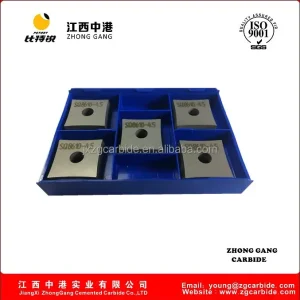
Wholesale Carbide OD Tube Scarfing Insert SDUW for Weld Bead Steel Tube
Configure & Quote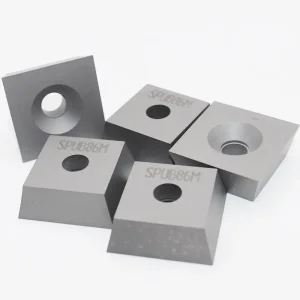
China Factory Wholesale Boxes Tungsten Woodworking Carbide Button Inserts
Configure & Quote
China New Shape Cemented Carbide Tips for Railway Track Tamping Pick Center Tooth
Configure & Quote
Buy 1*1*0.375“ CVD Coating Tungsten Carbide Tube Scarfing Insert
Configure & QuoteConnect with Zhongfu Metallurgical Engineering
Send 2D/3D part drawings or technical wear specifications. Our metallurgy team delivers detailed grade recommendations, tolerance analyses, and competitive factory-direct quotations within 8 hours.