
High-Performance Cemented Carbide Tooling Lineup
Explore our export-certified metallurgical portfolio featuring vacuum-sintered inserts, cold-heading tooling, sub-micron end mill blanks, and railway tamping picks built for demanding industrial environments.
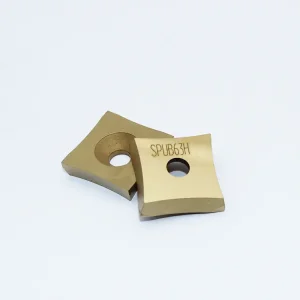
SPUB63H Square Tungsten Carbide Cemented Cutting Turning Lathe Tools
Explore SPUB63H Tools
Customized High-Precision Hard Alloy Tungsten Carbide Cutting Tool Wear Parts
Request Wear Parts Quote
Customized Tungsten Carbide Cold Heading Molds, Punch Dies & Wire Drawing Dies
View Mold & Die Blanks
Engineered Cemented Carbide Tips for Railway Track Tamping Pick Center Tooth
Inspect Tamping Teeth
Solid Tungsten Carbide Round Rod Blanks for End Mills & Deep-Hole Drills
Discover Rod Blanks
Indexable Square Tungsten Insert Carbide & Threading Carbide Blank Inserts
Inspect Threading Inserts
SPUB63J CVD Coating Heavy-Duty Tungsten Carbide OD Scarfing Insert
Check Scarfing Inserts
SPUB-63C Heavy-Duty Cemented Mining Tungsten Carbide Drill Insert
Examine Mining InsertsThe Strategic Integration of China Manufacturing for the US Carbide Tool Market
Examining how upstream tungsten reserves, advanced sinter-HIP technology, and Tier-1 engineering enable American industrial buyers to achieve superior cost-per-cut economics.
Upstream Raw Material Dominance: Direct Mine-to-Powder Advantage
In modern high-speed CNC cutting and extreme-environment wear tooling, the final transverse rupture strength (TRS) and hardness of cemented tungsten carbide (WC-Co) are fundamentally dictated by the chemical purity and grain size uniformity of virgin ammonium paratungstate (APT). China hosts over 70% of the world's accessible tungsten reserves, with Jiangxi province serving as the global epicenter for tungsten smelting and chemical powder refining.
For US tool distributors, automotive Tier-1 machine shops, and aerospace suppliers searching for a dedicated China US Carbide Tool Supplier, sourcing directly from Chinese manufacturing facilities eliminates layered trading margins and guarantees access to 100% virgin tungsten carbide powder. Sourcing virgin WC ensures zero trace contaminants such as calcium, silicon, or irregular carbon phases that frequently cause premature tool fracture during heavy intermittent milling operations.
100 Bar Sinter-HIP Sintering
Utilizing high-pressure vacuum furnaces running at 10 MPa (100 bar) argon overpressure at 1450°C to eliminate micro-voids, delivering near-theoretical density and preventing catastrophic chipping under heavy feed rates.
Sub-Micron Grain Metallography
Strict formulation control of grain sizes ranging from ultra-fine 0.2 μm for high-hardness titanium machining down to coarse 3.5 μm grades for heavy-impact cold heading and geological percussion drilling.
Traceable Batch Quality Control
Every batch of cemented carbide components is subject to saturation magnetization (4πσ), coercive force (Hc) testing, and density verification to guarantee identical tool life across multi-ton shipments.
Macro Technology Trends Transforming Carbide Tooling
How the global pivot toward lightweight aerospace alloys, electric vehicle battery structures, and micro-machining is revolutionizing tungsten carbide design.
1. Nanocrystalline Grain Formulations
The acceleration of 5-axis CNC machining centers requires round tool blanks with grain sizes below 0.4 μm. Nanocrystalline WC-Co formulations provide exceptional edge sharpness and hardness (HRA > 92.5) without sacrificing flexural strength, mitigating notch wear during dry milling of hardened tool steels (HRC 55–65).
2. Multi-Layer PVD/CVD Nano-Coatings
The interface between tungsten carbide substrate and advanced vapor deposition coatings (AlTiN, TiSiN, diamond-like carbon DLC) determines tool survival in high-heat zones. Chinese state-of-the-art facilities now integrate pre-coating micro-blasting and edge-radiusing (honing) to maximize coating adhesion under heavy shear loads.
3. Non-Magnetic & Corrosion-Proof Alloys
Conventional cobalt binder phases are ferromagnetic and susceptible to acid attack. Modern manufacturing utilizes nickel (Ni), chromium (Cr), and molybdenum (Mo) binder systems, unlocking ultra-high wear performance for Measurement-While-Drilling (MWD) downhole tools and electronics molding.
Localized Engineering Applications Across US Key Industries
Engineered to satisfy the exact tooling requirements of major North American manufacturing clusters, from Midwestern automotive hubs to Texas energy corridors.
Automotive & Heavy Truck Powertrain
Deployment: Michigan, Ohio, Indiana, and Ontario automotive corridors.
Application: Indexable scarfing inserts (SPUB63, SPUB86) and heavy turning inserts machining high-frequency welded steel tubes, engine blocks, brake rotors, and transmission shafts. Extreme resistance against thermal cracking during dry roughing.
Oil & Gas Drilling (Permian & Gulf Coast)
Deployment: Texas, Oklahoma, Louisiana energy basins.
Application: Nickel-bonded non-magnetic carbide wear rings, MWD/LWD sensor sleeves, valve trims, and mud pulser rotors. High resistance against abrasive sand slurry erosion and high-pressure hydrogen sulfide (H2S) sour gas corrosion.
Aerospace & Defense Superalloys
Deployment: Washington, California, Kansas aerospace hubs.
Application: Precision-ground solid carbide rod blanks with h6 tolerance, featuring central and helical coolant ducts for fabricating custom end mills cutting Inconel 718, Hastelloy, and Ti-6Al-4V airframe bulkheads.
Cemented Carbide Grade Selection Reference Matrix
A comprehensive metallurgical reference guide detailing binder ratios, grain sizes, physical characteristics, and matched US industrial applications.
| Carbide Grade | Binder (Co/Ni %) | Grain Size (μm) | Density (g/cm³) | Hardness (HRA) | TRS (MPa) | Primary Industrial Applications |
|---|---|---|---|---|---|---|
| YG6 (C2) | 6.0% Co | 1.0 – 1.4 | 14.85 – 15.00 | 90.5 | ≥ 2000 | Cast iron turning, non-ferrous finishing, light stamping dies, wire guide bushes. |
| YG8 (C1) | 8.0% Co | 1.4 – 1.8 | 14.65 – 14.85 | 89.5 | ≥ 2400 | Heavy-duty brazed lathe tools, rock drill buttons, wood processing cutters. |
| YG11C (Mining) | 11.0% Co | 2.2 – 3.2 | 14.30 – 14.50 | 87.0 | ≥ 2700 | Railway track tamping pick tips, percussion rotary drill bits, road cold planers. |
| YG15 (Forming) | 15.0% Co | 1.6 – 2.4 | 13.90 – 14.15 | 87.0 | ≥ 2900 | Cold heading punch dies, nut/bolt forming tools, high-stress wear bushings. |
| YG20 (Impact) | 20.0% Co | 2.0 – 3.0 | 13.45 – 13.70 | 85.5 | ≥ 3100 | Extreme-impact stamping punches, heavy cold extrusion dies, steel rolling rolls. |
| UF06 (Sub-Micron) | 8.0% Co + Cr/V | 0.4 – 0.6 | 14.50 – 14.70 | 92.8 | ≥ 3800 | Solid carbide round rods for micro-drills, high-speed end mills for hardened steel. |
| NM12 (Non-Mag) | 12.0% Ni-Cr | 1.2 – 1.8 | 14.40 – 14.60 | 88.5 | ≥ 2200 | Downhole MWD/LWD drilling tools, magnetic media compaction, acid fluid valves. |
Global Supply Chain Assurance & Quality Control Protocols
How our Nanchang production hub bridges logistics, trade compliance, and stringent testing for Fortune 500 and mid-sized US industrial purchasers.
Total Quality Architecture: From Powder Spectroscopy to CMM Verification
Procuring cemented carbide across continents requires total transparency and non-negotiable repeatability. At our 5,000+ m² facility, every production heat starts with high-resolution inductively coupled plasma (ICP) mass spectrometry to confirm that raw WC powder exhibits zero undesirable trace elements. Carbon balance is managed within ±0.05% to avoid brittle eta-phase (W3Co3C) or free carbon flakes that severely reduce mechanical shock resistance.
Post sinter-HIP processing, all precision wear components, plates, and indexable blanks are subjected to automated profile grinding and coordinate measuring machine (CMM) verification with measurement accuracy within 0.001 mm. Material test reports (MTRs), including metallographic grain inspection micrographs and coercivity logs, accompany each export carton to guarantee full ISO 9001 compliance for downstream defense and aerospace audits.
- DDP / CIF North American Freight Capability: Direct air freight delivery within 5–7 business days to major US logistics hubs (ORD, DFW, LAX) and consolidated maritime shipping to Long Beach, Houston, and Savannah ports.
- Custom Preform Engineering: Near-net-shape pressing dies minimize stock removal for tool manufacturers, slashing diamond grinding wheel wear by up to 40% during subsequent tool finishing.
- Custom Labeling & Master Distribution Packaging: Laser marking of customer part numbers, custom barcoding, and vapor-corrosion inhibitor (VCI) vacuum packaging ensuring oxidation-free transatlantic transit.
Frequently Asked Questions by Industrial Tooling Buyers
Expert answers addressing the metallurgical, technical, and commercial criteria essential to qualifying a Chinese carbide partner for North American operations.
How does sinter-HIP processing differ from conventional vacuum sintering for carbide tools?
What makes non-magnetic tungsten carbide indispensable in MWD downhole drilling?
Can Zhongfu manufacture customized carbide preforms directly from customer CAD drawings?
How do you ensure batch-to-batch metallurgical consistency over high-volume orders?
What are typical production lead times and emergency delivery schedules for US customers?
How do you prevent micro-cracking during wire electrical discharge machining (WEDM) of large blocks?
Specialized Wear Parts, Scarfing Inserts & Solid Blanks
Explore the remainder of our engineered product suite, engineered to withstand aggressive abrasion, mechanical impact, and high-temperature cutting loads.

Heavy-Duty Tungsten Carbide Insert for High-Stress Crushing Roll Wear Parts
View Crushing Roll Inserts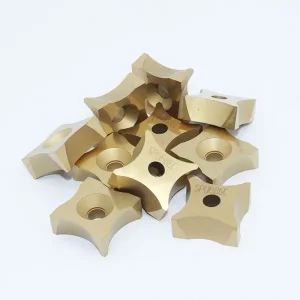
SPUB86C P40 Heavy Machining Tungsten Carbide Tube Scarfing Insert
Explore SPUB86C Inserts
SPUB86C Customized Tungsten Carbide CNC Diamond Metal Cutting Inserts
Discover Cutting Inserts
High Precision Straight-Toothed Steel Small Pinion Gears & Transmission Units
View Small Pinion Gears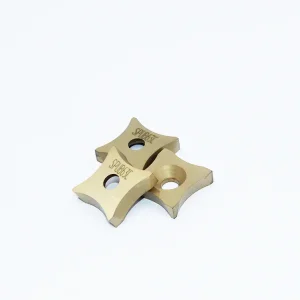
SPUB-63 External Scarfing Inserts for Tubes Machining & High-Frequency Pipes
Examine SPUB-63 Inserts
High-Quality Tungsten Carbide Strips & Durable Cemented Wolfram Flat Bars
Inspect Carbide Strips
Industrial Tungsten Alloy Solid Rod Material for Stainless Steel Machining
Order Tungsten Rods
SPUB63 Tungsten Carbide Insert Solutions for Industrial Lathe Cutting & Turning
Explore SPUB63 Range