
High-Performance Cemented Carbide Tooling & Inserts
Precision-manufactured sintered tungsten components engineered for extreme mechanical stress, thermal resistance, and abrasive environment longevity.







The Global Industrial Status of Tungsten: "The World's Strongest Metal"
An In-Depth Whitepaper on Refractory Hard Metals, Supply Chain Dominance, and Advanced Powder Metallurgy Manufacturing Systems in China.
Tungsten (chemically identified as Wolfram, symbol W, atomic number 74) holds an extraordinary position in global industrial engineering. Known as the strongest metal in terms of tensile strength and featuring the highest melting point of all unalloyed metals (3,422°C / 6,192°F), tungsten is the fundamental baseline for high-stress manufacturing, aerospace defense, deep-sea drilling, and ultra-precision cutting. When consolidated with carbon to form Tungsten Carbide (WC) and bound with cobalt, nickel, or iron matrices, it yields cemented carbide alloys boasting hardness levels rivaling diamond (HRA 85–94 / Vickers 1500–2400 HV).
Currently, the global industrial demand for China tungsten products is driven by rapid technological shifts in high-speed CNC machining, semiconductor wafer dicing, heavy mining, and energy sector exploration. China controls over 80% of the world's primary tungsten supply chain—from ammonium paratungstate (APT) refinement to advanced sub-micron powder synthesis and pressure sintering (Sinter-HIP). Chinese manufacturing facilities have evolved from raw material suppliers to global centers for high-value precision component engineering.
Industrial buyers navigating global procurement require transparent metallurgy insight. Raw tungsten metal itself exhibits excessive brittleness at room temperature. The industrial solution lies in powder metallurgy cemented carbide techniques. By heating tungsten powder in the presence of carbon at elevated temperatures (1,400°C–1,600°C), manufacturers synthesize WC grains. These hard ceramic grains are then combined with a metallic binder (typically Cobalt for impact resistance, or Nickel for non-magnetic corrosion resistance) and compressed under extreme hydraulic pressures before undergo Sinter-HIP processing.
Metallurgical Formulation & Sinter-HIP Engineering Standards
How state-of-the-art Chinese tungsten factories achieve zero-porosity, high transverse rupture strength, and tailored grain microstructures.
Grain Refinement Engineering
Controlling grain size from ultrafine/nano-grain (< 0.5 µm) for maximum micro-hardness in PCB drills, to coarse grain (> 3.0 µm) designed to absorb heavy mechanical shock in mining picks and oilfield tricone drill bits.
Sinter-HIP Porosity Control
Standard vacuum sintering leaves microscopic voids. Premium Chinese manufacturers utilize Sinter-HIP furnaces applying 100 bar of argon pressure at 1,450°C, compressing internal voids to achieve A00 B00 C00 porosity ratings.
Binder Matrix Selection
Selecting between Cobalt (Co) binders for maximum fracture toughness and bending strength (TRS), or Nickel (Ni) and Nickel-Chromium (Ni-Cr) binders for non-magnetic properties and acid/alkali corrosion resistance.
Standard Industry Cemented Carbide Grade Selection Reference
| Carbide Grade | Binder Ratio (%) | Density (g/cm³) | Hardness (HRA) | TRS (MPa) | Primary Application Profile |
|---|---|---|---|---|---|
| YG6 (K10/K20) | 6.0% Co | 14.80 - 15.00 | 90.5 - 91.5 | 2,200 | Chilled cast iron, non-ferrous finishing, wear plates, wire drawing dies. |
| YG8 (K30) | 8.0% Co | 14.60 - 14.80 | 89.5 - 90.5 | 2,500 | Heavy-duty roughing turning, mining button inserts, railway tamping picks. |
| YG15 (P30/P40) | 15.0% Co | 13.90 - 14.20 | 87.0 - 88.5 | 3,000 | Cold heading dies, high-impact stamping molds, heavy punch tooling. |
| YG20 (Impact Grade) | 20.0% Co | 13.40 - 13.70 | 85.0 - 86.5 | 3,400 | Extreme impact cold-forming dies, progressive stamping blocks, EDM blank stock. |
| YN12 (Non-Magnetic) | 12.0% Ni | 14.30 - 14.60 | 88.0 - 89.5 | 2,100 | MWD/LWD oilfield downhole tools, magnetic powder molding, chemical seals. |
Macro-Industry Engineering Application Scenarios
Deploying tungsten strongest metal components across challenging environments demanding minimal wear rates and zero catastrophic failures.
Mining, Tunneling & Geothermal Drilling
In hard-rock underground mining and DTH (Down-The-Hole) drilling, tungsten carbide buttons and gripper inserts undergo relentless impact and shear strain. Optimized YG8 and YG11C grades provide high fracture energy absorption, preventing tip fracturing while maintaining sharp cutting faces through abrasive granite and quartz strata.
Steel Processing & Tube Scarfing
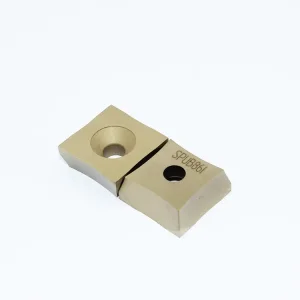
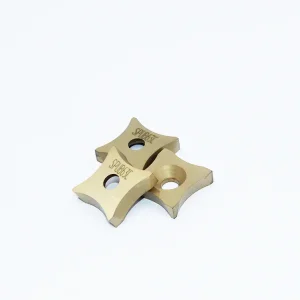
High-frequency welded pipe manufacturing requires continuous outer diameter (OD) and inner diameter (ID) scarfing. Heavy-duty inserts like SPUB63, SPUB86, and SNMX series feature thick CVD coatings (TiCN + Al2O3) to withstand thermal shock and red-hardness temperatures exceeding 900°C on steel mills.
Semiconductor & Precision Tooling
Micro-diameter solid carbide end mills (Ø 0.1mm to 3.175mm) and lead frame stamping dies demand ultra-fine grain structures (< 0.3 µm) with zero micro-cracking. Chinese factories supply pre-ground h6 tolerance round rods with internal coolant holes for high-speed CNC spindle operations.
Future Outlook & Technological Evolution (2025–2035)
Pioneering advancements in additive manufacturing, closed-loop urban mining recycling, and functional gradient materials (FGM).
1. Additive Manufacturing (3D Printing)
Selective Laser Melting (SLM) and Binder Jetting of Tungsten Heavy Alloys (W-Ni-Fe) enable complex internal cooling channels within die-casting cores and turbine blades impossible to achieve through traditional pressing.
2. Functional Gradient Substrates (FGM)
Engineered cobalt-enriched surface zones (gradient carbide) allow cutting inserts to feature extreme edge wear resistance on the outer rim while retaining high core shock toughness, doubling tool life in titanium milling.
3. Closed-Loop Zinc Process Recycling
Sustainable manufacturing models leverage zinc reclamation technology to reclaim tungsten carbide scrap without chemical digestion, saving 75% energy while yielding virgin-equivalent reclaimed powders.
Industrial Tungsten Alloy Rods, Plates & Specialized Cutters
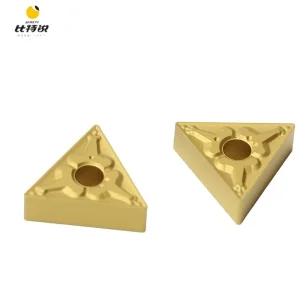
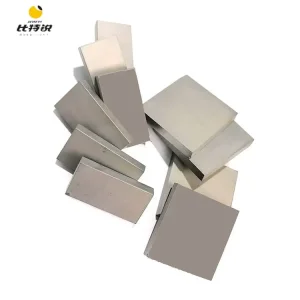
Factory-direct tungsten wear components, precision centerless ground rods, and specialized rail-tamping inserts built for severe operating conditions.





Frequently Asked Questions by Global Engineering Buyers
Technical clarity on tolerances, custom drawing manufacturing, chemical compliance, and global logistical fulfillment.