
Featured Tungsten Carbide Components & Precision Wear Solutions
Direct factory supply of precision-sintered tungsten carbide components, wear inserts, and profile tooling engineered for extreme abrasion, high impact, and severe operating environments across 20+ countries.
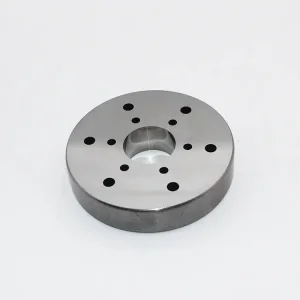
China Customized tungsten carbide fitting elbow tee cap reducer pipe flanges Suppliers, Factories
Configure & Inquire
China SPUB63B wholesale lathe round tungsten carbide turning inserts Supplier, Factory
Configure & Inquire
China tungsten carbide tube scarfing inserts SQ8615WCB Manufacturers, Supplier
Configure & Inquire
Buy YG8 carbide gripper inserts for chuck jaw Manufacturers, Supplier
Configure & Inquire
Wholesale Factory direct sale tungsten carbide turning inserts Manufacturer, Factory
Configure & Inquire
Wholesale Custom 60 knife variable speed fixed gear cast iron truck large metal gear Manufacturers, Factory
Configure & Inquire
China Tungsten Carbide Round Rod H6 Ground Ø1-40mm Solid Carbide Blanks Manufacturer, Supplier
Configure & Inquire
China Tungsten Carbide Plate | OEM Wear-Resistant Cemented Carbide Blank for Tooling & EDM Manufacturers, Supplier
Configure & InquireJiangxi Industrial Cluster: The Vanguard of Global Tungsten Metallurgy
Operating from Nanchang, Jiangxi Province—the undisputed geographical and technological epicenter of China's refractory metal deposits—Jiangxi Zhongfu Cemented Carbide Co., Ltd. delivers direct factory-integrated metallurgical excellence. With over 24 years of manufacturing heritage spanning an advanced 5,000+ m² automated production facility, our engineering operations integrate primary ore processing, ammonium paratungstate (APT) synthesis, chemical reduction, patented powder metallurgy, high-pressure sinter-HIP densification, and micron-grade precision CNC grinding.
100% Virgin Powder Sourcing
Zero recycled scrap, secondary black powder, or contaminated blends. Every batch originates from pure primary wolframite and scheelite refining streams, guaranteeing stoichiometric carbon balance, controlled grain morphology, and absolute absence of tramp element contamination (Fe, Si, P < 50 ppm).
Sub-Micron Phase Stability
Utilizing high-energy attritor ball-milling in temperature-regulated liquid hexane environments, our proprietary blending preserves sub-micron tungsten carbide crystal integrity (0.2 µm to 0.8 µm), preventing grain agglomeration and premature micro-fracturing under cyclic thermal shock.
Vertical Supply Chain Security
Direct mine-to-machine supply continuity shields global procurement partners from speculative price shocks, supply disruptions, and geopolitical embargoes. Zhongfu maintains strategic buffer reserves ensuring unbroken lead times for enterprise Tier-1 supply chains.
Sinter-HIP Technology: Eradicating Porosity at the Molecular Level
Standard vacuum sintering often leaves microporosity that serves as localized stress concentrators, leading to catastrophic tool fracture, spalling, and unpredictable EDM cutting failure. At Zhongfu Carbide, 100% of our wear parts, h6-ground solid rods, and high-impact plate blanks undergo Hot Isostatic Pressing within advanced Sinter-HIP autoclaves at 1,450°C and 100 bar (10 MPa) of ultra-pure Argon pressure.
ASTM B276 A00/B00 Rating
By forcing molten cobalt/nickel binder phases into interstitial micro-voids during liquid-phase sintering, internal micro-porosity is eradicated, consistently certifying to ASTM B276 A00, B00, C00 standards.
Transverse Rupture Strength
Elimination of void initiation sites boosts Transverse Rupture Strength (TRS) by 25% to 40% compared to conventional hydrogen vacuum sintering, ensuring survival in heavy-impact die stamping and rock drilling.
Mirror EDM Finishing
Dense, uniform binder distribution allows Wire Electrical Discharge Machining (WEDM) and CNC mirror polishing down to Ra 0.05 µm without subsurface flaking, cratering, or micro-cracking.
Grain Growth Inhibitors
Precise doping of Vanadium Carbide (VC) and Chromium Carbide (Cr3C2) creates thermodynamic barriers that lock sub-micron grain boundaries, preventing abnormal crystal enlargement during peak temperatures.
Engineering Grade Selection Matrix: Chemical & Mechanical Datasheets
Selecting the optimum cemented carbide composition requires balancing hardness, compressive yield strength, transverse rupture strength, fracture toughness (K1c), and chemical corrosion resistance. Review our standard metallurgical formulations or collaborate with our materials engineers to customize binder percentages.
| Alloy Grade | Binder Phase (wt%) | Grain Classification | Density (g/cm³) | Hardness (HRA) | TRS (MPa / N/mm²) | Fracture Toughness (MPa·m½) | Primary Industrial Use-Cases |
|---|---|---|---|---|---|---|---|
| YG6 ISO K10-K20 | 6.0% Co | Fine (1.0–1.4 µm) | 14.85 – 15.00 | 90.5 – 91.5 | 2,100 – 2,400 | 9.5 – 10.2 | Precision wear plates, finishing cast iron, wire drawing dies, valve trims. |
| YG6X ISO K05-K15 | 6.0% Co | Sub-micron (0.6–0.9 µm) | 14.90 – 15.05 | 92.0 – 93.0 | 2,300 – 2,600 | 8.8 – 9.6 | PCB micro-drills, high-hardness chilled alloy machining, razor slitting blades. |
| YG8 ISO K20-K30 | 8.0% Co | Medium (1.4–1.8 µm) | 14.65 – 14.80 | 89.5 – 90.5 | 2,400 – 2,750 | 10.8 – 11.6 | Brazed lathe tips, geological rotary core bits, gripper jaws, wood milling inserts. |
| YG15 ISO K40 | 15.0% Co | Coarse (2.2–3.0 µm) | 13.90 – 14.15 | 86.8 – 87.8 | 2,800 – 3,200 | 13.5 – 14.8 | Cold heading punches, blanking dies, stamping thick structural steel sheet. |
| YG20 Heavy Impact | 20.0% Co | Coarse (2.5–3.5 µm) | 13.45 – 13.65 | 85.0 – 86.2 | 3,100 – 3,500 | 15.8 – 17.5 | High-impact forging dies, cold-extrusion dies, fastener cold-upsetting. |
| NM-6Ni Non-Magnetic | 6.0% Ni (Co-Free) | Fine (1.0–1.5 µm) | 14.80 – 14.95 | 89.8 – 90.8 | 2,000 – 2,300 | 9.8 – 10.5 | MWD/LWD directional drilling, semiconductor magnetic dies, chemical pumps. |
| NM-12Ni Corrosion-Grade | 12.0% Ni (Co-Free) | Sub-micron + Cr/Mo | 14.20 – 14.40 | 87.5 – 88.5 | 2,400 – 2,700 | 12.2 – 13.0 | Sour gas valves (H2S), marine seals, titanium sponge compaction, cryogenic parts. |
* Note: All physical values represent Sinter-HIP densified states tested in compliance with ISO 3738 (Rockwell Hardness A), ISO 3326 (Coercivity), and ASTM B777. Customized chemical binders including Cr, Mo, Ta, and TiC additives are formulated upon direct drawing submission.
Macro-Industry Engineering Solutions: Built for Hostile Operational Load Cases
From subterranean exploration tools to high-throughput semiconductor manufacturing, tungsten carbide components manufactured at Zhongfu provide maximum thermal stability, minimal dimensional creep, and extreme erosion resistance under harsh operating conditions.
Subsea Oil & Gas (MWD / LWD)
Downhole measurement-while-drilling (MWD) tools demand 100% non-magnetic components to prevent magnetometer distortion. Our nickel-bonded non-magnetic sleeves, rotor-stators, and pulse orifice nozzles resist aggressive sand erosion and chloride-induced stress cracking down to 10,000 psi hydrostatic pressure.
High-Speed Steel Tube Scarfing
Heavy steel tube production relies on high-temperature scraping blades. Our SQ8615WCB and SNMX scarfing inserts resist thermal cracking and flank wear under extreme continuous frictional shearing at speeds exceeding 120 m/min, preventing unwanted mill shutdowns.
EV Battery & Stamping Dies
Lithium-ion battery cathode and anode slitting requires zero-burr edge retention across millions of linear meters of abrasive foil. Zhongfu's sub-micron carbide rotary slitting knives and stamping punches eliminate particulate shedding and edge micro-chipping.
Aerospace & Titanium Machining
Precision-ground solid round rods (h6 tolerance) in sub-micron YG6X/UF08 grades provide the stiffness and chatter-dampening necessary for high-speed end milling of nickel-based superalloys (Inconel 718), titanium structural ribs, and carbon fiber composites.
China Factory 4.0: Supply Chain Resilience, Automation & Cost Efficiency
The modern industrial procurement landscape demands more than standard pricing—it demands absolute supply predictability, complete material lot traceability, and rapid drawing-to-part production cycles. Zhongfu integrates digital automation into every phase of cemented carbide production.
CNC Multi-Axis Centerless Grinding
Our computerized centerless grinding cells achieve consistent h6 diameter tolerances (down to +0.000/-0.006 mm) across full rod lengths up to 330 mm. Automated laser micrometers verify cylindrical concentricity and runout in real-time, eliminating manual measurement error.
Full MES Digital Traceability
Every kilogram of powder is assigned an encrypted barcode tracking chemical reduction, milling duration, organic wax addition, pressing tonnage, sinter-HIP thermal profiling, and individual operator sign-off. Material test certificates (EN 10204 3.1) accompany every shipment.
Optimized Total Cost of Ownership (TCO)
Factory-direct integration eliminates brokerage markups, regional handling surcharges, and trader delays. Customers gain 25% to 40% tool-life improvements paired with direct pricing, reducing the ultimate cost-per-cut and cost-per-part on production floors.
Localized Global Support & Compliance Assurance
International manufacturing programs require uncompromising legal, environmental, and metallurgical compliance. Zhongfu guarantees full alignment with European Union and North American regulatory mandates, protecting Tier-1 supply chains from customs friction and audit exposure.
Conflict-Free Minerals Guarantee
Zhongfu strictly enforces the Responsible Minerals Initiative (RMI) standards, providing verified Conflict Minerals Reporting Templates (CMRT) verifying zero ores originate from sanctioned or conflict regions.
RoHS & REACH SVHC Certification
All carbide plates, rods, inserts, and brazed tips comply with EU Directives 2011/65/EU (RoHS) and Regulation (EC) No 1907/2006 (REACH), strictly testing negative for lead, mercury, cadmium, and hexavalent chromium.
CMM Dimensional Verification
Precision coordinate measuring machines (Zeiss CMM), optical profile projectors, and surface roughness profilometers verify GD&T geometric tolerances, perpendicularity, parallelism, and concentricity before shipment.
Flexible Global Incoterms
We provide comprehensive logistics handling across DDP, DAP, CIF, and FOB terms, including door-to-door customs clearance, consolidated air freight for rapid sampling, and secure oceanic container logistics.
Technology Roadmap: Future Horizons in Tungsten Materials Science
The frontier of cemented carbide metallurgy is shifting rapidly toward extreme microstructural control, binderless formulations, additive manufacturing, and closed-loop circular economy initiatives. Discover our ongoing R&D engineering vectors.
Nano-Composite Carbides
Developing ultra-homogeneous WC grains below 150 nm stabilized by quaternary transition-metal carbides. Aiming to breach 94.0 HRA while maintaining fracture toughness > 11 MPa·m½ for extreme wear shielding.
Binderless Pure WC Systems
Utilizing spark plasma sintering (SPS) to achieve 99.9% theoretical density without metallic cobalt or nickel phases. Delivers absolute chemical inertness in concentrated acid leaching and zero optical distortion in infrared molding.
Additive Metal Manufacturing
Pioneering binder-jet 3D printing and laser directed energy deposition (DED) of spherical refractory carbide powders, enabling conformal cooling channels within complex oilfield drill bits and injection molds.
Closed-Loop Green Recycling
Implementing eco-efficient zinc-recovery distillation and chemical digest processes to reclaim secondary tungsten carbide scraps back into ultra-high-purity virgin-grade APT, reducing global lifecycle carbon footprints by up to 65%.
Technical & Procurement FAQ: Essential Insights for Engineering Teams
Straightforward metallurgical, manufacturing, and procurement guidance from Jiangxi Zhongfu Cemented Carbide's engineering directorate.
Can Zhongfu manufacture customized tungsten carbide components directly from technical drawings?
How does Sinter-HIP processing differ from conventional vacuum sintering, and why is it critical for tooling?
What is the key functional differentiator between cobalt-bonded and nickel-bonded carbide grades?
How can global procurement teams qualify a new tungsten carbide vendor without production risks?
What are the standard dimensional tolerances for Zhongfu's ground rods and plates?
Specialized Inserts, Round Bars & Profile Carbide Solutions
Review our secondary industrial series encompassing wood processing inserts, bar peeling cutters, nickel non-magnetic round rods, gear shapers, and precision internal scraping tooling.

China Wholesale SPUB-63 series carbide wood insert milling carbide insert Supplier, Suppliers
Configure & Inquire
China Best price SPUB86J CVD coating boxes woodworking tungsten carbide button insert Manufacturer, Supplier
Configure & Inquire
China Nickel non magnetic cemented carbide rods with Nickel binder Manufacturer, Manufacturers
Configure & Inquire
China CNC Carbide Turning Tool Internal Tungsten Steel Cutting Insert Scraping Blade for Steel Workpiece Manufacturers, Factory
Configure & Inquire
China Factory wholesale tungsten cemented tools carbide coated blank inserts Factory, Factories
Configure & Inquire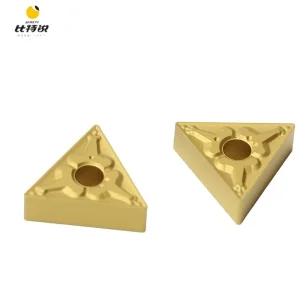
China Tungsten Carbide Bar Peeling Insert Hard Alloy Cutting for Centerless Lathe Steel Rod Manufacturer, Suppliers
Configure & Inquire
China Wholesale custom tungsten carbide module gear milling shaper cutters Manufacturers, Suppliers
Configure & Inquire