
Core Tungsten Carbide Engineered Components
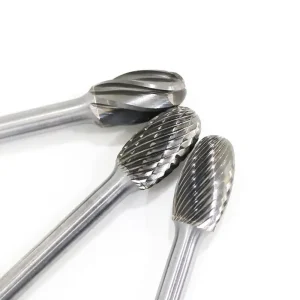
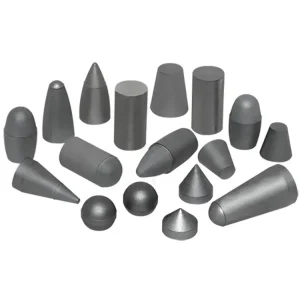
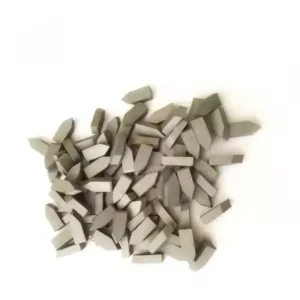
Direct factory sourcing for standard and custom cemented carbide tooling, rotary files, scarifier wear parts, round billets, and precision turning inserts manufactured to stringent dimensional tolerances.





The Global Commercial & Industrial Macro Landscape
Analyzing the shifting dynamics of tungsten carbide steel (cemented hardmetal) across global manufacturing ecosystems, supply chain resilience, and regional demand drivers.
Tungsten carbide steel—technically categorized as a metal matrix composite consisting of refractory tungsten carbide (WC) ceramic grains bound with ductile cobalt (Co), nickel (Ni), or iron (Fe)—represents the indispensable backbone of modern high-productivity machining and severe-service industrial wear mitigation. As advanced industrial economies ramp up investments in precision aerospace fabrication, electric vehicle (EV) component architecture, micro-electronics stamping, and resource extraction, the global hardmetal sector has evolved beyond a baseline commodity supply model into a precision science centered on grain refinement, chemical purity, and thermal-mechanical optimization.
China controls an estimated 80% of the world's upstream tungsten reserves and extraction infrastructure, particularly centered within the mineralogically rich belts of Jiangxi and Hunan provinces. This geostrategic foundation enables leading Chinese tungsten carbide manufacturers to establish completely integrated, closed-loop value chains: from ammonium paratungstate (APT) synthesis, hydrogen-reduction tungsten powder crystallization, and carbonization into tungsten monocarbide (WC), straight through to spray-drying granulation, high-tonnage multi-axial pressing, and overpressure hot isostatic pressing (Sinter-HIP). By consolidating both raw material refinement and precision finishing within domestic boundaries, China supplies global original equipment manufacturers (OEMs) and tooling distributors with an unmatched combination of metallurgical traceability, dimensional reliability, and competitive total cost of ownership (TCO).
Geopolitical Supply Chain Security
Global procurement teams in North America, Western Europe, and East Asia are shifting toward strategic partnerships with fully integrated Chinese facilities to shield manufacturing lines from supply shocks, soaring energy tariffs, and feedstock price volatility.
High-Precision Industrial Conversion
Automotive powertrain electrification and titanium/Inconel machining in aerospace have accelerated the migration away from high-speed steel (HSS) toward submicron-grain tungsten carbide grades capable of sustaining cutting speeds above 250 m/min.
Green Circular Metallurgy
Leading Chinese factories have integrated zinc recovery and chemical hydrometallurgical closed-loop recycling, recovering 99.8% pure tungsten from worn inserts, end scrap, and grinding sludge to meet international ESG and carbon footprint mandates.
Cemented Carbide Metallurgy & Grade Selection Matrix
Empirical mechanical characteristics, metallurgical composition ratios, and certified operational envelopes for industrial toolmakers, design engineers, and procurement specialists.
| ISO Classification | Grade Designation | Binder (Co / Ni wt%) | WC Grain Size (µm) | Density (g/cm³) | Hardness (HRA / HV30) | Transverse Rupture Strength (MPa) | Primary Industrial Working Domain |
|---|---|---|---|---|---|---|---|
| K05 – K10 | YG3X / Ultra-Fine | 3.0% Co | 0.4 – 0.6 (Submicron) | 15.20 – 15.35 | 92.8 HRA / 1850 HV | 2,100 | Chilled cast iron finishing, non-ferrous fine boring, circuit board micro-drilling |
| K10 – K20 | YG6X / YG6 | 6.0% Co | 0.8 – 1.2 (Fine) | 14.85 – 15.00 | 91.0 HRA / 1680 HV | 2,400 | Semi-finishing turning inserts, wire drawing dies, wear strips, precision nozzles |
| K20 – K30 | YG8 / General Wear | 8.0% Co | 1.4 – 2.0 (Medium) | 14.60 – 14.80 | 89.5 HRA / 1520 HV | 2,800 | Brazed tool tips, rock drilling bits, wood machining, rotary burr blanks |
| K30 – K40 | YG15 / Impact Tough | 15.0% Co | 2.0 – 3.5 (Coarse) | 13.90 – 14.15 | 87.0 HRA / 1280 HV | 3,200 | Heavy cold-heading dies, metal stamping punches, high-impact rock tamping tools |
| Specialty P30 | YT15 / YT5 (WC-TiC-Co) | 8.0% Co + 15% TiC | 1.2 – 2.2 (Medium) | 11.20 – 11.60 | 91.5 HRA / 1720 HV | 2,000 | Continuous carbon steel roughing, heavy alloy steel dry turning, peeling inserts |
| Non-Magnetic | YN08 / Ni-Binder | 8.0% Ni (Co-Free) | 1.2 – 1.8 (Medium) | 14.50 – 14.75 | 88.5 HRA / 1450 HV | 2,300 | Magnetic sensor enclosures, downhole MWD collars, anti-corrosive fluid valves |
Next-Generation Carbide Manufacturing Roadmap (2025–2030)
How state-of-the-art Chinese hardmetal production lines integrate digital process validation to eliminate internal voiding and micro-flaws.
Nano-Scale Inoculation
Doping with vanadium carbide (VC) and chromium carbide (Cr3C2) grain inhibitors to suppress discontinuous grain coarsening during high-temperature liquid phase sintering.
Paraffin-Free Spray Drying
Utilizing high-purity PEG (polyethylene glycol) carrier systems in inert nitrogen spray-drying towers to yield spherical granules with exceptional compressibility and flowability.
Overpressure Sinter-HIP
Applying 100 bar isostatic argon gas pressure at 1450°C during binder melting phase, completely collapsing internal microporosities to achieve near theoretical material density.
Sub-Micron h6 Grinding
Employing multi-axis CNC surface, centerless, and optical profile diamond grinding stations to deliver precision cylinder tolerances within ±0.002 mm and Ra < 0.1 µm finishes.
CVD / PVD Nano-Coatings
Depositing alternating nanolayers of AlTiN, AlCrN, or Diamond-Like Carbon (DLC) to construct exceptional thermal shields capable of repelling thermal degradation up to 1100°C.
Localized Heavy Industry Application Scenarios
Tungsten carbide steel components perform at the physical failure envelope where tool steel, hardened alloys, and structural ceramics fail under intense abrasion, galling, and impact shock.
Steel Mills: Slab Conditioning & Tube Scarfing
In continuous steel casting, our heavy-duty indexable carbide scarfing inserts (SPUB63, SPUB86, SNMX19) operate directly against red-hot steel slabs at temperatures exceeding 800°C. Engineered with specialized cobalt binding fractions and enriched cubic carbide phases, these inserts shave weld beads and cast skin without catastrophic thermal fatigue or micro-chipping, driving uninterrupted slab throughput.
Energy Exploration: MWD & Subsea Choke Valves
Directional oil, shale gas, and geothermal drilling subject drill-string components to erosive, high-velocity drilling mud containing abrasive silica quartz. Our nickel-bonded non-magnetic tungsten carbide parts (wear sleeves, pulser rotors, flow restrictors) deliver total immunity to magnetic measurement interference while resisting high-angle particle impingement and hydrogen sulfide (H2S) stress corrosion.
Automotive Stamping: Precision Progressive Dies
Fabricating high-strength dual-phase (DP) automotive structural sheet steel quickly destroys conventional tool steels through severe adhesive galling. Our submicron YG15 and YG20 carbide die plates and punches sustain continuous stamping cycles beyond 5,000,000 hits without burr formation, slashing press line re-tooling downtime and preserving tight dimensional tolerances.
Infrastructure: Concrete Milling & Scarification
Road cold-planing, bridge deck rehabilitation, and floor leveling subject cutting teeth to violent shock loading against embedded aggregate, granite, and rebar. Our tungsten carbide scarifier cutters, rotary burrs, and flail blades combine high-fracture-toughness substrates with precision copper-alloy brazing to maximize operational uptime across heavy civil infrastructure projects.
Strategic Macro TCO: Decoupling Acquisition Price from Production Economics
For industrial procurement directors, calculating the Total Cost of Ownership (TCO) of cemented carbide tooling extends far beyond initial purchase order price. When machining difficult alloys or maintaining automated punching lines, tool replacement labor, scheduled calibration, scrap production, and unplanned spindle stoppages routinely account for over 85% of total operating expenses. Sinter-HIP tungsten carbide components from Jiangxi Zhongfu deliver consistent hardness distributions (within ±0.3 HRA across the blank) and near-zero void fractions (A00, B00), elevating tool longevity by 250% to 400% compared to standard sintered hardmetal. This predictable wear curve allows production engineers to safely extend automated unattended night shifts, eliminate catastrophic cutter fractures, and radically decrease cycle-time costs.
Specialized Heavy-Wear & Cutting Inserts Portfolio
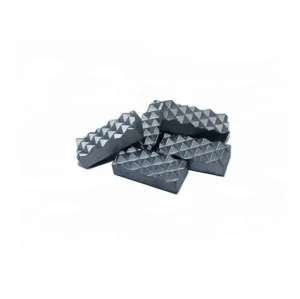
Factory-direct supply of indexable scarfing cutters, cold-heading gripper jaws, CVD-coated steel turning inserts, alloy stamping sheets, and non-magnetic erosion-resistant components.






Quality Assurance, Metallographic Testing & Traceability
Every production heat undergoes non-destructive and destructive metallurgical evaluation in accordance with ASTM and ISO hardmetal validation standards.
Microstructure & Porosity Audit
Optical and SEM metallographic inspection at 1500x magnification guarantees conformity to ISO 4505 standards. We verify porosity ratings of A02/B00 or better, with complete absence of harmful eta phase (Co3W3C decarbonization) or uncombined free carbon flakes.
Magnetic Saturation & Coercivity
Using digital coercimeters and magnetic balance instrumentation, our laboratory monitors cobalt binder dissolution and distribution. Tight coercivity control ensures strict uniformity of grain size, hardness, and fracture toughness from batch to batch.
Coordinate Metrology & Runout Check
High-precision multi-sensor CMMs and laser micrometers inspect critical dimensions, runout, and surface profiles. Precision ground solid carbide rods are held to certified h6/h5 diameter tolerances, while scarfing inserts adhere to tight thickness and edge radius criteria.
Tungsten Carbide Steel: Engineering & Procurement FAQ
Detailed technical answers addressing custom manufacturing tolerances, powder grade selection, brazing methodologies, and international delivery protocols.
What is the structural and mechanical distinction between "Tungsten Carbide" and "Tungsten Steel"?
How does Sinter-HIP technology prevent premature failure compared to conventional vacuum sintering?
What are the mechanical trade-offs between low-cobalt (6%) and high-cobalt (15–20%) carbide grades?
When should a buyer select nickel-bonded (non-magnetic) carbide over conventional cobalt binders?
What technical drawings and specifications are required to order custom carbide parts?
How do you guarantee batch-to-batch metallurgical consistency for recurring OEM orders?
Accelerate Your Hardmetal Supply Chain Today
Connect directly with Jiangxi Zhongfu's engineering metallurgy team to discuss custom tooling profiles, evaluate grade formulations, or request rapid sample prototyping for your industrial operations.