Precision Stock & Custom Fabrications
High-Performance Tungsten Carbide Tooling Catalog (Part I)
Direct factory supply of virgin-grade sintered carbide inserts, scarfing blocks, and wear-resistant substrate systems engineered for high-duty cycle industrial fabrication.

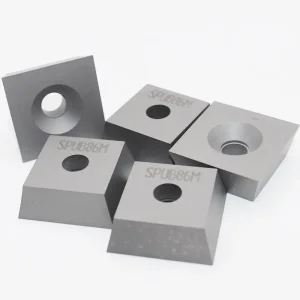
SPUB-63 Series Machine Cutter CNC Inserts
View Technical Specs
High-Toughness Railway Tamping Tine Tools
View Technical Specs
SQ8615WCB Heavy-Duty Carbide Scarfing Insert
View Technical Specs
Sintered Carbide Coated Blank Inserts
View Technical Specs
Sintered Carbide Stone & Wood Cutting Tools
View Technical Specs
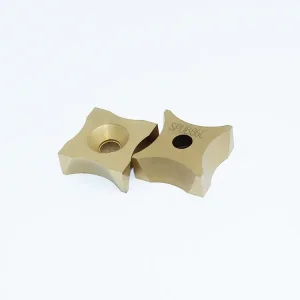
SPUB86F TiN Coating Tube Scarfing Inserts
View Technical Specs
High-Precision CNC Carbide Turning Inserts
View Technical Specs24+
Years Metallurgical Precision
5,000 m²
Integrated Manufacturing Floor
< 0.25 µm
Sub-Micron Grain Matrix Class
8 Hours
Technical DFM SLA Turnaround
Macro-Industrial Dynamics
Global Procurement Architecture for Tungsten Carbide Drills
Deciphering search intent, total cost of ownership (TCO), and engineering requirements across multi-axis aerospace machining, semiconductor micro-drilling, and energy exploration.
Aerospace & Titanium Milling
Machining CFRP (Carbon Fiber Reinforced Polymers), Inconel 718, and Ti-6Al-4V demands solid carbide drills with extreme resistance to abrasive edge round-off and mechanical thermal cracking.
- ✓ Ultrafine tungsten carbide matrix (0.4–0.6 µm)
- ✓ Multilayer AlTiN/AlCrN PVD coating configurations
- ✓ Through-coolant helical micro-channels up to 70 Bar
PCB Micro-Drilling & IC Packaging
Electronics miniaturization requires micro-drills below Ø 0.1 mm operating at spindle speeds exceeding 250,000 RPM, demanding dynamic balance and minimal runout.
- ✓ Runout concentricity within ≤ 0.002 mm (2 µm)
- ✓ Nano-grain WC with specialized Cobalt gradient distribution
- ✓ Enhanced anti-sticking surface polish down to Ra 0.05 µm
Oilfield & Downhole Rotary Tools
Harsh high-pressure and high-temperature (HPHT) subterranean environments cause catastrophic tool breakage unless carbide substrate fracture toughness is maximized.
- ✓ Co-binder optimization for maximum Transverse Rupture Strength
- ✓ Non-magnetic Nickel-based binder formulation options
- ✓ Sinter-HIP processing to eliminate microscopic void porosity
Engineering Deep Dive
Material Engineering Roadmap: Powder to Sub-Micron Drill Blank
Comprehensive grade selection matrices for enterprise sourcing specialists balancing flank wear resistance against mechanical shock resistance.
| Carbide Grade | Binder (Co/Ni %) | Grain Size (µm) | Density (g/cm³) | Hardness (HRA) | TRS (MPa) | Primary Industrial Use-Case |
|---|---|---|---|---|---|---|
| ZF-Micro02 | 8.0% Co | 0.2–0.4 (Nano) | 14.50 | 93.5 | 4,200 | High-hardness tool steels (HRC 55–68), PCB micro-drills |
| ZF-Aero10 | 10.0% Co | 0.5–0.7 (Sub-micron) | 14.40 | 92.2 | 4,000 | Titanium alloys, CFRP hybrid composite drill bits |
| YG6X (ISO K10) | 6.0% Co | 0.8–1.2 (Fine) | 14.95 | 91.5 | 2,800 | Chilled cast iron, non-ferrous abrasive metals, wear pads |
| YG8 (ISO K20) | 8.0% Co | 1.4–2.0 (Medium) | 14.70 | 89.5 | 3,100 | Rock drill bits, geotechnical rotary tools, masonry percussive heads |
| ZF-NM12 (Non-Mag) | 12.0% Ni-Cr | 1.2–1.8 (Medium) | 14.25 | 88.5 | 2,700 | MWD/LWD downhole logging tools, anti-corrosive chemical shafts |
Phase 01: Atomization
Virgin WC Powder Synthesis
100% pure tungsten metal precursor combined with carbon blacks, undergoing uniform carburization at 1,400°C–1,600°C to guarantee crystalline stability.
Phase 02: Compaction
Multi-Axis CNC Isostatic Pressing
Uniform radial pressure profiling eliminates uneven green body shrinkage, producing near-net shapes that minimize wasteful diamond wheel grinding.
Phase 03: Densification
Overpressure Sinter-HIP (60 Bar)
Elimination of microscopic micro-pores by applying Argon inert gas pressure at maximum liquid-phase sintering temperature to reach 99.99% theoretical density.
Phase 04: Precision Grinding
h6 Cylindrical Tool Grinding
Finished on CNC 5-axis grinding stations (Rollomatic/Walter) with diamond wheels, securing h6 outer diameter tolerance and ultra-low runout balance.
Supply Chain Resilience
Global Logistics, Compliance & Engineering Localization
Mitigating critical raw material risks while upholding environmental, export compliance, and on-site tool tuning across key international industrial corridors.
Traceability & Conflict-Free Sourcing
We source tungsten ores from accredited domestic mines in Jiangxi and Hunan, strictly adhering to OECD Due Diligence Guidance and CMRT conflict-free disclosures.
- ✓ Complete raw ore batch metallographic trace logs
- ✓ REACH, RoHS, and TSCA regulatory compliance testing
- ✓ Zero recycled scrap blending in precision drill lines
Tier-1 Export & Dual-Use Clearance
Navigating global customs clearance for advanced metal powders and cemented tools. Streamlined export certifications protect OEMs against port impoundments.
- ✓ Pre-cleared export compliance documentation (ECCN review)
- ✓ Air freight packaging with shock and humidity absorbers
- ✓ Strategic consignments across North American and European hubs
Direct OEM Tooling Support (DFM)
Our application engineers interface directly with your CAD/CAM teams to optimize drill geometries—including web thinning, clearance angles, and flute core tapers.
- ✓ Rapid turn-around for 2D/3D custom drill bit drafts
- ✓ Customized PVD coatings (TiAlN, AlTiSiN, DLC) tailored to speeds
- ✓ Life-cycle analysis to target minimum cost-per-hole metrics
Authoritative Knowledge Base
Frequently Asked Questions on Sourcing Tungsten Carbide Drills
Expert answers addressing the core questions of procurement officers, tool engineers, and metallurgical plant directors.
What metallurgical factors govern the tool life of solid carbide drills?
Tool life is determined by three variables: WC grain size, cobalt binder content, and sintered internal density. Sub-micron grains (0.2–0.5 µm) offer maximum hardness to counter flank wear, while cobalt fractions between 8% and 10% prevent catastrophic chipping under unstable chip-evacuation conditions. Overpressure Sinter-HIP sintering closes microscopic voids, increasing fatigue resistance during continuous feed cycle operations.
How does Zhongfu Carbide eliminate micro-porosity in custom drill blanks?
Every production lot is processed in computer-controlled Sinter-HIP furnaces at pressures up to 60 Bar. This eliminates microporosity down to class A02 B00 C00 under ASTM B276 standards. As a result, our h6 ground carbide drill blanks prevent stress cracking during high-speed CNC operations.
Can you manufacture non-magnetic carbide drills for directional drilling and electronics?
Yes. Standard cemented carbide relies on cobalt, which is ferromagnetic. For non-magnetic requirements—such as Measurement While Drilling (MWD) downhole tools, medical electronics, and semiconductor handlers—we formulate proprietary Nickel-Chromium binder matrix alloys that achieve zero magnetic permeability (µ ≤ 1.005) while preserving Rockwell hardness above 88 HRA.
What are the dimensional tolerances and surface finishes achievable on your solid rods?
Our in-house centerless grinding lines routinely deliver outer diameter tolerances down to ISO h6 (e.g., +0/-0.008 mm on Ø 6.0 mm) and h5 upon request. Surface finishes reach Ra 0.1 µm or mirror polished to Ra 0.05 µm. This surface quality promotes smooth chip flow and optimal adhesion for physical vapor deposition (PVD) coatings like TiAlN and Diamond-Like Carbon (DLC).
What is the minimum order quantity (MOQ) and production lead time for custom tooling?
Standard rod blanks and catalog inserts ship from stock within 48 hours. Custom profile blanks, stepped drill blanks, or drawing-specified carbide wear inserts require approximately 15 to 22 working days from CAD sign-off to metallurgical sintering and final inspection. We support trial orders of 20 to 50 pieces for corporate material validation.
Complete Tooling System
Specialized Carbide Substrates, Rods & Industrial Consumables (Part II)
Nano-grain carbide drill rods, CNC profile blades, and wear components engineered for harsh manufacturing environments.

SPUB86 P40 Welded Pipe Scarfing Inserts
View Technical Specs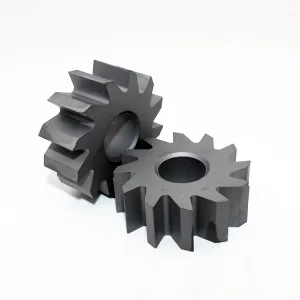
Precision Sintered Wear Parts & Gear Blanks
View Technical Specs
Ø8 × 330 mm Nano Grain Solid Carbide Drill Rods
View Technical Specs
Factory-Direct Sintered Turning Inserts
View Technical Specs
High Hardness Sintered Ceramic & Carbide Plates
View Technical Specs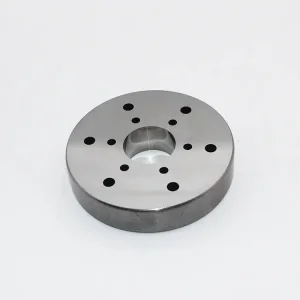
Custom Tungsten Carbide Fittings & Bushings
View Technical Specs
Precision Hard Alloy Wear Parts & Cutters
View Technical Specs