
Precision Tooling Showcase
High-Performance Cemented Carbide Inserts & Wear Parts
Direct supply line featuring heavy-duty scarfing geometries, CNC turning profiles, and custom engineered hardmetal components.

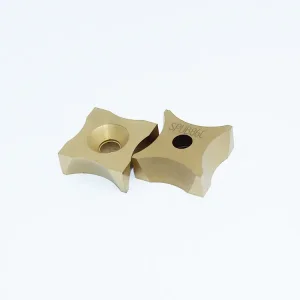
China CNC Carbide Turning Tool Internal Tungsten Steel Cutting Insert Scraping Blade for Steel Workpiece Manufacturers, Factory
View Technical Specs
Wholesale Factory direct sale tungsten carbide turning inserts Manufacturer, Factory
View Technical Specs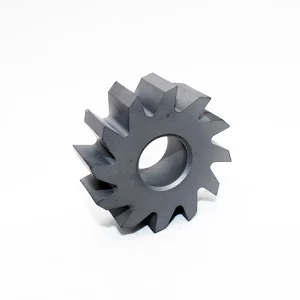
Buy Wholesale custom nonstandard metal worm gears bevel gears pinion gears Suppliers, Factories
View Technical Specs
China Wholesale SPUB-63C cemented mining tungsten tools carbide drill insert Supplier, Factories
View Technical Specs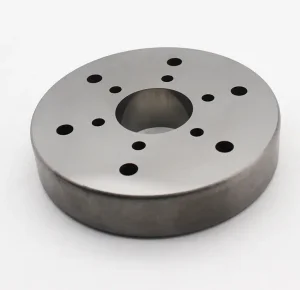
Buy Customized tungsten cemented carbide wear parts for roll crushing Manufacturer, Manufacturers
View Technical Specs
Wholesale Factory wholesale SPUB86 CVD coating tungsten carbide turning inserts Manufacturers, Factories
View Technical Specs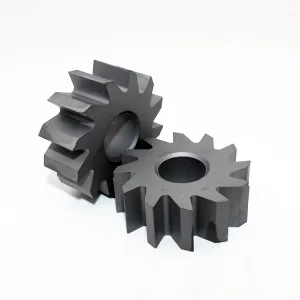
Buy Customize good quality precision metal parts spur gear tiller cultivator parts back gear Manufacturer, Manufacturers
View Technical Specs24+
Years Sintering Expertise
100%
Virgin Sub-Micron WC
≤ 8h
Technical Sizing Reply
20+
Export Nations Certified
Technical Breakdown
Understanding the SPUB86C Engineering Standard
The standard SPUB geometry represents an industrial benchmark in longitudinal high-speed tube scarfing, billet peeling, and heavy-duty turning. In particular, the SPUB86C indexable insert is engineered with high transverse rupture strength to withstand high-volume shear loads across severe continuous casting mills.
Optimized Chamfer Land Dynamics
The "C" suffix in SPUB86C denotes a engineered micro-geometry chamfer along the cutting edges. This chamfer dramatically balances cut pressure, dampening vibrations encountered during the external flash trimming of welded pipes and reducing micro-chipping on abrasive mill scale.
Extreme Thermal Deflection Resistance
Scarfing passes generate extreme thermal spikes exceeding 900°C. SPUB86C inserts formulated with fine-to-medium tungsten grain sizes and balanced cobalt binder matrices (YG8 to YG15 series) preserve red-hardness while eliminating plastic deformation under violent friction.
Multi-Layer CVD/PVD Hard Coatings
Equipped with specialized AlTiN, TiAlSiN, or thick-layer CVD TiCN+Al2O3 barrier architectures, SPUB86C blades provide an impenetrable thermal barrier against adhesive welding, thermal shock crack propagation, and premature flank abrasive cratering.
Global Market Analysis
Macro Dynamics & Procurement Demands for SPUB86C
Industrial trends shaping the sourcing patterns of multinational steel conglomerates, oil country tubular goods (OCTG) manufacturers, and mechanical fabrication centers.
High-Yield OCTG Pipeline Expansion
Global demand for high-strength steel grades such as API 5L X70, X80, and corrosion-resistant alloys has outpaced standard cutting tool endurance. Buyers actively demand SPUB86C tooling with ultra-tight geometric tolerances and controlled cutting-edge preparation (±0.01 mm) to prevent notch stresses during weld seam scarfing in gas pipeline infrastructure.
Total Cost of Ownership (TCO) Prioritization
Global purchasing managers are transitioning away from evaluating simple per-insert acquisition costs toward calculating full operational lifecycle costs. Unplanned line downtime in a high-speed tube rolling mill costs up to $15,000 per hour. Inserts providing predictable edge retention, repeatable tool life, and uncompromised metallurgy consistently outrank lower-grade alternatives.
Near-Net Shape & Custom Geometry Requirements
Increasingly, standard off-the-shelf catalog inserts fall short in custom manufacturing lines. Sourcing directors rely on OEM/ODM Chinese partners capable of producing specialized radius bevels, non-standard nose angles, and customized wiper lands to increase feed rates by 30% to 50% without degrading surface finishes.
Traceability, RoHS & Ethical Mineral Verification
Western and European buyers operate under strict supply chain disclosure regulations. Trusted suppliers must verify that 100% virgin tungsten ore originates from ethical mines and that every production run includes metallographic microstructure test reports, density verification, and magnetic saturation measurements (Cobalt magnetic balance).
Smart Manufacturing Ecosystem
China Factory 4.0: Resilient Metallurgy & Efficiency
How Jiangxi Zhongfu leverages vertical integration, automated pressing, and sinter-HIP technology to deliver global supply continuity.
Vertical Upstream Proximity
Situated in Jiangxi Province—the historic epicenter of global tungsten reserves—our facility secures steady, high-purity APT (Ammonium Paratungstate) precursors with zero geopolitical or logistics disruption, guaranteeing uninterrupted high-volume production schedules.
Sinter-HIP Porosity Elimination
Standard vacuum sintering often leaves micropores that act as structural failure origins under heavy cyclic loads. We utilize advanced Overpressure Sinter-HIP (Hot Isostatic Pressing) units operating up to 10 MPa at 1450°C, collapsing microscopic voids to achieve near 100% theoretical density.
Sub-Micron CNC Profile Grinding
High-precision multi-axis CNC grinding machines paired with digital optical vision profile projectors grind the exact edge chamfer on SPUB86C blades. Each batch matches designated edge hone radials (K-factor) down to ±3 μm accuracy.
Metallurgical Reference Guide
Engineering Grade Specifications for SPUB86C
Select the precise binder concentration and carbide grain distribution to balance impact toughness against abrasive friction.
| Alloy Grade | Cobalt Content (%) | Grain Size (μm) | Density (g/cm³) | Hardness (HRA) | T.R.S. (MPa) | Optimal Industrial Operation |
|---|---|---|---|---|---|---|
| ZF-P20 / YG6X | 6.0% | 0.8 – 1.2 (Fine) | 14.95 ± 0.10 | 91.5 ± 0.5 | ≥ 2200 | High-speed finishing, continuous light scarfing, non-ferrous bar peeling. |
| ZF-M30 / YG8C | 8.0% | 1.4 – 2.0 (Medium) | 14.75 ± 0.10 | 89.5 ± 0.5 | ≥ 2650 | Standard SPUB86C workhorse: ERW tube external scarfing, medium carbon steel turning. |
| ZF-K40 / YG11C | 11.0% | 2.2 – 3.0 (Coarse) | 14.40 ± 0.10 | 88.0 ± 0.5 | ≥ 2900 | Heavy intermittent tube scarfing, hot billet scalping, severe shock loading. |
| ZF-U15 / YG15 | 15.0% | 2.5 – 3.5 (Coarse) | 14.00 ± 0.15 | 86.5 ± 0.5 | ≥ 3200 | Extreme shock resistance, rail weld cleanup, mining percussion tool foundations. |
| ZF-Ni10 (Non-Mag) | 10.0% Ni Binder | 1.2 – 1.8 (Medium) | 14.55 ± 0.10 | 89.0 ± 0.5 | ≥ 2400 | Non-magnetic environments, MWD downhole equipment, chemical corrosive scarfing. |
Operational Realities
Localized Industrial Deployment of SPUB86C
Field installations and mechanical performance profiles across major metallurgical processing environments.
ERW & HFW Longitudinal Pipe Production
In Electric Resistance Welded (ERW) pipe mills, molten weld extrusion (weld flash) must be planed flush instantaneously while moving at line speeds of 30 to 120 m/min. SPUB86C blades mount within specialized scarfing rings or mandrel assemblies to slice the red-hot outer bead smoothly, generating an continuous chip without tearing.
Centerless Bar Peeling & De-scaling
Hot-rolled steel bars often carry rough oxide scales and surface micro-fissures. Mounted in rotary peeling heads, SPUB86C heavy inserts remove outer mill scale from stainless steels, alloy steels, and nickel alloys, producing bright bar stock with close tolerances for downstream automotive forging.
Continuous Billet & Ingot Conditioning
Prior to hot forging or wire rod extrusion, continuous cast steel billets must have surface slag, transverse cracks, and cooling defects mechanically scarfing-milled or turned. The massive edge cross-section of SPUB86C absorbs high-amplitude mechanical shocks caused by uneven billet surfaces.
Procurement & Technical FAQ
Frequently Asked Questions: SPUB86C Direct Sourcing
Clear, unedited technical advice directly from our metallurgical engineering team.
What is the exact mechanical difference between SPUB86 and SPUB86C inserts?
The primary differentiator lies in cutting edge conditioning. Standard SPUB86 inserts usually feature an as-sintered or sharp-ground edge land suitable for lighter general turning. In contrast, SPUB86C incorporates a specifically engineered, precision-chamfered edge (C-land) designed to handle high-shear, shock-intensive operations like welded tube flash scarfing. This chamfer directs the cutting vector away from the vulnerable outer cutting corner into the solid carbide substrate, preventing micro-chipping.
Can Jiangxi Zhongfu customize edge hone radials (K-factor) and corner radii?
Yes. As an original sintered carbide manufacturer, we adjust grinding programs to achieve designated hone radii ranging from 15 μm up to 80 μm, or apply progressive asymmetric waterfalls (K-factor 1.5 to 2.0). Simply supply your detailed CAD file, or describe your steel workpiece grade, line speed, and cutting depth for custom engineering recommendations.
Why is 100% virgin tungsten powder critical for heavy scarfing inserts?
Recycled scrap carbide often contains uncontrolled trace impurities (such as iron, titanium, and calcium) that form brittle eta-phases (η-phase: Co3W3C) during sintering. Under severe thermal cycling and intermittent shock loads, these brittle zones create cleavage fractures that destroy the insert. We formulate exclusively with 100% virgin sub-micron WC powder to guarantee uniform microstructure and maximum transverse rupture strength.
Which coating technology is superior for SPUB86C: CVD or PVD?
The choice depends on cutting velocity and temperature. For continuous high-speed scarfing (>60 m/min) on heavy-gauge carbon steel pipe, high-temperature multi-layer CVD (TiCN + thick α-Al2O3 + TiN) provides superior heat shielding and crater resistance. For slower lines, sticky low-carbon steels, or operations subject to severe mechanical vibrations, nano-composite PVD (AlTiN or TiAlSiN) offers higher film toughness and resists edge flaking.
What is the lead time for standard versus customized carbide tooling runs?
Standard stocked grades of SPUB86 and SPUB63 inserts ship within 3 to 5 business days. Custom powder formulations, non-standard nose angles, or OEM proprietary press molds require 15 to 25 business days to cover tool tooling prep, automated pressing, HIP sintering, precision multi-axis CNC grinding, coating, and complete metallographic inspection.
How does Zhongfu verify quality control before international shipments?
Every production lot undergoes comprehensive laboratory testing: density checks (Archimedes method), Rockwell hardness testing (HRA), coercive force (Hc) testing, magnetic saturation (σs) analysis for binder state evaluation, and scanning electron microscopy (SEM) to verify porosity-free microstructures under ISO 4505 standards.
Comprehensive Tooling Catalog
Explore Complementary Hardmetal & Wear Solutions
Comprehensive portfolio of hard alloy sheets, ground rods, tamping tips, and woodworking profiles from our Jiangxi factory floor.

Wholesale Premium Tungsten Carbide Sheet for Stamping Dies Durable P30 Alloy Model 200x200x10mm Manufacturers, Suppliers
View Technical Specs
Wholesale Nickel based tungsten carbide rods with nickel binder for machinery Manufacturer, Factories
View Technical Specs
China New shape cemented carbide tips for railway track tamping pick center tooth Manufacturers, Factory
View Technical Specs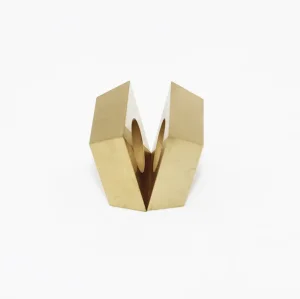
Wholesale Carbide hard alloy blade square Carbide Cutting Inserts for Metal Processing Suppliers, Factories
View Technical Specs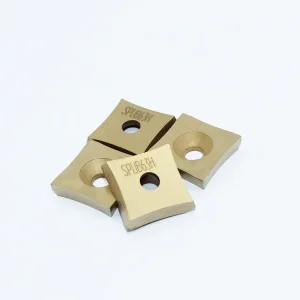
Buy Wholesale woodworking blades tungsten carbide insert milling inserts inconel Manufacturers, Suppliers
View Technical Specs
Wholesale Customized tungsten cemented carbide hardware parts water jet nozzle seat valve Factory, Factories
View Technical Specs
China Tungsten tool holder lathe cemented carbide cutting tool inserts for chian saw Manufacturer, Suppliers
View Technical Specs