

High-Velocity Tooling Solutions
Precision Engineered Milling Machine Consumables & Inserts
Engineered via vacuum sinter-HIP and multi-axis diamond profiling to maximize metal removal rates (MRR) and edge stability across demanding machining cycles.

Buy Wholesale tungsten non-magnetic cemented carbide wear parts Supplier, Suppliers
Configure & Quote
China Tungsten Carbide Round Rod H6 Ground Ø1-40mm Solid Carbide Blanks Manufacturer, Supplier
Configure & Quote
Wholesale China best price custom tungsten carbide steel cutters concrete scarifier blade Supplier, Factory
Configure & Quote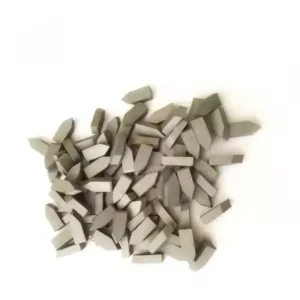
Wholesale Customized carbide welding tips for turning milling cutters Manufacturer, Manufacturers
Configure & Quote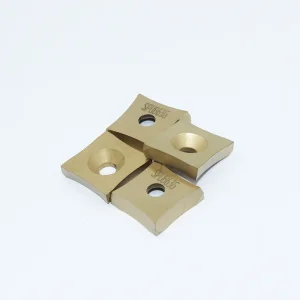
Buy Wear resistant technical round tungsten lathe carbide inserts knife blade Manufacturers, Supplier
Configure & Quote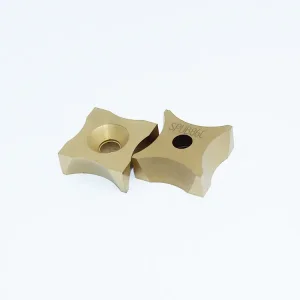
Wholesale SPUB86C customized lathe_ tungsten_carbide_inserts drill bit insert Supplier, Factory
Configure & Quote
Wholesale Best price woodturning tungsten carbide turning tip inserts and cutter railway Manufacturer, Suppliers
Configure & Quote
Industry Evolution & Macro Analysis
Engineering Trends in Advanced CNC Milling Machine Subsystems
The transition toward high-speed dry milling, cryogenic cutting, and closed-loop cyber-physical manufacturing is imposing unprecedented thermo-mechanical stress on fundamental CNC mill components.
Sub-Micron Solid Tooling Geometries
Modern 5-axis vertical machining centers (VMC) running at 24,000+ RPM require solid carbide rotary tools with runout tolerances below <0.003 mm. Ultrafine-grain tungsten carbide rod substrates (sub-0.5 µm WC grain sizes) provide the flexural transverse rupture strength (TRS > 4,000 MPa) required to prevent brittle tool fracture under high-chipload trochoidal milling cycles.
- Isostatic hot pressing for eliminated microporosity (A00-B00 grade)
- Optimized cobalt binder gradient to halt micro-crack propagation
- Custom coolant channel geometries including helical twin cooling
Thermal & Dynamic Damping Interfaces
Spindle interfaces and linear guide wear surfaces are undergoing aggressive material redesign. Conventional tool steels deform under sustained thermal flux generated during superalloy (Inconel 718, Ti-6Al-4V) milling. Cemented tungsten carbide structural wear plates and gibs offer modulus of elasticity up to 650 GPa—nearly triple that of structural steel.
- High dynamic stiffness minimizing tool-chatter resonance harmonics
- Exceptional dimensional stability across broad ambient temperature spans
- Superior surface micro-hardness ensuring long-term bed alignment
Non-Magnetic & Chemical Inert Wear Parts
Next-generation linear motor-driven milling centers utilize dense neodymium magnetic fields for rapid acceleration (>2G). Ferromagnetic carbide wear components distort magnetic tracks and accumulate swarf. Specialized nickel-bonded (Ni-WC) non-magnetic wear parts isolate magnetic flux while maintaining superior erosion resistance.
- Magnetic permeability (μ) approaching 1.002-1.005 for clean operation
- High resistance against aggressive water-soluble coolants and synthetic esters
- Application in sensitive sensor chucking jaws and automated fixture units
Technical Procurement Framework
What Global OEM Machinists & Buyers Demand in 2026
Procuring CNC milling parts is no longer purely about dimensional drawings; global tier-1 supply chains evaluate manufacturers based on metallurgical consistency, statistical process control, and total life-cycle cost (TCO).
Strict Metallurgical Traceability & Pore Control
Uncontrolled porosity in carbide blocks or inserts leads to catastrophic thermal fracture during face milling. Procurement authorities require:
- Hot Isostatic Pressing (HIP): Solid sintering combined with 10 MPa argon gas pressurization eliminates residual voids to level A02 or better.
- Raw Material Provenance: Exclusive use of virgin ammonium paratungstate (APT) powder with certified grain size distribution rather than inconsistent scrap-reclaimed powders.
- Batch Microstructure Metallography: Strict validation of carbon balance to completely eliminate brittle eta (η) phase formations and graphite rosettes.
Micron Tolerance Execution (ISO Standard h6)
For end mill blanks and toolholders, standard dimensional accuracy is insufficient for balancing high-speed dynamic assemblies:
- Centerless OD Grinding: Maintaining consistent diameter tolerances within 0.002 mm across lengths up to 330 mm.
- Surface Roughness (Ra): Ground and superfinished to Ra < 0.1 µm, facilitating uniform adherence of nano-composite PVD/CVD coatings (AlTiN, AlCrN, DLC).
- Runout & Straightness: Dynamic straightness under 0.005 mm per 100 mm length to prevent spindle bearing wear and tool imbalance.
| Standard Grade | Cobalt Content (%) | Density (g/cm³) | Hardness (HRA) | TRS (MPa) | Typical CNC Milling Functional Role |
|---|---|---|---|---|---|
| YG6 (ISO K10-K20) | 6.0% | 14.90 | 90.5 - 91.5 | 2,200 | Finishing inserts for grey cast iron, guide strips, non-ferrous profiling |
| YG8 (ISO K20-K30) | 8.0% | 14.70 | 89.0 - 90.0 | 2,600 | General-purpose milling cutter bodies, brazed tips, heavy roughing tooling |
| Ultra-Fine Submicron | 10.0% - 12.0% | 14.40 | 92.0 - 93.0 | 4,200 | Solid carbide end mills for hardened steel (>55 HRC), micro-drills, aerospace blades |
| YG15 / YG20 | 15.0% - 20.0% | 13.50 | 84.5 - 87.0 | 3,400 | Heavy shock-resistant fixtures, chuck grippers, wear strips under intermittent loads |
| Ni-Binder Non-Magnetic | 8.0% - 10.0% Ni | 14.65 | 88.5 - 90.0 | 2,100 | Linear drive motor machine shields, electronic fixture plates, corrosive environment gibs |
Supply Chain Resilience & Upstream Dominance
China Factory 4.0: Metallurgical Supremacy from Jiangxi to the World
By situating core manufacturing directly within Jiangxi—the epicenter of global tungsten ore extraction and refining—Zhongfu Carbide bridges direct metallurgical access with precision multi-axis CNC fabrication.
Mine-to-Spindle Vertical Integration
Direct integration with domestic tungsten deposits eliminates global market price fluctuations and raw material rationing. Complete internal ownership of ball milling, automated spray drying towers, and multi-atmosphere HIP sintering ensures zero variability from virgin powder to finished machined geometry.
Automated Sinter-HIP Infrastructure
Employing computerized thermal cycles that achieve synchronized 1450°C vacuum sintering with subsequent high-pressure gas quenching. This densification eliminates micro-voids, elevating fatigue limits under cyclic milling shocks and tripling cutting tool lifespan in continuous operations.
Rigorous Quality Gateways
Every batch passes automated laser micrometers, ultrasonic non-destructive flaw detectors, and metallographic digital image analysis to certify grain sizing, decarburization absence, and exact geometric concentricity prior to international export packing.
24+
Years Engineering Expertise
5,000 m²
Modern Production Hub
20+
Tier-1 Export Countries
< 8 Hours
Engineering Feasibility Response
Localized Application Engineering
Optimized Scenarios for Tungsten Carbide CNC Machine Components
Deploying specialized carbide formulations across demanding machining environments guarantees optimized cutting performance, vibration attenuation, and extreme service durability.
Aerospace Superalloy Milling
Machining complex structural spars and turbine blisks from titanium alloys (Ti-6Al-4V) and nickel superalloys requires cutting edges that withstand localized contact temperatures exceeding 900°C without plastic deformation. Sub-micron carbide rods with 10% cobalt content and ultra-high heat dissipation provide the ideal base for aggressive trochoidal tool paths.
Automotive High-Volume Die & Mold
Automotive body stamping dies made from hardened tool steels (1.2379 / D2 at 60 HRC) require uninterrupted ball-nose end milling for dozens of continuous operational hours. Carbide plates and mold core blanks formulated with balanced wear-resistance parameters mitigate micro-spalling and ensure Ra < 0.2 µm mirror finishes directly off the machine spindle.
Heavy Energy & Railway Infrastructure
Processing forged railway tracks, oil country tubular goods (OCTG), and wind-turbine planetary carrier housings involves severe intermittent cutting. Heavy-duty SNMX and SPUB scarifier and bar peeling inserts absorb massive torsional impact without edge breakout, maintaining high tool life under dry rough-milling regimens.
Specialized Blanks, Inserts & Plates
Standard & Custom Industrial Machining Components
Explore our complete spectrum of wear-resistant cemented carbide solutions manufactured to client-specified CAD geometry and strict ISO quality specifications.

Wholesale Customized tungsten non-magnetic carbide scarifier cutter/through hole wear parts Manufacturers, Factories
Configure & Quote
China 2020 Tungsten carbide whole seller Tungsten carbide square thread inserts tools Factory, Factories
Configure & Quote
Buy YG8 carbide gripper inserts for chuck jaw Manufacturers, Supplier
Configure & Quote
Wholesale Factory direct sale tungsten carbide turning inserts Manufacturer, Factory
Configure & Quote
Wholesale Wholesale SPUB63 tungsten indexable carbide brazing inserts woodworking tools Manufacturers, Supplier
Configure & Quote
China Tungsten cemented carbide cutting inserts for CNC machine tool bar peeling SPUB86I Suppliers, Factories
Configure & Quote
China Tungsten Carbide Plate | OEM Wear-Resistant Cemented Carbide Blank for Tooling & EDM Manufacturers, Supplier
Configure & Quote
China Best price SPUB86J CVD coating boxes woodworking tungsten carbide button insert Manufacturer, Supplier
Configure & Quote
Technical Clarifications
Frequently Asked Technical & Procurement Questions
Detailed insights into material compatibility, sintering protocols, and rapid supply fulfillment direct from our manufacturing facility.
What parameters define the choice between cobalt (Co) and nickel (Ni) binders in CNC milling parts?
Cobalt remains the industry benchmark for general metalcutting applications due to its exceptional wettability with tungsten carbide particles, yielding superior transverse rupture strength (TRS) and resistance to heavy mechanical shock. However, nickel binders are mandatory in scenarios where non-magnetic properties (μ ≤ 1.005) are required—such as machine tool assemblies located within linear induction drives—or where the parts are subjected to corrosive water-miscible emulsions, acid fumes, or aggressive EDM die-sinking processes.
How does Sinter-HIP technology influence tool deflection and fatigue endurance?
Standard vacuum sintering often leaves residual microscopic pores (A04-B04 levels) that serve as localized stress concentrations, initiating catastrophic fatigue fractures under periodic chip impacts. Sinter-HIP applies 60 to 100 bar of high-purity argon gas pressure at peak sintering temperatures (approx. 1400°C–1450°C), closing internal micro-voids to near-theoretical density (porosity ≤ A00-B00). This process increases transverse rupture strength by 15% to 30%, virtually eliminating premature edge chipping.
Can Zhongfu fabricate complex non-standard geometries from 3D STEP or DXF files?
Yes. Custom tooling and specialized wear blanks represent more than 60% of our production volume. Our facility features CNC wire-EDM, 5-axis profile grinding, and precision optical profile grinding machines capable of holding profile tolerances within ±0.002 mm. Our engineering team conducts full Design for Manufacturability (DFM) reviews on customer CAD models within 8 business hours.
What quality documentation is provided with international shipments?
Every shipment includes an authoritative Certificate of Analysis (COA) specifying exact batch density, Rockwell hardness (HRA), coercive force (Hc), magnetic saturation (4πσ), and metallographic microstructure images certifying zero eta-phase or abnormal grain growth, ensuring seamless incoming inspection for ISO 9001 and AS9100 certified production lines.
What is the standard production lead time for prototype and volume runs?
Standard h6 ground rods, square plates, and standard indexable inserts are maintained in raw blank stock for rapid ground-to-size dispatch within 3 to 5 business days. Custom molded wear components, specialized EDM blocks, and custom brazed tips typically require 12 to 18 working days including tooling manufacture, pressing, HIP sintering, and finish grinding.