
Industrial Carbide Preforms & High-Wear Tool Blanks
Explore initial standard profiles, tamping tines, and scarfing inserts sintered with overpressure HIP technology for flawless defect-free microstructures.

China Tungsten carbide tamping tines for railway construction equipment Suppliers, Factory
View Product Specs
China Hot sale SPUB63M30 tungsten carbide odinternalexternal tube scarfing insert Manufacturer, Factories
View Product Specs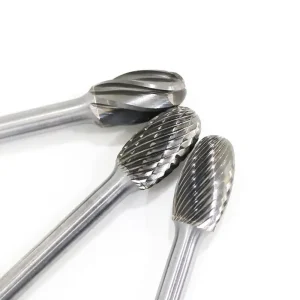
Wholesale Oval cutting tool tungsten carbide rotary file shank diameter Factory, Factories
View Product Specs
China New shape cemented carbide tips for railway track tamping pick center tooth Manufacturers, Factory
View Product Specs
China Wholesale insert carbide manufacturer threading carbide blank inserts Manufacturers, Factory
View Product Specs
Buy High Hardness High Density Pressureless Sintered Silicon Carbide Plate Polished SiC Ceramic Plate Factory, Factories
View Product Specs
Wholesale China Non-magnetic Solid Cemented Carbide Pin Plug Gauges Rod Manufacturers, Factories
View Product Specs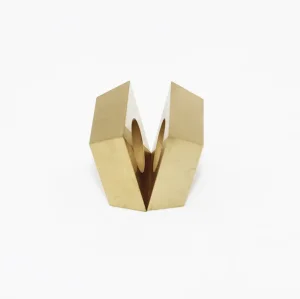
Wholesale Carbide hard alloy blade square Carbide Cutting Inserts for Metal Processing Suppliers, Factories
View Product SpecsStrategic China OEM Factory Advantage: Metallurgy to Market
Operating out of Jiangxi Province—the epicentre of global tungsten reserves—our manufacturing complex leverages upstream vertical integration with direct access to Ammonium Paratungstate (APT) refineries, sub-micron WC powder synthesis, and 100-bar overpressure Sinter-HIP furnaces.
Direct Tungsten Supply Chain
Zero reliance on volatile intermediary broker markets. By sourcing virgin tungsten crystals directly from local Ganzhou mining complexes, we enforce 99.95% chemical purity benchmarks, eliminating unwanted trace elements (Fe, Ca, S) that trigger cobalt pool defects and micro-cracking in flat blanks.
Sinter-HIP Densification
Standard vacuum sintering leaves micro-porosity (A02-A04). Our German-engineered PVA vacuum dewaxing and 10 MPa argon-pressurized Sinter-HIP systems compress transient voids at 1450°C, delivering theoretical 100% density with transverse rupture strength (TRS) exceeding 3800 MPa.
Dynamic Formula Customization
We tailor binder matrices beyond standard Cobalt (Co). Formulate corrosion-proof Nickel (Ni-Cr) blends for chemical tooling, non-magnetic matrices for semiconductor wafer handling, or Cr3C2/VC grain-growth inhibitors for nano-carbides retaining ultra-sharp shear edges.
Evolutionary Trends in Cemented Carbide Flat Blank Engineering
Modern tooling systems demand severe wear resilience without the catastrophic brittleness typical of conventional hardmetals. Examine the shifts redefining OEM specifications across North America, Europe, and Asia-Pacific.
1. Sub-Micron to Ultrafine WC Grain Morphologies
Progressive die stamping of silicon steel laminations (0.2 mm) and EV stator packs requires sub-micron WC grains (<0.6 μm). By uniformly dispersing trace Vanadium Carbide (VC) during high-energy ball milling, our metallurgical team prevents Ostwald ripening, maintaining hardness values upwards of 92.5 HRA alongside superior edge integrity.
2. Zero-Porosity Sinter-HIP over Traditional Sintering
Conventional liquid-phase vacuum sintering frequently retains residual argon or carbon-monoxide voids. Sinter-HIP incorporates an isostatic compression pulse (60 to 100 bar) precisely at the eutectic temperature. This collapses closed micro-pores, yielding a pore-free ISO rating of A00, B00, C00—essential for Wire-EDM mirror polishing.
3. Specialized Corrosion & Non-Magnetic Nickel Binders
Lithium-ion battery slurry slitting blades and high-frequency sensor calibration plates degrade rapidly under cobalt-catalyst chemical leaching. Our specialized non-magnetic flat blanks use high-nickel (Ni-Cr-Mo) binders, sustaining non-permeability (μ ≤ 1.005) while resisting harsh electrolytic corrosion.
| Carbide Grade | Binder (Co/Ni %) | Grain Class (μm) | Density (g/cm³) | Hardness (HRA) | TRS (MPa) | Target Tooling Applications |
|---|---|---|---|---|---|---|
| ZF-YG6X | 6.0% Co | 0.6 (Sub-micron) | 14.95 ± 0.05 | 92.4 – 93.0 | 2,600 | Chilled cast iron, non-ferrous slitting, silicon steel stamping |
| ZF-YG8 | 8.0% Co | 1.2 (Medium) | 14.75 ± 0.05 | 89.5 – 90.5 | 2,900 | Wear guide plates, wire flattening rolls, brazed cutting blanks |
| ZF-YG15 | 15.0% Co | 1.8 (Medium-Coarse) | 14.05 ± 0.08 | 87.0 – 88.0 | 3,400 | Heavy cold stamping dies, metal punching, deep-drawing dies |
| ZF-YG20 | 20.0% Co | 2.2 (Coarse) | 13.55 ± 0.08 | 85.0 – 86.5 | 3,800 | Extreme shock resistance, cold heading dies, thick-plate blanking |
| ZF-NM10 | 10.0% Ni-Cr | 1.0 (Fine) | 14.50 ± 0.06 | 88.5 – 89.5 | 2,700 | Non-magnetic wear plates, battery slurry knives, MWD tools |
Engineering Solutions for Demanding Localized Environments
Where failure is not an option. Discover how leading manufacturing plants solve premature fracture, abrasive degradation, and high thermal fatigue using custom-profiled cemented carbide flat blanks.
Lithium-Ion Battery Foil Slitting
Slitting 4.5 μm copper and 9 μm aluminum current-collector foils requires blanks with extreme compressive strength and zero burrs. Our sub-micron flat blanks undergo cryogenic stress relieving, eliminating internal micro-tensions to prevent edge chipping over 500,000 continuous meters of cutting.
Progressive Lamination Stamping Dies
High-speed punches cycling at 800+ strokes per minute induce intense frictional heat and micro-shocks. Using our optimized ZF-YG12X with balanced 12% cobalt distribution, die-makers report a 4× improvement in regrind intervals compared to standard cold-work tool steel (D2, tungsten high-speed steel).
Corrosive Slurry & Pump Seal Faces
In offshore downhole drilling and chemical dispensing units, cavitation combined with hydrogen sulfide attack dissolves standard cobalt binder matrices. Our Nickel-Chromium cemented carbide flat plates maintain mechanical boundary integrity, prolonging equipment uptime under 150°C acidic environments.
Global Enterprise Sourcing Architecture & Supplier Auditing
A rigorous metallurgical procurement checklist designed for international engineering directors, supply chain VPs, and quality auditors sourcing tungsten carbide flat blanks from China.
Verification of Raw Material Origin
Demand documented Certificates of Analysis (CoA) validating 100% virgin tungsten powder origin. Recycled tungsten scrap (zinc-reclaimed carbide) contains uncontrollable residual trace contaminants (Ti, Ta, Fe) that compromise fracture toughness and cause premature micro-cracks during wire EDM profiling.
Non-Destructive Ultrasonic & Metallographic Testing
Every OEM production batch at Jiangxi Zhongfu undergoes saturation magnetization testing, coercive force measurement (Hc), and 1000× metallographic analysis. We inspect for carbon deficiency (η-phase embrittlement) and excessive free carbon (graphite rosettes), guaranteeing consistent isotropic strength.
Precision Grinding & Surface Integrity Options
From as-sintered blanks with optimized machining allowances (+0.8 mm / +1.5 mm) to ready-to-mount blanks ground to ±0.002 mm tolerance with Ra 0.05 μm mirror polishing. In-house surface grinding, wire-EDM roughing, and CMM dimension verification reduce downstream machining labor for the client.
Frequently Asked Questions by Industrial Tooling Buyers
Comprehensive engineering insights addressing material specifications, wire-EDM machinability, cobalt leaching prevention, and custom manufacturing parameters.
How does Sinter-HIP technology eliminate cracking during Wire-EDM machining?
Wire-EDM induces severe localized thermal stress, creating a recast layer (white layer). Standard sintered blanks with residual micropores cannot withstand these residual tensile stresses, propagating micro-cracks into catastrophic splits. Our 10 MPa overpressure Sinter-HIP process seals micro-voids and normalizes binder distribution, enabling safe, stable EDM machining with minimal recast fracturing.
What is the difference between WC-Co and non-magnetic Ni-binder flat blanks?
Cobalt (Co) is ferromagnetic and exhibits high wettability with tungsten carbide, making it the premier binder for high mechanical strength and impact resistance. However, Cobalt corrodes in water-glycol fluids and generates magnetic interference. Nickel (Ni) binders create a completely non-magnetic matrix (μ < 1.005) with superior resistance to acidic, alkaline, and electrolytic degradation.
Can you provide custom dimensions and non-standard geometric bevels?
Yes. We engineer flat blanks ranging from thin wear strips (0.5 mm thickness) to massive monolithic blocks (300 mm × 300 mm × 80 mm). We operate CNC multi-axis green-machining before sintering, forming mounting holes, counterbores, and edge bevels directly into the preform to reduce costly diamond wheel grinding after sintering.
What quality documentation accompanies international OEM export shipments?
Every OEM delivery is backed by comprehensive quality records: Raw Material Purity CoA, Sinter-HIP Heat Batch Record, Microstructural Porosity Report (ISO 4505 / ASTM B276), Rockwell Hardness & Density Verification, and CMM Dimensional Inspection Sheets. Full traceability is laser-etched onto blank perimeters on request.
Specialized Inserts, Tooling Billets & Wear Components
Explore our heavy-duty pipe scarfing inserts, chuck jaw grippers, round billets, and precision custom alloy blanks engineered for prolonged operating life under extreme loads.
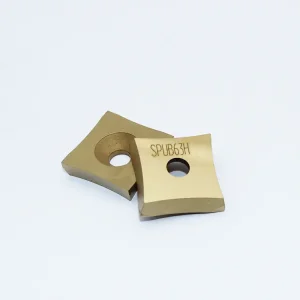
Buy Wholesale SPUB63H square tungsten carbide cemented cutting turning lathe tools Manufacturers, Factories
View Product Specs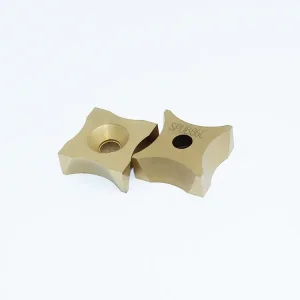
China SPUB86C P40 CVD coating tungsten carbide scarfing insert Manufacturers, Suppliers
View Product Specs
China YG8 Standard tungsten carbide torque gripper inserts for chuck jaws Factory, Factories
View Product Specs
Buy Tungsten carbide tamping tines use tip wearing part for Railway Industry Supplier, Suppliers
View Product Specs
China SPUB86 P40 tungsten carbide scarfing inserts for welded steel pipe Manufacturer, Factory
View Product Specs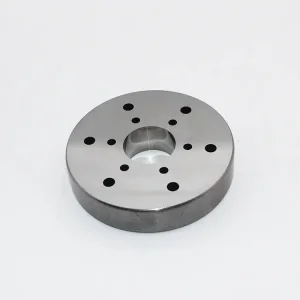
China Customized tungsten carbide fitting elbow tee cap reducer pipe flanges Suppliers, Factories
View Product Specs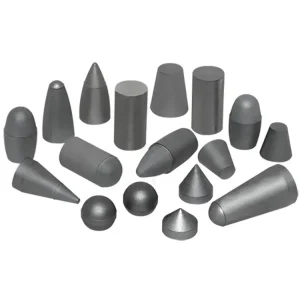
China Round billet metal for high strength cemented carbide tools Manufacturer, Supplier
View Product Specs
China Wholesale SPUB63M30 tin coating scarfing insert carbide od scarfing insert Manufacturer, Factories
View Product SpecsNeed Custom Cemented Carbide Flat Blanks to Print?
Submit your 2D/3D CAD drawings (.DWG, .STEP, .IGES) with required tolerances, wear modes, and finish conditions. Our metallurgical engineering team provides comprehensive grain-grade recommendations, sintering allowances, and factory-direct volume pricing.