Selected Industrial Tungsten & Nickel Carbide Solutions
Ultra-dense, HIP-sintered components engineered for extreme mechanical shear, chemical erosion, and corrosive wear conditions.




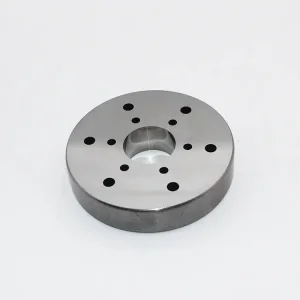


Evolution of Nickel-Bonded Carbides in High-Stress Environments
Bridging the operational limits of traditional cobalt matrices: Why industrial engineers specify WC-Ni formulations for petrochemical, semiconductor, and subsea operations.
Corrosion & Acid Neutrality
Traditional cobalt binders dissolve rapidly when exposed to acidic media (pH < 7), resulting in grain boundary erosion. Nickel carbide composites (WC-Ni, WC-Ni-Cr) offer superior galvanic stability and chemical resistance across harsh solvents and saltwater.
Near-Zero Magnetic Interference
Ferromagnetic cobalt generates severe electromagnetic disruptions in downhole MWD/LWD drilling arrays, medical equipment, and precision magnetic compaction dies. Our proprietary nickel grades maintain magnetic permeability values below μ < 1.01.
High Thermal Oxidation Resistance
Nickel binders develop a stable, self-passivating nickel-oxide layer at elevated temperatures (> 650°C), preventing micro-spalling in high-speed rotary scarfing, bar peeling, and severe metal-to-metal friction applications.
Standard & Custom WC-Ni Grade Architecture
Carefully balanced grain distributions to deliver exact toughness-to-hardness ratios for specific mechanical wear criteria.
| Alloy Grade | Binder Composition | Grain Size (μm) | Density (g/cm³) | Hardness (HRA) | TRS (MPa) | Key Target Application |
|---|---|---|---|---|---|---|
| ZF-NM06 | 6% Ni + Mo Inhibitor | 0.8 – 1.2 | 14.90 – 15.05 | 91.5 – 92.5 | 2300 | Micro-nozzles, precision electronic dies, wear seal rings |
| ZF-NM10 | 10% Ni | 1.2 – 1.8 | 14.50 – 14.70 | 89.0 – 90.5 | 2700 | MWD/LWD oilfield tools, non-magnetic guidance sleeves |
| ZF-NM15CR | 15% Ni-Cr Alloy | 1.5 – 2.5 | 14.00 – 14.25 | 86.5 – 88.0 | 3100 | High-impact slurry valves, marine flow control trims |
| ZF-YG8 Standard | 8% Co | 1.4 – 2.0 | 14.60 – 14.80 | 89.0 – 90.0 | 2800 | Chuck jaw grippers, scarifier blades, rock drilling tips |
| ZF-YG15 Block | 15% Co | 2.0 – 3.5 | 13.90 – 14.10 | 86.0 – 87.5 | 3400 | Heavy cold heading, EDM plate blocks, stamping matrices |
Engineered Sourcing for Tier-1 Industrial Sectors
Addressing structural procurement risks: supply chain resilience, virgin powder traceability, and customized metallurgical engineering.
Upstream Chemical & Subsea
Providing offshore drilling platforms with erosion-proof choke valve trims, downhole bush liners, and non-magnetic pulse housings that endure sour-gas (H2S) exposure without cracking.
High-Speed Tube Scarfing
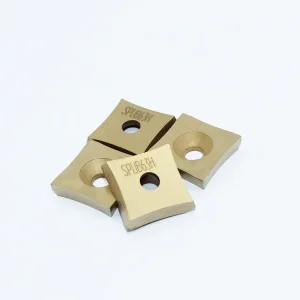
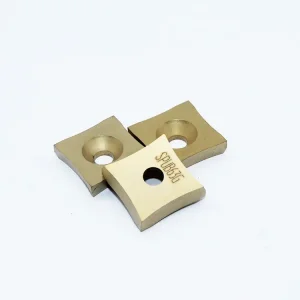
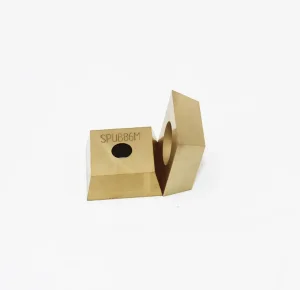
Delivering heavy-duty SPUB63, SPUB86, and SNMX inserts engineered for automated longitudinal weld bead peeling in high-throughput API tube and casing mills.
Electronic Component Stamping
Fabricating ultra-dense EDM plate blanks and punch pins with zero pore structural integrity to prevent premature chipping during sub-micron connector punching cycles.
Concrete & Road Scarifying
Furnishing durable brazed tips and flail cutter assemblies that resist shock load fracture across continuous asphalt peeling and bridge surface profiling equipment.
Global Compliance, Quality Control & Traceability
Every kilogram of cemented carbide produced by Zhongfu undergoes end-to-end metallurgical validation from initial ammonium paratungstate (APT) reduction to final laser dimensional metrology.
100% Virgin Powder Sourcing
We reject recycled scrap powders. Every batch utilizes high-purity virgin WC and electrolyte-grade Ni/Co powders, backed by EN 10204 3.1 chemical inspection certificates.
Overpressure Sinter-HIP
Our German-engineered Sinter-HIP furnaces exert up to 10 MPa of argon gas pressure at 1,450°C, compressing microporosities down to ASTM A00/B00/C00 levels to eliminate internal micro-cracks.
Export Logistics & Packaging
Exporting to 20+ countries including the USA, Germany, Canada, and Australia. Components are vacuum-sealed with anti-corrosion VCI barrier film and crated in shockproof seaworthy packaging.
Technological Roadmap & Metallurgy 4.0
Continuous investment in materials science to serve the next generation of harsh-environment manufacturing challenges.
Nano-Grain Doping
Integration of VC/Cr3C2 grain growth inhibitors at sub-micron scales to achieve ultra-fine grain structures (<0.25 μm) that exceed 93.5 HRA hardness thresholds.
Dual-Binder Systems
Pioneering Ni-Co synergistic matrix formulations that retain the corrosion resistance and non-magnetic performance of nickel while enhancing thermal fatigue resistance.
Near-Net Additive
Deploying binder jet 3D printing for complex non-magnetic carbide wear geometries with internal helical cooling channels that cannot be machined by conventional EDM.
Carbon-Neutral Sintering
Transforming heating cycles with intelligent closed-loop furnace automation, reducing embodied carbon footprints across the tungsten metallurgical supply chain.
Frequently Asked Questions
Direct technical and commercial answers for OEM design teams and industrial buyers.
What is the practical difference between Nickel-bonded and Cobalt-bonded carbide?
Cobalt is the standard binder for mechanical wear due to high wetting characteristics and transverse rupture strength. However, cobalt is ferromagnetic and rapidly corrodes in acidic or marine environments. Nickel binders offer exceptional chemical resistance (pH 2–12), non-magnetic behavior (relative permeability close to 1), and superior oxidation resistance at high temperatures.
Can you customize powder formulations according to our drawing specs?
Yes. Custom engineering is our core specialty. Our technical engineering division can modify WC particle sizing (from 0.2 μm ultrafine to 4.5 μm coarse) and blend proprietary nickel, chromium, or molybdenum binder contents to balance fracture toughness against abrasion for your specific load cases.
How does Zhongfu ensure consistent quality without internal voids?
Every production run passes through our state-of-the-art overpressure Sinter-HIP units operating under 100 bar of pressurized argon. This compacts all metallurgical microporosities to near-theoretical density (near zero porosity), certified by rigorous optical metallographic microscope analysis before shipment.
What is your production lead time and drawing turnaround protocol?
Engineering reviews, manufacturability assessments, and grade recommendations are submitted within 8 hours of receiving your 2D/3D CAD files. Standard blank orders are ready within 12–15 days, while precision finish-ground parts (tolerance down to ±0.002 mm) require 20–25 days.
Precision Inserts, Blank Plates & Custom Tooling
Explore our full range of scarfing inserts, high-wear plates, and precision-engineered tool geometries.