
High-Performance Machining Products & Sintered Carbide Components
Explore our premium sintered carbide flat blanks, precision inserts, non-magnetic rods, and specialized wear parts produced in Nanchang, Jiangxi.

China OEM Customizable HIP Processed Square Tungsten Carbide Plate, Polished Flat Blank
Technical Specs
Wholesale Factory SPUB86 CVD Coating Tungsten Carbide Turning Inserts
Technical Specs
Wholesale Non Magnetic Cemented Carbide Rods for Water Meter Shafts
Technical Specs
Customized Tungsten Non-Magnetic Carbide Scarifier Cutter & Wear Parts
Technical Specs
Buy YG8 Carbide Gripper Inserts for Chuck Jaw Workholding Tools
Technical Specs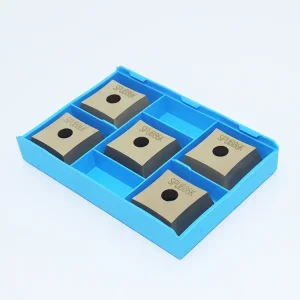
SPUB86K CVD Coating Tungsten Carbide Lathe Cutting Tool Inserts
Technical Specs
Custom Tungsten Carbide Steel Cutters Concrete Scarifier Milling Blades
Technical Specs
Heavy-Duty Tungsten Carbide Square Thread Inserts & Threading Tools
Technical SpecsGlobal Machining Paradigm & China’s Metallurgical Supply Chain
A comprehensive examination of how integrated upstream tungsten reserves, computerized powder processing, and advanced multi-axis machining establish competitive advantages for global OEMs.
The global precision engineering and machining ecosystem is witnessing an unprecedented transition toward ultra-hard material processing, sub-micron dimensional repeatability, and extended consumable tool lifecycle. As advanced manufacturing verticals—spanning aerospace propulsion, commercial electric vehicles, renewable wind hubs, downhole measurement-while-drilling (MWD) logging tools, and steel slab scarfing—demand higher thermal stability and abrasion mitigation, cemented tungsten carbide (WC-Co and WC-Ni) has solidified its position as the foundational core of modern subtractive manufacturing.
Within this global industrial topography, Jiangxi Zhongfu Cemented Carbide Co., Ltd. operates at the nexus of metallurgical raw material dominance and precision finish machining. Located in Nanchang, Jiangxi—a geographic epicenter holding over 60% of verified global tungsten reserves—our manufacturing infrastructure eliminates third-party raw material premiums and guarantees 100% virgin powder integrity. In contrast to contract job shops that merely shape bought-in sintered stock, Zhongfu executes full-cycle manufacturing: from micro-grain formulation compounding, automatic servo pressing, and high-pressure Hot Isostatic Pressing (HIP) sintering to 5-axis CNC diamond profile grinding and vacuum chemical vapor deposition (CVD) thin-film coating.
Upstream Raw Powder Control
Direct mine-to-refinery access to primary Ammonium Paratungstate (APT). Zero reliance on contaminated secondary black scrap ensures predictable fracture toughness (K1c) and eliminates premature catastrophic fracture during high-feed milling.
Sinter-HIP Densification
Processing under 100 bar isostatic argon pressure at 1450°C dissolves microscopic internal voids, resulting in Grade A00 porosity, near-theoretical density (14.6–15.0 g/cm³), and exceptional transverse rupture strength exceeding 3200 MPa.
Sub-Micron h6 Precision
Our climate-regulated CNC grinding centers utilize high-precision vitrified diamond wheels to achieve h6 cylindrical outer diameter tolerances, mirror surface finishes down to Ra 0.05 µm, and absolute geometric parallelism across large-format plates.
Formulation-Driven OEM
More than 24 years of application-tailored formulation engineering allows us to customize binder compositions (Cobalt vs. Nickel-Chromium matrices) to address corrosive acidic environments, non-magnetic criteria, or severe cycloid impacts.
Material Science & Cemented Carbide Grade Selection Architecture
A precision selection matrix linking metallurgical grain sizes, cobalt binder ratios, and mechanical hardness metrics to operational wear phenomena.
In precision machining and heavy tooling design, standard tool-steel alloys degrade rapidly under mechanical shear stress and thermal creep. Cemented carbide bridges this performance divide by suspending hexagonal tungsten monocarbide (WC) grains within a ductile cobalt (Co) or nickel (Ni) metallic binder. The overarching metallurgical rule for tooling design mandates: lower cobalt concentration coupled with ultra-fine grain size maximizes hardness and hot-wear abrasion resistance; conversely, higher binder fraction and medium-coarse grains maximize transverse rupture strength, shock damping, and structural toughness.
| Grade Standard | Binder Ratio (%) | Density (g/cm³) | Hardness (HRA) | TRS (MPa) | Primary Machining & Tooling Domain |
|---|---|---|---|---|---|
| YG6 / K10-K20 | 6.0% Co | 14.90 – 15.00 | 90.5 – 91.5 | ≥ 2400 | Chilled cast iron turning, non-ferrous metal finishing, precision wire-drawing dies, slitter knives. |
| YG8 / K20-K30 | 8.0% Co | 14.60 – 14.80 | 89.5 – 90.5 | ≥ 2800 | Rotary rock drilling, percussive mining tips, lathe brazed welding tips, chuck jaw gripping teeth. |
| YG15 / K40 | 15.0% Co | 13.90 – 14.10 | 87.0 – 88.0 | ≥ 3200 | Cold heading punches, progressive stamping dies, cold extrusion tools subject to moderate cyclic impact. |
| YG20 / Severe Shock | 20.0% Co | 13.40 – 13.60 | 85.0 – 86.5 | ≥ 3400 | Heavy forging dies, scrap metal shear inserts, thick plate EDM punch blanks, tamping tines for railway beds. |
| ZF-Ni10 / Non-Magnetic | 10.0% Ni-Cr | 14.45 – 14.70 | 88.5 – 89.5 | ≥ 2600 | Downhole directional drilling (MWD/LWD), magnetic sensor components, corrosive pump seals (permeability < 1.005 µ). |
| ZF-Nano02 / Sub-Micron | 10.0% Co + Cr/V | 14.40 – 14.55 | 92.5 – 93.5 | ≥ 3800 | Solid carbide Ø0.25–12mm end mills, micro drills, high-speed routing of titanium aerospace airframes. |
Every sintered batch from Jiangxi Zhongfu is subjected to quantitative metallurgical microscopy to assess cobalt distribution uniformity, magnetic saturation (4πσ), and coercive force (Hc). This ensures absolute freedom from harmful eta-phases (Co3W3C embrittlement) or free carbon clusters, guaranteeing predictable tool edge retention in unattended lights-out CNC machining cells.
Engineering Solutions Across Mission-Critical Industrial Sectors
Demonstrating how Zhongfu custom carbide solutions solve severe wear, extreme temperature fluctuations, and cyclic mechanical shock across modern production ecosystems.
Continuous Steel Tube Scarfing & Mill Conditioning
In high-frequency welded (ERW) steel tube production and continuous slab casting mills, hot weld seam bead removal occurs at temperatures exceeding 800°C. Zhongfu’s proprietary SPUB-63, SPUB86, and SNMX series scarfing inserts feature optimized rake profiles and thermal shock-resistant titanium aluminum nitride (TiAlN) coatings. In automated tube mills across North America and Western Europe, our inserts increased continuous run times from 45 minutes to over 180 minutes between indexing, slashing unexpected line shutdowns and maintaining smooth flash-free OD/ID tube geometry.
Downhole Oil & Gas (MWD/LWD) Exploration
Measurement-While-Drilling and Logging-While-Drilling assemblies require wear-resistant bushings, valve trims, and flow restrictors located directly adjacent to magnetic telemetry sensors. Standard cobalt-bonded carbide distorts electromagnetic logging readings due to cobalt’s ferromagnetism. Zhongfu supplies custom-machined Nickel-Chromium bonded non-magnetic carbide shafts and wear sleeves exhibiting magnetic permeability < 1.005 µ, alongside exceptional resistance to high-velocity drilling mud erosion containing abrasive silica sands.
Automotive Stamping & EV Battery Tooling
The manufacturing of lithium-ion battery electrode foils and electric motor stator laminations requires burr-free slitting at cycle speeds up to 1200 strokes per minute. A microscopic blade chipping defect causes short circuits in battery packs. Zhongfu manufactures mirror-polished sub-micron YG15/YG20 cutting blocks and slitting dies finished to Ra 0.05 µm with cutting edge sharpness radii under 2 µm. Customers observe uninterrupted punch life exceeding 5 million strokes before regrinding, preserving critical battery cell integrity.
International Regulatory Compliance & Precision Metrology Assurance
A rigorous five-stage quality gate protocol delivering absolute metallurgical traceability from powder blending to customs export clearance.
Procuring engineered components across borders requires unequivocal confidence in material honesty, structural consistency, and dimensional fidelity. Jiangxi Zhongfu maintains an ISO 9001:2015 certified total quality management system. Every production batch of cemented carbide is accompanied by verified 3.1 Material Test Certificates (EN 10204), documenting exact chemical binder percentages, density (Archimedes method), Vickers/Rockwell hardness, and transverse rupture strength.
Laser diffraction particle size analyzers verify tungsten carbide powder distributions (Fisher sub-sieve size) prior to batch blending.
Computer-logged sinter-HIP cycles maintain precise temperature ramps and 10 MPa argon pressure to ensure complete porosity elimination.
Metallographic optical and scanning electron microscopy (SEM) verify ISO 4505 porosity ratings (A00-B00) and uniform binder distribution.
Zeiss 3D Coordinate Measuring Machines and optical profile projectors verify linear tolerances to ±0.002 mm on ground parts.
Full compliance testing ensuring raw materials meet EU RoHS 2011/65/EU, REACH (SVHC) directives, and global export packaging standards.
To protect fragile sub-micron ground cutting edges and mirror-polished faces during international transit to our clients across the USA, Canada, Germany, Australia, and Mexico, all finished items undergo ultrasonic cleaning, immersion anti-corrosion vacuum sealing, and custom high-density CNC-milled protective packaging.
Technology Roadmap: Next-Generation Machining & Advanced Metallurgy
Strategic R&D pathways shaping our production lines through 2030, from binderless ultra-hard materials to closed-loop digital twin HIP sintering.
Binderless Tungsten Carbide Synthesis
Eliminating metallic binders altogether to create pure WC matrices achieving hardness levels exceeding 2600 HV. Designed for optical lens compression glass molds and chemical slurry nozzles requiring near-infinite erosion and acid resistance.
Digital Twin Predictive Sintering
Deploying finite element simulation software to model multi-stage thermal shrinkage (typically 18–22%) during the sintering phase. This allows complex, near-net preforms to be pressed with minimal post-sinter grinding stock, reducing raw material waste and lead times.
Additive Binder Jetting of Carbide
Developing 3D binder jetting technologies for complex internal cooling channels within solid carbide end mills and deep-hole drilling bodies, providing direct high-pressure coolant delivery to micro cutting edges.
Eco-Circular Secondary Refining
Pioneering zinc-recovery and chemical recycling systems that convert clean spent carbide cutting tools back into ultra-pure tungsten trioxide (WO3) without environmental degradation, establishing a resilient closed-loop supply cycle.
Specialized Tooling, Brazing Tips & Precision Wear Blanks
Discover our engineered rod blanks, lathe brazing inserts, scarfing cutting tips, and custom gear transmission tooling ready for global deployment.
Wear Resistant Technical Round Tungsten Lathe Carbide Inserts & Knife Blades
Technical Specs
Wholesale Tungsten Cemented Tools & Carbide Coated Blank Inserts
Technical Specs
Industrial Tungsten Alloy Rod Material for Stainless Steel CNC Machining
Technical Specs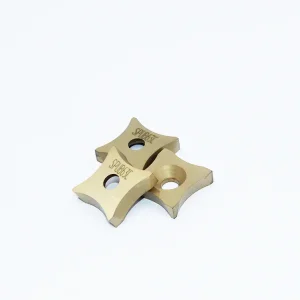
Buy SPUB-63 External Scarfing Inserts for High Frequency Steel Tube Mills
Technical Specs
Dia 8 × 330 mm Nano Grain Size Carbide Rods for 0.25 µm Endmills & Drills
Technical Specs
Custom Transmission Reverse Idle Gear, Starter Gear & Precision Spur Gear Sets
Technical Specs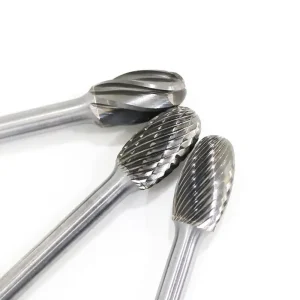
Precision Oval Cutting Tool Tungsten Carbide Rotary Burrs & File Shanks
Technical Specs
SPUB86J CVD Coating Woodworking Tungsten Carbide Button Inserts
Technical SpecsFrequently Asked Questions: Global Procurement & Technical Execution
Essential guidance on tolerances, metallurgical formulations, custom tooling drawings, lead times, and global shipping policies.
Can Jiangxi Zhongfu manufacture precision tungsten carbide parts directly from customer CAD drawings?
What dimensional tolerances and surface finishes can your CNC finish grinding achieve?
Why is Non-Magnetic Tungsten Carbide necessary, and how does Zhongfu achieve it?
What is the standard production turnaround time and technical quote response speed?
How does Zhongfu ensure consistent quality across repeat international shipments?
Which global markets and international freight arrangements do you support?
Accelerate Your Machining Performance with Sintered Precision
Send your 2D/3D component drawings, target annual volumes, or specific metallurgical wear challenges directly to our Nanchang metallurgical engineering team.