

SPUB-63C Mining Drill Inserts
Explore Specifications →Select from high-volume precision-sintered blanks, metallurgical scarfing inserts, micro-grain solid round rods, and customized mechanical wear assemblies direct from our production lines.
SPUB-63C Mining Drill Inserts
Explore Specifications →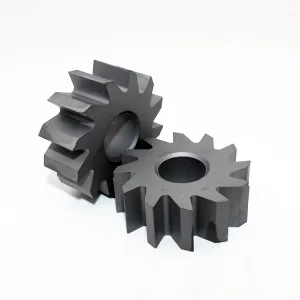
Precision Spur Gear Cultivator Parts
Explore Specifications →
Sintered Carbide Stone/Wood Cutters
Explore Specifications →
H6 Ground Solid Carbide Rods Ø1-40mm
Explore Specifications →
SPUB63B ISO TiN Scarfing Inserts
Explore Specifications →
SQ8615WCB Carbide Scarfing Inserts
Explore Specifications →
SPUB63J Tube Scarfing Tool Blanks
Explore Specifications →
Sub-Micron Rod Blanks for End Mills
Explore Specifications →For strategic procurement heads, technical buyers, and tool fabricators worldwide, the question "How expensive is tungsten?" extends far beyond spot market quotes. Tungsten (chemical symbol W, atomic number 74) is an irreplaceable refractory transition metal possessing the highest melting point of all elements (3,422 °C), extreme density (19.25 g/cm³ comparable to gold), and exceptional modulus of elasticity.
Tungsten ore concentrates (Wolframite and Scheelite) are thermally and hydrometallurgically converted into Ammonium Paratungstate (APT). Global pricing benchmarks, published via Metal Bulletin and Fastmarkets, revolve around the metric ton unit (mtu = 10kg WO3). Global industrial trends, trade policies, and environmental compliance directly drive raw APT volatility, baseline costs for all sintered subcomponents.
Converting APT into pure tungsten metal powder and sub-micron Tungsten Carbide (WC) powder requires high-temperature reduction and solid-state carbonization. This stage incurs significant electrical, gas (pure H2), and precision micron-classification expenses. Grain sizes ranging from ultra-coarse (5.0–10.0 μm) for mining inserts to nano-grain (0.2–0.5 μm) for solid micro-drills carry tiered pricing models.
WC powder blended with metallic binders (Cobalt or Nickel) undergoes dry pressing, organic dewaxing, and Sinter-HIP densification under 60–100 bar isostatic argon pressure. Final costs encompass diamond-wheel centerless grinding, OD/ID CNC profiling, and surface polishing down to h6 and mirror micro-finishes (Ra ≤ 0.1 μm).
| Processing Stage | Material Form | Estimated Cost Range (USD/kg equivalent) | Primary Cost Sensitivity Drivers |
|---|---|---|---|
| Raw Ore / Intermediates | Ammonium Paratungstate (APT, 88.5% WO3) | $35 – $48 / kg | Mining quotas, environmental taxes, global smelting capacity |
| Pure Chemical Powders | Carburized Tungsten Carbide (WC) Powder | $48 – $65 / kg | Hydrogen gas costs, vacuum carbonizing furnace cycle times, micro-sieving |
| Sinter-HIP Finished Blanks | YG6 / YG8 / YG15 Sintered Wear Plates & Rods | $65 – $95 / kg | Cobalt metal quotes, Sinter-HIP furnace electricity, batch yield efficiency |
| Precision Micro-Ground Parts | h6 Ground Rods, Complex Scarfing & Milling Inserts | $110 – $280+ / kg | Diamond grinding wheel wear, CNC multi-axis tooling, optical inspection tolerances |
Jiangxi province is internationally celebrated as the "Tungsten Capital of the World," harboring the world's most concentrated tungsten ore deposits and integrated downstream metallurgical supply clusters. Operating from Nanchang, Jiangxi Zhongfu Cemented Carbide Co., Ltd. capitalizes on this geographic proximity to ensure our clients avoid multiple layers of intermediate commodity markups.
We reject secondary recycled scrap (zinc-melt reclaimed WC) for structural wear tooling. Utilizing exclusively virgin ammonium paratungstate yields exceptional crystalline purity, uniform cobalt dispersion, and eliminates structural voids.
With proprietary ball-milling kinetics and dopants (VC, Cr3C2, TaNbC grain-growth inhibitors), our technical engineers tailor fracture toughness (K1C) versus hardness (HRA) to match severe field stresses.
Standard vacuum sintering often leaves microporosities (A04/B02) that cause premature fracture in impact scenarios. Our computer-monitored Sinter-HIP units eliminate micro-voids, guaranteeing near-zero porosity (A00/B00/C00).
Accelerate your project schedule with direct feedback from our metallurgical team. Receive drawing reviews, grade cross-referencing (YG6, YG8, YG15, YG20, Ni-grades), and volume-tiered quotations within 8 hours.
The tungsten processing ecosystem is shifting toward higher-efficiency extraction, strict circular economy tracking, and high-performance powder metallurgy.
Modern micro-machining of printed circuit boards (PCBs), aerospace titanium alloys, and composite carbon fibers requires cutting tools capable of maintaining razor edge integrity without chipping. This drive has accelerated production of sub-micron (0.4–0.7 μm) and nano-grain (≤0.2 μm) WC powders, which deliver exceptional transverse rupture strength (TRS ≥ 4,000 MPa) and high Rockwell hardness (HRA ≥ 92.5).
Traditional cobalt-bonded cemented carbide exhibits ferromagnetism, rendering it problematic for magnetic electronic molding or downhole pulse telemetry tools. The industry is rapidly adopting Nickel-Chromium-Molybdenum (Ni-Cr-Mo) binders, eliminating magnetic interference while providing up to 10× higher galvanic corrosion resistance in acidic or marine operating environments.
Tungsten carbide's high hardness makes diamond grinding cost-prohibitive for intricate geometries. Through advanced CNC multi-action presses and modern Ceramic/Metal Injection Molding (CIM/MIM), manufacturers can achieve complex through-holes, intricate helical cooling channels, and complex contouring at the green compact stage, reducing final grinding expenses.
While initial acquisition costs for tungsten carbide are higher than tool steels or Stellite alloys, its run-life often yields a significantly lower Total Cost of Ownership (TCO).
In high-frequency ERW steel tube mills, our SPUB63, SPUB86, and SNMX series scarfing inserts shave outer and inner longitudinal weld beads at 800–1,000 °C under high mechanical vibrations, maintaining continuous edge retention across high line speeds.
Equipped with optimized YG8 / YG11C coarse-grained carbide buttons and brazed drill teeth, our rock-cutting inserts withstand severe impact, crushing through granitic, quartzite, and chert formations without catastrophic body fracture.
High-cobalt grades like YG15 and YG20 serve cold heading, punching, and fastener dies. With compressive strengths exceeding 4,000 MPa, our carbide inserts outlast standard D2/M2 tool steel dies by up to 25 to 50 times.
Our nickel-bonded non-magnetic pins, mud pulser orifices, and directional drill nozzles perform continuously in highly corrosive, chloride-rich drilling muds, operating near delicate magnetometer and gamma sensor suites without field distortion.
Selecting the ideal tungsten carbide formulation requires balancing wear resistance (HRA hardness) and mechanical shock resistance (Transverse Rupture Strength). Review our baseline grade matrix:
| Carbide Grade | Binder Ratio (wt%) | Density (g/cm³) | Hardness (HRA) | TRS (MPa min) | Core Application Domain |
|---|---|---|---|---|---|
| YG6 (ISO K10-K20) | 6.0% Cobalt | 14.85 – 15.00 | 90.5 | 1,900 | Fine turning of cast iron, non-ferrous metals, paper slitters, wear plates. |
| YG8 (ISO K20-K30) | 8.0% Cobalt | 14.60 – 14.80 | 89.5 | 2,200 | Rough turning, brazed tips, water-well drilling teeth, scrapers. |
| YG11C (Mining Coarse) | 11.0% Cobalt | 14.30 – 14.50 | 87.0 | 2,600 | Heavy rock drilling, percussion bits, roller cone teeth, scarifier blades. |
| YG15 (ISO K40) | 15.0% Cobalt | 13.90 – 14.15 | 87.5 | 2,800 | Stamping dies, cold heading dies, metal punches, structural wear rings. |
| YG20 (Impact Tough) | 20.0% Cobalt | 13.40 – 13.65 | 85.5 | 3,100 | Heavy cold forging dies, high-impact punches, large EDM blank stock. |
| NM-8 (Non-Magnetic) | 8.0% Nickel alloy | 14.60 – 14.85 | 88.5 | 2,100 | MWD downhole telemetry components, non-magnetic sensor housings, chemical seals. |
Finished ground and application-tailored carbide assemblies engineered for high accuracy, minimal vibration, and extended service intervals.

Jewelry Industry Non-Magnetic Pins
Explore Specifications →
YG8 Chuck Jaw Gripper Inserts
Explore Specifications →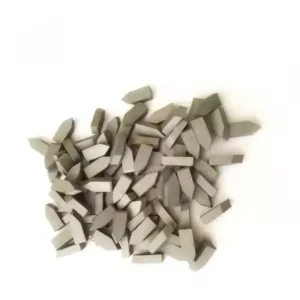
Welding Tips for Turning/Milling Tools
Explore Specifications →
Non-Magnetic Plug Gauge Rods
Explore Specifications →
Original Square Carbide Cutting Inserts
Explore Specifications →
SPUB63B Round Lathe Turning Inserts
Explore Specifications →
Scarifier Cutters & Through-Hole Parts
Explore Specifications →
Spiral Bevel Gear Milling Cutters
Explore Specifications →Clear, direct answers to common questions regarding tungsten pricing, technical grading, factory capabilities, and global fulfillment from our engineering staff.
The price journey from unrefined ore to finished components involves multiple energy-intensive chemical and metallurgical steps: extracting Ammonium Paratungstate (APT), high-temperature reduction to pure W powder, solid-state carburization at 1,400–1,600 °C to synthesize WC crystals, high-energy wet ball-milling with cobalt, spray drying, precision compaction, and 100-bar Sinter-HIP densification. Finished parts often require diamond grinding, which adds cycle time and wheel consumption expenses.
Our factory is located directly in Jiangxi Province, home to the majority of China's domestic tungsten reserves and processing plants. We source virgin materials locally without ocean freight surcharges, import tariffs, or third-party broker markups. Furthermore, running our own automated CNC forming equipment, Sinter-HIP lines, and in-house diamond grinding facilities keeps secondary processing costs low, and we pass these efficiencies on to our customers.
Standard items such as h6 ground solid rods, standard SPUB/SNMX scarfing inserts, and common wear plates are kept in stock for immediate dispatch within 48 to 72 hours. Custom parts requiring new compacting dies, specialized powder formulations, or complex EDM work generally take 12 to 20 business days for complete batch production, Sinter-HIP processing, grinding, and QA sign-off.
Yes. Custom OEM/ODM manufacturing accounts for over 65% of our daily floor production. We accept 2D/3D CAD models (.step, .dwg, .pdf) and provide a technical review within 8 hours. Our engineering team reviews tolerances, evaluates geometries for pressing feasibility, and recommends the optimal carbide grade for your wear and impact conditions.
Every production run undergoes strict metallurgical testing. We test green density, evaluate coercive force (Hc) and magnetic saturation (4πσ) to monitor carbon balance, and verify density via Archimedean displacement. We also perform cross-sectional metallographic microscopy to confirm porosity ratings meet ISO 4505 standards (A00/B00) with zero eta-phase embrittlement.
We support international B2B payment terms including Wire T/T, Irrevocable Documentary Letters of Credit (L/C at sight), and tailored open-account terms for long-term partners. Logistics terms include FOB Shanghai/Shenzhen, CIF, CFR, and door-to-door DDP air/sea freight handling through partners like DHL, FedEx, and global ocean freight carriers.