
High-Performance Cemented Carbide Tooling Catalog (Part 1)
Explore standard and specialized tungsten carbide inserts engineered for pipe welding mills, mechanical tooling, severe-impact rock drilling, and precision turning.

China YG8 Standard tungsten carbide torque gripper inserts for chuck jaws Factory, Factories
View Product
China Tungsten Carbide Plate | OEM Wear-Resistant Cemented Carbide Blank for Tooling & EDM Manufacturers, Supplier
View Product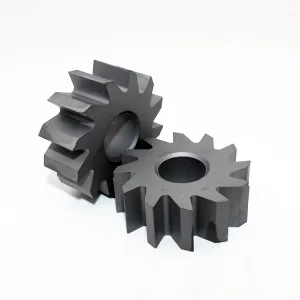
Buy Customize good quality precision metal parts spur gear tiller cultivator parts back gear Manufacturer, Manufacturers
View Product
China Customized tungsten carbide insert for wear parts crushing roll Manufacturer, Suppliers
View Product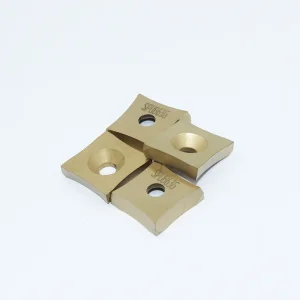
Buy Wear resistant technical round tungsten lathe carbide inserts knife blade Manufacturers, Supplier
View Product
Wholesale Factory wholesale SPUB86 CVD coating tungsten carbide turning inserts Manufacturers, Factories
View Product
China Tungsten cemented carbide cutting inserts for CNC machine tool bar peeling SPUB86I Suppliers, Factories
View Product
Buy Cemented tungsten carbide gripper inserts/tips for mining and diamond drilling Factory, Factories
View ProductGlobal ERW Steel Pipe Manufacturing: Macro Industrial Realities & Flash Removal Dynamics
A comprehensive technical perspective on high-speed continuous external bead conditioning, metallurgical thermal shocks, and production uptime economics across contemporary tube mills.
In modern High-Frequency Welded (HFW) and Electric Resistance Welded (ERW) tube and pipe production, outer-diameter (OD) external weld bead removal—universally referred to as external scarfing—is one of the most operationally unforgiving metal removal applications. Operating directly inline downline of the induction or contact welding coils and squeeze rolls, the external scarfing insert encounters molten, dynamic weld upset flash ranging from 1,000°C to 1,350°C at line speeds often exceeding 60 to 120 meters per minute.
Historically, tube manufacturers across North America, Western Europe, and Asia faced frequent micro-chipping, thermal cracking, and severe crater wear when processing high-strength low-alloy (HSLA) steels, API line pipe grades (X52 through X80), and structural steels. The confluence of extreme mechanical vibration, cyclic thermal shock caused by intermittent coolant immersion, and abrasive high-temperature oxides demands a sophisticated carbide formulation that defies the classical metallurgical trade-off between hardness and transverse rupture strength (TRS).
Thermal Fatigue Mitigation
Combating severe comb-crack propagation generated by rapid cycling between 1,200°C flash shear zones and high-pressure aqueous quenching flushes.
Plastic Deformation Resistance
Substrate enrichment with submicron WC grain structures and refractory binder elements to prevent nose mushing under severe hot shear stresses.
Radial Contour Profiling
High-precision edge radiusing (chamfered, honed, or ground concave) precisely aligned to pipe diameters from 12.7 mm up to 660 mm OD.
Substrate Formulation, Sinter-HIP Densification & Multi-Layer Coatings
How China's premier cemented carbide manufacturers utilize 100% virgin raw materials and vacuum Sinter-HIP processing to eliminate microscopic voids.
The manufacturing architecture of heavy-duty OD scarfing inserts involves a fine balance of powdered metallurgy. Standard metal-cutting inserts fail prematurely in tube flash scarfing because standard grades are optimized for static cutting kinematics. In contrast, pipe scarfing occurs in a dynamic environment where the workpiece is vibrating, moving longitudinally at extreme velocity, and exhibiting variable flash wall thicknesses.
The Sinter-HIP Advantage Over Atmospheric Sintering
In our Jiangxi production facility, inserts such as SPUB63, SPUB86, SNMX19, and SNMG1907 undergo overpressure hot isostatic pressing (Sinter-HIP) at 1,420°C under argon gas pressures reaching 60 to 100 bar. This collapses internal microporosity to less than grade A02/B00 according to ISO 4505 standards. By removing internal void nucleation points, the transverse rupture strength (TRS) increases by up to 28%, effectively eliminating notch failure when cutting irregular weld beads or hard inclusions in the steel coil seam.
Chemical Vapor Deposition (CVD) vs. Physical Vapor Deposition (PVD)
OD scarfing inserts utilize distinct coating mechanisms optimized for specific steel strip alloys and thermal regimes:
| Coating System | Layer Architecture | Micro-Hardness (HV 0.05) | Max Oxidation Temp | Best Suited Application Field |
|---|---|---|---|---|
| Multi-Layer CVD | TiN + Thick MT-TiCN + Columnar α-Al₂O₃ | 2,800 – 3,200 HV | 1,050°C | Heavy-wall API line pipes, HSLA coils, structural tubes running at standard high speeds. Outstanding heat barrier. |
| Advanced Nano-PVD | Gradient AlTiN / AlCrN Nanocomposite | 3,300 – 3,600 HV | 1,150°C | Precision small-diameter tubes, stainless steel (300/400 series), automotive exhaust tubing requiring ultra-sharp burr-free cuts. |
| CVD TiN Coated | Mono/Bilayer High-Adhesion TiN Flash | 2,300 – 2,500 HV | 600°C | General carbon steel tubes (SPUB63M30), furniture tubing, cost-optimized conduit production with continuous flood coolant. |
| Uncoated Micro-Grain | Sintered & Ground Virgin WC + 8-12% Cobalt Matrix | 1,450 – 1,600 HV (Substrate) | 500°C | Interrupted cut flash stripping, non-ferrous tube lines, specialized cold peeling where coating flaking cannot be tolerated. |
Field Scenarios & Operational Engineering Realities
Examining real-world production environments across high-volume tube mills, mechanical steel suppliers, and specialized alloy tube producers.
API 5L / OCTG Line Pipe
Subject to stringent roundness and weld-zone flushness regulations. Inserts like SPUB86 and SNMX25 condition heavy-wall weld seams without inducing gouging or thermal micro-cracking in high-grade X65-X80 pipe bodies.
Automotive Structural Tubing
High-frequency welded hydroforming tubes, side-impact beams, and drive shafts demand 100% flat scarfing without secondary grinding. Micro-honed cutting edges eliminate flash burrs that compromise automated hydroforming dies.
Precision Conduit & HVAC Tubes
Thin-walled carbon and ferritic stainless steel tubing operating at speeds up to 140 m/min. Tool life consistency is imperative to prevent frequent line stoppages on high-output automated roll forming cells.
Engineering Case Study: Reducing Tool Change Downtime on a 114mm OD Tube Mill
A high-frequency tube mill running ASTM A500 Grade B hollow sections suffered from frequent corner chipping using standard P30-grade square scarfing tools. Inserts averaged 4.5 kilometers of continuous weld stripping before requiring indexing. After auditing edge radiusing and transitioning to our SPUB86 CVD Al₂O₃-coated insert with controlled micro-chamfering (K-land), the mill achieved an average continuous run of 14.8 kilometers per cutting edge. This reduced daily tool-change indexing from 4 interventions to just 1 per operational shift, delivering direct savings in mill operational downtime and reducing scrap transition sections by 62%.
Global Compliance Standards & Comprehensive Metallographic Testing
Traceable manufacturing processes certified to international metrology frameworks and metallurgical consistency standards.
Raw Material Purity (100% Virgin)
Zero recycled tungsten powder or secondary scrap. High-purity ammonium paratungstate (APT) refined within Jiangxi ensures zero trace contaminant embrittlement.
Metallographic Microstructure
Every production sintering lot is verified by optical and scanning electron microscopy (SEM) for cobalt pooling, eta-phase (W₃Co₃C) embrittlement, and grain sizing.
Full Dimensional CMM Verification
Key groove alignments, radial arc tolerances, and mounting seating surfaces measured within ±0.01 mm to guarantee rigid seating in standard rotary scarfing toolholders.
Our export compliance framework guarantees that tooling shipped overseas to partners across the United States, Germany, Mexico, Canada, Turkey, and Southeast Asia meets or exceeds ISO 9001:2015 quality management benchmarks. In addition, full material test certificates (MTC) stating chemical analysis, cobalt binder percentages, Rockwell hardness (HRA), density (g/cm³), and coercive force (Hc) accompany every production batch for complete audit traceability.
Technology Roadmap: Next-Generation OD Scarfing Solutions
Anticipating the evolving demands of ultra-high-strength steel tube fabrication, automated IoT tool-condition monitoring, and environmental sustainability.
Functionally Graded Substrates
Integrating cobalt-gradient surface zones that offer 30% higher fracture toughness at the direct cutting edge while maintaining a rigid, ultra-hard core to prevent tool sagging under continuous heavy load.
Cryogenic & High-Entropy Coatings
Development of multielement (AlCrTiSiN) high-entropy nano-structured PVD layers capable of maintaining lubricity and chemical inertness at interfacial cutting temperatures exceeding 1,200°C.
Acoustic Tool Wear Monitoring
Aligning insert geometries with automated digital acoustic emission sensors installed inside the scarfing carriage to alert mill operators precisely before edge breakdown causes out-of-spec seams.
Frequently Asked Engineering & Procurement Questions
In-depth responses regarding insert geometries, wear troubleshooting, grade matching, and custom manufacturing capabilities.
What are the key differences between SPUB, SNMX, and SNMG scarfing insert geometries?
How do you resolve catastrophic thermal cracking (comb cracking) on the scarfing tool edge?
- Transition to a cemented carbide grade with higher thermal conductivity and optimized cobalt binder content (e.g., P35 to P45 toughness range).
- Employ a multi-layer CVD coating incorporating thick alpha-aluminum oxide (α-Al₂O₃), which functions as a high-efficiency thermal barrier.
- Ensure coolant delivery is uniform and continuous; intermittent splashes on the cutting tip exacerbate thermal cycle fatigue significantly more than dry cutting.
Can your factory supply custom concave radiused inserts matched to specific pipe outer diameters?
What causes premature notch wear at the outer boundaries of the weld flash cut?
What lead times and minimum order quantities (MOQ) apply for custom OEM drawings?
High-Performance Cemented Carbide Tooling Catalog (Part 2)
Explore dedicated OD scarfing inserts, specialized square threading blanks, heavy grooving inserts, and wear-resistant carbide plates.

Buy Square Tungsten insert carbide manufacturer threading carbide blank inserts Manufacturer, Manufacturers
View Product
Buy Wholesale high quality tungsten wolfram carbide grooving inserts milling Manufacturers, Suppliers
View Product
China Best price YG8 tungsten carbide gripper inserts for chuck jaw Suppliers, Factories
View Product
China Wholesale SPUB63M30 tin coating scarfing insert carbide od scarfing insert Manufacturer, Factories
View Product
China SPUB86 P40 tungsten carbide scarfing inserts for welded steel pipe Manufacturer, Factory
View Product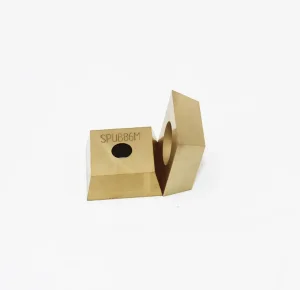
China High quality SPUB86M china indexable tungsten carbide_inserts Manufacturer, Supplier
View Product
China Nickel non magnetic cemented carbide rods with Nickel binder Manufacturer, Manufacturers
View Product