
Featured High-Precision Alloy Products (Batch I)
Explore our primary portfolio of ISO-compliant cemented tungsten carbide inserts, wear parts, and structural alloy blanks engineered for extreme abrasion, high thermal load, and mechanical impact.
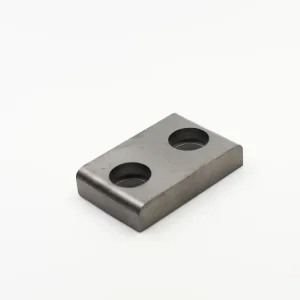

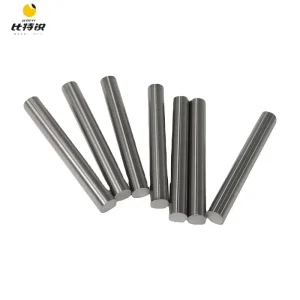
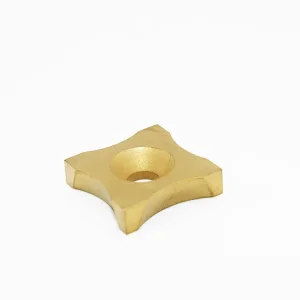
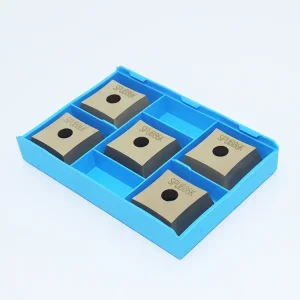
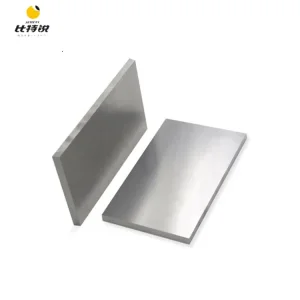

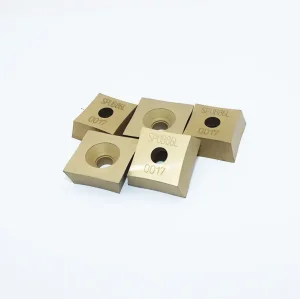
1. Global Commercial & Industrial Status of Advanced Alloys
In modern industrial manufacturing, advanced engineering alloys constitute the baseline material foundation for energy, aerospace, automotive, heavy infrastructure, and micro-electronics production. As global machinery operates under increasingly extreme velocity, thermal stress, and corrosive environments, the global market for specialized industrial alloys—specifically Cemented Tungsten Carbides (WC-Co/Ni), Superalloys, and Cobalt-based Alloys—has expanded beyond traditional metallurgy into highly tailored, nano-engineered structural components.
China has emerged as the definitive centerpiece of global alloy manufacturing, leveraging over 80% of global tungsten reserves, advanced powder metallurgy infrastructure, and vertically integrated supply chains. Chinese manufacturers supply critical wear parts, indexable scarfing inserts, h6-ground solid carbide rods, and non-magnetic components to tier-1 industrial clients across North America, Europe, and the Asia-Pacific region.
2. Comprehensive Classification Architecture of Industrial Alloys
Selecting the appropriate industrial alloy requires matching mechanical properties (hardness, transverse rupture strength, fracture toughness, thermal shock resistance) against operational failure modes (abrasive wear, adhesive galling, thermal cracking, chemical corrosion). Below is a deep structural breakdown of alloy classes manufactured in China:
A. Cemented Tungsten Carbides (WC-Co / WC-Ni)
Formed via liquid-phase sintering of tungsten carbide (WC) grains embedded within a metallic binder phase (Cobalt or Nickel).
- Low Cobalt (YG6 / ISO K10): Optimized for extreme abrasive wear, drawing dies, and cast-iron machining.
- Medium Cobalt (YG8 / ISO K20): Exceptional balance of impact strength and wear life for rock drilling & brazed tips.
- High Cobalt (YG15–YG20): Maximum fracture toughness for cold heading, heavy stamping, and metal forming dies.
- Non-Magnetic Ni-Binder: Replaces ferromagnetic Cobalt with Nickel for magnetic molding and downhole MWD/LWD tools.
B. Nickel-Based & Cobalt-Based Superalloys
Engineered to retain structural integrity at temperatures exceeding 800°C–1100°C under aggressive oxidizing conditions.
- Inconel & Hastelloy Formulations: Nickel-chromium-molybdenum matrices for chemical processing and aerospace turbine hot-sections.
- Stellite (Cobalt-Cr Alloys): Outstanding resistance to galling, cavitation, and unlubricated sliding wear at elevated heat.
- High-Entropy Alloys (HEAs): Multi-principal element alloys offering extreme structural stability under radiation and cryogenic stress.
C. Titanium & Refractory Heavy Alloys
Combining high strength-to-weight ratios with nuclear radiation shielding capabilities and biocompatibility.
- Tungsten-Nickel-Iron (W-Ni-Fe): High-density (17.0–18.5 g/cm³) alloys for inertial counterweights and radiation shields.
- Tungsten-Copper (W-Cu): Pseudo-alloys tailored for electrical discharge machining (EDM) electrodes and microelectronic heat sinks.
- Titanium Gr. 5 (Ti-6Al-4V): High-strength structural alloy for aerospace and biomedical devices.
3. Quantitative Technical Performance & Material Selection Matrix
To streamline engineering specification, the following data matrix cross-references microstructural parameters, mechanical thresholds, and primary operational targets across standard industrial alloy grades:
| Alloy Grade Class | Binder / Composition % | Density (g/cm³) | Hardness (HRA / HV) | TRS (MPa) | Fracture Toughness ($K_{IC}$) | Primary Industrial Application |
|---|---|---|---|---|---|---|
| WC-Co Ultrafine (YG6X) | 6% Co, 94% WC (0.5µm) | 14.9 - 15.1 | 92.5 - 93.5 HRA | 2600 - 3000 | 8.5 - 9.5 $MPa\cdot m^{1/2}$ | Chilled cast iron, PCB micro-drills, high-speed finish turning |
| WC-Co Standard (YG8) | 8% Co, 92% WC (1.5µm) | 14.6 - 14.8 | 89.5 - 90.5 HRA | 2800 - 3200 | 10.5 - 12.0 $MPa\cdot m^{1/2}$ | Heavy steel tube scarfing (SPUB/SNMX), rock drill tips, lathe tools |
| WC-Co Heavy Impact (YG15) | 15% Co, 85% WC (2.5µm) | 13.9 - 14.1 | 87.0 - 88.5 HRA | 3400 - 3800 | 15.0 - 18.0 $MPa\cdot m^{1/2}$ | Cold heading dies, punching pins, stamping tools, heavy shear blades |
| WC-Ni Non-Magnetic | 6-10% Ni binder phase | 14.5 - 14.9 | 88.0 - 91.0 HRA | 2400 - 2900 | 9.0 - 11.0 $MPa\cdot m^{1/2}$ | MWD/LWD oilwell sensors, magnetic powder compacting dies, acid pump seals |
| Inconel 718 (Ni-Superalloy) | 52% Ni, 19% Cr, 5% Nb | 8.19 | 36 - 44 HRC | 1100 - 1400 | 100+ $MPa\cdot m^{1/2}$ | Gas turbine blades, aerospace exhausts, high-pressure subsea valves |
| W-Cu Pseudo-Alloy (W80Cu20) | 80% W, 20% Cu matrix | 15.2 - 15.6 | 220 - 240 HV | 700 - 850 | 18.0 - 22.0 $MPa\cdot m^{1/2}$ | High-voltage electrical contacts, EDM electrodes, semiconductor heat sinks |
4. Advanced Sinter-HIP Metallurgy & Processing Technology Roadmap
Achieving theoretical density and zero microporosity in tungsten carbide and hard alloy components demands rigorous metallurgical control across every manufacturing stage. Chinese precision factories utilize advanced Overpressure Sinter-HIP (Hot Isostatic Pressing) processing combined with nanoscale binder phase engineering.
Stage I: Spray Drying & Precision Compaction
Virgin tungsten metal (99.95% purity) is carburized into WC powder with tightly controlled grain size distributions (from 0.2µm nano-grain to 5.0µm coarse grain). Combined with organic paraffin wax binders in high-energy ball mills, the slurry undergoes spray drying towers to form free-flowing spherical granules. CNC automatic presses and Isostatic Pressing (CIP) shape green compacts with uniform density profiles.
Stage II: Overpressure Sinter-HIP Sintering (1450°C / 10 MPa)
The green compacts are processed in integrated Sinter-HIP furnaces. As temperatures reach the liquidus point of the Cobalt binder (approx. 1380°C–1450°C), High-purity Argon gas is injected at 60–100 bar pressure. This collapses internal micro-voids, eliminates A/B/C type porosity down to ISO 4499 Class A00, and enhances Transverse Rupture Strength (TRS) by up to 30%.
Stage III: Precision CNC Grinding & Micro-Geometry Finishing
Post-sintered blanks are ground using diamond wheel CNC machinery (Centerless, Surface, Profile, and Internal Grinding). Rod blanks achieve h6 diameter tolerances (< 0.004 mm) with mirror surface roughness ($R_a < 0.1 \mu m$). Edge honing, radius chamfering, and polished chip-breaker geometries optimize cutting forces during machining.
Stage IV: PVD / CVD Hard Functional Coatings
To combat high cutting temperatures, wear components undergo Physical Vapor Deposition (PVD) or Chemical Vapor Deposition (CVD). Advanced Nano-structured coatings—such as TiAlN, AlTiN, AlCrN, and Diamond-Like Carbon (DLC)—raise surface hardness above 3000–3500 HV, forming thermal barriers that block cobalt binder diffusion during high-speed operations.
5. Sector-Specific Application Scenarios & Case Engineering
Different types of hard alloys and carbide formulations serve specialized operational roles across critical global industries:
Steel Processing & Tube Scarfing
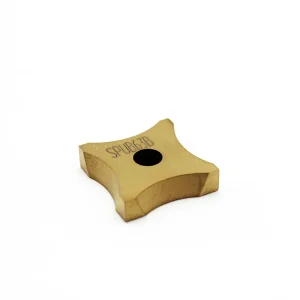
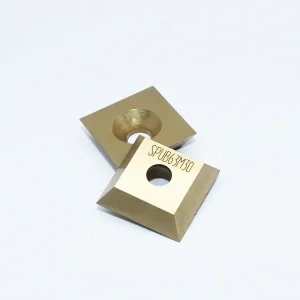
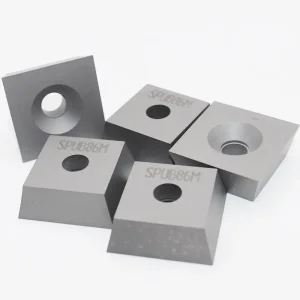
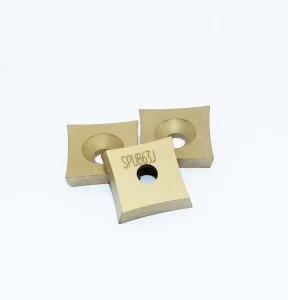
Indexable tungsten carbide scarfing inserts (e.g., SPUB63, SPUB86, SNMX1907, SNMG series) perform heavy outer diameter (OD) and inner diameter (ID) weld seam removal on high-frequency welded steel pipes at elevated temperatures (800°C+). Tough Co-enriched grades prevent thermal cracking and catastrophic chipping.
Oil & Gas Drilling / Downhole Mining
YG8 and YG11C carbide buttons, drill bit inserts, and non-magnetic sleeve bearings endure combined abrasive rock erosion, severe hydraulic shock, and corrosive drilling muds in deep oilfield downhole assemblies (MWD/LWD).
Semiconductor & Precision Dies
Sub-micron WC plates and ultra-dense blocks (100x100x60mm) are wire-EDM machined into lead-frame stamping dies, IC packaging molds, and rotor/stator punching tools, achieving millions of hit cycles without dimensional degradation.
Featured High-Precision Alloy Products (Batch II)
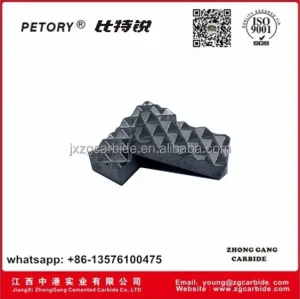
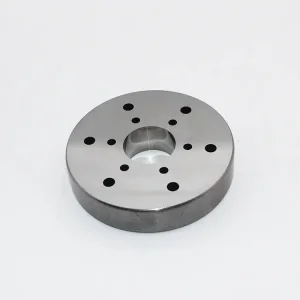
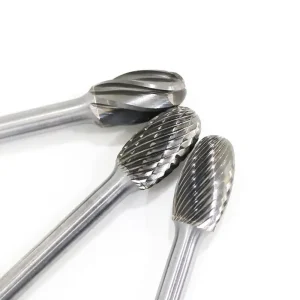
Explore our specialized inventory of tube scarfing inserts, chuck jaw grippers, custom pipe fittings, woodworking buttons, and rotary file blanks available for OEM customization.

6. Manufacturing Excellence: Jiangxi Zhongfu Cemented Carbide Co., Ltd.
Backed by over 24 years of specialized carbide powder metallurgy experience, Jiangxi Zhongfu Cemented Carbide Co., Ltd. operates a state-of-the-art 5,000 m² production facility in Nanchang, Jiangxi Province, China. Positioned directly within China's primary tungsten raw material hub, Zhongfu delivers end-to-end OEM/ODM manufacturing integrity—from 100% virgin WC powder formulation to sub-micron diamond grinding and metallographic quality control.
100% Virgin Material Guarantee
We strictly enforce a zero-recycled-scrap policy. All products utilize 100% virgin tungsten carbide powder and pure Cobalt/Nickel binders, guaranteeing structural homogeneity, zero thermal cracking, and batch-to-batch consistency.
Advanced In-House QA Lab
Every production lot undergoes rigorous destructive and non-destructive testing: metallographic micro-structure analysis, magnetic saturation checks (Co-phase verification), coercivity testing, and TRS breaking stress validation.
Global Export Capabilities
Serving industrial partners across 20+ countries (USA, Germany, Canada, Mexico, Australia, Japan), our engineering department guarantees technical response times of under 8 hours with full CAD/CAM drawing review.
7. Frequently Asked Technical & Procurement Questions (FAQ)
Direct answers from our senior metallurgical engineering team to assist procurement managers and tooling designers during grade selection and RFQ evaluation.