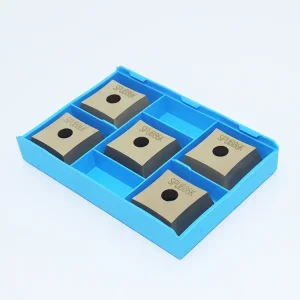
Featured Precision Tooling & Carbide Components
Explore our foundational line of HIP-sintered tungsten carbide components, specialized scarfing inserts, non-magnetic rods, and die-wear blanks fabricated with near-zero porosity.

SPUB86 P40 Scarfing Inserts for Welded Steel Pipe
View Specifications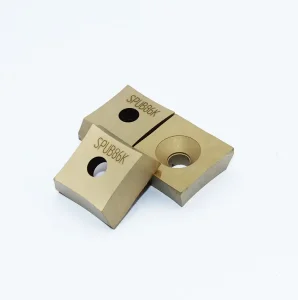
Wholesale Carbide Scarfing Inserts SPUB86 Series
View Specifications
Non-Magnetic Carbide Rods for Water Meter Shafts
View Specifications
Customized Hard Alloy Precision Wear Parts
View Specifications
YG8 Tungsten Carbide Gripper Inserts for Chuck Jaws
View Specifications
Carbide Cold Heading Molds, Punches & Drawing Dies
View Specifications
SPUB86C CNC Diamond Metal Cutting Inserts
View Specifications
SPUB86 CVD Coated Tungsten Carbide Turning Inserts
View SpecificationsThe Structural Evolution of Cemented Carbide Rod Metallurgy
In modern precision manufacturing, solid tungsten carbide (WC-Co) rods are the vital foundation for rotating round cutting tools—including micro-drills, high-efficiency end mills, deep-hole reamers, and customized surgical burs. As cutting conditions accelerate toward High-Speed Machining (HSM) and dry-cutting environments, the metallurgical benchmarks for cemented carbide blanks have shifted dramatically. The core challenge in powdered metallurgy has always centered on overcoming the inverse relationship between hardness (wear resistance) and transverse rupture strength (fracture toughness).
Historically, conventional coarse-grain alloys (grain size > 2.0 μm) struggled with rapid micro-chipping along the cutting edge when subject to severe thermal cyclic shock and cyclic deflection loads. Contemporary industrial advancements driven by Chinese sintering science focus heavily on Ultrafine (0.5–0.8 μm) and Nano-Grain (< 0.4 μm) matrix designs. By deploying targeted Grain Growth Inhibitors (GGIs)—specifically VC (Vanadium Carbide) and Cr3C2 (Chromium Carbide)—metallurgists suppress the Ostwald ripening phenomenon during liquid-phase sintering. The outcome is an ultra-dense contiguous tungsten carbide skeleton characterized by mean free cobalt paths under 100 nanometers, yielding a tool substrate capable of retaining edge radius sharpness (rβ < 2 μm) without micro-flaking during intense 5-axis CNC passes.
Furthermore, the mainstream adoption of Overpressure Sinter-HIP technology (10 MPa Argon atmospheric pressure at 1420°C–1460°C) has established near-zero internal micro-porosity (rated superior to ISO A02-B00-C00). This hot isostatic consolidation collapses latent sub-surface micro-voids, elevating the Transverse Rupture Strength (TRS) beyond 4,000 MPa and providing exceptional cyclic fatigue endurance under extreme shear stresses.
Submicron Sintering Parameters
Achieving predictable tool life requires absolute uniformity across the entire rod volume, from periphery to centerline.
- Raw Material Purity: 99.95% pure virgin ammonium paratungstate (APT) reduction powders.
- Internal Sinter-HIP Porosity: Controlled to ASTM B276 Class A00 rating.
- Magnetic Saturation (4πσ): Strictly balanced between 88% and 94% to avoid brittle eta (η) phases and free carbon porosity.
- Coercivity (Hc): Maintained within 260–380 Oe for fine and submicron carbide grades.
Navigating Global Corporate Procurement: TCO Over Price-Per-Kilo
Modern procurement directors in Tier-1 aerospace, mold fabrication, and automotive manufacturing look beyond nominal quote figures to evaluate Total Cost of Ownership (TCO), predictable batch consistency, and uninterrupted supply security.
Minimizing Downtime & Cycle Drift
In unmanned lights-out multi-axis production centers, a premature edge fracture or dimensional runout deviation above 2 microns cascades into unrecoverable scrapped aerospace workpieces and unscheduled multi-hour tooling setups. Premium tungsten carbide rods provide stable flank wear curves ($V_B$), letting toolmakers establish dependable automated cycle lifetimes.
Rigorous Traceability Protocols
Engineering contracts demand full material certs. Every shipment is verified through full-spectrum metallographic reports, batch density logs, coercive force documentation, and submicron grain size histograms. This transparent audit trail eliminates non-conformance disputes across defense and medical instrumentation supply tiers.
Geopolitical Supply Resiliency
With global supply chain vulnerabilities rising, direct partnerships with premier Chinese carbide integrated manufacturers safeguard production continuity. Access to primary upstream deposits and integrated downstream finishing eliminates intermediary delays and shields corporate supply pipelines from volatile market swings.
China Factory 4.0: Upstream Integration & Precision Grinding
The technological evolution of China's cemented carbide manufacturing sector has outgrown basic raw material export models. Centered within Jiangxi’s rich tungsten industrial corridor, our facilities operate an unbroken metallurgical value chain spanning mineral refinement, virgin-purity ammonium paratungstate (APT) synthesis, precision thermal carburization, automated wax blending, Sinter-HIP processing, and sub-micron grinding operations.
By transitioning to Industry 4.0 digital automation, our manufacturing line integrates real-time laser monitoring for extrusion straightness, closed-loop PLC thermal regulation in 100-bar pressure furnaces, and automated multi-axis centerless CNC grinding cells. This integrated operational structure drives down scrap rates, achieves consistent batch-to-batch repeatability, and eliminates third-party markups.
100% Virgin Tungsten Matrix
We prohibit secondary recycled zinc-recovery scraps. Every rod blank is synthesized exclusively from first-reduction tungsten and extra-fine cobalt powder, preventing trace element contamination (Fe, Ni, Ca) that weakens grain boundary integrity.
Proprietary Coolant Channel Extrusion
Utilizing precision extrusion presses, we formulate solid rods, straight coolant ducts, and 30° / 40° helical twin coolant channels. Our patented anti-twisting drying dies maintain pitch precision throughout the sintering cycle.
Tungsten Carbide Rod Grade Selection & Mechanical Matrix
Selecting the appropriate cemented carbide grade requires balancing binder proportion, tungsten grain size, and mechanical strength against the specific cutting conditions and workpiece material.
| Alloy Grade | Cobalt Content (wt%) | Grain Size (μm) | Density (g/cm³) | Hardness (HRA / HV30) | TRS (N/mm² / MPa) | Primary Industrial Application |
|---|---|---|---|---|---|---|
| UF-06 (Nano) | 6.0% | 0.2 – 0.4 | 14.95 | 93.5 / 1920 | 3,800 | Finishing chilled cast iron, high-Si Al alloys, graphite, PCB routing tools. |
| UF-10 (Submicron) | 10.0% | 0.5 – 0.7 | 14.45 | 91.8 / 1640 | 4,200 | Universal milling & drilling of hardened steels (< HRC 55), stainless steels, and tool steels. |
| UF-12 (Toughness) | 12.0% | 0.6 – 0.8 | 14.15 | 90.5 / 1500 | 4,400 | Interrupted heavy cutting, roughing end mills, high-impact titanium & nickel alloy milling. |
| YG8 (Standard) | 8.0% | 1.2 – 1.6 | 14.70 | 89.5 / 1420 | 3,200 | Brazed tooling, chuck jaw gripper inserts, rock drilling components, mining wear buttons. |
| YG15 (Heavy Impact) | 15.0% | 1.8 – 2.5 | 14.00 | 87.0 / 1200 | 3,600 | Cold heading punch dies, severe stamping punches, heavy-gauge wire drawing dies. |
| NM-90 (Non-Magnetic) | 8.5% (Ni Binder) | 0.8 – 1.2 | 14.65 | 89.0 / 1380 | 2,900 | Water meter shafts, magnetic sensor housings, downhole MWD oilfield steering tools. |
* Note: Nominal values are based on Sinter-HIP conditions. Mechanical properties can be tailored via custom binder mixes and specialized carbon balance adjustments.
Localized Application Scenarios & Real-World Machining Conditions
Modern carbide rod formulations are engineered around real cutting physics: abrasive flank wear, thermal cracking from intermittent cooling, and mechanical shock during severe chip evacuations.
Aerospace Superalloys & CFRP Stacks
Machining heat-resistant superalloys like Inconel 718 and Titanium Ti-6Al-4V subjects cutting edges to temperatures over 900°C alongside high mechanical shear. Our UF-10 submicron rods provide elevated hot hardness to limit thermal plastic deformation, while specialized twin helical coolant channels flush chips directly away from the cut zone to stop notch wear at the depth-of-cut line.
Micro-Drilling for Electronic PCBs
Printed circuit boards and semiconductor carriers require multi-layer drilling with diameters down to 0.1 mm, operating at spindle speeds exceeding 200,000 RPM. Our UF-06 nano-grain rods feature an ultra-dense tungsten distribution that prevents bending deflection, eliminating hole-wall smear and delivering runouts under 1 μm.
High-Impact Fastener Cold Heading Dies
Automotive and industrial bolt forming uses high-volume mechanical impacts that will shatter brittle substrates. Our specialized coarse-grain YG15 and YG20 formulations provide 15–20% cobalt binder buffering, giving cold-heading punches the yield strength needed to absorb cyclic shock while maintaining tight die bores over hundreds of thousands of cycles.
Non-Magnetic Fluid Metering & MWD Downhole
Measurement-While-Drilling (MWD) downhole tools and pulse telemetry systems require abrasion-resistant components that do not interfere with magnetic direction-sensing instruments. By substituting cobalt with a non-magnetic nickel-chromium alloy binder, our NM-90 rods deliver high wear life while keeping relative magnetic permeability ($\mu_r$) under 1.005.
Frequently Asked Questions: Technical & Operational Insights
Detailed answers addressing core metallurgical formulations, dimensional tolerance standards, and practical procurement guidelines for industrial buyers.
Conventional vacuum sintering relies primarily on capillary action during liquid phase formation to densify green compacts, often leaving microporosities (ISO class A04 or higher) that act as stress concentration notches. Sinter-HIP integrates a high-pressure Argon environment (up to 10 MPa or 100 bar) directly into the high-temperature soak cycle. This external isostatic force collapses residual interior voids, eliminating porosity and lifting Transverse Rupture Strength (TRS) by 20% to 35% compared to conventionally sintered carbide blanks.
When machining steels hardened above HRC 50, tool failure is typically driven by mechanical shock and abrasive rubbing rather than gross mechanical fracture. Nano and ultrafine carbide grains (0.2–0.6 μm) establish a significantly harder, denser boundary matrix that resists micro-cleavage along the tool edge. This stability lets grinders polish cutting edges down to micro-radii (rβ < 2 μm), ensuring lower cutting forces, minimal mechanical friction, and longer PVD coating life.
We deliver centerless ground rods holding ISO 286-2 h6 diametrical tolerances as standard, with precision h5 tolerances available for tight toolholder shrink-fit requirements. Surface roughness is kept below Ra 0.1 μm, with total radial runout held under 0.002 mm across the full rod length, minimizing balancing errors on dynamic high-speed CNC spindles.
Cobalt is naturally ferromagnetic. In applications like downhole electromagnetic telemetry, measurement-while-drilling (MWD) logging subs, or sensitive fluid flowmeter shafts, cobalt binders introduce parasitic electromagnetic interference. Replacing cobalt with a nickel or nickel-chromium alloy binder retains chemical binding integrity and hardness while reducing relative magnetic permeability ($\mu_r$) to near unity (< 1.005), with the added benefit of improved corrosion resistance in acidic or marine fluids.
Yes. Beyond standard solid rods, we run continuous screw-extrusion lines capable of pressing single central coolant holes, dual parallel straight channels, and twin or triple helical holes with 30-degree and 40-degree helix angles. Sintered helix shrinkages are modeled through computer simulations to hit true cross-sectional drill positions and prevent cross-hole wall blowouts during tool fluting.
Industrial Ground Rods, Tool Blanks & High-Wear Assemblies
Complete your tooling requirements with our structural nano-grain round bars, railway maintenance tines, die plates, and ultra-high-pressure fluid-handling components.

Dia 8 × 330 mm Nano Grain Rods for 0.25 µm Tooling
View Specifications
Carbide Tamping Tines for Railway Construction
View Specifications
P30 Carbide Sheet for Stamping Dies 200×200×10mm
View Specifications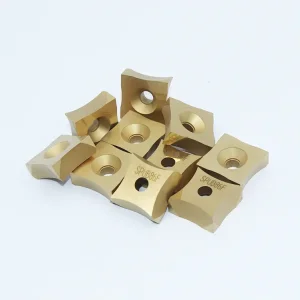
Factory Direct Carbide Turning Tool Inserts
View Specifications
SPUB86C P40 Uncoated Blank Carbide Inserts
View Specifications
Water Jet Nozzle Seat Valves & Hardware Parts
View Specifications
YG8 Heavy-Duty Chuck Jaw Gripper Inserts
View Specifications