
High-Precision Tungsten Carbide Products (Part I)
Explore high-wear cemented carbide inserts, custom bevel gears, submicron plug gauges, and high-tensile scarfing blanks engineered for severe industrial service.
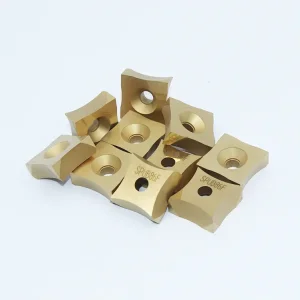
China Factory sale tungsten carbide insert cutting tools turning tool Manufacturer, Supplier
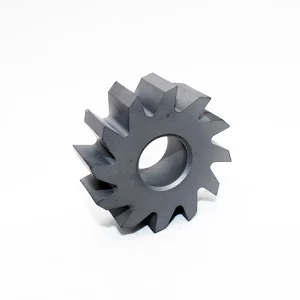
Buy Wholesale custom nonstandard metal worm gears bevel gears pinion gears Suppliers, Factories

Wholesale China Non-magnetic Solid Cemented Carbide Pin Plug Gauges Rod Manufacturers, Factories

Wholesale China best price custom tungsten carbide steel cutters concrete scarifier blade Supplier, Factory

China 2020 Tungsten carbide whole seller Tungsten carbide square thread inserts tools Factory, Factories

China Wholesale insert carbide manufacturer threading carbide blank inserts Manufacturers, Factory

Buy Wholesale SPUB63M30 tungsten carbide welding inserts square for needle holders Suppliers, Factory
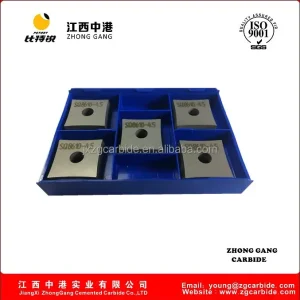
Wholesale carbide OD tube scarfing insert SDUW for weld bead steel tube Manufacturer, Factories
Macro Trends & Technological Evolution of Cemented Carbide
Tungsten carbide (WC-Co/WC-Ni) serves as the primary material of modern high-performance tooling, wear systems, and severe-environment mechanical engineering.
Submicron & Nano-Grain Sintering
The global tooling sector has transitioned rapidly toward ultrafine and nano-grained tungsten carbide (0.2–0.5 µm). By refining the WC crystal structure, mechanical engineers achieve simultaneous increases in microhardness (>92 HRA) and transverse rupture strength (>4,000 MPa).
- Eliminates edge-chipping during high-feed CNC turning.
- Yields optical-grade mirror finishes down to Ra 0.05 µm.
- Significantly enhances tool life in aerospace composites machining.
Corrosion & Non-Magnetic Formulations
Traditional cobalt binders exhibit chemical leaching in acidic slurry and cause interference near MWD/LWD drilling magnetometers. Nickel and proprietary complex binders solve this challenge permanently without degrading fracture toughness.
- Permeability values below µr 1.005 for telemetry equipment.
- Passivated resistance against petrochemical sulfide corrosion.
- Eliminates galvanic degradation in food processing plants.
HIP (Hot Isostatic Pressing) Densification
Standard vacuum sintering leaves microscopic voids (A02-B02 porosity). Advanced Sinter-HIP processing exerts argon pressures up to 10 MPa at liquidus sintering temperatures, collapsing all microporosity and maximizing structural fatigue limits.
- Near 100% theoretical density across large cross-sections.
- Near-zero risk of internal cracking during Wire-EDM wire cutting.
- Guarantees reliable service under heavy cyclic impact loading.
Global Enterprise Sourcing Architecture
A systematic framework for evaluating total cost of ownership (TCO), supplier manufacturing capability, batch consistency, and supply chain continuity.
100% Virgin Powder Traceability
High-end tooling operations demand absolute raw material purity. Suppliers utilizing recycled black scrap suffer from inconsistent grain growth and unpredictable brittle fracture in production environments.
- Certified chemical assay reports per production batch.
- Zero uncontrolled secondary scrap contamination.
- Tight stoichiometric control over carbon balance (W₂C free).
Geometric Tolerancing & h6 Grinding
Precision CNC tool bodies and mold dies require strict diametrical and linear consistency. Centerless grinding to ISO h6 tolerances eliminates toolholder runout and preserves spindle bearing longevity.
- Submicron laser inspection for concentricity and circularity.
- Cylindrical grinding capabilities spanning Ø1 mm to Ø40 mm.
- Profile chamfering, center-drilling, and custom flute ground steps.
Total Cost of Ownership (TCO) Optimization
Initial acquisition costs represent less than 15% of the total operating expense in machining and cold-forming operations. Extended tool life directly slashes machine downtime and re-tooling labor.
- Multiplied production runs between insert indexing cycles.
- Consistent tool wear dynamics for unattended lights-out CNC machining.
- Direct factory tier pricing bypassing intermediary markups.
| Standard Grade | Binder (Co/Ni %) | Density (g/cm³) | Hardness (HRA) | TRS (MPa) | Primary Industrial Uses |
|---|---|---|---|---|---|
| YG6 (ISO K10-K20) | 6.0% Co | 14.85 – 15.00 | 90.5 – 91.5 | ≥ 2,100 | Fine turning of chilled cast iron, non-ferrous metals, precision drawing dies, guide bushings. |
| YG8 (ISO K20-K30) | 8.0% Co | 14.60 – 14.80 | 89.5 – 90.5 | ≥ 2,400 | Heavy roughing of iron/steel, concrete scarifier blades, rock drill inserts, gripper chuck pads. |
| YG15 (ISO K40) | 15.0% Co | 13.90 – 14.15 | 87.0 – 88.0 | ≥ 2,900 | Stamping punches, cold-heading dies, metal extrusion components subject to high cyclic stress. |
| YG20 (Impact Class) | 20.0% Co | 13.40 – 13.65 | 85.0 – 86.5 | ≥ 3,200 | Extreme-impact progressive dies, heavy forging tools, large thick-walled EDM block blanks. |
| YN8 (Non-Magnetic) | 8.0% Ni Binder | 14.50 – 14.75 | 88.5 – 89.5 | ≥ 2,200 | MWD/LWD directional drilling tools, magnetic media compaction dies, high-corrosion fluid seals. |
Macro-Industrial Solutions & Sector Blueprints
Engineered tungsten carbide assemblies solving severe mechanical wear, thermal fatigue, and chemical degradation across mission-critical vertical industries.
High-Speed Tube & Pipe Mills
Continuous resistance welded (ERW) steel tube production demands rugged OD and ID scarfing inserts capable of withstanding molten slag and high thermal shocks.
- Inserts: SDUW, SPUB63, SPUB86, SNMX series.
- Thermal Stability: TiN and AlTiN multi-layer PVD coatings.
- Performance: Continuous edge stability at 120 m/min pipe speeds.
Aerospace & Defense Tooling
Machining titanium alloys (Ti-6Al-4V) and carbon-fiber-reinforced polymers (CFRP) requires razor-sharp cutting geometries and ultra-dense substrate cores.
- Rods: Ultrafine Ø1–40 mm solid blanks with h6 tolerance.
- Substrate: Grain size ≤ 0.4 µm with balanced cobalt content.
- Finish: Centerless diamond lapped finish down to mirror grade.
Civil Engineering & Road Milling
Scarifying concrete pavements and milling asphalt roadbeds subjects cutter tips to aggressive three-body abrasive wear and catastrophic shock loading.
- Components: Tungsten carbide tipped flail scarifier blades.
- Grade: High-impact YG8/YG11 coarse grain formulations.
- Joining: Vacuum furnace brazing with high shear strength silver-copper alloys.
Metal Forming & Precision Dies
Progressive blanking, deep drawing, and cold heading of stainless alloys require die inserts with high compressive strength and extreme fatigue endurance.
- Tooling: Punch inserts, blind plates, wear rings, redraw dies.
- Integrity: Zero-porosity Sinter-HIP blocks ideal for precision EDM.
- Hardness Profile: Tuned between 86.0 and 89.0 HRA to prevent chipping.
End-to-End Production Process & Quality Control
From nanoscale wet-milling through precision Sinter-HIP furnaces to sub-micron optical metrology: a 5-step zero-defect production methodology.
Powder Synthesis
High-purity virgin tungsten powder blended with cobalt or nickel binders in computer-controlled ball mills with paraffin wax plasticizers.
CNC Compaction
Uniaxial automatic hydraulic pressing and cold isostatic pressing (CIP) to achieve uniform green density and accurate shrinkage ratio control.
Overpressure Sinter-HIP
Dewaxing, vacuum sintering, and 10 MPa argon pressure consolidation at 1450°C to eliminate all structural voids and micro-flaws.
Precision Grinding
High-precision centerless grinding, CNC surface grinding, Wire-EDM profiling, and lapping to h6/h5 diametrical tolerances.
Metrology & Assay
Metallographic microscope inspection of crystal grain distribution, coercivity testing, magnetic saturation, and ultrasonic flaw detection.
Localized Support, Export Protocols & Compliance
Ensuring frictionless international trade, rapid logistics cycles, and regulatory conformity across North America, Europe, and Asia-Pacific.
Export Logistics & Protective Packaging
Industrial tungsten carbide components feature high mass density and brittle sharp edges, requiring specialized export packing protocols.
- Custom vacuum-sealed anti-corrosion skin packs.
- Reinforced high-impact inner foam compartmentalization.
- ISPM-15 compliant export fumigation-free wooden cases.
- Express courier (DHL/FedEx/UPS) & consolidated sea/air freight.
Conflict Minerals & ESG Governance
Global supply chain security requires certified non-conflict raw materials conforming to stringent international trade and ethical benchmarks.
- Full conformity with OECD Due Diligence Guidance protocols.
- RMI (Responsible Minerals Initiative) compliance for Tungsten (W).
- RoHS & REACH chemical compliance across all binder chemistries.
- ISO 9001:2015 certified metallurgical quality management systems.
Localized Rapid Engineering Support
Eliminate project communication barriers through direct access to senior metallurgical and tooling engineers fluent in industrial technical English.
- Drawing reviews (CAD/STEP/PDF) completed within 8 hours.
- Custom powder formulation development for proprietary projects.
- DFM (Design for Manufacturability) cost-reduction recommendations.
- Rapid prototyping with dedicated sample production queues.
Next-Generation Technology & R&D Horizons
Strategic advancements driving the cemented carbide industry over the next decade, from gradient structures to additive manufacturing integration.
Functionally Graded Carbides (FGC)
Revolutionary sintered components featuring continuous compositional variation. The exterior zone maintains high cobalt depletion for peak abrasion resistance (>93 HRA), while the interior substrate retains high cobalt binder for maximum impact resilience.
Binder-Jet 3D Additive Printing
Overcoming the geometric constraints of traditional pressing dies. Binder jetting enables production of internal cooling helical passages in drilling rods and highly complex lightweight conformal wear plates without costly tooling molds.
High-Entropy Alloy (HEA) Binders
Replacing standard cobalt with multi-principal element alloys (FeCoNiCrAl). This breakthrough dramatically improves high-temperature oxidation thresholds above 900°C and eliminates toxic cobalt reliance for environmentally certified operations.
High-Precision Tungsten Carbide Products (Part II)
Explore heavy-duty round rod blanks, centerless peeling inserts, YG8 gripper chuck pads, and customized carbide reducer plate assemblies.

Buy Tungsten Carbide Round Rod Blanks for End Mills Manufacturer, Manufacturers

China Tungsten cemented carbide cutting inserts for CNC machine tool bar peeling SPUB86I Suppliers, Factories

China SPUB86C P40 uncoated blank cemented tools carbide inserts Suppliers, Factory
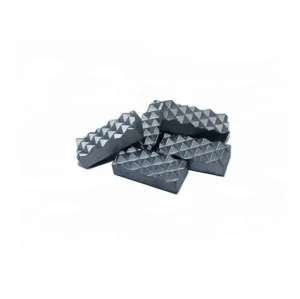
Buy YG8 carbide gripper inserts Manufacturers, Factory
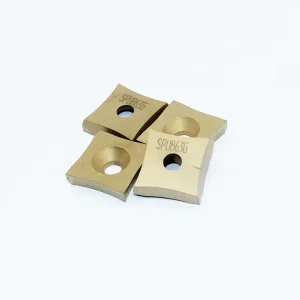
Buy Wear resistant SPUB 63G tool holder insert carbide cutting inserts turning tools Manufacturer, Supplier

Buy Customized size style tungsten cemented carbide carbon steel reducer blind plate flange Factory, Factories

China Tungsten Carbide Round Rod H6 Ground Ø1-40mm Solid Carbide Blanks Manufacturer, Supplier

China SPUB86F TiN coating tungsten carbide tube scarfing insert Manufacturers, Suppliers
Frequently Asked Engineering & Sourcing Questions
Authoritative technical answers directly addressing material selection, manufacturing tolerances, non-magnetic properties, and procurement guidelines.
What factors determine whether to specify submicron WC rods over standard grain grades?
How does nickel binder achieve non-magnetic performance in carbide parts?
Why is overpressure Sinter-HIP necessary compared to conventional vacuum sintering?
Can non-standard tungsten carbide parts be produced directly from customer 2D/3D CAD drawings?
What are the key technical differences between YG6, YG8, YG15, and YG20 grades?
Request a Custom Carbide Technical Consultation
Submit your component drawings, working conditions, or grade requirements. Our senior metallurgical engineering team delivers detailed DFM reviews and commercial quotations within 8 hours.