
Featured Industrial Cutting Tools & Inserts
Direct from China's premier cemented carbide precision tooling facilities. Micron-toleranced, CVD/PVD coated, and HIP-sintered blanks engineered for high-feed roughing and super-finish operations.






Comprehensive Classification: Types of Industrial Cutting Tools
Modern metal-cutting, profiling, and machining ecosystems demand tailored tool geometry, metallurgical integrity, and surface treatment regimes. Selecting between solid carbide, indexable inserts, and brazed tools directly impacts cycle times, thermal dissipation, and workpiece surface roughness (Ra).
1. Indexable Turning & Lathe Inserts
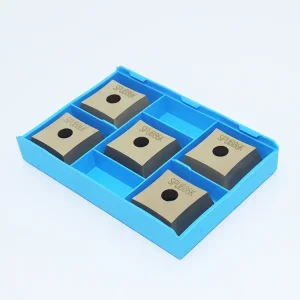
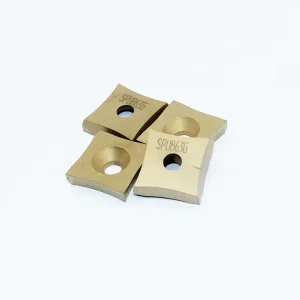
Engineered for high-volume CNC turning centers. Indexable inserts (such as SPUB86, SPUB63, SNMX, and SNMG geometry families) feature replaceable multi-edge tips. When a cutting edge suffers thermal crater or flank wear, indexation brings a virgin cutting edge into alignment, minimizing machine downtime and tooling stock costs across mass-production runs.
2. Heavy-Duty Tube Scarfing Cutters
Specifically designed for high-frequency ERW (Electric Resistance Welded) tube lines and automated pipe mills. Tube scarfing inserts (like SPUB86C P40 and SPUB63M30) encounter abrasive weld seam flash at temperatures exceeding 900°C. Made from specialized sub-micron grain tungsten carbide binders that resist catastrophic spalling and mechanical shock.
3. Solid Hard Alloy Rods & End Mill Blanks
Precision-ground to h6 tolerance (Ø1–40 mm), solid tungsten alloy bars serve as the structural precursor for aerospace micro-drills, high-speed ball-nose cutters, and reamers. Nano-grain structural formulation (0.25–0.4 µm WC) provides the exact balance of transverse rupture strength (TRS > 4,200 MPa) and hardness (~92 HRA) for machining nickel-based superalloys.
4. Brazed Tool Tips & Lathe Welding Blades
Cost-effective cutting tips brazed via silver-copper shims onto structural steel shanks. Heavily deployed in rough cast iron turning, railway wheel re-profiling, foundation drilling, and timber harvesting. Standard grades like YG6, YG8, and YT15 guarantee resilient cutting impact performance under intermittent cut loads.
5. Cemented Carbide Plates & EDM Blanks
Flat wear-resistant blocks used as blanking dies, stamping punches, and electrical discharge machining (EDM) preforms. Sinter-HIP processing eliminates internal microporosity down to zero, ensuring zero edge flake-out when wire-cutting ultra-intricate punch matrix geometries for electronics stamping.
6. Non-Magnetic & Specialized Wear Tooling
Engineered by swapping traditional cobalt (Co) matrixes with Nickel (Ni) or specialty solid-solution binders. These tools operate without magnetic hysteresis in sensitive MWD (Measurement While Drilling) sensors, electronic precision winding, and corrosive saltwater or chemical slurries.
Global Cutting Tool Trends & Corporate Procurement Realities
Industrial supply chain directors across North America, Europe, and Asia-Pacific are moving away from catalog-bound middleman traders toward integrated original equipment manufacturers offering direct metallurgical formulation flexibility.
Shift to Total Cost of Ownership (TCO) vs. Initial Price per Edge
Modern machine shops running multi-axis 5-axis CNC machines and automated transfer lines calculate tool economics by cost-per-part rather than nominal invoice costs. A cutter tip that runs 25% longer under elevated cutting speeds (Vc) eliminates unplanned spindle pauses, yielding hundreds of thousands of dollars in annualized machine uptime gains. Procuring directly from specialized factories allows customized grain sizing and coating chemistries engineered to precise workpiece hardness (HRC 45–65).
Advanced CVD/PVD Multilayer Coating Transitions
Thermal degradation at the primary shear zone requires sophisticated vapor deposition architectures. Procurement teams demand multi-layer nanostructured coatings (such as AlTiN, AlCrN, and diamond-like carbon) over ultra-tough carbide substrates. These advanced layers form an amorphous aluminum oxide thermal barrier under extreme friction, keeping the tungsten skeleton structurally stable even during dry cutting environments.
Aerospace & EV Lightweighting Driving Difficult Alloys
The transition to electric drivetrains and lightweight aerostructures has triggered a massive surge in machining Titanium Ti-6Al-4V, Compacted Graphite Iron (CGI), and Carbon Fiber Reinforced Polymers (CFRP). Standard high-speed steel tools fail within minutes on these abrasive materials. Tungsten carbide manufacturers must formulate dedicated cutting tool grades featuring optimized edge hone radiuses (rβ) and mirror-polished flutes to prevent edge built-up (BUE).
Demand for Localized Engineering Support & Customized Tooling
Standard off-the-shelf catalog tools frequently fail to maximize productivity in complex part geometries. Corporate purchasing departments increasingly require manufacturing partners capable of rapid 2D/3D prototyping, customized insert blank press-molding, and metallurgical analysis from physical wear samples within days rather than months.
China Factory 4.0: Supply Chain Resilience & Metallurgical Superiority
Located in the epicenter of the global tungsten belt in Jiangxi, our smart manufacturing infrastructure provides an unbroken chain of custody from raw ammonium paratungstate (APT) reduction to sub-micron finish grinding.
100% Virgin Powder Sourcing
Zero recycled tungsten scrap contamination. Our close geographic proximity to the world's most concentrated tungsten mines ensures raw material purity, predictable grain growth inhibitors, and homogenous chemical distribution across every sintering charge.
Overpressure Sinter-HIP
Integrated vacuum debinding and overpressure hot isostatic pressing (Sinter-HIP up to 10 MPa) compresses micropores before grain coalescing occurs, achieving theoretical bulk density (>14.8 g/cm³) and eliminating premature sub-surface micro-fractures.
Closed-Loop CNC Grinding
High-precision 5-axis CNC grinding centers equipped with in-process laser gauging and optical edge hone cameras ensure that indexable insert edge preparation and round rod diametrical tolerances remain locked strictly within ±0.002 mm.
Rapid OEM Custom Prototyping
Digital tooling models are transferred from client CAD drawings directly to our automated EDM electrode makers and mold-pressing die shops, delivering custom insert pilot samples in as little as 10 business days with rapid batch scaling.
Field-Proven Heavy Industrial Application Scenarios
Explore how our customized tungsten carbide cutting tools, scarfing inserts, and wear preforms resolve severe machining challenges across key global industrial sectors.
Seamless Steel & ERW Tube Manufacturing
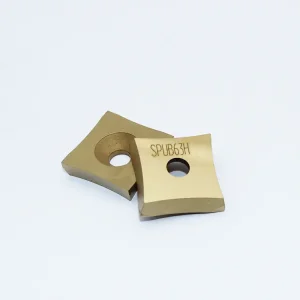
Continuous internal and external bead removal on longitudinally welded steel tubing demands high-temperature thermal resistance. Our SPUB63 and SPUB86C carbide scarfing inserts cleanly trim structural steel flash at high line speeds, resisting edge chipping caused by thermal cycling.
Railway Infrastructure & Track Maintenance
Heavy track maintenance machinery utilizes tungsten-tipped tamping tines and re-profiling inserts to plane work-hardened rail steels. Our specialized YG8 and YG15 heavy alloy inserts withstand immense stone ballast impact without fracture, extending replacement intervals 3.4-fold.
Centerless Bar Peeling & Wire Drawing
Steel mills processing hot-rolled alloy bars into bright stock rely on carbide bar peeling inserts. Featuring specialized chip breakers and edge honing, our inserts strip scale and decarbonized skins at speeds up to 180 m/min, leaving mirror-like h9 round stock tolerances.
Heavy-Duty Cutting Inserts, Alloy Rods & Strips
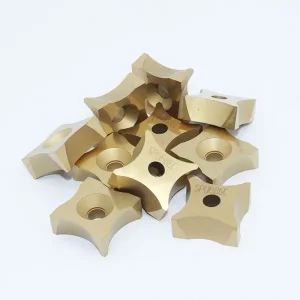
Engineered for severe duty cycles: high-feed milling, deep-hole drilling, pipe scarfing, and wear-resistant tool holders. Fully traceable batch testing certificates supplied with every dispatch.






Frequently Asked Questions (FAQ) for Global Buyers
Direct technical clarifications from our chief metallurgists and international export engineering team regarding grades, tolerances, custom tooling, and supply chain integrity.