
Factory Direct Cemented Carbide & Tungsten Solutions
Engineered directly from high-purity virgin tungsten powder feedstock: precision scarfing inserts, ground rods, custom tooling blanks, and heavy wear components.

Wholesale Wholesale SPUB63B tungsten carbide insert box used carbide inserts price Supplier, Factories
Request Quotation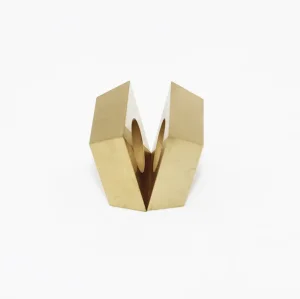
Wholesale Carbide hard alloy blade square Carbide Cutting Inserts for Metal Processing Suppliers, Factories
Request Quotation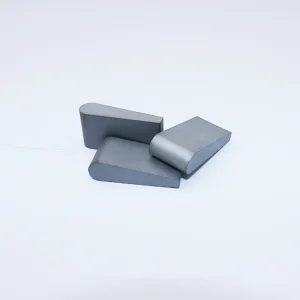
China New shape tungsten carbide tamping tines for railway Manufacturers, Factory
Request Quotation
China SPUB86C P40 uncoated blank cemented tools carbide inserts Suppliers, Factory
Request Quotation
China Tungsten Carbide Plate | OEM Wear-Resistant Cemented Carbide Blank for Tooling & EDM Manufacturers, Supplier
Request Quotation
China tungsten carbide tube scarfing inserts SQ8615WCB Manufacturers, Supplier
Request Quotation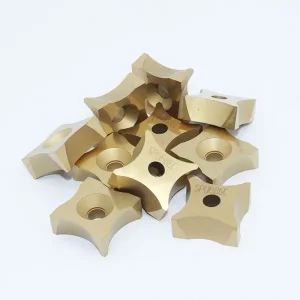
Buy SPUB86C P40 tungsten carbide tube scarfing insert for heavy machining Supplier, Factories
Request Quotation
Wholesale Nickel based tungsten carbide rods with nickel binder for machinery Manufacturer, Factories
Request QuotationTungsten Powder Pricing Dynamics & Global Supply Chain Realities
A deep dive into upstream raw material indices, conversion economics from Ammonium Paratungstate (APT), and the cost structure governing industrial carbide powder.
APT Index Correlation
Ammonium Paratungstate (APT, WO3 88.5%) represents the pricing anchor for all downstream tungsten derivatives. Historical market behavior demonstrates that 78% to 84% of crystalline tungsten powder FOB pricing is directly tied to the primary European and Chinese Fastmarkets APT spot indices.
Energy intensive calcination, hydrogen reduction, and rotary carbonization account for the remaining processing margin, making raw ore availability the primary volatility driver.
Hydrogen Reduction Cost Factors
Transforming blue tungsten oxide (WO2.9) or yellow tungsten oxide (WO3) into refined tungsten metal powder occurs in multi-tube pusher furnaces under strict hydrogen flow control.
Power consumption, hydrogen purity (≥99.999%), furnace temperature profiles (650°C to 1050°C), and push rates dictate the final Fisher Sub-Sieve Sizer (FSSS) grain sizing. Tighter particle size tolerances carry manufacturing premiums of 6% to 15%.
Critical Mineral Geopolitics
Designated as a Tier-1 Strategic Critical Material by the European Union, the United States Department of Defense, and Japan’s METI, tungsten supply chains are subject to heightened international scrutiny.
Global defense contractors and Tier-1 automotive manufacturers require validated downstream traceability back to audited, non-conflict smelters compliant with the OECD Due Diligence Guidance.
Key Procurement Insight: Total Cost of Ownership vs. Virgin Powder Formulation
While low-grade reprocessed powders (derived from low-temperature zinc-reclaim methods) offer initial procurement discounts of 12% to 18%, they introduce micro-porosity, irregular grain boundaries, and deleterious trace elements (Fe, Ca, Si > 150 ppm). For mission-critical cemented carbide wear blanks, metal cutting inserts, and downhole petroleum tools, opting for 100% virgin gas-reduced tungsten powder with controlled stoichiometric carbon ratios prevents catastrophic chipping, lowers premature tooling failures, and yields up to a 34% reduction in overall operating costs.
Macro Industry Solutions Powered by Engineered Tungsten Powder
Across extreme wear, thermal stress, radiation, and ballistic environments, tungsten powder forms the metallurgical foundation of modern advanced manufacturing.
Cemented Carbide & Tooling
Carburized into tungsten carbide (WC) with precise carbon stoichiometric ratios (6.13% ± 0.05%), then wet ball-milled with cobalt or nickel binders. Powers CNC inserts, PCB micro-drills, heavy tube scarfing cutters, and mining roadheaders.
Additive Manufacturing (AM)
Spherical tungsten and WC-Co powders engineered via Radio Frequency (RF) plasma spheroidization. Featuring superior flowability (Hall flow < 8.5 s/50g) and bulk tap densities > 11.2 g/cm³ for LPBF and EBM 3D printing of aerospace and fusion reactor components.
Semiconductors & Electronics
High-purity chemical vapor deposition (CVD) targets, ion implantation source blocks, and diffusion barriers. Demands 99.999% (5N) tungsten powder with ultra-low alpha-emitting isotopes to prevent soft memory bit flipping in sub-3nm nodes.
Heavy Alloys & Defense
Tungsten Heavy Alloys (W-Ni-Fe, W-Ni-Cu) with theoretical densities up to 18.5 g/cm³. Utilized in kinetic energy penetrators, counterweights, collimators for oncology radiotherapy, and high-energy physics radiation shielding.
| Industrial Grade | Grain Size (FSSS) | Purity (W %) | O2 Content Max | Primary Industrial Application | Processing Route |
|---|---|---|---|---|---|
| Ultrafine (UF-W) | 0.40 – 0.80 µm | ≥ 99.95% | ≤ 0.35% | PCB micro-drills, wear coatings, nano-grain rods | Low-temp Hydrogen Multi-tube Reduction |
| Submicron (SM-W) | 0.80 – 1.50 µm | ≥ 99.95% | ≤ 0.20% | Solid carbide end mills, aerospace finishing inserts | Pushed-boat Dry Gas Calcination |
| Medium Grain (MG-W) | 2.50 – 4.50 µm | ≥ 99.90% | ≤ 0.08% | Heavy tube scarfing inserts, stamping dies, plates | Standard Rotary Hydrogen Furnace |
| Coarse Crystalline (CC-W) | 8.00 – 25.0 µm | ≥ 99.90% | ≤ 0.04% | Mining drill buttons, rock excavation chisel tips | High-temp Static Reduction Bed |
| Plasma Spherical (AM-W) | 15.0 – 53.0 µm (D50) | ≥ 99.98% | ≤ 0.03% | Additive manufacturing (LPBF/DED), thermal barrier spray | RF Induction Plasma Spheroidization |
| Ultra-High Purity (5N-W) | 1.00 – 3.00 µm | ≥ 99.999% | ≤ 0.01% | Semiconductor CVD/ALD targets, silicide gates | Electron Beam Melting + Hydride De-hydride |
Global Commercial Status & Industrial Factory Sourcing
Analyzing the shifting trade corridors, export controls, and long-term procurement agreements between Western OEMs and primary Chinese metallurgical bases.
Geographic Concentration & Refinery Dominance
China continues to supply more than 80% of the world's refined tungsten products, anchored in Jiangxi, Hunan, and Henan provinces. The Jiangxi corridor, home to our Nanchang production facilities, represents the highest concentration of wolframite and scheelite metallurgical processing worldwide.
Western economies (US, Germany, Japan, South Korea) import over 70% of their intermediate tungsten chemical feedstock (APT, Tungsten Trioxide, Tungsten Blue Oxide). Consequently, established commercial relationships with vertically integrated Chinese manufacturers provide OEM purchasing managers with direct hedge protections against trade quota restrictions and currency fluctuations.
Secondary Recycling Economics (Scrap vs. Virgin)
Tungsten is an inherently circular metal. Today, secondary tungsten derived from spent carbide inserts, grinding sludges, and soft zinc scrap constitutes approximately 30% to 35% of total annual consumption in North America and Western Europe.
However, chemical digestion via the sodium carbonate hydrometallurgical route is required to bring recycled tungsten back to virgin 99.95% purity. Low-cost thermal zinc recovery methods fail to strip refractory tramp elements (such as Ti, Ta, Nb, and Cr), which can degrade high-temperature rupture strength in finished heavy tooling.
Localized Support, ESG Standards & Regulatory Compliance
Mitigate international trade friction through verifiable metallurgical origin, environmental stewardship, and dedicated local engineering support.
RMAP & Conflict-Free Sourcing
All virgin concentrate originates from certified, state-licensed mines fully audited under the Responsible Minerals Assurance Process (RMAP). Guarantees zero conflict minerals from designated embargoed territories, complete with Chain of Custody documentation conforming to Dodd-Frank Section 1502.
EU REACH & RoHS Compliance
Fully compliant with EU Regulation (EC) No 1907/2006 (REACH) for Registration, Evaluation, Authorisation, and Restriction of Chemicals. Tungsten metal powders, carbide formulations, and nickel/cobalt sintered matrices are fully registered with Safety Data Sheets (SDS) certified to GHS revision 8 standards.
Local Warehousing & Export Protocols
To insulate overseas clients from sea-freight lead times, we maintain strategic consignment hubs and bonded warehouse partnerships across Rotterdam (Europe), Chicago (North America), and Monterrey (Mexico), offering customs-cleared JIT delivery schedules within 48 to 72 hours.
Engineered Application Scenarios: Translating Powder to Part
Real-world industrial case analyses demonstrating how granular control of particle morphology yields superior resistance to thermal shock, sliding abrasion, and extreme mechanical fatigue.
Tube Scarfing & Heavy De-Burring
Workpiece: Longitudinal High-Frequency ERW Steel Pipe Welding Seams (API 5L X70/X80 pipeline grade).
Solution: Formulated using 3.2 µm medium-coarse WC powder with 8.5% cobalt binder, pressed into SPUB63 and SPUB86 geometries. Sinter-HIP processing eliminates internal voids, preventing micro-chipping under continuous 950°C red-hot weld bead flash conditions.
Railway Track Ballast Tamping
Workpiece: Automated Track Tamping Units handling basalt, granite, and porphyry stone aggregates.
Solution: Heavy-duty tamping tines clad with coarse crystalline tungsten carbide (YG11C/YG15C grade, FSSS 4.5 µm). Yields transverse rupture strength exceeding 2,750 MPa, increasing field service longevity from 80 hours (for chrome-moly steel) to over 850 operating hours.
Corrosive Downhole MWD/LWD Drilling
Workpiece: Measurement While Drilling (MWD) pulse housings, directional steering shoes, and mud motor rotor sleeves.
Solution: Nickel-bonded non-magnetic tungsten carbide parts synthesized with submicron WC powder. Completely non-magnetic (magnetic permeability μ < 1.005) while resisting hydrogen sulfide (H2S) stress corrosion and severe chloride abrasion in deepwater wells.
Technology Roadmap & Metallurgy Horizons (2025–2032)
Anticipating the technological disruptions shaping the next decade of refractory powder synthesis, grain boundary engineering, and circular metallurgical economies.
Continuous Rotary Fluidized Bed Carburization (Nano & Sub-0.2µm)
Traditional static pusher carburization exhibits uneven thermal and carbon potential gradients across boat depth. Next-generation fluid-bed reactors maintain solid WC powder particles suspended in cracked CH4/H2 atmospheres, achieving near-perfect stoichiometric carbon control (6.13% ± 0.01%) on 0.2 µm nano-powders without abnormal grain growth or free carbon soot precipitation.
Radio Frequency (RF) Induction Plasma Spheroidization for Additive Manufacturing
Accelerating adoption of tungsten powders in electron beam powder bed fusion (E-PBF) and laser directed energy deposition (DED). High-temperature thermal RF plasma flames in-flight melt angular reduced particles into satellite-free, perfectly spherical beads with near-theoretical tap density (> 11.5 g/cm³), unlocking complex rocket engine nozzle liners and fusion divertor components.
Cobalt-Free & High-Entropy Alloy (HEA) Binder Systems
Driven by EU hazard classifications and cobalt supply instability, research into cobalt-free cemented carbides is accelerating. Utilizing multi-principal element alloys (e.g., Fe-Ni-Cr-Mn or Al-Co-Cr-Fe-Ni) as binder matrices with fine WC grains delivers equivalent fracture toughness (K1c > 11.5 MPa·m½) while doubling resistance to high-temperature oxidative wear up to 850°C.
Green Hydrogen Smelting & Closed-Loop Hydrometallurgy
Transitioning primary reduction furnaces from fossil-fuel derived steam-methane reformed hydrogen to water-electrolysis green hydrogen powered by regional hydroelectric grids. Simultaneously, closed-loop electro-chemical digestion processes reduce water consumption by 65% and eliminate nitrate effluents in compliance with zero-liquid-discharge (ZLD) environmental mandates.
Frequently Asked Questions on Tungsten Powder Procurement
Detailed technical, commercial, and metallurgical answers addressing the primary inquiries submitted by procurement managers and metallurgical engineers.
What is the current relationship between APT pricing and Tungsten Powder FOB prices?
Ammonium Paratungstate (APT) represents the primary industrial trading benchmark (priced per Metric Ton Unit, MTU, equivalent to 10 kg of WO3). To calculate the baseline cost of pure Tungsten Powder (W):
1 MTU of APT contains approximately 7.93 kg of pure tungsten metal. Factoring in stoichiometric conversion yields (approx. 99.2%), continuous high-purity hydrogen reduction furnace energy costs, labor, and capital depreciation, the processing fee (conversion spread) typically adds US $4.50 to $7.50 per kg of pure powder produced, depending on required grain sizing (ultrafine powders command higher premiums due to slower push rates and higher hydrogen throughput).
How does grain size (FSSS) affect the final sintered carbide hardness and toughness?
Sintered tungsten carbide adheres to an inverse Hall-Petch relationship regarding grain size, cobalt binder content, and mechanical hardness:
Ultrafine / Submicron Powders (0.4 – 1.0 µm): Produce microstructures with exceptionally short mean free paths between binder phases. With 6% to 10% cobalt, hardness levels reach 92.0 to 94.5 HRA, ideal for high-speed finish machining, PCB micro-drilling, and optical mold punch tools.
Coarse Crystalline Powders (3.5 – 8.0 µm): Accommodate higher binder mean free paths, significantly inhibiting catastrophic crack propagation. While hardness decreases to 85.5 – 88.0 HRA, Transverse Rupture Strength (TRS) and impact fracture toughness (K1c) rise significantly, making it the standard choice for mining bits, railway tamping picks, and cold heading dies.
What are the critical chemical impurity limits for high-reliability tungsten powder?
High-reliability virgin tungsten powders require trace elemental impurities to remain strictly controlled. In standard industrial 99.95% purity grades, the maximum allowable thresholds are:
Iron (Fe) ≤ 50 ppm, Calcium (Ca) ≤ 20 ppm, Aluminum (Al) ≤ 15 ppm, Silicon (Si) ≤ 20 ppm, Nickel (Ni) ≤ 30 ppm, and Sodium (Na) ≤ 15 ppm. Oxygen content must be calibrated to grain size: ultrafine powders allow up to 0.35% O2 due to their immense specific surface area (BET), whereas coarse powders require ≤ 0.05% O2 to ensure sound liquid-phase sintering without gas porosity defects.
What is Sinter-HIP processing and why is it essential for finished carbide products?
Conventional vacuum sintering solidifies cemented carbide to approximately 99.0% to 99.5% theoretical density, leaving residual micro-porosity (A02-B02 class under ISO 4505). This internal porosity serves as stress concentration origins under cyclic impact loads.
Sinter-HIP (Hot Isostatic Pressing) combines vacuum liquid-phase sintering with an in-situ high-pressure argon gas quench (typically 60 to 100 bar / 6 to 10 MPa) at peak sintering temperatures (1,380°C – 1,480°C). The isostatic pressure collapses internal micro-voids, increasing mechanical density to ≥ 99.98% of theoretical, doubling Transverse Rupture Strength and dramatically boosting fatigue life in high-stress applications such as tube scarfing inserts and railway tines.
What packaging, handling, and shelf-life protocols apply to tungsten metal powder?
Due to its high specific gravity and pyrophoric potential when dealing with ultra-fine particles, tungsten powder is hermetically sealed under inert argon gas or vacuum purge inside inner polyethylene liners. These are placed in hermetic iron drums or heavy polyethylene buckets with tamper-evident seals (typically 50 kg or 100 kg net weight per drum).
When stored in climate-controlled environments (temperature ≤ 25°C, relative humidity ≤ 45%), sealed virgin tungsten powder exhibits an effective shelf-life exceeding 24 months without measurable oxygen uptake.
Factory Direct Precision Inserts, Blades & Milling Systems
Explore our secondary lineup of precision-engineered lathe cutting tips, pipe scarfing inserts, round blades, and industrial ball mill bowls manufactured from virgin tungsten matrices.

China Tungsten tool holder lathe cemented carbide cutting tool inserts for chian saw Manufacturer, Suppliers
Request Quotation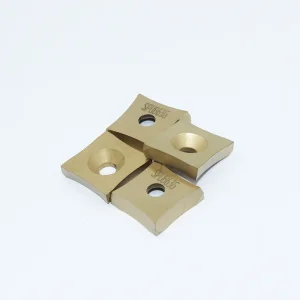
Buy Wear resistant technical round tungsten lathe carbide inserts knife blade Manufacturers, Supplier
Request Quotation
China SPUB86F TiN coating tungsten carbide tube scarfing insert Manufacturers, Suppliers
Request Quotation
Wholesale Wholesale Steel Pipe Scarfing Tools SPUB63J Tube Scarfing Inserts Supplier, Factories
Request Quotation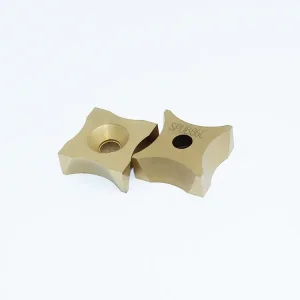
China SPUB86C P40 CVD coating tungsten carbide scarfing insert Manufacturers, Suppliers
Request Quotation
China Wholesale SPUB-63 series carbide wood insert milling carbide insert Supplier, Suppliers
Request Quotation
Wholesale SPUB63B wholesale ISO TiN tungsten carbide scarfing insert Supplier, Factory
Request Quotation
Wholesale Factory sale customized carbide milling jar tungsten carbide bowl/ jar/mortar Manufacturer, Factory
Request QuotationRequest Current Spot Pricing & Custom Sieve Formulations
Connect directly with our metallurgical engineers to receive a certified chemical analysis certificate (CoA), tailored particle size distribution curves, and volume-discounted FOB/CIF spot quotations within 8 business hours.