
Precision Engineered Tungsten Carbide Solutions: Catalog A
Engineered for high-stress tooling, severe continuous abrasion, and maximum yield strength. Discover our advanced tungsten carbide inserts and HIP-sintered blanks.

Buy Square Tungsten insert carbide manufacturer threading carbide blank inserts Manufacturer, Manufacturers
View Specifications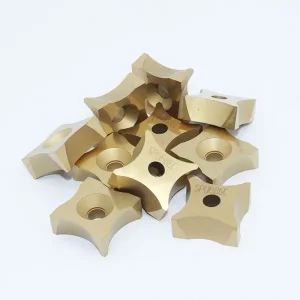
Buy SPUB86C P40 tungsten carbide tube scarfing insert for heavy machining Supplier, Factories
View Specifications
China SPUB86F TiN coating tungsten carbide tube scarfing insert Manufacturers, Suppliers
View Specifications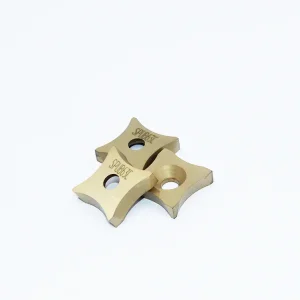
Buy SPUB-63 External Scarfing Inserts for Tubes Machining and High Frequency Pipes Suppliers, Factory
View Specifications
Buy 1*1*0.375“ CVD coating tungsten carbide tube scarfing insert Supplier, Factory
View Specifications
Wholesale Wholesale SPUB63 tungsten indexable carbide brazing inserts woodworking tools Manufacturers, Supplier
View Specifications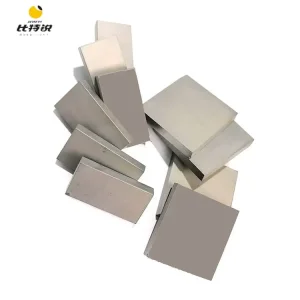
Buy Tungsten Carbide Plate HIP-Sintered Wear-Resistant Flat Blanks in YG6–YG20 Grades Supplier, Suppliers
View Specifications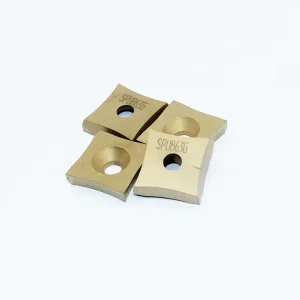
Buy Wear resistant SPUB 63G tool holder insert carbide cutting inserts turning tools Manufacturer, Supplier
View SpecificationsTungsten Carbide Hardness: Rockwell C vs Rockwell A Conversions
A rigorous metallurgical overview of indentation hardness testing, microstructural grain constraints, and dynamic conversion methodologies for industrial tooling.
The Mechanics of HRC vs. HRA
In standard metallurgical quality control, Rockwell C (HRC) utilizes a 150 kgf load with a diamond spheroconical indenter. Because ultra-hard cemented carbides can micro-fracture under this severe point load, industry standards dictate using Rockwell A (HRA, 60 kgf load) under ASTM B294 and ISO 3738. Rockwell C values are then derived through empirical cross-referencing to determine macro-hardness limits, typically yielding working values between 68 and 82 HRC equivalent.
Binder Phase Influences
The primary control levers of tungsten carbide hardness are cobalt binder fraction (Co wt%) and WC crystal grain refinement. Decreasing cobalt content down to 6% (such as in YG6) drives hardness up to 90.5 HRA (≈76-78 HRC equivalent), providing exceptional sliding abrasion resistance. Higher cobalt compositions (e.g., YG20 at 20% Co) lower hardness to ≈85.5 HRA (≈68 HRC equivalent) while dramatically improving fracture toughness to resist catastrophic impact.
Sinter-HIP Porosity Removal
Theoretical hardness cannot prevent early spalling if internal void defects exist. Our 10 MPa overpressure Hot Isostatic Pressing (Sinter-HIP) densification collapses sub-surface microporosities down to standard A02/B00 ratings according to ISO 4505. This complete elimination of micro-voids ensures consistent hardness distribution across large structural blanks, stamping dies, and wear plates.
| Alloy Grade | Binder (Co/Ni %) | Density (g/cm³) | Nominal HRA | Estimated Equivalent HRC | Transverse Rupture Strength (MPa) | Primary Industrial Use-Case |
|---|---|---|---|---|---|---|
| YG6 (ISO K10-K20) | 6% Co | 14.8 – 15.0 | 90.5 | 76 – 78 | 1900 | Wire drawing, cast iron machining, high-wear guides |
| YG8 (ISO K20-K30) | 8% Co | 14.6 – 14.8 | 89.5 | 74 – 75 | 2200 | Brazed drill tips, rock tooling, heavy lathe inserts |
| YG15 (ISO K40) | 15% Co | 13.9 – 14.1 | 87.0 | 70 – 71 | 2800 | Cold heading dies, metal stamping punches, shear blades |
| YG20 (Impact Line) | 20% Co | 13.4 – 13.6 | 85.5 | 67 – 69 | 3100 | Heavy forging dies, high-impact extrusion blocks |
| Ni-Non-Mag Series | 8-10% Ni | 14.5 – 14.9 | 88.0 – 90.0 | 72 – 76 | 2100 | MWD downhole sub-assemblies, magnetic punch tooling |
China Factory 4.0: Supply Chain Resilience & Process Controls
Full vertical integration in Nanchang, Jiangxi: from high-purity virgin APT ores to automated precision production cells.
Upstream Reserve Control
Located in Jiangxi Province, our manufacturing center operates adjacent to the world's most concentrated tungsten ore deposits. This geographic alignment guarantees an uninterrupted, price-stabilized supply of pure ammonium paratungstate (APT), fully insulated from international shipping disruptions and volatile market spikes.
Closed-Loop Processing
From ball-milling control with precise grain growth inhibitors (VC, Cr3C2) to computerized spray drying, every micron of compound meets strict stoichiometry. Fully automated powder compaction presses ensure consistent green-part densities across all geometries before entry into our high-vacuum sinter-HIP chambers.
Micro-Precision Grinding
Following sintering, high-rigidity CNC 5-axis tool grinders, centerless grinding units, and wire EDM machinery finish products down to h6 dimensional tolerances, Ra 0.2 μm mirror finishes, and strict geometric concentricity, ready for direct operational integration.
Macro Industry Solutions & Severe Service Applications
Custom-engineered carbide grades addressing severe wear modes, high impact dynamic loading, and combined corrosion environments worldwide.
Steel Mills: Tube Scarfing & Trimming
Continuous seam scarfing in ERW tube manufacturing demands intense thermal resistance alongside mechanical toughness. Our high-density SPUB63, SPUB86C, and SNMX inserts, configured with specialized chipbreakers and TiN/CVD diamond-like thin films, strip high-temperature weld beads while resisting catastrophic thermal fatigue cracking.
Energy Exploration & MWD/LWD Drilling
Measurement-While-Drilling (MWD) downhole exploration requires non-magnetic wear sleeves, pulse valve seats, and rotor assemblies. Using nickel-bonded non-ferromagnetic carbide configurations, our components protect downhole telemetry tools from abrasive drilling mud while exhibiting magnetic permeability (μ) near 1.005.
Heavy Stamping & Stamping Die Tooling
Progressive die stamping of high-strength alloys causes micro-chipping in standard cold-work steels. Our fine-grained YG15 and YG20 plate blocks withstand multi-million-cycle production runs, eliminating downtime for re-sharpening and holding sub-micron stamping tolerances across decades of use.
Technical Roadmap: Next-Generation Hardmetal Metallurgy
Pioneering the boundary of hardness, thermal stability, and structural longevity through focused material science research.
Nano-Grained WC Structures
By engineering sub-0.2 μm grain matrices through advanced spark plasma sintering (SPS) and high-energy attrition milling, our experimental grades exceed 93.5 HRA (>80 HRC equivalent), delivering high yield strength without the micro-cleavage typical of brittle sub-micron alloys.
High-Entropy Binder Alternatives
In response to international critical material dependencies and high corrosion environments, our engineers are deploying Fe-Ni-Co-Cr-Mo high-entropy alloy (HEA) matrix systems. These formulations eliminate binder leaching in acidic chemical production loops while maintaining an 89 HRA hardness baseline.
Selective Direct Additive Manufacturing
Targeted investments into selective electron beam additive manufacturing (SEBM) now allow production of intricate interior conformal cooling passages within solid carbide components, unlocking high cooling rates for extreme high-speed metal cutting.
Global Procurement: Quality Assurance & Compliance Systems
Complete traceability and international compliance verification: from powder chemistry to final international port clearance.
Chemical & Physical Verification
Every shipment is accompanied by comprehensive EN 10204 Type 3.1 Inspection Certificates. We verify carbon saturation via magnetic saturation (Co-magnetic percentage), coercive force (Hc in kA/m), physical density checks, and cross-sectional SEM microstructure scans.
Ethical Sourcing & Environmental Audits
Zhongfu guarantees compliance with OECD Due Diligence Guidance for Responsible Supply Chains of Minerals from Conflict-Affected Areas. Our manufacturing meets ISO 9001 (Quality), ISO 14001 (Environmental Management), and RoHS/REACH chemical safety directives.
Global Export Logistics
Exporting to more than 20 countries—including the United States, Germany, Australia, and Mexico—our logistics protocols guarantee vacuum seal packaging, desiccants, heavy wooden framing, and continuous digital tracking for door-to-door delivery.
Precision Engineered Tungsten Carbide Solutions: Catalog B
Explore our heavy-wear components: chuck jaw inserts, railway tamping tine tips, precision gears, and erosion-resistant nozzle seats.

Buy Wholesale tungsten non-magnetic cemented carbide wear parts Supplier, Suppliers
View Specifications
China YG8 Standard tungsten carbide torque gripper inserts for chuck jaws Factory, Factories
View Specifications
Buy Tungsten carbide tamping tines use tip wearing part for Railway Industry Supplier, Suppliers
View Specifications
Wholesale Factory wholesale custom tungsten carbide spiral bevel gear milling cutters for sale Suppliers, Factory
View Specifications
Wholesale Premium Tungsten Carbide Sheet for Stamping Dies Durable P30 Alloy Model 200x200x10mm Manufacturers, Suppliers
View Specifications
Wholesale Customized tungsten cemented carbide hardware parts water jet nozzle seat valve Factory, Factories
View Specifications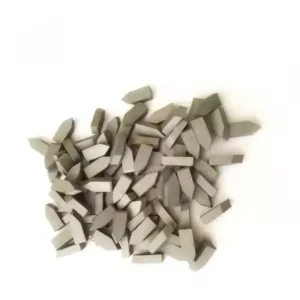
Wholesale Customized carbide welding tips for turning milling cutters Manufacturer, Manufacturers
View Specifications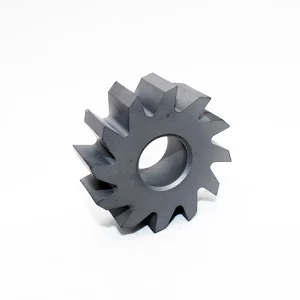
Buy Wholesale custom nonstandard metal worm gears bevel gears pinion gears Suppliers, Factories
View SpecificationsFrequently Asked Technical & Procurement Questions (FAQ)
Key metallurgical and logistics criteria to consider when sourcing industrial tungsten carbide.