
Featured Tungsten Carbide & Alloy Steel Components
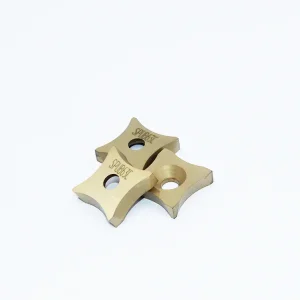
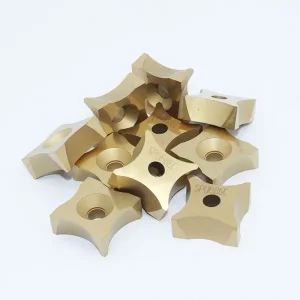
Standardized ISO/ANSI wear tools, tube scarfing inserts, micro-grain round bars, and high-impact structural components engineered for extreme abrasive service environments.






The Global Commercial Landscape of Tungsten Alloy Steel & Carbide Tooling
Tungsten alloy steel—spanning cemented tungsten carbide (WC-Co/Ni), high-speed refractory matrix steels, and non-magnetic heavy alloy compounds—constitutes the foundational metallurgical backbone of contemporary heavy industry, micro-machining, and high-velocity infrastructure tooling.
Refractory Hardness Equilibrium
Tungsten (Wolfram, atomic number 74) exhibits the highest melting point of any non-alloyed metal at 3,422 °C, accompanied by an exceptionally high modulus of elasticity (411 GPa). When chemically stabilized with stoichiometric carbon into tungsten monocarbide (WC) and embedded within cobalt or nickel metallic matrices, it provides an unbeatable combination of hot-hardness, extreme micro-yield strength, and wear resistance that outclasses chrome-molybdenum or traditional tool steels by a factor of 10 to 50.
Structural Supply Dynamics
Global original equipment manufacturers (OEMs), precision engineering facilities, and heavy metallurgical mills are actively redesigning their procurement pipelines. Rising demand in electric vehicle e-axle gearing, titanium alloy aerospace contouring, and longitudinal high-frequency welded (ERW) tube scarfing necessitates raw powder purity exceeding 99.95%, near-zero microporosity verified via metallographic ISO 4505 standards, and strictly traceable supply chains from ammonium paratungstate (APT) synthesis to finish ground tooling.
Procurement Risk Mitigation
International procurement directors in North America, Western Europe, and the Asia-Pacific region no longer rely solely on catalog-stock intermediaries that inflate unit tariffs. Strategic buyers are partnering directly with vertically integrated Chinese tungsten carbide manufacturers capable of custom powder doping, tailor-made grain sizes ranging from 0.2 µm to 5.0 µm, and in-house hot isostatic pressing (HIP), cutting total cost of ownership (TCO) by 30% to 45% while stabilizing production schedules.
The Chinese Factory Advantage: Raw Material Cluster to Precision Sintering
China’s dominance in tungsten metallurgy is rooted in geographic clustering and advanced vertical processing. Located in regions like Jiangxi and Hunan, high-tech manufacturing ecosystems unite raw ore extraction, chemical reduction, computer-controlled planetary ball milling, and multiaxial CNC profile grinding within a 50-kilometer radius.
100% Virgin Powder Integrity
Unlike Western processors that frequently rely on high-ratio secondary black scrap re-melting, top Chinese factories employ 100% virgin tungsten powder derived from blue tungsten oxide (WO2.9) and high-purity electrolytic cobalt. This eliminates micro-inclusions, residual sulfur, and oxygen contamination, ensuring fracture toughness consistency across high-volume production batches.
Overpressure Sinter-HIP Technology
State-of-the-art Chinese production lines utilize integrated vacuum dewaxing and overpressure sinter-HIP furnaces operating at 10 MPa (100 bar) argon atmosphere at 1,450 °C. The simultaneous application of thermal heat and uniform isostatic pressure forces residual sub-micron pores to fuse completely, driving structural density toward theoretical 100% (A00 porosity status).
Sub-Micron Precision Grinding
Equipped with Agathon 4-axis insert grinders, Rollomatic multi-axis CNC blank preparation centers, and ultra-precision centerless grinders, Chinese factories regularly achieve rod dimensional tolerances of h6 (+0.000 / -0.008 mm), Ra 0.05 µm mirror finishes, and complex 3D chipbreaker geometry with rapid turnarounds.
Integrated Economy of Scale
Complete supply chain proximity eliminates inter-regional logistics markups, import duties on raw ores, and subcontracting premiums. Global clients benefit from Tier-1 metallurgical engineering expertise backed by rapid prototyping cycles, reducing sample delivery times from twelve weeks down to fourteen business days.
Localized Industrial Application Scenarios
Tungsten alloy steel components are deployed wherever extreme cyclic mechanical stress, hyper-velocity abrasive friction, elevated thermal spikes, or severe corrosive wear would destroy conventional tool steels.
1. Continuous Welded Tube Scarfing
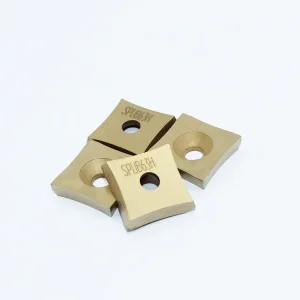
During the production of high-frequency welded (ERW) and spiral carbon or stainless steel pipelines, a molten exterior and interior weld bead flash forms instantly. Specialized tungsten carbide scarfing inserts—such as SPUB-63, SPUB86, SNMX19, and SNMX25 in ISO P40-P50 metallurgy—operate under continuous thermal shock (up to 1,000 °C) and severe dynamic load, continuously profiling weld seams without spalling or catastrophic cutting edge chipping.
2. Railway Infrastructure & Track Maintenance
Modern high-speed rail networks require automated track geometry leveling. Heavy dynamic tamping units drive ballast tamping tines directly into crushed granite rock beds under high vibration (35 Hz). Tungsten carbide brazed tamping tine tips provide the impact toughness and extreme abrasive wear resistance needed to extend maintenance service intervals from 40 hours to over 350 operational track hours.
3. Aerospace Superalloy Profiling
Milling and turning difficult-to-cut nickel-based superalloys (Inconel 718, Hastelloy) and aerospace-grade titanium (Ti-6Al-4V) generate extreme cutting temperatures and severe work hardening. Using solid ultrafine/nano-grain tungsten carbide rods with cobalt binders doped with refractory chromium/vanadium carbide carbides maintains acute cutting edge sharpness, minimizes chemical cratering wear, and prevents burr formation.
4. High-Speed Stamping & Forming Dies
In electric motor rotor/stator lamination stamping, silicon steel sheets are blanked at rates exceeding 800 strokes per minute. Fine-grain tungsten carbide die plates (such as YG15, YG20, and specialized micro-grain dies) withstand billions of cyclic shear impacts without micro-cracking, preserving dimensional punch-to-die clearances down to 0.003 mm and preventing edge burrs.
5. Magnetic Sensor Die & MWD Drilling
In measurement-while-drilling (MWD) downhole oil exploration and the compaction molding of bonded NdFeB rare-earth magnets, magnetic interference corrupts sensor readouts or distorts magnet alignment. Non-magnetic tungsten carbide plates and ground rods replace cobalt binders with specialized non-ferromagnetic nickel-chromium alloy systems, providing high HRA hardness while maintaining magnetic permeability close to vacuum (µ < 1.005).
6. Mining, Trenching & Geological Boring
TBM rock cutter discs, core drill bits, and water well drill tips demand heavy-gauge brazed carbide inserts capable of surviving compressive rock cleavage. Metallurgically balanced YG8 and YG11C coarse-grain WC grades (grain sizes 3.0–5.0 µm) deliver the necessary plastic deformation resistance to absorb severe percussive impacts without fracturing during deep-strata limestone and granite boring.
Cemented Tungsten Carbide Metallurgical Grades & Performance Index
Careful grade selection establishes the optimal balance between binder volume (Co/Ni ratio), tungsten monocarbide grain boundary refinement, and fracture toughness (K1C), preventing premature edge wear or brittle catastrophic fracture.
| ISO Classification | Proprietary Grade | Binder Content (wt%) | Grain Size Class (µm) | Density (g/cm³) | Hardness (HRA) | TRS (MPa) | Primary Industrial Application |
|---|---|---|---|---|---|---|---|
| ISO K05–K10 | YG6X / UF-06 | 6.0% Co | Sub-micron (0.6–0.8) | 14.90–15.05 | 92.5–93.2 | 2,400 | Chilled cast iron, non-ferrous fine turning, PCB micro-drills |
| ISO K10–K20 | YG6 Standard | 6.0% Co | Medium (1.2–1.8) | 14.80–14.95 | 90.5–91.5 | 2,200 | Wire drawing dies, abrasive wear plates, ceramic nozzles |
| ISO K20–K30 | YG8 / P30 | 8.0% Co | Medium (1.4–2.2) | 14.60–14.80 | 89.5–90.5 | 2,600 | Lathe brazed tips, welded tube scarfing inserts, stone profiling |
| ISO P35–P45 | SP-P40 Scarfing | 10.0% Co+TiC+TaC | Coarse/Medium (2.0) | 13.80–14.20 | 88.0–89.5 | 2,750 | Heavy tube scarfers (SPUB63/SPUB86), high-heat welded pipe trimming |
| ISO K40–G15 | YG15 Mold Grade | 15.0% Co | Coarse (2.2–3.5) | 13.90–14.15 | 87.0–88.0 | 3,100 | Cold heading dies, punching tools, high-speed stamping blanking |
| Heavy Impact | YG20 / G20 | 20.0% Co | Coarse (2.5–4.0) | 13.40–13.65 | 85.0–86.5 | 3,400 | Fastener extrusion dies, heavy impact forging, thick EDM blocks |
| Non-Magnetic | NM-Ni10 | 10.0% Ni-Cr-Mo | Sub-micron (0.8–1.2) | 14.40–14.70 | 89.0–90.5 | 2,300 | Magnetic sensor bodies, MWD directional tools, rare-earth magnet dies |
Next-Generation Technological Paradigms in Tungsten Metallurgy
The cemented carbide and tungsten alloy steel sector is evolving beyond basic sintering. Advanced nanostructuring, computational thermodynamics, and multi-layer functional coatings are redefining the limits of tool longevity and processing speed.
Nano-Grain WC Formulations (0.2 µm)
By introducing grain growth inhibitors such as vanadium carbide (VC) and chromium carbide (Cr3C2) in concentrations between 0.2% and 0.8%, forward-looking Chinese factories suppress cobalt-mediated Ostwald ripening during the liquid-phase sintering window. This locks final grain structure at the true nano-scale (0.2–0.4 µm), elevating transverse rupture strength beyond 4,000 MPa while maintaining ultra-high HRA 93 hardness for micro-machining graphite, hardened tool steels (>60 HRC), and medical implants.
Multilayer CVD & PVD Nano-Coatings
Standard uncoated cutting inserts degrade quickly under high-speed thermal loads. Modern factories apply multi-layer chemical vapor deposition (CVD) coatings—such as TiCN-Al2O3-TiN combinations—and physical vapor deposition (PVD) titanium aluminum silicon nitride (TiAlSiN) nanocomposite films. These nanostructured barriers withstand internal cutting temperatures exceeding 1,150 °C, resist thermal diffusion wear, and prevent weld-chip edge adhesion during high-volume steel peeling.
Near-Net Shape Precision Pressing
To reduce scrap waste from expensive diamond grinding wheels, manufacturers utilize multi-axis computer-controlled CNC hydraulic and electric servo-presses. Pressing complex 3D helical cutting inserts, internal coolant holes, and intricate chipbreakers to near-net dimensions significantly reduces diamond grinding stock allowances, lowers per-piece cycle times, and conserves expensive raw tungsten resources.
The Global Procurement Checklist: Auditing a Chinese Carbide Factory
Vetting an overseas tungsten manufacturing partner requires evaluating rigorous metallurgical verification steps, non-destructive quality controls, and factory-floor certifications to ensure consistent tool life and process reliability.
1. Powder Verification
Demand documented inductively coupled plasma mass spectrometry (ICP-MS) trace assays. Verify that trace elements like potassium, sodium, and calcium remain under 10 ppm, while iron contamination does not exceed 100 ppm, preventing brittle secondary phase compounds in finished sintered profiles.
2. Sinter-HIP Furnace Audit
Confirm the facility uses pressure sinter-HIP equipment rather than legacy atmospheric hydrogen vacuum furnaces. Sinter-HIP guarantees uniform internal density, eliminating interior microporosities (A02/B02 or better) and micro-voids that trigger fatigue cracks under heavy cyclic loads.
3. Saturation Magnetization Check
Require magnetic saturation (Cobalt magnetic balance) and coercive force (Hc) batch testing. These non-destructive metrics confirm optimal carbon window control, ensuring no brittle eta-phase (W6Co6C carbon deficiency) or free graphite flakes (carbon excess) weaken the carbide matrix.
4. Dimensional Metrology
Ensure the facility operates high-magnification optical profile projectors, Zeiss coordinate measuring machines (CMM), and laser micrometer scanners capable of verifying h6 shaft tolerances, chamfer consistency, and Ra surface roughness across high-volume production orders.
Frequently Asked Questions on Sourcing Tungsten Alloy Steel
Clear, metallurgical insights to resolve common procurement, customization, and engineering challenges encountered by global sourcing teams.
What distinguishes "Tungsten Alloy Steel" from Cemented Tungsten Carbide (WC-Co)?
Why is Overpressure Sinter-HIP preferred over conventional vacuum sintering?
Can Chinese factories manufacture custom-engineered tungsten components directly from customer 2D/3D CAD models?
How does binder choice (Cobalt vs. Nickel) impact corrosion and magnetic performance?
What are the lead times and quality certification documents provided for export shipments?
Specialized Carbide Tooling, Wear Plates & Gearing Components
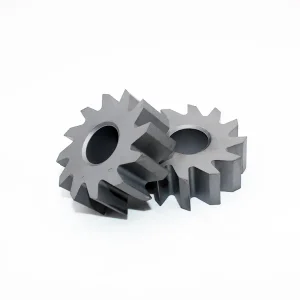
High-durability CVD coated inserts, HIP-processed stamping sheets, non-magnetic pin gauges, bar peeling inserts, and precision transmission steel gear pairs designed for demanding industrial operations.






Consult Directly with Tungsten Tooling Engineers
Send 2D/3D component drawings, application parameters, or sample specifications. Our application engineering department evaluates your wear conditions, recommends optimized powder formulations, and returns formal quotations within 8 working hours.