
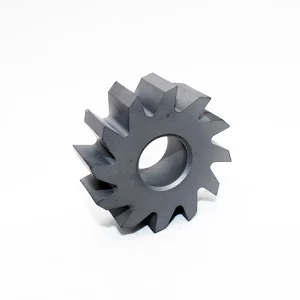
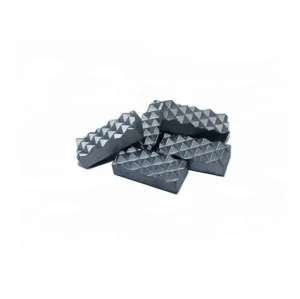
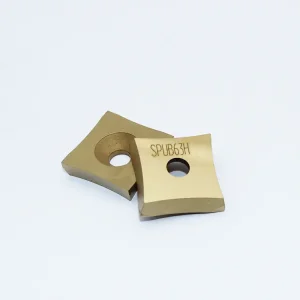
Featured Precision Tungsten Carbide & Alloy Components
Explore our export-grade cemented carbide tooling blanks, wear assemblies, and precision-sintered inserts engineered with 100% virgin tungsten powders for extreme operating wear life.





The Global Commercial Landscape of Tungsten Heavy Alloys and Carbide Rods
Strategic resource allocation, microstructural metallurgy, and evolving demand curves across North America, the European Union, and the Asia-Pacific industrial corridors.
In modern industrial metallurgy, tungsten occupies a critical niche that no alternative refractory element can match. Tungsten alloy rods—encompassing both Tungsten Heavy Alloys (W-Ni-Fe, W-Ni-Cu, W-Cu) and Cemented Tungsten Carbide (WC-Co/Ni) ground round bars—represent the backbone of high-stress modern manufacturing. Valued for an exceptional density rivaling gold (17.0 to 18.5 g/cm³ for heavy alloys and 14.2 to 15.1 g/cm³ for cemented carbide tooling blanks), extreme volumetric stability at red heat temperatures exceeding 1,000 °C, and modulus of elasticity higher than 600 GPa, these round stock profiles solve mechanical failures where high-strength steels, titanium, and technical ceramics buckle.
The contemporary global market is navigating an unprecedented structural transition. Rising automation, micro-machining of titanium and nickel superalloys in aerospace, advanced subsea directional drilling in energy harvesting, and stringent radiation safety mandates in medical oncology have triggered an accelerated demand cycle. Concurrently, supply chain leaders are re-evaluating sourcing channels to eliminate high intermediary markups, demand full traceability back to virgin concentrates (ammonium paratungstate - APT), and require microstructural guarantees such as zero A-type porosity under ISO 4505 standards.
Severe Environment Resistance
Tungsten alloy rods resist dynamic galling, high-velocity abrasive erosion, and high-frequency cyclical thermal shock. Their high thermal conductivity quickly draws heat away from critical contact zones in cutting edges and kinetic impact assemblies.
Micron-Scale Concentricity
Finished round tool blanks undergo rigorous multi-pass CNC centerless grinding. Achievable cylindrical tolerances reach ISO h6/h5, with runout beneath 0.002 mm across full 330 mm standard lengths, ensuring vibration-free spindle engagement above 40,000 RPM.
Isotropic Mechanical Integrity
Through modern hot isostatic pressing (HIP) and high-temperature vacuum sintering, interstitial micro-porosities are fully healed. Metallographic inspections confirm homogenous grain matrix distributions with zero localized binder pooling or brittle eta-phase formation.
The Jiangxi Manufacturing Advantage: Upstream Control to Final Precision Grind
Why Tier-1 international tool fabricators, defense contractors, and energy conglomerates source directly from integrated facilities in Jiangxi, China.
The geographic concentration of global tungsten reserves places Jiangxi Province at the epicenter of raw refractory metal production. More than 60% of the world’s accessible scheelite and wolframite ores originate within this geological belt. Sourcing your tungsten alloy rods directly from Jiangxi Zhongfu Cemented Carbide Co., Ltd. unlocks an structural competitive advantage that fragmented Western downstream workshops cannot match:
100% Virgin Powder Sourcing
We eliminate recycled black scrap powders that introduce uncontrolled trace contaminants (Fe, P, S). From pure chemical APT crystallization to hydrogen reduction furnaces, we tightly calibrate WC particle sizes between 0.2 µm and 8.0 µm with narrow bell-curve distribution.
Sinter-HIP Thermal Densification
Our 5,000+ m² workshop utilizes computer-monitored overpressure sintering autoclaves (Sinter-HIP) reaching 100 bar at 1,450 °C. The simultaneous application of heat and isostatic gas pressure collapses structural micropores, producing 99.98% theoretical density.
Total Cost & Lead-Time Control
By bypassing multiple distributor margins and handling extrusion, vacuum dewaxing, sintering, and centerless cylindrical grinding under one ISO 9001 quality umbrella, our clients capture a 25% to 40% landed cost reduction alongside stable, forecasted lead times.
Engineering Grades: Tungsten Carbide (WC-Co/Ni) & Heavy Alloy (W-Ni-Fe)
Formulation parameters, density benchmarks, Rockwell hardness ratings, and transverse rupture strength for precision specification selection.
| Alloy Class | Composition (Wt. %) | Grain Size (µm) | Density (g/cm³) | Hardness (HRA / HRC) | TRS (N/mm²) | Primary Industrial Utility |
|---|---|---|---|---|---|---|
| Nano-Grain WC-Co | WC + 10% Co + Cr3C2/VC | 0.2 – 0.4 µm | 14.35 – 14.50 | 92.8 – 93.5 HRA | 4,200 – 4,500 | High-speed micro-end mills, PCB drills, hardened steel (>60 HRC) milling |
| Ultrafine WC-Co | WC + 12% Co | 0.5 – 0.8 µm | 14.15 – 14.30 | 91.8 – 92.5 HRA | 3,800 – 4,200 | General CNC solid carbide round tools, reamers, aerospace composite routers |
| Submicron WC-Co | WC + 6% – 8% Co | 0.8 – 1.0 µm | 14.70 – 14.95 | 90.5 – 91.5 HRA | 3,200 – 3,600 | Heavy-load broaches, wear pins, high-temperature wire drawing mandrels |
| Nickel-Bonded (Ni) | WC + 8% – 12% Ni | 1.0 – 1.5 µm | 14.50 – 14.75 | 88.5 – 90.0 HRA | 2,800 – 3,200 | Completely non-magnetic tooling, MWD/LWD offshore sensor housings, food knives |
| Heavy Alloy Class 1 | 90W - 7Ni - 3Fe | Sintered Matrix | 17.00 – 17.20 | 28 – 34 HRC | >850 Yield | Kinetic energy dampers, aerospace balance weights, isotope collimators |
| Heavy Alloy Class 3 | 95W - 3.5Ni - 1.5Fe | Sintered Matrix | 18.00 – 18.25 | 32 – 38 HRC | >900 Yield | Anti-vibration boring bars, nuclear medicine syringe shields, ordnance penetrators |
| Tungsten Copper | W75 - Cu25 / W80 - Cu20 | Infiltrated Matrix | 14.80 – 15.60 | >85 HRB | Thermal Cond: 200W/mK | EDM spark erosion electrodes, high-voltage arcing contacts, heat sinks |
Selecting between Cobalt-bonded tungsten carbide rods and Tungsten Heavy Alloys (W-Ni-Fe / W-Ni-Cu) depends primarily on the required mechanical properties. If your application demands extreme surface hardness to prevent abrasive scratching and gouging during high-speed metal cutting, nano-grain cemented carbide with a low binder fraction is ideal. Conversely, if your goal is inertial mass concentration, vibration dampening with balanced machinability, or gamma/X-ray radiation absorption, Class 1 to Class 4 tungsten heavy alloys offer high density without the brittleness of cemented carbide.
Localized Application Engineering Across Global Heavy Industries
Real-world integration points where tungsten alloy rods deliver extended life cycles and critical dimensional tolerance preservation.
Aerospace Vibration Dampening Boring Bars
Deep-hole internal boring operations in nickel-chromium aerospace landing gear assemblies suffer from chatter deflection when using steel tool shanks. Utilizing solid tungsten heavy alloy boring bars provides a dynamic Young’s modulus three times stiffer than high-tensile steel, absorbing harmonic vibrations, expanding tool life by 400%, and delivering mirror-finish internal bore tolerances.
Semiconductor PCB Micro-Drill Blanks
The miniaturization of multi-layer integrated circuit boards requires micro-drills with diameters down to 0.10 mm. Fabricated from our 0.2 µm nano-grain solid carbide rods, these micro-tools demonstrate extreme transverse rupture strength (TRS > 4,300 MPa) to resist instantaneous catastrophic breakage during spindle speeds reaching 200,000 RPM.
Subsea MWD/LWD Drilling Wear Pins
Directional measurement-while-drilling (MWD) tools operate inside corrosive borehole muds with harsh magnetic logging interference. Our nickel-bonded non-magnetic tungsten carbide rods provide maximum resistance against abrasive erosion and mud cavitation without distorting sensitive electromagnetic steering compasses.
Radiation Oncology Multileaf Collimators
Cancer radiotherapy requires precision-shaped photon and proton beams. High-density W-Ni-Fe alloy rods and milled leaf blades absorb ionizing radiation far more effectively than lead, eliminating environmental toxicity risks while allowing compact, high-attenuation beam shaping.
High-Voltage Electrical Arc Contacts
Tungsten-copper (W-Cu) composite rods, produced through liquid copper melt infiltration into a sintered porous tungsten skeleton, maintain low contact resistance alongside thermal spark resistance, preventing contact welding in high-power circuit breakers and vacuum interrupters.
Crankshaft & Dynamic Flywheel Balancing
High-performance motorsport engines (Formula 1, Le Mans prototypes) and aerospace gyroscopic stabilizers demand massive inertial weight in tightly confined spaces. Sintered heavy alloy rods machined to tight weight-per-inch tolerances enable precise dynamic balancing.
Technological Evolutions & Market Trajectories in Hard Material Engineering
Critical trends driving powder metallurgy, binder engineering, and environmental stewardship across the worldwide refractory metal supply chain.
Advanced Coolant Channel Extrusions
Demand is shifting rapidly toward solid tungsten carbide rods featuring precision spiral and straight dual coolant passages. Our synchronized plastic extrusion technology allows 30° and 40° helical coolant passages to remain unwarped through Sinter-HIP cycles, directing high-pressure coolant directly to cutting zones in titanium and CFRP machining.
Alternative & Bio-Safe Binders
With cobalt facing scrutiny under European chemical registrations (REACH) and environmental mandates, our metallurgists are pioneering Fe-Ni-Co entropy binder formulations. These proprietary matrixes deliver equivalent or superior transverse rupture strength without human respiratory hazards during high-speed diamond grinding.
Digital Traceability & Closed-Loop Refining
International procurement frameworks increasingly mandate transparent ESG validation. Our fully integrated facility leverages advanced zinc recycling recovery and chemical reclamation, processing clean production returns while guaranteeing that every structural batch originates with authenticated conflict-free mineral certifications.
Global Procurement Playbook: How to Audit Tungsten Alloy Rod Suppliers
A technical checklist for procurement directors, mechanical engineers, and tooling fabricators verifying alloy chemistry and dimensional integrity.
When procuring bulk solid carbide round bars or tungsten heavy alloy rods, relying merely on nominal chemical tags invites premature cutting tool fracture or mass variance. Our quality assurance framework mandates five critical inspection gates prior to ocean container or air freight packing:
1. Porosity & Microstructure Audit
Every sintered run is evaluated under 1,000x metallographic microscope magnification. We test in strict conformance to ISO 4505 standards: A-type porosity (pores < 10 µm) must rate A02 or better; B-type porosity (pores 10–25 µm) must rate B00, ensuring complete absence of structural void clusters.
2. Magnetic Saturation & Coercivity
For WC-Co tooling rods, magnetic saturation (Cobalt magnetic percentage) confirms carbon balance. Excess carbon creates brittle graphite flakes; deficient carbon yields fragile eta-phase (W3Co3C). Our fluxmeters verify tight carbon windows alongside precise coercivity (Hc).
3. Automated Laser Metrology
Finished ground bars pass through non-contact laser micrometer scanning benches. Bar outer diameter, circularity, and straightness (max deflection < 0.05 mm per 330 mm length) are recorded digitally. Mill test certificates (MTC) with 100% heat traceability accompany each shipping pallet.
Frequently Asked Technical & Sourcing Questions
Comprehensive engineering clarifications addressing common drawing, metallurgical, and international logistics questions.
What is the key functional difference between a Tungsten Heavy Alloy rod and a Cemented Tungsten Carbide rod?
Tungsten Heavy Alloys (W-Ni-Fe or W-Ni-Cu) feature a metallic binder phase binding pure tungsten particles, resulting in high densities (17.0–18.5 g/cm³), excellent elongation, ductile machinability with conventional tooling, and high radiation attenuation. Cemented Tungsten Carbide (WC-Co/Ni) is a hard metal ceramic-metal composite consisting of tungsten carbide crystals sintered with cobalt or nickel. It achieves superior hardness (88–94 HRA) and wear resistance, making it ideal for metal-cutting tool blanks, dies, and abrasive wear components.
What outer diameter (OD) tolerances can your centerless grinding facility achieve on finished carbide rods?
Our automated high-precision centerless grinding cells achieve ISO h6 cylindrical tolerances as standard (e.g., +0/-0.008 mm for Ø6.0 mm rods; +0/-0.009 mm for Ø12.0 mm rods). Upon technical agreement, we can grind critical round rods to ultra-precise h5 tolerances with a surface finish down to Ra 0.1 µm, ready for direct PVD/CVD hard coating application without additional polishing.
Why are nickel-bonded tungsten carbide rods preferred in non-magnetic and corrosive environments?
Standard cemented carbide uses a cobalt (Co) binder, which is naturally ferromagnetic and subject to rapid galvanic corrosion in acidic or saline media. By replacing cobalt with a specialized nickel (Ni) or nickel-chromium alloy binder, the material becomes non-magnetic (magnetic permeability µ < 1.005) while resisting electrochemical attack in oilfield downhole drilling fluids and marine environments.
Can Jiangxi Zhongfu produce custom rod profiles according to customer-supplied 2D/3D CAD drawings?
Yes. Custom carbide wear parts and non-standard rod profiles are our primary manufacturing specialization. We produce unground sintered blanks with customized grinding allowances, single/dual straight internal coolant holes, 30°/40° helical coolant passages, step-shank configurations, Chamfer cutoffs, and threaded ends.
What is the standard production lead time and minimum order quantity (MOQ) for export shipments?
Standard inventory solid carbide ground rods (Ø3 mm to Ø32 mm × 330 mm in YG6, YG8, or ultrafine grain grades) ship within 48 to 72 hours. Custom grade powder formulations, custom lengths, or non-standard profiles generally require 15 to 25 business days for precision tooling, pressing, Sinter-HIP processing, and finish grinding. Our factory provides flexible prototype sampling with an initial trial MOQ of only 5 kg to 10 kg.
How do you guarantee that exported tungsten products remain free of micro-cracks during long-distance transit?
Due to the high weight density and brittle nature of hard metals, every finished rod is individually wrapped with protective foam sleeves or sealed in high-impact plastic tubes. Multiple tubes are bundled with anti-vibration shock foam and packaged in reinforced export-grade plywood crates lined with waterproof vapor corrosion inhibitor (VCI) film, ensuring moisture-free arrival across worldwide destinations.
Additional Tungsten Carbide Strips, Plates, Rods & Industrial Cutters
Review our specialized sintered products, including non-magnetic rods, high-hardness plates, scarfing cutters, and wear-resistant concrete milling inserts.








Consult Our Metallurgical Engineers for a Direct Factory Quotation
Send your 2D/3D component drawings, target hardness, working wear conditions, or alloy composition requirements. Receive a comprehensive engineering analysis and FOB/CIF price schedule within 8 business hours.