Industrial Metal Shaping Dies, Blanks & Cutting Inserts
Browse our high-performance tungsten carbide cold heading dies, scarfing blades, precision ground blanks, and ceramic tooling plates tailored for extreme wear conditions.

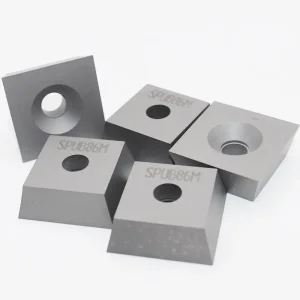
China CNC Carbide Turning Tool Internal Tungsten Steel Cutting Insert Scraping Blade for Steel Workpiece Manufacturers, Factory
View Product Details
China Hot sale SPUB63M30 tungsten carbide odinternalexternal tube scarfing insert Manufacturer, Factories
View Product Details
Buy Customized Tungsten Carbide Cold Heading molds/punch dies/wire drawing dies Manufacturers, Suppliers
View Product Details
China Wholesale SPUB63M30 tin coating scarfing insert carbide od scarfing insert Manufacturer, Factories
View Product Details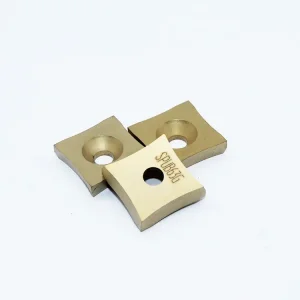
Wholesale Wear resistant SPUB 63 series carbide turning tube scarfing inserts Factory, Factories
View Product Details
China Tungsten tool holder lathe cemented carbide cutting tool inserts for chian saw Manufacturer, Suppliers
View Product Details
Wholesale Customized Cemented Carbide Plate — Factory-Direct Tungsten Carbide Blanks in Any Size, Shape & Grade Factory, Factories
View Product Details
Buy High Hardness High Density Pressureless Sintered Silicon Carbide Plate Polished SiC Ceramic Plate Factory, Factories
View Product DetailsGlobal Metal Shaping Dies Market: Industrial Dynamics, TCO, & Precision Demands
Navigating macro supply chain pressures, microstructural integrity, and metallurgical selection criteria when qualifying premier suppliers for heavy stamping, cold forging, and tube drawing operations.
$11.8B
Global Metal Forming Die Market by 2029
4.8x
Life Multiplier over D2/M2 Tool Steels
±0.002mm
Sinter-HIP Ultra-Precision Tolerances
Zero Defect
Ultrasonic C-Scan Density Assurance
In high-volume sheet metal fabrication, cold extrusion, fastener heading, and high-frequency welded (ERW) tube production, die failure translates directly into hundreds of hours of lost press time. When production engineers look to buy metal shaping dies supplier solutions, the modern mandate stretches far beyond catalog dimensional matching. Today's industrial procurement strategies demand metallurgical mastery: custom grain-boundary sizing, optimized Cobalt and Nickel binder systems, Hot Isostatic Pressing (HIP) execution, and near-net-shape geometries designed to withstand cyclic compressive stresses up to 3,500 MPa.
The transition toward ultra-high-strength steels (UHSS) and advanced high-strength steels (AHSS) with tensile yields exceeding 1,200 MPa has rendered conventional high-carbon cold work tool steels (such as AISI D2, D3, and A2) increasingly obsolete in progressive dies. Under unrelenting abrasive friction and high cyclical shock, tool steels suffer localized galling, micro-spalling, and catastrophic mechanical fracturing. Modern manufacturing enterprises require specialized tungsten carbide (WC-Co) shaping dies that deliver exceptional Young's modulus (up to 650 GPa), extreme Vickers hardness (HV 1,200 to 2,200), and minimal thermal expansion coefficients, guaranteeing dimensional repeatability across millions of press cycles.
Cold Heading & Punch Tooling
Designed for multi-station cold headers forming high-tensile bolts, structural rivets, and automotive pins. Manufactured with high-toughness WC grades (15% to 20% Cobalt binder) to withstand brutal shock loading without axial cleavage.
- Radial compressive pre-stress casing rings
- Mirror-polished ID down to Ra 0.05 μm
- Sub-micron grain matrices prevent chipping
Deep Drawing & Wire Dies
Precision wire drawing nibs and deep drawing rings engineered for ferrous and non-ferrous wire, bullet casings, and automotive battery canisters. Engineered to prevent metallurgical adhesion and friction-induced galling.
- Optimized reduction angle profile geometry
- Non-magnetic Nickel binder options for sensors
- High thermal conductivity removes heat build-up
Tube Scarfing & Trimming Inserts
Heavy-duty SPUB63, SNMX, and SNMG series tube scarfing inserts designed for continuous longitudinal weld bead removal on ERW carbon steel and stainless steel pipe production lines.
- Multi-layer TiN / AlTiN PVD coatings
- Exceptional edge retention at 900°C red heat
- Custom OD/ID scraping radii to pipe specs
Cemented Tungsten Carbide Grade Matrix for Metal Shaping
Selecting the exact Cobalt ratio, tungsten carbide grain sizing, and binder phase distribution to balance micro-hardness (HRA) against transverse rupture strength (TRS).
The metallurgical balance within cemented carbide represents an inherent engineering trade-off between hardness (wear resistance) and fracture toughness (impact absorption). In metal shaping operations, pure mechanical abrasion is rarely the only failure mechanism; dies are routinely subjected to cyclic thermo-mechanical shocks, shear tensile spikes during ejection, and extreme interfacial friction. Our ISO-certified production lines utilize 100% virgin ammonium paratungstate (APT) derived powders, systematically eliminating iron, titanium, and tantalum contaminants that provoke brittle micro-porosity in recycled powders.
| Carbide Grade | Binder (Co/Ni %) | Grain Size (μm) | Density (g/cm³) | Hardness (HRA) | TRS (MPa) | Primary Industrial Application |
|---|---|---|---|---|---|---|
| YG6 / K10 | 6.0% Co | 1.2 – 1.6 | 14.90 – 15.00 | 90.5 – 91.5 | 2,000 | Non-ferrous wire drawing, high-speed thin sheet punching, light drawing dies |
| YG8 / K20 | 8.0% Co | 1.4 – 2.0 | 14.70 – 14.85 | 89.0 – 90.0 | 2,300 | Intermediate wire reduction, tube expanding plugs, scarfing blade tips |
| YG11C / K30 | 11.0% Co | 2.2 – 3.0 | 14.40 – 14.55 | 87.0 – 88.0 | 2,700 | Cold heading dies for standard fasteners, blanking punches, trimming knives |
| YG15 / K40 | 15.0% Co | 2.0 – 2.8 | 13.95 – 14.15 | 86.5 – 87.5 | 3,000 | Heavy-impact stamping dies, cold forging dies, nut former punches |
| YG20 / G50 | 20.0% Co | 2.4 – 3.2 | 13.45 – 13.65 | 85.0 – 86.0 | 3,300 | Severe impact cold heading, high-stress swaging, thick EDM tooling blocks |
| NM-12 (Non-Mag) | 12.0% Ni-Cr | 1.6 – 2.2 | 14.30 – 14.50 | 88.0 – 89.5 | 2,400 | Electromagnetic sensor components, corrosive environments, stainless forming |
By pairing advanced Hot Isostatic Pressing (Sinter-HIP) furnaces operating at 1,450°C and 100 bar Argon pressure with multi-axis surface and ID cylindrical grinders, we ensure internal micro-porosity levels strictly compliant with ISO 4505 Class A00 B00 C00. This defect-free metallurgical cross-section prevents premature cracking along binder interfaces, permitting wire EDM profiling with negligible recast damage when appropriate wire dielectric regimes are applied.
Localized Metal Shaping Scenarios: Solving Field-Specific Wear
Examining real-world production environments across automotive manufacturing hubs, energy corridors, electronics corridors, and structural fastener centers.
Automotive Body & Structural Stamping
Automotive plants in North America, Germany, and Japan process high-strength dual-phase (DP600/DP980) and martinsitic steels. Cemented carbide punch inserts and draw bead inserts engineered with fine-grain YG15 eliminate edge rounding and galling, reducing downtime for die repolishing from every 15,000 strikes to over 120,000 strikes.
- Extreme resistance to adhesive pickup
- Custom segmented modular die construction
- Optimized for robotic high-speed press lines
Aerospace Superalloy & Titanium Forming
Forming titanium Ti-6Al-4V fasteners and Inconel ducting necessitates dies that resist high-temperature oxidation and diffusion wear. Our customized cobalt-nickel matrix formulations preserve yield strength up to 800°C, ensuring zero dimensional drift during hot isothermal titanium heading and swaging cycles.
- High thermal shock resilience
- AlCrN nano-structured surface barrier coatings
- Zero chemical affinity for reactive titanium
Continuous ERW Tube Mills & Steel Pipe
Longitudinal high-frequency pipe welding creates aggressive internal and external molten flash beads. Our SPUB63 series carbide scarfing inserts, available in single-sided and multi-edge indexable designs, slice through heavy alloy flash cleanly at line speeds up to 120 meters per minute without thermal shattering.
- Convex and concave radius ground to tube OD
- Proprietary edge hone avoids chipping
- Extended tool life between indexing cycles
China Factory Supply Chain Resilience: Upstream Access & Lean Scale
How Jiangxi's integrated tungsten industrial belt provides global procurement teams with unparalleled raw material security, rapid DFM turnarounds, and price stability.
Procuring directly from an established tungsten carbide manufacturing facility in Nanchang, Jiangxi Province provides international buyers with a distinct structural and geopolitical advantage. Jiangxi Province anchors China's globally dominant tungsten corridor, housing over 60% of the world's commercial tungsten mining and smelting reserves. This geographical concentration insulates our manufacturing operations from volatile international raw material price shocks and sudden secondary supply bottlenecks.
Unlike European or North American die shops that rely on third-party sintered rod or preformed blank imports—often compounding lead times to 12–16 weeks—our end-to-end vertically integrated production cluster spans every phase under one continuous quality system:
Direct Powder Metallurgy
In-house wet ball milling, spray drying tower atomization, and computer-controlled grain size classification guarantee consistent carbide crystallite morphology. We synthesize proprietary powder batches matching client-specific hardness-to-toughness targets in 48 hours.
Automated Multi-Cavity Pressing
Equipped with 15-ton to 100-ton CNC automatic powder compacting presses. Multi-level tool kinematics generate near-net shapes with uniform green density, drastically minimizing post-sinter diamond grinding allowances and material waste.
Rapid 8-Hour Engineering DFM
Our dedicated technical team provides comprehensive Design for Manufacturability (DFM) reviews within 8 hours. From shrink-fit steel casing interference calculations to Wire EDM corner relief optimization, we eliminate production roadblocks before powder compaction begins.
Technology Roadmap: The Future of Metal Shaping Tooling
Pioneering ultra-fine grain matrices, intelligent sensor-embedded smart dies, and circular tungsten reclamation to redefine die longevity and sustainability.
Ultrafine Grain Consolidation
Implementing 0.2 μm ultra-fine tungsten grains stabilized with Vanadium and Chromium carbide grain-growth inhibitors. Delivers HRA 93.5 hardness while retaining the fracture toughness of medium-grain alloys, designed for micro-precision electronic connector stampings.
Functionally Graded Carbide (FGC)
Developing single-body dies featuring a continuous transition: a ultra-hard, wear-resistant surface shell (6% Co) merging seamlessly into an ultra-tough, shock-absorbing interior core (16% Co), eliminating internal stress risers between case and core.
Embedded In-Die Sensor Cavities
Precision EDM micro-cavity routing to accommodate acoustic emission sensors and dynamic strain gauges. Enables real-time predictive wear monitoring, stroke counter verification, and impending galling alerts on automated high-speed stamping presses.
100% Eco-Recycled APT Feedstock
Chemical zinc-process reclamation that recovers industrial scrap dies back into pristine 99.99% purity virgin-equivalent Ammonium Paratungstate. Lowers carbon footprint per kilogram of sintered tooling by 72% while meeting rigorous ESG audit guidelines.
Global Compliance & Rigorous Quality Assurance Framework
Total traceability from raw powder batch to packaged tooling, verified under rigorous metallurgical standards and international logistics protocols.
100% Metallographic Inspection
Every sintering heat undergoes rigorous testing for specific density (Archimedes method), coercive force (Hc), magnetic saturation (4πσ), and Rockwell A hardness. Optical and SEM cross-sections verify absence of eta-phase (η) or graphite free-carbon inclusions.
Standardized Inspection Certificates
Orders ship accompanied by comprehensive EN 10204 3.1 chemical composition analysis, heat-treatment logs, CMM dimensional inspection protocols, and ultrasonic C-scan non-destructive testing reports ensuring flawless internal consistency.
Export Compliance & Door-to-Door Logistics
Fully certified under RoHS, REACH, and Conflict-Free Smelter Initiative (CFSI) standards. Supported by dedicated air express and sea freight multimodal channels with export wooden casing and vacuum anti-corrosion barrier packaging for 20+ countries.
Frequently Asked Questions: Technical Procurement Guide
Key engineering questions raised by tooling designers, die shop managers, and procurement leads before placing custom carbide tooling orders.
Why should I choose cemented carbide over high-speed steel (HSS) or D2 for metal shaping dies?
Cemented tungsten carbide provides a Young's modulus nearly three times higher than tool steel (600 GPa vs 210 GPa), drastically reducing elastic deformation under extreme forming tonnages. Carbide offers superior hardness retention at operating temperatures above 500°C, an abrasive wear life 10 to 50 times greater than D2, and negligible risk of micro-welding (galling) when forming stainless steels and high-strength alloys. The initial tooling premium is rapidly offset by eliminating press downtime and tool sharpening interruptions.
How do I mitigate the brittle White Layer (recast layer) created during Wire EDM processing of carbide die inserts?
Wire Electrical Discharge Machining (WEDM) melts the binder phase and forms micro-cracks along the perimeter of the carbide nib if high-current rough cuts are unmanaged. To eliminate this hazard, we mandate multi-pass skim cutting (minimum 4 to 6 trim passes) at reduced peak currents, followed by chemical etching or diamond paste micro-lapping to remove the outer 5–10 μm recast skin. For complex punches, applying post-EDM stress relief heat treatments at 200°C prevents sub-surface micro-fractures under cyclic shock loading.
When is a Nickel-bonded (non-magnetic) carbide die preferable over standard Cobalt-bonded grades?
Cobalt is ferromagnetic and subject to chemical attack in acidic environments or when using chlorinated drawing lubricants. Nickel-bonded tungsten carbide is strictly non-magnetic (magnetic permeability μ < 1.005) and exhibits superior corrosion resistance across pH 2 to 10. Non-magnetic dies are essential when compacting NdFeB rare-earth magnetic powders, forming stainless steel surgical devices, or operating in automated sensor-controlled stamping dies where stray magnetic flux would disrupt sensitive electronics or attract metal swarf.
What casing interference ratios and shrink-fit guidelines are recommended for carbide cold heading dies?
Because cemented carbide possesses exceptional compressive strength (up to 4,000 MPa) but lower tensile strength (approx. 1,500 MPa), cold heading inserts must be pre-stressed under high radial compression using an outer alloy steel casing (such as AISI 4340 or H13, hardened to 42–46 HRC). Standard shrink-fit diametrical interference ranges between 0.4% and 0.8% of the carbide insert's outer diameter, ensuring the carbide remains in compression even at peak punch penetration pressures.
Can you manufacture customized metal shaping dies directly from our CAD drawings?
Yes. Over 75% of our monthly tonnage comprises bespoke, custom-engineered tooling. Send your 2D engineering prints (DWG, DXF, PDF) and 3D solid models (STEP, IGES, Parasolid) along with target work materials and stamping press parameters. Our engineering department conducts a full DFM analysis, confirms sintering shrinkage tolerances (±0.8% unground or ±0.002 mm precision ground), recommends the optimal carbide grade, and quotes factory-direct pricing within 8 hours.
Heavy-Duty Tungsten Carbide Components & Specialized Tooling
Expand your manufacturing capability with specialized non-magnetic shafts, brazed inserts, woodworking tooling, and heavy alloy plate blanks.

Wholesale Custom 60 knife variable speed fixed gear cast iron truck large metal gear Manufacturers, Factory
View Product Details
Wholesale Customized tungsten non-magnetic carbide scarifier cutter/through hole wear parts Manufacturers, Factories
View Product Details
Buy Wholesale SPUB63 tungsten carbide insert scraps lathe cutting tools turning Supplier, Factories
View Product Details
Wholesale SPUB63B wholesale ISO TiN tungsten carbide scarfing insert Supplier, Factory
View Product Details
Wholesale Non magnetic cemented carbide rods for making water meter shaft Supplier, Suppliers
View Product Details
Buy Premium Bright Surface Tungsten Heavy Alloy Sheets & Pure Tungsten Plates for Industrial Applications Manufacturer, Factories
View Product Details
Wholesale Wholesale SPUB63 tungsten indexable carbide brazing inserts woodworking tools Manufacturers, Supplier
View Product Details