
High-Performance Machining Carbide Components
Explore high-wear resistance inserts, tool blanks, gear shaping cutters, and drawing dies manufactured to exacting micrometer tolerances via sinter-HIP densification.
-
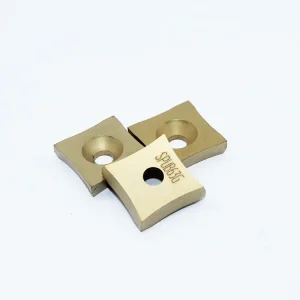
Wholesale Wear resistant SPUB 63G customize imported carbide threading inserts Factory, Factories
-

China Tungsten tool holder lathe cemented carbide cutting tool inserts for chian saw Manufacturer, Suppliers
-

Wholesale Wholesale SPUB63B tungsten carbide insert box used carbide inserts price Supplier, Factories
-

China Wholesale custom tungsten carbide module gear milling shaper cutters Manufacturers, Suppliers
-

Buy Customized Tungsten Carbide Cold Heading molds/punch dies/wire drawing dies Manufacturers, Suppliers
-

China Best price YG8 tungsten carbide gripper inserts for chuck jaw Suppliers, Factories
-
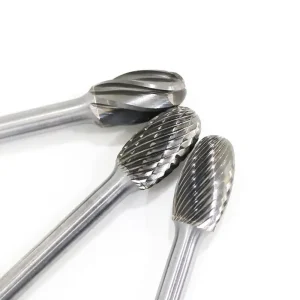
Wholesale Oval cutting tool tungsten carbide rotary file shank diameter Factory, Factories
-

Wholesale tungsten carbide scarfing insert SQ8615WCB Supplier, Factory
The Material Science of Machining Tungsten Carbide
A comprehensive engineering review of powder metallurgy parameters, microstructural phase distributions, and mechanical wear resilience across severe cutting conditions.
In modern industrial subtractive manufacturing, the search for the optimal machining carbide material supplier is driven by extreme engineering tolerances and high thermal dynamics. Cemented carbide—predominantly composed of tungsten monocarbide (WC) hard phases bonded by an iron-group metallic binder (primarily Cobalt [Co] or Nickel [Ni])—represents the foundation of high-speed turning, heavy milling, cold heading, and precision wear surfaces. At Jiangxi Zhongfu Cemented Carbide Co., Ltd., material performance is treated as a metallurgical discipline governed by grain boundary physics, chemical stoichiometry, and hot isostatic pressing (Sinter-HIP) densification.
The mechanical performance of cemented carbide materials is fundamentally an inverse correlation between hardness (Rockwell HRA / Vickers HV30) and fracture toughness (K1C / Transverse Rupture Strength TRS). Fine-tuning these characteristics requires exact control over tungsten carbide mean grain size, which spans from submicron/nano-crystalline regimes (0.2 – 0.5 μm) for hard alloy finishing to coarse structures (2.5 – 6.0 μm) for high-impact stamping dies, rotary percussion drilling, and heavy scarfing operations.
| ISO / Standard Grade | Binder Phase (wt%) | Mean WC Grain Size (μm) | Density (g/cm³) | Hardness (HRA) | TRS (N/mm²) | Primary Industrial Use-Case |
|---|---|---|---|---|---|---|
| YG6 / K10-K20 | 6.0% Co | 1.0 – 1.4 | 14.90 – 15.00 | 90.5 | 1,900 – 2,200 | Non-ferrous machining, cast iron roughing, small drawing dies |
| YG8 / K20-K30 | 8.0% Co | 1.4 – 2.0 | 14.65 – 14.80 | 89.5 | 2,200 – 2,500 | Brazed cutting tips, lathe chuck jaw grippers, rock drill inserts |
| YG15 / K40 | 15.0% Co | 1.8 – 2.5 | 13.95 – 14.15 | 87.0 | 2,800 – 3,200 | Cold heading dies, punching tools, high-shock forming punches |
| YG20 / G50 | 20.0% Co | 2.2 – 3.0 | 13.40 – 13.60 | 85.5 | 3,100 – 3,400 | Heavy stamping tooling, thick-plate EDM blocks, impact shredders |
| YN8 (Ni-Bond) | 8.0% Ni | 1.2 – 1.6 | 14.60 – 14.85 | 89.0 | 2,100 – 2,400 | Non-magnetic tooling, corrosive chemical valves, MWD oil exploration |
| Nano-WC Grade | 10.0% Co + Cr/V | 0.3 – 0.5 | 14.40 – 14.55 | 92.8 | 3,800 – 4,200 | High-speed micro end mills, PCB drills, titanium alloy finishing |
Why Sourcing Directly from Jiangxi, China Maximizes TCO
Upstream mineral reserves, end-to-end metallurgical integration, and advanced Sinter-HIP processing eliminate intermediate broker margins.
Upstream Mineral Advantage
Jiangxi Province contains the planet's densest concentration of high-purity wolframite and scheelite deposits. Located in Nanchang, Jiangxi Zhongfu draws directly on raw Ammonium Paratungstate (APT) refineries, ensuring stable raw material cost without speculative ocean logistics markups.
Full Process Closed-Loop Control
From wet ball-milling in solvent atmospheres, spray drying atomization, automated CNC isostatic powder compacting, to high-pressure vacuum Sinter-HIP sintering (up to 100 bar Ar pressure), we control every microstructural variable without outsourcing critical thermal stages.
Total Cost of Ownership (TCO) Reduction
Direct supply contracts yield a 25% to 45% reduction in consumable tooling cost relative to Western and Japanese catalog redistributors. Extended tool life decreases machine spindle downtime, reduces insert exchange labor, and lowers per-part workpiece manufacturing expenses.
Engineering Audit: What Leading Procurement Teams Demand
A checklist guide for QA managers, chief metallurgists, and strategic sourcing directors selecting a qualified cemented carbide factory.
Zero Apparent Porosity (A00/B00)
Micro-voids cause spontaneous fracture under high shear. Our Sinter-HIP processing operates under 60–100 bar hot argon gas to compress microporosity to ASTM B276 Class A00, B00, C00, eliminating premature EDM cracking.
ISO h6 / h5 Ground Tolerance
For solid carbide rods and tool blanks, runout is maintained under 0.002 mm, with surface roughness reaching mirror polish (Ra ≤ 0.05 μm) using high-precision centerless grinders and profile EDM wire-cutting.
Magnetic Coercivity & Saturation
Every powder batch is verified with coercive force meters and cobalt magnetometers. This guarantees consistent carbon stoichiometry, completely avoiding detrimental brittle η-phase (W6Co6C) or free graphite inclusions.
Batch-to-Batch Repeatability
Strict lot tracking backed by full metallographic documentation. Mill test certificates, hardness maps, and density certifications ship with every batch, ensuring automated CNC cells do not experience unexpected tool life drop-offs.
Localized Engineering Support & International Standards
Seamless CAD-to-production communication and complete adherence to global material safety directives.
Rapid 8-Hour Engineering Drawing Review
Global tooling engineers frequently face communication delays when ordering custom carbide geometries from overseas suppliers. At Zhongfu Carbide, our dedicated bilingual technical team analyzes 2D (.dwg, .dxf, .pdf) and 3D (.step, .iges) drawings within 8 hours.
We review tolerances, draft angles for pressing, thermal relief radii, and wire EDM margins, recommending grade adjustments that match the customer's specific cutting speeds (Vc), feeds (fz), and workpiece metallurgy (e.g., Inconel 718, heat-treated alloy steels, titanium alloys, or abrasive copper commutators).
Sample Prototyping: We provide rapid sample fabrication cycles of 7 to 12 days for custom profile blanks, allowing OEM validation prior to full multi-ton production batch release.
Global Compliance Framework
-
✓
RoHS Directive 2011/65/EU & (EU) 2015/863: Certified zero content of lead, cadmium, mercury, or hexavalent chromium across all raw carbide mixtures.
-
✓
REACH SVHC Verification: Fully aligned with European Chemicals Agency (ECHA) standards regarding the monitoring of metallic cobalt binders.
-
✓
RMI Conflict-Free Minerals: Certified ethical sourcing adhering to OECD Due Diligence Guidance for Responsible Supply Chains of Minerals from Conflict-Affected Areas.
-
✓
ISO 9001:2015 Quality Management: Comprehensive calibration of automated presses, optical comparators, and density testing balances.
Mission-Critical Application Scenarios
Discover how custom-formulated cemented carbide material grades solve severe wear, heat, and shock problems across varied manufacturing sectors.
Heavy Tube Scarfing & Rolling Mills
Steel tube manufacturing requires intense, high-temperature external and internal weld bead removal. Our specialized SPUB63, SPUB86, and SNMX series scarfing inserts operate at continuous work temperatures above 850°C without edge softening or micro-thermal flaking, maintaining consistent burr-free pipe profiles.
Oil & Gas Downhole MWD/LWD Drilling
Downhole directional drilling requires components that resist sand-slurry erosion while remaining non-magnetic so they do not interfere with sensitive measurement instruments. Our proprietary Nickel-bonded (YN series) non-magnetic carbide parts achieve relative magnetic permeability μr < 1.005 with outstanding cavitation-wear resistance.
EV Motor Stamping & Micro-Punches
The transition to electric vehicles demands millions of thin silicon steel motor lamination sheets. Our YG15 and YG20 high-cobalt micro-grain plates provide the extreme shock resilience needed for progressive stamping punches, achieving over 1,500,000 punch cycles between regrinds.
Solid Tooling for Aerospace Composites
Machining carbon fiber reinforced polymers (CFRP) and titanium stacks requires submicron solid carbide round rods with balanced microstructures. Our h6 tolerance rods provide the high edge retention needed to eliminate workpiece delamination and tool deflection during deep cavity 5-axis milling.
Automated Fixturing & Chuck Grippers
Robotic CNC turning centers rely on secure part holding. Our YG8 chuck jaw gripper inserts feature sharp pyramidal tooth profiles sintered directly into the carbide blank, preventing workpiece slippage under heavy roughing cuts and eliminating chuck marking on pre-machined surfaces.
Precision Gear Hobbing & Broaching
Custom gear shaper cutters and gear milling inserts manufactured from ultrafine tungsten carbide blanks maintain tooth flank involute accuracy through high-temperature dry machining operations, lowering tool exchange frequencies across automotive transmission lines.
Emerging Technological Trends in Carbide Material Engineering
How nanostructure formulations, multi-layer nano-coatings, and circular recycling reshape the machining carbide industry.
Ultrafine & Nano-Grain Synthesis
By introducing precise additions of Vanadium Carbide (VC) and Chromium Carbide (Cr3C2) as grain growth inhibitors during liquid-phase sintering, modern carbide research holds WC crystallite growth below 300 nanometers. This provides exceptional edge sharpness and hardness levels exceeding 93.0 HRA while maintaining high fracture resistance.
HiPIMS & Multi-Layer Nanocomposite Coatings
Modern indexable carbide inserts increasingly utilize High-Power Impulse Magnetron Sputtering (HiPIMS) and advanced Chemical Vapor Deposition (CVD). Alternating nanometer-scale layers of AlTiN, AlCrN, and Diamond-Like Carbon (DLC) create chemical diffusion barriers that extend tool life beyond 1,100°C contact temperatures.
Zinc-Process & Chemical Upcycling
With environmental ESG scrutiny intensifying globally, Zhongfu's engineering lab focuses on virgin-material synthesis while developing closed-loop recovery pathways. Clean zinc reclamation and chemical digestion of spent inserts return scrap back to ultra-pure APT, lowering the carbon footprint per kilogram of finished carbide tooling.
Frequently Asked Questions: Global Carbide Sourcing
In-depth technical answers addressing material selection, EDM machining considerations, binder mechanics, and ordering procedures.
How does Cobalt binder percentage affect cutting performance and tool life?
Cobalt functions as the ductile metallic binder that cements the refractory tungsten monocarbide (WC) grains together. As a fundamental metallurgical principle, increasing the cobalt content (e.g., from 6% in YG6 to 15% or 20% in YG15/YG20) increases the Transverse Rupture Strength (TRS) and impact toughness, allowing the carbide to endure heavy interrupted cuts, vibration, and mechanical shock without catastrophic fracturing.
Conversely, reducing cobalt content increases wear resistance, thermal hot-hardness, and compressive strength, making low-cobalt grades (4.5% to 6%) optimal for continuous, high-speed turning of abrasive cast irons, non-ferrous metals, and graphite. Selecting the right grade always involves balancing abrasive wear resistance against impact toughness.
Why is Sinter-HIP processing superior to conventional vacuum sintering?
Conventional vacuum sintering relies strictly on capillary forces during liquid-phase sintering (around 1,380°C – 1,450°C) to densify the compacted powder, which often leaves residual sub-surface microporosities (ASTM Class A04 or higher). Sinter-HIP (Hot Isostatic Pressing) applies an isostatic argon gas pressure of 60 to 100 bar directly inside the furnace while the cobalt binder is molten.
This immense pressure collapses internal gas pockets, reducing porosity to virtually zero (Class A00/B00). As a result, Sinter-HIP carbide parts achieve up to 20% higher transverse rupture strength, significantly improved mirror-polish capabilities (Ra < 0.02 μm), and uniform electrical discharge machining (EDM) performance, preventing stress-cracking during precision die manufacturing.
How do I prevent micro-cracking during Wire EDM machining of carbide blocks?
Electrical Discharge Machining (EDM) exposes the cemented carbide surface to localized thermal shocks exceeding 3,000°C, which can cause cobalt leaching, binder evaporation, and tensile residual stresses that form micro-cracks along the white recast layer. To prevent this:
- Utilize specific EDM-optimized submicron grades with fine grain distribution and corrosion inhibitors.
- Employ multi-pass skim-cut parameters with high-frequency, low-energy electrical discharge pulses to minimize the thickness of the thermal recast layer.
- Perform stress-relief tempering at 180°C to 220°C for 2 hours immediately following EDM operations, or lap away the outer 0.01 – 0.02 mm recast boundary.
What makes non-magnetic carbide grades different, and where are they required?
Standard cemented carbide utilizes metallic Cobalt as its binder, which is naturally ferromagnetic. In applications such as downhole Measurement While Drilling (MWD/LWD) sub-assemblies, semiconductor handling devices, magnetic powder molding dies, and electron-beam inspection tooling, any residual magnetic susceptibility distorts sensor telemetry and causes unwanted magnetic swarf adhesion.
Our non-magnetic carbide grades replace the Cobalt binder with a complex Nickel-Chromium (Ni-Cr) solid-solution matrix. This achieves a relative magnetic permeability (μr) below 1.005 while maintaining hardness levels of 88.5 to 90.0 HRA and offering superior corrosion resistance against acidic and saline operating environments.
Can Jiangxi Zhongfu produce custom-shaped carbide blanks from 2D/3D CAD drawings?
Yes. Custom engineered carbide components represent more than 60% of our daily production volume. We accept standard CAD files (.step, .iges, .dwg, .dxf, and PDF). Our engineering team reviews your dimensional tolerances, operational wear stresses, and machining allowances within 8 hours.
We manufacture custom near-net shape powder molds, CNC green-machined blanks, and fully precision-ground finished parts with tolerances down to ±0.002 mm, complete with custom chamfers, counterbores, oil feed holes, and chipbreaker profiles.
Specialized Tooling, Die Blanks & Machining Inserts
Explore our specialized range of silicon carbide ceramic plates, wood-milling inserts, chuck-jaw grippers, and indexable scarfing geometries.
-

China Square Tungsten special carbide carbide tools button insert Supplier, Suppliers
-

Wholesale China best price straight toothed steel small pinion gears Manufacturers, Supplier
-

Buy High Hardness High Density Pressureless Sintered Silicon Carbide Plate Polished SiC Ceramic Plate Factory, Factories
-
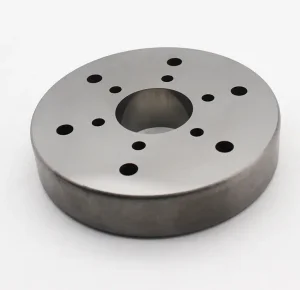
Buy Customized tungsten cemented carbide wear parts for roll crushing Manufacturer, Manufacturers
-

Buy YG8 carbide gripper inserts for chuck jaw Manufacturers, Supplier
-
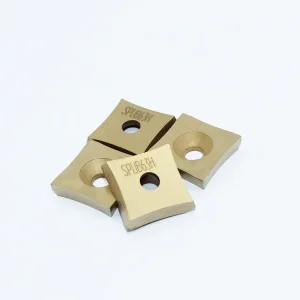
Buy Wholesale woodworking blades tungsten carbide insert milling inserts inconel Manufacturers, Suppliers
-

China SPUB86F TiN coating tungsten carbide tube scarfing insert Manufacturers, Suppliers
-
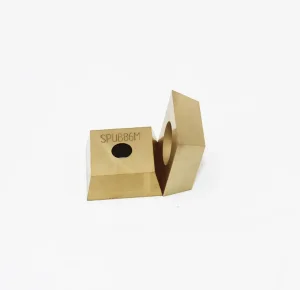
China High quality SPUB86M china indexable tungsten carbide_inserts Manufacturer, Supplier
Partner with an Established Cemented Carbide Manufacturer
Send your custom technical drawings, specification sheets, or target grade requirements. Our metallurgical engineers provide direct pricing, grade recommendations, and lead-time analysis within 8 hours.