
Precision Non-Magnetic Carbide Assemblies
Ultra-low magnetic permeability (μr ≤ 1.005) sintered parts built to counter galvanic corrosion and erosive multi-phase fluid flow in high-temperature environments.
-

Kuwait Standard Non-Magnetic Carbide Scarifier Cutter Wear Parts
-

High Precision Carbide Cutting Tool Wear Parts for Kuwait Operations
-

Wholesale Non-Magnetic Cemented Carbide Wear Parts for Kuwait
-

Industrial Non-Magnetic Carbide Pins for Kuwait High-Spec Manufacturing
Industrial Dynamics & Non-Magnetic Carbide Demand in Kuwait
The State of Kuwait represents one of the most demanding operational environments in the Middle East. With significant expansions overseen by the Kuwait Oil Company (KOC) and the Kuwait National Petroleum Company (KNPC), drilling depths and complex geologies—such as the high-pressure, high-temperature (HPHT) non-associated gas fields in North Kuwait (Najmah-Sarjelu and Marrat formations)—require precision equipment that can withstand immense mechanical stress.
Standard cemented carbide tools that use ferromagnetic cobalt (Co) binders pose serious challenges in deep well drilling and directional telemetry. When logging instruments like Measurement While Drilling (MWD) and Logging While Drilling (LWD) travel miles below ground, stray magnetic fields caused by standard tool string components interfere with sensitive magnetometers and directional sensors. This leads to azimuth deviation errors and expensive downhole inaccuracies.
By replacing ferromagnetic binders with advanced nickel-chromium matrices (Ni-Cr), non-magnetic carbide components provide complete magnetic transparency alongside extreme hardness (HRA 88–92). This ensures reliable operation across heavy drilling programs, subsea choke manifolds, and coastal refineries in Mina Al-Ahmadi and Mina Abdullah.
Kuwait Vision 2035 & Heavy Crude Initiatives
Under Kuwait's "New Kuwait Vision 2035," long-term strategic plans require raising oil production capacity to 4 million barrels per day. Tapping into the difficult Lower Fars heavy oil reservoir requires aggressive cyclical steam stimulation (CSS) and complex progressive cavity pumping (PCP). These operations demand high wear resistance, resistance to high-salinity formation water, and absolute dimensional stability under continuous thermal loading.
Formulation Breakdown: Overcoming Challenging Environments
Standard cemented carbide fails prematurely in sour oil fields and coastal marine settings due to cobalt leaching and binder depletion. Our nickel-alloyed binder systems prevent both magnetic distortion and chemical degradation.
Zero Magnetic Interference (MWD/LWD)
Ferromagnetic binders alter directional data downhole, risking collision in high-density cluster wells across Burgan and Sabriya fields. By using non-magnetic nickel-based matrices, magnetic susceptibility is virtually eliminated, keeping compass and gyroscope telemetry accurate.
Corrosion-Erosion Synergy Defense
Kuwait's formations are known for high H2S sour gas content, carbon dioxide (CO2), and high-salinity brine. Pure cobalt binders leach quickly in low-pH environments. Our specialized WC-Ni-Cr alloys prevent corrosion channels and grain loosening.
Hot Isostatic Pressing (Sinter-HIP)
Micro-porosity can lead to structural failure under cyclic mechanical shock. Every blank undergoes Sinter-HIP processing under 10 MPa of inert argon at high temperatures, removing internal micro-voids and achieving theoretical density.
Specialized Industrial Applications Across Kuwait
Custom-fabricated components matched to specific downhole, subsea, and plant maintenance operations.
| Application Sector | Specific Component | Operating Challenge in Kuwait | Material Solution |
|---|---|---|---|
| Directional Well Drilling (MWD/LWD) | Telemetry Sensor Housings & Deflection Wear Plates | Interference with magnetometers in clustered drilling platforms | Ultra-Low Magnetic Nickel Carbide (μr < 1.002, 10% Ni Matrix) |
| Sour Gas Upstream Processing | Choke Valve Stems, Seats & Flow Control Orifices | Hydrogen sulfide stress cracking and severe sand-slurry cavitation | Sub-micron WC-Ni-Cr-Mo composite formulation (HRA 91.5) |
| Artificial Lift Systems (ESP / PCP) | Intermediate Radial Bushings & Thrust Bearings | Heavy crude (11–18° API) with fine sand slurry under continuous operation | Self-lubricating specialized carbide grade with high thermal conductivity |
| Desalination & Power Generation | High-Pressure Sea Water RO Pump Mechanical Seal Faces | Severe chloride pitting and galvanic corrosion in Arabian Gulf waters | Cobalt-free tungsten carbide with fine chromium-carbide grain growth inhibitors |
| Refining & Fluidized Catalytic Cracking | Catalyst Slide Valve Liners & Thermowell Sleeves | High-temperature abrasive catalyst dust traveling at high velocity | Erosion-resistant coarse-grain WC-Ni matrix optimized for thermal shock |
Chinese Manufacturing Strength for Kuwait EPCs & Drillers
For Kuwaiti procurement heads, local oilfield services suppliers, and international EPCs managing projects under MEW and K-Companies, balancing cost and delivery times can be difficult. European or North American carbide suppliers often require 16 to 24-week delivery schedules for custom sintered non-magnetic parts.
Direct supply from China's primary tungsten industrial zone helps resolve these bottlenecks:
- Upstream Tungsten Control: Direct access to primary ammonium paratungstate (APT) ensures steady raw material quality without volatile middleman pricing.
- Advanced Tooling & Mold Production: Complete in-house wire EDM, CNC profile grinding, and rapid tooling produce complex custom geometries from 2D/3D CAD drawings within 10 to 14 business days.
- Reliable Quality Control: Every batch is verified using magnetic saturation meters, coercive force meters, and metallographic imaging, accompanied by full 3.1 inspection certification.
- Fast Logistics to the Arabian Gulf: Direct sea-freight routes from Ningbo and Shanghai to Kuwait's Shuwaikh and Shuaiba ports deliver shipments in 18 to 22 days. High-priority orders can be dispatched via air freight directly to Kuwait International Airport (KWI) within 5 to 7 days.
Need Engineering Support for an Upcoming Kuwait Tender?
Our metallurgical team can assess your 2D/3D technical drawings, recommend optimal binders, and verify magnetic permeability compliance.
Send Inquiry NowNon-Magnetic Tungsten Carbide Rods, Blanks & Tooling Inserts
Finished ground components and semi-sintered blanks ready for custom EDM processing, downhole sub-assemblies, and industrial machining.
-

Kuwait Spec Non-Magnetic Carbide Rods for Meter and Sensor Shafts
-

Nickel-Based Tungsten Carbide Rods for Industrial Machinery in Kuwait
-

Nickel-Bonded Non-Magnetic Carbide Rods for Kuwait Precision Tooling
-

Non-Magnetic Solid Carbide Pin Plug Gauges for Kuwait Metrology
-

Tungsten Carbide Cold Heading & Wire Drawing Dies for Kuwait Plants
-
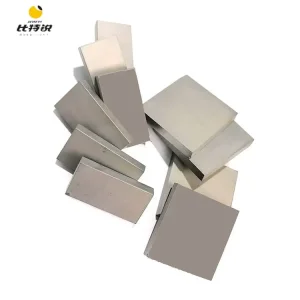
HIP-Sintered Wear-Resistant Flat Carbide Plates for Kuwait Valves
-

Special Tungsten Carbide Button Inserts for Kuwait Downhole Bits
-

Carbide Torque Gripper Inserts for Rig Chuck Jaws in Kuwait
Frequently Asked Questions: Non-Magnetic Carbide Parts
Detailed technical answers for engineering, reliability, and international procurement teams.
What magnetic permeability threshold is guaranteed for Kuwait directional drilling applications?
For downhole telemetry, MWD, and LWD equipment, we produce parts with a relative magnetic permeability (μr) between 1.001 and 1.005. Standard cobalt-bonded carbide typically displays magnetic values exceeding 1.5 to 3.0, making it unsuitable for directional tools. Every order includes magnetic permeability test certificates using calibrated low-field permeability meters.
How does a nickel (Ni) binder perform in Kuwait's high-salinity and sour (H2S) environments?
Cobalt binders dissolve quickly in low-pH, sour, or chloride-heavy fluids, leading to grain boundary breakdown and premature failure. Nickel-bonded matrices resist acid corrosion, sulfide stress cracking, and cavitation erosion much more effectively. In standard ASTM G31 acid testing, our WC-Ni-Cr grades show less than 15% of the corrosion rate observed in traditional WC-Co grades.
Can you manufacture components according to custom engineering drawings with strict tolerances?
Yes. Custom manufacturing to precise customer drawings is our core focus. We work with both finished ground components and semi-sintered blanks. Using multi-axis CNC surface grinding, optical profile grinding, and wire EDM, we achieve outer diameter tolerances of h6, hole concentricity within 0.005 mm, and surface finishes down to Ra 0.05 μm for high-pressure seal faces.
What are standard sample lead times and full production schedules for Kuwait?
Standard prototyping and drawing confirmation takes 7 to 10 days. Sinter-HIP production for custom tooling takes 15 to 20 days depending on component geometry and required finish. Air cargo via Kuwait International Airport (KWI) delivers in 5 to 7 days, while consolidated sea shipments to Shuwaikh Port arrive within 20 to 25 days.
What material testing reports are supplied with international orders?
Each delivery includes an EN 10204 3.1 material test certificate. Documentation covers raw powder purity assays, density (g/cm³), Rockwell hardness (HRA), transverse rupture strength (TRS), microstructural grain size assessments, magnetic permeability test logs, and coordinate measuring machine (CMM) dimensional reports.
Partner with an Experienced Non-Magnetic Carbide Supplier
Work directly with our metallurgy and engineering specialists to lower total downhole maintenance costs, prevent casing wear, and optimize part life for your Kuwait operations.