
High-Torque Milling, Scarifying & Structural Carbide Parts for Moscow Tooling Hubs
Direct from our precision Sinter-HIP furnaces: high-coercivity tungsten carbide components engineered to withstand abrasive degradation in extreme Russian operational climates.




Moscow’s Industrial Paradigm: Wear-Part Localization & Heavy Manufacturing Demands
An in-depth metallurgical analysis of how the Central Federal District and Moscow Oblast are sourcing high-durability tungsten carbide solutions amidst complex supply shifts.
Strategic Transition to Direct-to-Factory Metallurgy
The Moscow metropolitan industrial cluster, spanning traditional mechanical manufacturing districts from Podolsk and Kolomna to the Stankostroyeniye centers, has undergone an unprecedented transformation. Industrial plants previously reliant on Western European carbide tooling (such as Sandvik, Kennametal, and Ceratizit) face mandatory import substitution targets and heightened lead-time pressures. High-performance cemented tungsten carbide parts (known historically under the GOST standard nomenclature as VK6, VK8, VK15, and VK20) require precise metallurgical matching.
For high-precision aerospace subassemblies, heavy defense engineering, and transmission gear shaving, standard off-the-shelf catalog carbide inserts no longer meet operational longevity demands. Buyers in Moscow need customized wear geometries, specialized non-magnetic formulations (WC-Ni), and bespoke tool blanks that can endure intermittent cutting shocks and thermal fatigue typical of machining high-temperature alloys like VT6 (titanium) and nickel-chromium superalloys.
Central Federal District Procurement Drivers
- Near-Zero Porosity via 10MPa Sinter-HIP: Eliminates catastrophic thermal fracture in deep-hole boring and high-feed railway tamping.
- Direct Technical Translation (GOST to ISO/GB): Seamless cross-engineering between GOST 3882-74 (VK-series) and premium ISO K10–K40/P10–P40 specifications.
- Logistical Velocity & Custom Sizing: Fast delivery to Moscow customs terminals with comprehensive metallurgical certification (chemical composition, density, coercive force, and HRA/HV hardness).
Advanced Tungsten Carbide Sintering Technology: Formulations, Grain Size & Binder Chemistry
How state-of-the-art submicron grain distribution and patented binder chemistry bridge the theoretical gap between fracture toughness (K1c) and extreme abrasive hardness.
| Alloy Grade (Zhongfu) | Russian GOST Equivalent | WC Grain Class | Binder (Co/Ni %) | Density (g/cm³) | Hardness (HRA) | TRS (MPa) | Primary Industrial Moscow Use-Case |
|---|---|---|---|---|---|---|---|
| ZF-K05 / YG3X | ВК3-М (VK3-M) | Submicron (0.6 µm) | 3.0% Co | 15.20–15.35 | 92.8–93.5 | 1850 | Precision finishing pins, wire drawing dies, glass fiber slitting knives |
| ZF-K15 / YG6X | ВК6-М (VK6-M) | Fine (0.8 µm) | 6.0% Co | 14.85–15.00 | 91.5–92.5 | 2300 | Gear shaper cutters, spiral bevel blades, cast iron machining |
| ZF-K20 / YG8 | ВК8 (VK8) | Medium (1.4 µm) | 8.0% Co | 14.60–14.80 | 89.5–90.5 | 2650 | Railway track tamping picks, concrete scarifier blades, rock drilling tips |
| ZF-M30 / YG15 | ВК15 (VK15) | Medium-Coarse (2.0 µm) | 15.0% Co | 13.90–14.15 | 87.0–88.2 | 3100 | Heavy stamping punches, cold heading dies, roll crushing rings |
| ZF-N10 (Non-Mag) | ВКН-8 / Nickel Bond | Fine (0.9 µm) | 10.0% Ni-Cr | 14.45–14.65 | 88.5–89.8 | 2200 | MWD downhole directional drilling tools, magnetic fluid seals, chemical valves |
Liquid Phase Sinter-HIP
Operating at 1450°C under 100 bar pure Argon pressure. Sinter-HIP dissolves residual micro-voids, elevating transverse rupture strength by over 20% compared to vacuum sintering alone.
Grain Growth Inhibitors
Micro-alloying with Vanadium Carbide (VC) and Chromium Carbide (Cr3C2) prevents abnormal grain coalescence during liquid state transition, securing uniform hardness distribution across complex shapes.
Multi-Axis EDM & h6 Grinding
Our post-sinter precision finishing shops utilize copper-tungsten wire EDM, profile optical grinding, and diamond lapping to achieve diametrical tolerances down to ±0.002mm and surface finishes of Ra 0.05.
Mission-Critical Operating Environments in Greater Moscow & European Russia
Engineered to conquer high mechanical stresses, severe chemical erosion, and extreme seasonal thermal cycles.
Rail Infrastructure Maintenance (RZD Networks)
The Moscow Railway (Московская железная дорога) represents the densest passenger and freight hub in the Eurasian rail corridor. Ballast tamping machines (Plasser & Theurer, Remputmash) demand carbide tamping tines that can strike hard granite ballast at 35Hz vibration without chipping. Our dual-grain structure combines impact-resistant YG15 bases with ultra-hard YG8 tungsten tips, tripling operational intervals between track-maintenance downtime windows.
Oil & Gas Refinery Valve Trim & Slurry Transport
At Moscow Refinery (Kapotnya) and regional pipeline junctions, fluid handling equipment suffers from entrained quartz sand erosion and sulfur-rich chemical pitting. Traditional martensitic stainless steels perish within weeks under cavitating conditions. Zhongfu custom solid tungsten carbide valve stems, seats, and orifice sleeves deliver zero-leakage sealing across 10,000+ continuous high-pressure throttling hours.
High-Precision Gear Shaving & Transmission Cutting
Automotive and heavy machinery transmissions manufactured in Dmitrov and Yaroslavl require high-pitch module milling cutters. Our tungsten carbide gear inserts and hobs deliver high tooth profile accuracy, preventing micro-chipping during high-speed feed passes on 40Kh and 20KhN3A forged alloy steels.
Mining & Aggregates Crushing (HPGR Rolls)
Crushing quartzite, granite, and metallurgical ores near the Central European Russian perimeter demands High-Pressure Grinding Roll (HPGR) studs that do not spall. Our semi-spherical carbide studs undergo 100% ultrasonic defect inspection, guaranteeing optimal autogenous wear layers in high-tonnage roller presses.
Technological Roadmap & Metallurgy Evolution (2025–2035)
Anticipating next-generation wear challenges: How Zhongfu is leading the shift toward functionally graded carbides and multi-cation nanocoatings.
Functionally Graded WC-Co
Sintering multi-layered powder matrices to create wear parts with an ultra-hard exterior layer (HRA 93.0) transitioning seamlessly into a shock-absorbing tough core (HRA 86.5), eliminating brazing shear faults.
Additive Binder Jetting + Sinter-HIP
Printing complex internal conformal cooling channels within solid carbide drill heads and waterjet nozzles, followed by high-pressure HIP consolidation to achieve 99.9% theoretical density.
Cobalt-Free Ecological Hardmetals
Replacing cobalt with high-entropy alloy (HEA) binders (Fe-Ni-Cr-Al-Mn), offering superior acid corrosion resistance, reduced toxicological exposure, and zero paramagnetism for sensitive sensing assemblies.
End-to-End Custom Carbide Fabrication for Moscow Industrial OEM Partners
From metallurgical formula tuning to precision CAD/CAM electrical discharge machining and certified non-destructive testing.
Powder Synthesis & Ball Milling
100% virgin ammonium paratungstate (APT) derived tungsten carbide powder. Wet ball milling in alcohol slurry ensures uniform cobalt binder dispersal without iron contamination.
CNC Multi-Axis Dry Pressing
Hydraulic and electric presses up to 500 tons with closed-loop pressure compensation produce near-net shapes, controlling green density variations within ±0.03 g/cm³.
Sinter-HIP Densification
High-vacuum dewaxing followed by pure argon gas pressurization at 10 MPa. Eliminates micro-cracks and guarantees zero microporosity conforming to ISO 4505 standards.
Frequently Asked Technical Questions by Moscow Industrial Buyers
Clear, unvarnished metallurgical guidance addressing engineering, logistics, and quality assurance criteria.
Can you manufacture tungsten carbide components directly from Russian GOST blueprints?
How do you guarantee that carbide wear parts will not catastrophically shatter under sub-zero Moscow winter operations?
What is your typical manufacturing lead time for custom carbide tooling exported to the Moscow region?
What documentation and quality certifications accompany each shipment to the Russian Federation?
Do you manufacture non-magnetic tungsten carbide parts for measurement-while-drilling (MWD) tools?
How do you prevent brazing cracks when bonding carbide wear teeth onto carbon steel bodies?
Can you supply rough-sintered blanks with grinding allowance or only finished ground parts?
What is your policy on sample testing and trial batch validation?
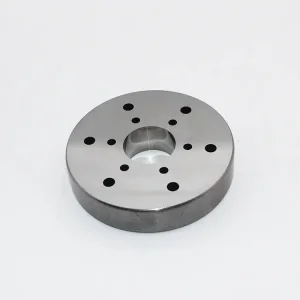
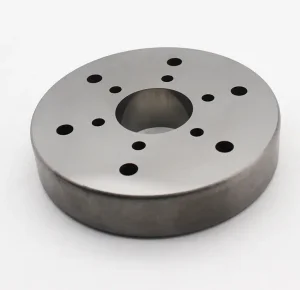
Precision High-Pressure, Crushing & Railway Track Wear Components
Explore our specialized tungsten cemented carbide parts deployed across heavy aggregate processing, fluid jetting, laboratory milling, and railway network maintenance.






Ready to Eliminate Downtime in Your Moscow Manufacturing Operations?
Send your CAD models (.step, .dwg, .pdf) or Russian GOST material specifications directly to our engineering metallurgical division. We reply with formal quotes, sintering analysis, and mold feasibility studies within 8 hours.