
Heavy-Duty Engineered Carbide Tooling & Fluid Handling for Iraq
Direct factory delivery of mission-critical wear parts, gear-shaping cutters, and high-pressure fluid valves optimized for harsh Middle Eastern operating parameters.
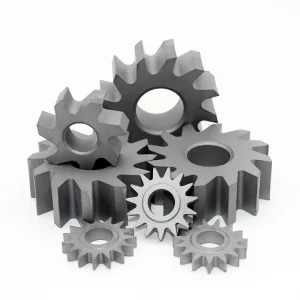
Wholesale Factory wholesale custom tungsten carbide spiral bevel gear milling cutters for sale Suppliers, Factory
View Product Specs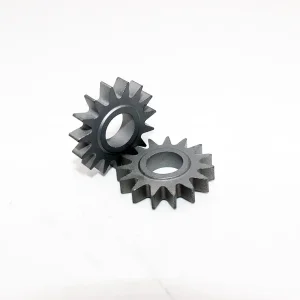
China Wholesale custom tungsten carbide module gear milling shaper cutters Manufacturers, Suppliers
View Product Specs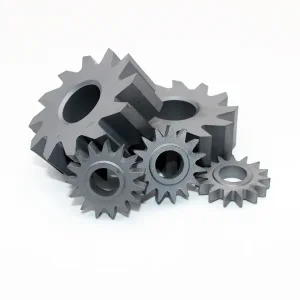
Wholesale China best price custom tungsten carbide steel cutters concrete scarifier blade Supplier, Factory
View Product Specs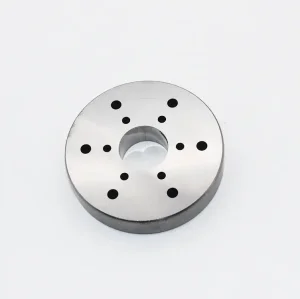
Buy Customized size style tungsten cemented carbide carbon steel reducer blind plate flange Factory, Factories
View Product SpecsThe Strategic Demand for Cemented Carbide in Iraqi Industrial Modernization
A rigorous examination of heavy wear environments across Iraq's extractive reserves, municipal rebuilding programs, and expanding petrochemical hubs.
1. Localized Industrial Dynamics in Iraq: From Basra to Kurdistan
The Republic of Iraq is progressing through an unprecedented scale of industrial revitalization. At the center of this transformation is the sustained extraction and modernization of world-class hydrocarbon reservoirs—notably the Rumaila, West Qurna, Zubair, and Majnoon fields situated in southern Iraq near Basra, alongside deep formations across the Kirkuk and Maysan governorates. Downhole exploration in these geological strata exposes drilling tooling, Measurement-While-Drilling (MWD) housings, and bottom hole assemblies (BHA) to brutal abrasive quartz sands, aggressive hydrogen sulfide (H2S), corrosive saline brine, and extreme bottom-hole pressures exceed 10,000 PSI.
Standard hardened chrome-moly steels or thermal spray coatings suffer catastrophic wear within hundreds of operational hours under such severe slurry erosion. The requirement for custom-sintered tungsten carbide components—specifically submicron-grain choke valve trims, carbide valve seats, sand-blasting nozzles, downhole stabilizer inserts, and non-magnetic drill collars—has transitioned from an operational option to a technical prerequisite. Iraqi field operators and engineering procurement contractors (EPCs) are acutely aware that every unplanned trip out of hole (POOH) represents substantial downtime expenses. Precision-formulated cemented carbide components mitigate premature tool washout, stabilize flow rates in crude processing facilities (CPF), and extend maintenance intervals across critical transmission manifolds.
Concurrently, nationwide reconstruction is driving significant demand for wear-resistant components in municipal infrastructure, transport, and raw material processing. The massive expansion of regional cement manufacturing plants in Sulaymaniyah, Muthanna, and Erbil necessitates ultra-tough carbide inserts for clinker crushing rolls, grinding mill scrapers, and raw material pulverizers. In the transportation sector, the continuous modernization of the Iraqi Republic Railways (IRR) linking Umm Qasr Port with Baghdad requires heavy-duty ballast tamping tines and track-maintenance picks capable of withstanding extreme dynamic shock against hard basalt ballast under desert temperatures exceeding 50°C.
2. Global Industrial Paradigm: Precision Sintering vs. Severe Mechanical Wear
Across the international manufacturing theater, the cemented carbide market has shifted from standardized off-the-shelf blanks toward custom-engineered, application-tailored metallurgical profiles. Historically, procurement teams selected generic grades (such as standard ISO K10 or K20). Today, high-efficiency production paradigms require grain-size-engineered compositions ranging from ultrafine (0.2–0.5 µm) for extreme cutting edge sharpness to extra-coarse (3.0–6.0 µm) combined with 10% to 20% binder content to withstand severe mechanical impact in percussive drilling and asphalt scarification.
The global energy and mineral processing industries are progressively standardizing on Sinter-HIP (Hot Isostatic Pressing) technology. By applying simultaneous high temperature (up to 1,450°C) and uniform argon gas pressures of up to 10 MPa inside the furnace, microscopic microporosities are eliminated. For Iraqi industrial buyers, sourcing Sinter-HIP manufactured carbide parts guarantees near-zero defect rates, eliminating the risk of internal micro-fractures when cutting tools or flow valves are subjected to cyclical hydrodynamic stress and high impact.
Nano & Ultrafine Grain Metallurgy
Controlled powder milling produces uniform WC grain sizing down to 0.4µm, delivering high surface hardness (up to 92.5 HRA) and wear resistance for precision metal machining, slitting blades, and internal turning tools.
Non-Magnetic Ni-Binder Tech
Replacing traditional ferromagnetic Cobalt with engineered Nickel matrices yields 100% non-magnetic parts with relative magnetic permeability (µr) < 1.005, essential for directional MWD/LWD drilling tools in oil exploration.
High-Integrity Brazing Metallurgy
Utilizing high-frequency induction brazing with silver-copper-nickel sandwich foils ensures shear joint strengths exceeding 260 MPa, preventing catastrophic carbide detachment under severe vibratory loads.
Why Iraqi Industry Partners with Zhongfu: Direct Factory Engineering Power
Direct supply-chain integration from raw tungsten ore processing to finished micro-ground parts eliminates intermediary markup and ensures verified material traceability.
Vertical Integration: From Jiangxi Tungsten Reserves to Iraqi Industrial Sites
Our facility is based in Jiangxi, China—the epicenter of global tungsten reserves. This strategic geographical position grants us unmatched direct access to virgin ammonium paratungstate (APT) and pure tungsten powder, free from recycled scrap contamination. This metallurgical consistency is the foundational bedrock of all high-performance cemented carbide: Zero recycled powder, strict control of trace contaminants, and batch-to-batch structural integrity.
For industrial operators in Iraq, procurement challenges often revolve around lead times, volatile supply chains, and components that fail prematurely due to internal porosity. Our manufacturing ecosystem integrates five critical stages in-house:
- Formulation Tuning: Proprietary WC-Co and WC-Ni formulations engineered to balance hardness (HRA) and transverse rupture strength (TRS).
- CNC Multi-Axis Isostatic Pressing: Near-net shape forming to minimize raw material waste and lower finish-grinding costs.
- Vacuum Sinter-HIP Furnaces: 10 MPa pressure densification ensuring 99.99% theoretical density and zero structural microporosity.
- Micron-Level Precision Grinding: Centerless, cylindrical, and optical profile CNC grinding yielding tolerances up to ±0.002 mm (h6 standards).
- Metallographic Microstructure Verification: Every production batch is certified via scanning electron microscopy and coercive force testing.
- Expedited Direct Export Logistics: Comprehensive sea-air multi-modal freight routes directly connecting Shanghai/Shenzhen to Umm Qasr Port and Baghdad International Airport.
Iraqi Industrial Cemented Carbide Grade Specification Matrix
Selecting the optimal balance between cobalt binder percentage, tungsten carbide grain morphology, and matrix toughness is critical for downhole and abrasive mechanical applications:
| Grade Code | Binder Content | Density (g/cm³) | Hardness (HRA) | TRS (MPa) | Typical Iraq Industrial Application |
|---|---|---|---|---|---|
| YG6X | 6.0% Cobalt | 14.90 - 15.05 | 91.5 - 92.5 | 1800 - 2000 | High-precision finish turning, gear milling cutters, chilled cast iron machining. |
| YG8 | 8.0% Cobalt | 14.65 - 14.85 | 89.5 - 90.5 | 2200 - 2400 | Concrete scarifier blades, road milling tips, rotary drilling teeth in limestone. |
| YG11C | 11.0% Cobalt | 14.30 - 14.50 | 86.5 - 87.5 | 2600 - 2800 | Railway ballast tamping picks, heavy impact roller crushing inserts, downhole reamers. |
| YG15 | 15.0% Cobalt | 13.95 - 14.15 | 85.5 - 86.8 | 2900 - 3200 | Heavy cold heading dies, hydraulic flange liners, stamping punches under shock. |
| YN8 (Ni-Bond) | 8.0% Nickel | 14.60 - 14.80 | 89.0 - 90.2 | 2000 - 2200 | Non-magnetic MWD oilfield directional drilling tools, H2S/sour gas choke valve trims. |
| YG20 | 20.0% Cobalt | 13.40 - 13.60 | 83.5 - 85.0 | 3300 - 3600 | Severe-impact roll crushing segments, pulverizer blocks for raw cement minerals. |
Severe Operating Scenarios Across Iraq's Industrial Sectors
From fine alluvial silica erosion along the Tigris-Euphrates basin to high-sulfur sour gas flows in Basra, standard metals fail rapidly. Discover where our custom carbide parts excel.
Basra Oilfields: Sand-Slurry Valve Seats & Chokes
Crude streams in Southern Iraq carry substantial abrasive quartz sand fractions. Standard alloy control valves erode in weeks. Custom-machined solid tungsten carbide seats, choke beans, and throttle sleeves maintain precise orifice geometries under differential pressures exceeding 5,000 PSI, preserving separation efficiency and preventing line blowouts.
Kirkuk & Northern Basins: Non-Magnetic MWD Bushings
Directional horizontal drilling through hard carbonate formations requires precision electromagnetic telemetry. Our nickel-bonded non-magnetic tungsten carbide radial bearings and wear sleeves provide exceptional erosion resistance against drilling mud while exhibiting magnetic permeability (µr) near unity, ensuring zero distortion to sensitive magnetic survey sensors.
Iraqi Railway Modernization: Track Tamping Tines
The reconstruction of the north-south Iraqi rail corridor entails continuous mechanised ballast tamping. Tamping picks tipped with our coarse-grain cemented carbide plates resist severe impact fragmentation against hard granite ballast in extreme desert heat, outlasting standard steel tines by more than 10 to 1.
Municipal Highway Projects: Scarifier Cutters
Asphalt repaving across Baghdad and major highway bypasses demands rapid cold milling and concrete scarification. Our high-toughness multi-edge rotary carbide blades shred thermal-aged asphalt and reinforced concrete without edge chipping, reducing drum downtime and cutter replacement cycles.
Kurdistan Cement Manufacturing: Roll Crusher Inserts
Heavy clinker roll crushers in Bazian and Tasluja endure abrasive pulverization loads. We supply custom wear studs and heavy rectangular carbide blocks brazed or mechanically fastened onto crushing rollers, lowering scheduled re-facing frequency and safeguarding throughput consistency.
Petrochemical Refineries: High-Pressure Blind Flanges
Custom carbide-lined carbon steel blind flanges, reducers, and flow-direction elbows resist cavitation erosion and chemical pitting at major processing hubs like the Daura Refinery in Baghdad and Shuaiba Refinery in Basra.
International QA/QC Engineering Standards for Iraqi Enterprise Procurement
Every custom component destined for Middle Eastern industrial operations undergoes multi-stage non-destructive testing and metallurgical certification before export dispatch.
Strict Qualification Checklist for Enterprise Buyers
Purchasing directors and chief engineers working on Iraqi projects require verifiable documentation to guarantee that parts perform under rigorous continuous service. Our factory operates in full alignment with international standards:
- ASTM B777 / ISO 4499 Microstructure Inspection: Certified metallurgical cross-section analysis ensuring zero Type A/B porosity and absence of unreacted free carbon or brittle eta-phase (W3Co3C).
- Ultrasonic Flaw Detection: 100% volumetric non-destructive testing (NDT) on large cross-section blanks, plates, and blocks to identify internal cracks prior to precision wire EDM cutting.
- Coordinate Measuring Machine (CMM) Verification: Dimensional inspection with digital reports confirming geometric tolerances, concentricity, and roundness within sub-micron bands.
- Surface Roughness Profilometry: Fine mirror polishing down to Ra 0.05 µm for dynamic mechanical seal faces, valve orifices, and downhole bearing surfaces.
Custom Sintered Tungsten Carbide Wear Parts & Rail Tooling for Iraq
Explore our specialized range of water jet orifices, heavy crushing inserts, pulverizing jars, and high-impact railway track maintenance tamping tines.
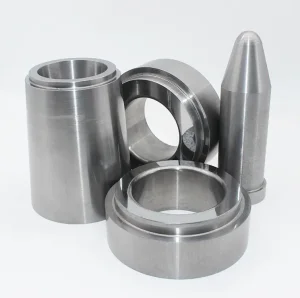
Wholesale Customized tungsten cemented carbide hardware parts water jet nozzle seat valve Factory, Factories
View Product Specs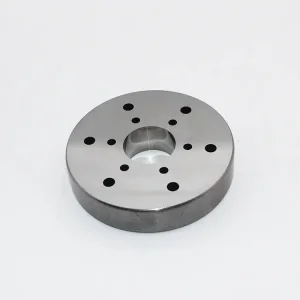
China Customized tungsten carbide fitting elbow tee cap reducer pipe flanges Suppliers, Factories
View Product Specs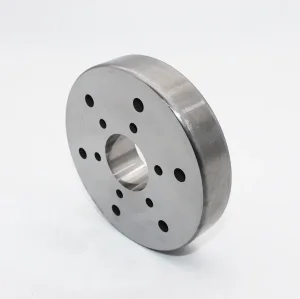
China Customized tungsten carbide insert for wear parts crushing roll Manufacturer, Suppliers
View Product Specs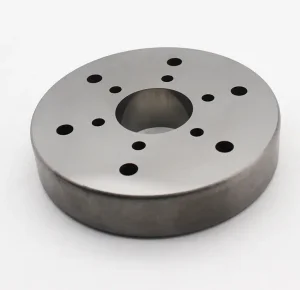
Buy Customized tungsten cemented carbide wear parts for roll crushing Manufacturer, Manufacturers
View Product Specs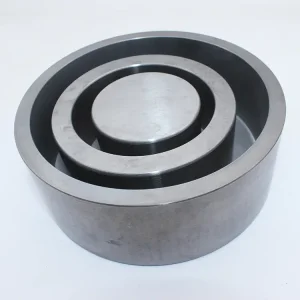
Wholesale Factory sale customized carbide milling jar tungsten carbide bowl/ jar/mortar Manufacturer, Factory
View Product Specs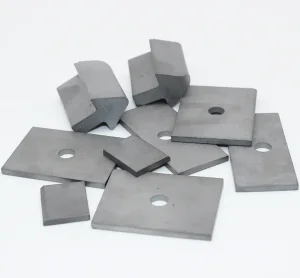
China New shape cemented carbide tips for railway track tamping pick center tooth Manufacturers, Factory
View Product Specs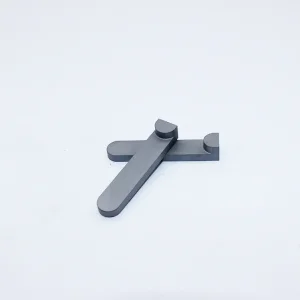
Buy Tungsten carbide tamping tines use tip wearing part for Railway Industry Supplier, Suppliers
View Product Specs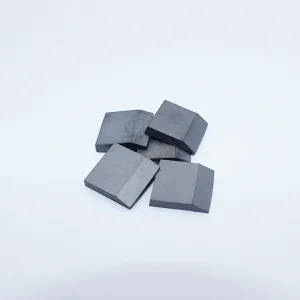
Buy New Shape Tungsten Carbide Tamping Tine Tools for Railway Industry Manufacturer, Factories
View Product SpecsFrequently Asked Questions for Iraqi Carbide Buyers
Expert answers addressing customs clearance, drawing confidentiality, grade optimization, and shipping timelines to Iraq.
Accelerate Your Operations with Custom Carbide Engineering
Send your drawings, specifications, or worn sample images to our technical department today. Receive a comprehensive metallurgical analysis, tolerance review, and quotation within 8 hours.
Send Inquiry Now