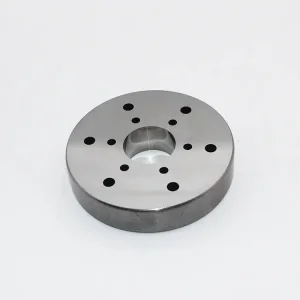
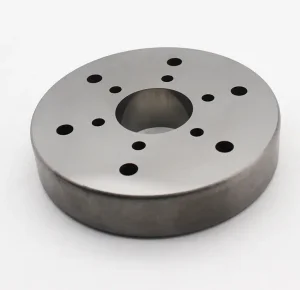
High-Performance Carbide Components for Jakarta Machining Hubs
Featured customized cutters, scarifier teeth, and pressure flange blanks formulated to resist high thermal cracking and extreme abrasive mechanical wear.




The Greater Jakarta Manufacturing Nexus: Tungsten Carbide Demand Drivers
The industrial ecosystem surrounding Daerah Khusus Ibukota Jakarta (DKI Jakarta) and extending across the Jabodetabek megapolis (Jakarta, Bogor, Depok, Tangerang, Bekasi) alongside the extended industrial corridors of Cikarang, Karawang, and Purwakarta constitutes the manufacturing powerhouse of Southeast Asia. As international automotive conglomerates, chemical processors, palm oil refineries, and heavy infrastructure projects accelerate operational cycles under Indonesia's "Making Indonesia 4.0" master plan, the mechanical stresses imposed on cutting, pressing, shaping, and pulverizing equipment have reached historic thresholds.
In high-speed production environments such as the MM2100 Industrial Town, Greenland International Industrial Center (GIIC), and Karawang International Industrial City (KIIC), unscheduled downtime caused by premature tooling failure translates into massive overhead losses. Cemented tungsten carbide (WC-Co) custom parts serve as the vital material baseline for modern automated manufacturing lines. The extreme hardness (up to 92.5 HRA), superior compressive strength, and high Young's modulus of sintered tungsten carbide make it the material of choice over hardened tool steels, high-speed steels (HSS), and basic cobalt alloys.
Automotive Stamping & Powertrain
High-volume Tier 1 & Tier 2 component suppliers in Bekasi and Karawang rely on our custom tungsten carbide cold heading dies, progressive stamping punches, and spiral bevel gear cutters to machine transmission units and engine blocks with micron precision.
Heavy Infrastructure & Track Works
With major mass transit networks, including the Jakarta-Bandung High-Speed Railway (Whoosh) and KAI Commuter networks, our specialized tungsten carbide railway tamping tines and track picks endure continuous ballast stone impact without tip spalling.
Agro-Industrial & Fluid Slurry
Jakarta acts as the corporate and logistics headquarters for vast agricultural processors. Our erosion-resistant carbide waterjet nozzles, valve seats, and crushing roll inserts resist abrasive silica and corrosive palm oil fatty acids during continuous extraction.
Metallurgical Optimization for Demanding Tropical Operating Conditions
Operating machinery in equatorial environments presents distinct tribological challenges: ambient humidity often exceeds 85%, accelerating galvanic and intergranular corrosion when parts are exposed to acidic lubricants or aggressive slurries. Traditional WC-Co formulations with coarse grain sizing often suffer from binder leaching when subjected to chemical washing or aqueous cooling fluids.
To overcome these failure modes, our proprietary powder metallurgy utilizes precision grain boundary control. By introducing grain growth inhibitors such as Vanadium Carbide (VC) and Chromium Carbide (Cr3C2), we produce submicron and ultrafine grain carbide matrices (grain size 0.5–0.8 µm) that exhibit exceptional boundary cohesion. Furthermore, for non-magnetic or highly corrosive applications in offshore oil refining and chemical processing clusters around Cilegon and Merak, we replace the conventional ferromagnetic cobalt binder with a specialized nickel-chromium (WC-Ni-Cr) solid-solution matrix, eliminating chemical pitting and magnetic sensor interference.
Upstream Manufacturing Integration: From Virgin APT to Finished Assemblies
Procurement teams based in Jakarta and surrounding economic development zones face two common bottlenecks when sourcing wear components: European and Japanese original equipment manufacturers (OEMs) demand exorbitant replacement costs and multi-month lead times, while local job shops frequently lack vacuum hot isostatic pressing (Sinter-HIP) facilities, resulting in micro-porosity and sudden brittle fracture. Jiangxi Zhongfu Cemented Carbide Co., Ltd. bridges this gap by offering a fully vertically integrated Chinese supply chain directly to Indonesian enterprise buyers.
Situated in Jiangxi Province—the world's foremost natural hub for high-purity tungsten ore reserves—we execute complete in-house control over the entire production cycle. Unlike low-tier processors that introduce recycled scrap powder (reclaimed zinc-process carbide), our strict quality protocol enforces 100% virgin Ammonium Paratungstate (APT) raw materials. This raw material purity guarantees structural homogeneity, eliminating macro-inclusions that cause micro-cracking under repetitive shock loads.
Advanced Vacuum Sinter-HIP Technology & High-Mix Precision Machining
The core structural integrity of custom carbide components hinges upon the sintering process. We utilize computer-controlled, 100-bar overpressure Sinter-HIP (Hot Isostatic Pressing) furnaces. Under simultaneously applied high thermal energy (1,400°C–1,480°C) and inert gas isostatic pressure, any microscopic voids and gas pockets within the green compact are fully collapsed. The resulting sintered carbide displays theoretical density (near-zero porosity rating ISO A00/B00/C00), drastically improving transverse rupture strength (TRS) by up to 35% compared to conventional hydrogen-atmosphere vacuum sintering.
Following sintering, our precision machine shop—equipped with multi-axis CNC profile grinders, slow-feeding wire electrical discharge machining (WEDM), internal/external cylindrical grinders, and optical profile grinders—achieves surface finishes down to Ra 0.05 µm. Whether your project requires complex internal coolant channels, tight keyway geometries, or custom-tapered valve seats, our engineers manufacture strictly to your 2D engineering blueprints (AutoCAD DWG/DXF) or 3D STEP/IGES models.
Tungsten Carbide Grade Matrix for Industrial Applications
Selecting the optimal carbide grade requires balancing extreme abrasive hardness against dynamic impact toughness. The general rule of powder metallurgy dictates that lower cobalt binder content maximizes hardness and sliding wear life, whereas elevated cobalt content bolsters impact toughness against mechanical shock. Use the comparative matrix below to cross-reference your operational parameters before finalizing engineering drawings.
| Grade Code | Binder Ratio (%) | WC Grain Size (µm) | Density (g/cm³) | Hardness (HRA) | T.R.S. (MPa) | Recommended Jakarta Field Scenarios |
|---|---|---|---|---|---|---|
| YG6X | 6.0% Co | 0.8 (Submicron) | 14.95 | 91.8 – 92.5 | 2,200 | Precision finishing of chilled cast iron, automotive valve seats, and high-wear wire drawing dies. |
| YG8 | 8.0% Co | 1.2 – 1.6 (Medium) | 14.75 | 89.5 – 90.5 | 2,500 | Brazed cutting tools, concrete scarifier blades, wood-milling cutters, and general tooling wear components. |
| YG11C | 11.0% Co | 2.2 – 3.0 (Coarse) | 14.40 | 86.5 – 87.5 | 2,800 | Heavy-shock mining bits, railway ballast tamping picks, aggregate crushing rolls, and hammer mill tips. |
| YG15 | 15.0% Co | 1.6 – 2.2 (Medium-Coarse) | 14.05 | 87.0 – 88.0 | 3,000 | Cold stamping punches, progressive sheet metal stamping dies, deep-drawing dies, and extrusion sleeves. |
| YG20 | 20.0% Co | 2.0 – 2.8 (Coarse) | 13.60 | 85.0 – 86.0 | 3,200 | Cold heading dies for fasteners, heavy-impact forming dies, blanking dies for structural automotive steel. |
| YN08 (Ni) | 8.0% Ni | 1.0 – 1.4 (Submicron) | 14.65 | 89.0 – 90.0 | 2,300 | Non-magnetic wear components, magnetic powder compacting dies, acid-slurry valve seats, and offshore oil seals. |
End-to-End Indonesian Trade Compliance & Port-to-Plant Logistics
International procurement in Indonesia demands a thorough understanding of localized regulatory environments, import licensing protocols, and maritime clearance schedules. Sourcing wear-resistant custom parts through our specialized global sales division guarantees frictionless customs processing, transparent document trails, and minimized total landing costs for industrial buyers across Java and the outer islands.
ACFTA Form E Tariff Elimination
Under the ASEAN-China Free Trade Agreement (ACFTA), we issue official Form E Preferential Certificates of Origin. This classification allows Indonesian importers to clear qualified tungsten carbide products (HS Codes 8209.00 and 8207.70) with 0% to preferential low-duty rates, slashing import tax overheads.
Direct Tanjung Priok Maritime Routes
We maintain dedicated maritime freight corridors from major Chinese export terminals directly to Jakarta's Port of Tanjung Priok and the Cikarang Dry Port (CDP). Standard ocean transit durations average 8 to 12 days, backed by express air options via Soekarno-Hatta (CGK) for critical MRO breakdowns.
Quality Certification & Traceability
Every shipment is accompanied by complete inspection dossiers: 3.1 Mill Test Certificates (EN 10204), metallurgical microstructure images (1000x magnification), hardness test sheets (Rockwell HRA), and 3D CMM coordinate inspection reports for tight geometric tolerances.
Total Cost of Ownership (TCO) Paradigm for Indonesian Plant Managers
In price-sensitive industrial procurement, assessing carbide parts purely on initial purchase price represents an incomplete financial metric. When standard steel wear rings or low-cost re-sintered inserts fail after 150 hours of operation, the direct expenses incurred—labor costs for replacement, production stoppage on continuous stamping presses, and defective workpiece output—far exceed the component's acquisition cost.
By switching to precision HIP-sintered virgin tungsten carbide custom parts, manufacturing plants across West Java regularly achieve a 4x to 8x expansion in continuous operational service life. This longevity flattens change-out cycles, preserves tight tolerance stability across multi-million cycle stamping runs, and lowers the aggregate Cost Per Part (CPP), generating decisive competitive advantages for export-driven manufacturing companies.
Request a Technical Drawing Review & Custom Sintering Quote
Send your 2D/3D CAD drawings to our senior engineering team. We deliver complete material grade evaluations, manufacturability assessments, and factory-direct DDP/FOB quotations within 8 hours.
Send Inquiry Now →Emerging Technological Trends in Hardmetal Manufacturing
The global hardmetal industry is undergoing rapid technological evolution driven by demands for higher machining efficiency, reduced environmental impact, and superior wear surfaces under extreme stress. Jakarta's manufacturing enterprises are directly benefiting from several breakthrough innovations currently deployed across our production lines:
1. Ultrafine & Nano-Grain WC-Co Compositions: By employing advanced chemical vapor reaction powder synthesis, we produce tungsten carbide particles with grain diameters below 0.4 microns. These ultrafine grades provide an exceptional combination of high hardness (>93 HRA) and robust transverse rupture strength, critical for ultra-precise micro-milling cutters and high-density semiconductor trimming dies.
2. Advanced Functional Surface Coatings (PVD/CVD): While cemented carbide exhibits extraordinary bulk substrate properties, high-speed dry cutting operations benefit substantially from modern nanocomposite coatings. Multi-layered coatings such as TiAlN (Titanium Aluminum Nitride), AlCrN (Aluminum Chromium Nitride), and diamond-like carbon (DLC) act as chemical and thermal barriers, preventing thermal deformation at interface temperatures exceeding 900°C.
3. Complex Near-Net-Shape Powder Injection Molding (PIM): For intricate geometric components that would require prohibitive multi-axis diamond grinding or sinker EDM finishing, our specialized Powder Injection Molding (Carbide MIM) technology enables the formation of highly sophisticated profiles, internal fluid passages, and threading directly in the green state, drastically cutting machining scrap and final procurement prices.
Frequently Asked Questions: Jakarta Enterprise Buyers
Clear, direct metallurgical and logistical guidance compiled by our engineering directors and Southeast Asian international trade desk.
How can Jakarta manufacturing plants verify the metallurgical authenticity of your carbide custom parts?
We enforce 100% material transparency. Every customized batch undergoes strict internal metallographic examination, coercivity (Hc) measurement, magnetic saturation (4πσ) verification, and Rockwell hardness testing. With every delivery to Indonesia, we provide comprehensive EN 10204 Type 3.1 inspection certificates documenting exact chemical composition, grain sizing, and mechanical parameters. Enterprise clients are also welcome to conduct independent secondary metallurgical audits through third-party laboratories such as TÜV SÜD or SGS prior to export dispatch.
What is your standard production lead time for customized drawings delivered to Jabodetabek industrial parks?
For custom components requiring specialized pressing tooling or custom EDM profiling, standard prototype production requires approximately 12 to 18 calendar days. Repeat batch orders from pre-existing tool sets are typically sintered and ground within 10 to 14 days. Maritime transit from our factory through direct export lanes to Jakarta's Port of Tanjung Priok takes 8 to 12 days. For emergency breakdown maintenance (MRO), we offer urgent airfreight dispatch directly into Soekarno-Hatta International Airport (CGK) within 3 to 5 business days.
Can you manufacture non-magnetic carbide wear parts for specialized electronics or offshore drilling in Indonesia?
Yes. Conventional tungsten carbide utilizes a cobalt binder, which is ferromagnetic and prone to galvanic corrosion in wet, saline, or chemical environments. We supply high-grade non-magnetic carbide custom parts formulated with proprietary nickel (WC-Ni) or nickel-chromium (WC-Ni-Cr) matrix alloys. These parts exhibit a magnetic permeability (µ) approaching 1.000, making them indispensable for magnetic powder compaction dies, semiconductor sorting equipment, downhole MWD/LWD drilling tools, and corrosion-resistant chemical pump trim.
How do your prices compare against European, Japanese, or domestic Indonesian carbide fabricators?
As a direct Chinese manufacturer situated at the epicenter of raw tungsten ore reserves (Jiangxi), we eliminate intermediate trading company markups and foreign franchise premiums. Compared to European or Japanese brands (e.g., Sandvik, Mitsubishi, Ceratizit), our custom parts deliver equivalent microstructural purity and dimensional accuracy at a 35% to 55% reduction in direct procurement costs. Compared to local Indonesian job shops, we offer advanced multi-step Sinter-HIP furnaces, guaranteeing structural homogeneity that avoids premature breakage in high-load industrial applications.
What documentation is provided to ensure smooth Indonesian customs clearance and preferential duty benefits?
We provide complete international trade documentation packages tailored to Indonesian customs (Bea Cukai) protocols. This includes the Commercial Invoice, Packing List, Clean Bill of Lading, Mill Test Certificate, and crucially, the official ACFTA Form E Certificate of Origin issued by Chinese customs authorities. Under the ASEAN-China Free Trade Agreement, Form E enables qualified Indonesian buyers to reduce or completely eliminate import tariffs under HS Codes 8209 and 8207.
What engineering tolerances and surface finishes can your CNC grinding facility attain on complex carbide geometries?
Our machining workshop is equipped with high-precision CNC surface, cylindrical, and optical profile grinders capable of achieving dimensional tolerances as tight as ±0.002 mm (±2 µm) on precision ground rods (ISO h6 tolerance) and custom cold heading dies. For mirror-finished wear surfaces, valve seats, and drawing dies, our diamond lapping and polishing techniques consistently attain surface roughness parameters down to Ra 0.05 µm (Rz 0.4 µm).
Comprehensive Tungsten Carbide Hardware & Wear Parts Catalog
Engineered for extreme service environments across Indonesian mining, aggregate crushing, fluid jet cutting, high-speed rail, and chemical transportation industries.