
High-Precision Carbide Tooling Engineered for Hungarian Industry
Explore customized cemented tungsten carbide solutions fabricated to micron tolerances for automotive transmission machining, heavy forming, and railway maintenance.




Hungary’s Industrial Transformation & The Demand for Advanced Carbide Parts
A macroeconomic and technical overview of Hungary’s manufacturing ecosystem, tooling challenges, and strategic material selection.
Automotive & EV Battery Hub in Central Europe
Hungary has positioned itself as one of the premier automotive manufacturing hubs within the European Union. Supported by global Tier-1 OEMs and substantial foreign direct investments in automotive assembly (Győr, Kecskemét, Debrecen), the demand for high-performance cutting tools and wear parts is accelerating rapidly.
The simultaneous rise of massive EV battery gigafactories across Hungary has introduced rigorous abrasive cutting, shearing, and stamping conditions where standard tool steel fails prematurely under high cycle rates.
Severe Wear & Sub-Zero Porosity Demands
Industrial machinery operators across Central and Eastern Europe require cemented carbide with zero porosity and ultra-consistent grain structure. Sinter-HIP (Hot Isostatic Pressing) technology is critical for preventing premature micro-chipping during high-speed feed rates.
- Elimination of micro-voids ensures fracture toughness across complex gear hobs and blanking punches.
- Customized binder formulations (Co vs. Ni) allow Hungarian industrial buyers to counter galvanic corrosion in wet machining and chemical pipelines.
Bridging the EU Supply Chain Bottleneck
Procuring custom tungsten carbide components within Western Europe frequently comes with 12 to 18-week lead times and prohibitive engineering tooling fees. Hungarian enterprises require a reliable, responsive direct manufacturing partner able to deliver precision OEM geometries rapidly.
By leveraging certified ISO9001 metallurgical controls and direct-from-source Chinese powder supplies, our supply framework offers European quality compliance at optimized production overheads.
Why Global Procurement Teams Rely on Our Advanced Carbide Production
Combining primary virgin tungsten reserves, integrated powder-to-part manufacturing, and world-class precision machining to optimize total cost of ownership (TCO).
Upstream Material Control in Jiangxi
Situated in Jiangxi, the global epicenter of tungsten mining and raw material processing, we maintain direct control over primary APT (Ammonium Paratungstate) refining and tungsten powder synthesis. This eliminates third-party volatility and ensures 100% virgin powder purity without contaminated scrap reclamation.
Consistent raw grain sizing (from ultrafine 0.2μm to coarse 4.0μm) guarantees repeatable transverse rupture strength (TRS) across all production batches delivered to Europe.
Advanced 5-Axis CNC & Wire EDM Machining
Sintered carbide blanks are only half the journey. Our manufacturing workshop integrates optical profile grinders, centerless grinding units, AgieCharmilles slow-speed wire EDM machines, and surface finishing equipment capable of achieving mirror finishes (Ra ≤ 0.05μm).
Whether you require complex internal keyways, custom coolant passages, or micro-toleranced bevel profiles for gear tooling, we eliminate the need for downstream secondary machining in your facility.
Formulation Engineering for Customized Demands
We do not just produce catalog standards; we engineer custom metallurgical solutions tailored to specific wear vectors: abrasive wear, adhesive wear, thermal fatigue, or corrosive pitting. Our technical consultants work from your 2D/3D CAD models (.step, .dwg, .pdf).
- Proprietary binder doping (Cr3C2, VC) inhibits grain growth during vacuum sintering.
- Optimized cobalt-nickel hybrid binders withstand aggressive petrochemical and coolant environments.
Cemented Carbide Grade Comparison for Industrial Applications
Recommended metallurgical grades for tooling designers, manufacturing engineers, and procurement managers targeting high-wear European manufacturing environments.
| Grade Designation | Binder Composition | Grain Size (μm) | Hardness (HRA) | TRS (N/mm²) | Target Industrial Application in Hungary |
|---|---|---|---|---|---|
| ZF-K10 (YG6X) | 6% Co | 0.6 - 0.8 | 91.5 - 92.5 | 2,200 | High-speed gear shaving, precision turning of chilled cast iron, automotive valve seats. |
| ZF-K20 (YG8) | 8% Co | 1.0 - 1.4 | 89.5 - 90.5 | 2,600 | Railway track tamping tines, concrete scarifier blades, heavy duty wood and metal shredding. |
| ZF-M30 (YG15) | 15% Co | 1.4 - 1.8 | 87.0 - 88.0 | 3,100 | Cold stamping dies, battery electrode cutting anvils, metal punch extrusion tooling. |
| ZF-Impact (YG20C) | 20% Co | 2.0 - 3.0 | 84.5 - 86.0 | 3,400 | Heavy rock crushing rolls, cold heading dies, high-shock forging and blanking blocks. |
| ZF-NonMag (Ni-Bind) | 8-10% Ni | Sub-micron | 88.5 - 90.0 | 2,400 | Corrosive fluid nozzles, magnetic powder compacting dies, valve seats in chemical pipelines. |
Precision Cemented Carbide Parts for Critical Operating Environments
From high-pressure waterjet valve seats to railway tamping picks and heavy crushing roll inserts—engineered for unmatched durability.
-
Hungary Custom Carbide Water Jet Nozzle Seat Valve

-
Hungary Custom Carbide Fitting Elbow Tee Cap Reducer
-
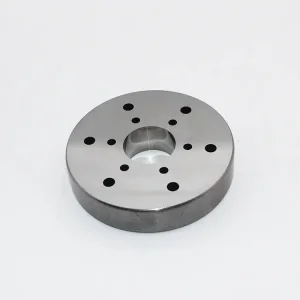
Hungary Custom Carbide Insert for Crushing Roll

-
Hungary Roll Crushing Cemented Carbide Wear Parts
-
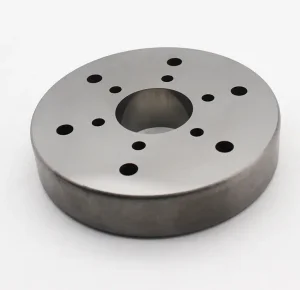
Hungary Customized Carbide Milling Jar Bowl Mortar

-
Hungary Carbide Tips for Railway Track Tamping Pick

-
Hungary Railway Tamping Tines Tip Wearing Part

-
Hungary New Shape Carbide Tamping Tine Tools

Frequently Asked Questions for Hungarian & European Buyers
Essential guidance on ordering custom carbide parts, grade matching, shipping logistics, and quality assurance.
How do you guarantee geometric accuracy from our engineering drawings?
We work seamlessly with standard CAD files including STEP, IGES, DWG, and high-definition vector PDFs. Our CNC profile grinding and slow-speed wire EDM centers achieve tolerances as tight as ±0.002 mm. Every custom batch is subjected to CMM (Coordinate Measuring Machine) verification and optical profilometry prior to dispatch, with full dimensional inspection reports included.
What are standard production and shipping lead times to Budapest or regional Hungary?
Standard prototype and custom tooling fabrication typically requires 15 to 25 working days depending on geometrical complexity and finishing requirements. For expedited deliveries to Hungary, air freight (via Budapest Ferenc Liszt International Airport - BUD) takes 4 to 7 business days. For regular scheduled bulk orders, multimodal rail and sea freight options provide maximum freight economy.
Can you provide material certificates with chemical and physical properties?
Yes. Every shipment leaves our factory with comprehensive Mill Test Certificates (MTC) conforming to EN 10204 / 3.1 standards. The documentation outlines precise chemical compositions (% WC, % Co, % Ni, trace carbides), hardness (HRA), density (g/cm³), transverse rupture strength (TRS), and metallographic microstructure classification (porosity rating).
How do we select the right carbide grade for severe impact or heavy chipping?
When selecting grades for impact-prone tasks—such as railway tamping tines or heavy stamping dies—hardness must be balanced with transverse rupture strength. In these scenarios, our metallurgical team recommends fine or medium-coarse grain structures with elevated cobalt content (12% to 20%), such as ZF-YG15 or ZF-YG20C, ensuring the part absorbs vibrational shock without edge fracturing.