
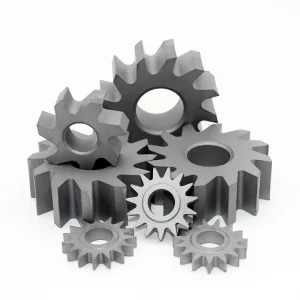
Precision Engineered Blanks & Cutters
Featured Carbide Custom Components Serving Austrian Industry
Direct factory supply of high-performance sintered tungsten carbide solutions manufactured under strict Sinter-HIP densification for the highest tool life expectancy.
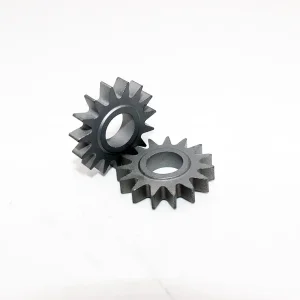
High-Module Tungsten Carbide Shaper Cutters for Austrian Heavy Machinery
View Product Specs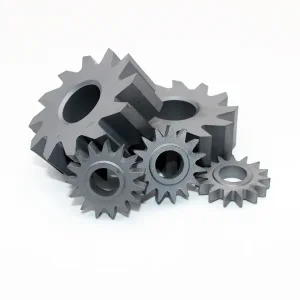
Heavy-Duty Carbide Concrete Scarifier Blades for Alpine Civil Construction
View Product Specs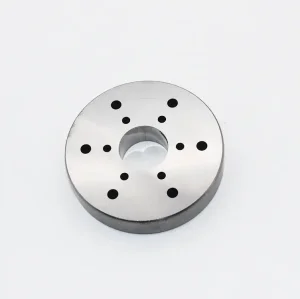
Wear-Resistant Cemented Carbide Lined Blind Flanges for Linz Chemical Parks
View Product Specs
Regional Market Intelligence
Industrial Context: Tungsten Carbide Demand in Austria
Austria represents one of Europe's most technologically sophisticated advanced manufacturing landscapes, where high precision and metallurgy form the foundation of global competitiveness.
Alpine Heavy Tunneling & Civil Engineering
Austria's leadership in the New Austrian Tunnelling Method (NATM) and massive infrastructure corridors like the Semmering Base Tunnel and Koralm Railway creates immense consumption for ultra-coarse grain carbide tips. These tools require exceptional impact toughness (K1C > 14 MPa·m½) to resist catastrophic spalling during high-thrust rock excavation.
Styrian Automotive & Transmission Clusters
Centering around Graz and Steyr, Austria hosts world-class automotive system engineering. The shift toward e-mobility drivetrains has increased demand for sub-micron tungsten carbide gear hobbers, precision internal scraping blades, and cold-heading dies capable of maintaining ±0.002 mm tolerances across million-cycle production lines.
Linz Steelmaking & Continuous Processing
In the heart of Upper Austria, high-performance metallurgy requires wear-resistant scarfing inserts (such as SPUB, SNMX, SNMG series) for billet conditioning. Our customized heavy carbide inserts deliver sustained hot hardness under severe thermal shock conditions, directly reducing mill line downtime.
Global Metallurgy Strategy
Global Industry Dynamics & Technological Evolution
Addressing global raw material stability, binder migration resistance, and the imperative for circular powder supply lines across European supply chains.
| Grade Classification | Cobalt / Binder % | Grain Size (µm) | Transverse Rupture (MPa) | Typical Austrian Application Case |
|---|---|---|---|---|
| ZF-U05 (ISO K05-K10) | 6.0% Co | 0.4 (Sub-micron) | 3,800 | High-speed micro-milling & PCB routing tools |
| ZF-M10 (ISO K20) | 8.0% Co | 0.8 (Fine) | 3,400 | Spiral bevel gear cutters, shaper cutters, fluid nozzles |
| ZF-R25 (ISO Mining) | 11.0% Co | 2.5 - 3.5 (Coarse) | 3,100 | Track tamping picks, scarifier teeth, tunneling bits |
| ZF-NM12 (Non-Mag) | 9.5% Ni + Cr | 1.2 (Medium) | 2,900 | Magnetic sensor housings, corrosion-resistant valve trim |
Comprehensive Engineering Solutions
Macro Industry Solutions: Engineering Beyond the Drawing
We do not just produce shapes according to prints. We engineer the microstructural morphology to resolve thermal cracking, edge degradation, and premature mechanical wear.
Zero-Porosity Sinter-HIP Consolidation
To prevent micro-void propagation in high-impact Austrian stamping and cold-forging tooling, 100% of our products undergo Sinter-HIP processing at 60 bar argon pressure. This compresses residual porosity to ISO 4505 class A00, dramatically increasing dynamic fatigue resistance.
Micro-Grain & Gradient Metallurgy
Through optimized additions of grain-growth inhibitors (VC, Cr3C2, TaC), we stabilize tungsten carbide grain structure down to the sub-micron boundary. This eliminates cobalt pooling and guarantees uniform edge sharpness for gear shaping cutouts and profile cutters.
Non-Magnetic & Acid-Resistant Alloys
For precision electronic sensor tooling and specialty chemical valves in Austrian industrial clusters, we replace ferromagnetic cobalt binders with engineered nickel-chromium matrix alloys, completely neutralizing magnetic permeability (μ < 1.005) while maximizing pitting resistance.
Full Product Portfolio
Comprehensive Carbide Custom Parts Catalog
From fluid handling valve trims and high-abrasion crushing rolls to railway maintenance tines, browse our certified catalog of engineered tungsten carbide parts.
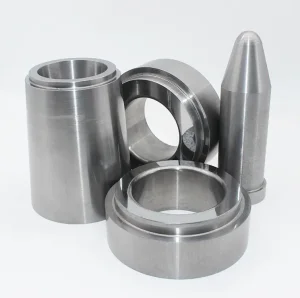
Precision Tungsten Carbide Waterjet Nozzle Seats & Valve Trim for Austrian Hydraulics
Explore Product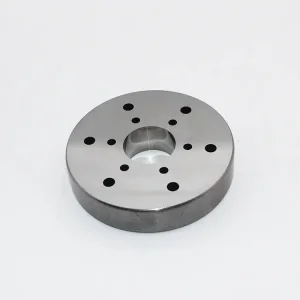
Cemented Carbide Lining Elbows, Tees & Pipe Reducers for Slurry Transport
Explore Product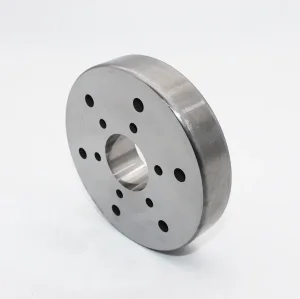
Heavy-Duty Tungsten Carbide Inserts for High-Pressure Grinding Crushing Rolls
Explore Product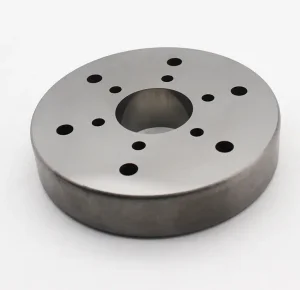
Abrasion-Proof Carbide Studs & Wear Blocks for Alpine Mining Roll Crushers
Explore Product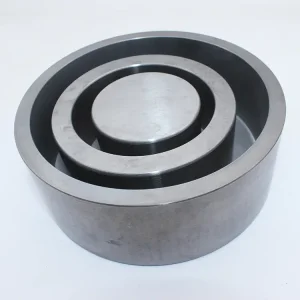
High-Purity Tungsten Carbide Milling Jars & Mortars for Austrian R&D Laboratories
Explore Product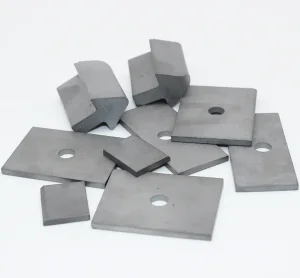
Reinforced Carbide Tips for ÖBB Railway Track Tamping Pick Center Teeth
Explore Product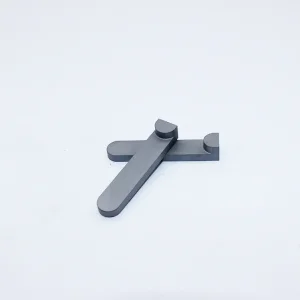
Impact-Resistant Tungsten Carbide Tamping Tines for Alpine Railway Systems
Explore Product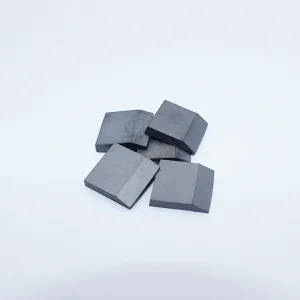
Heavy-Duty Customized Tungsten Carbide Tamping Tine Assembly for Ballast Work
Explore Product
Next-Gen Materials Roadmap
Technology Roadmap & Engineering Horizons
Strategic focus areas driving our metallurgical R&D to meet the rigorous decarbonization, efficiency, and micro-precision demands of Central European industry.
Binderless & Low-Cobalt Alternatives
To align with strict EU REACH cobalt limits, we are advancing ultra-hard binderless WC grades (>2200 HV) and novel Fe-Ni-based intermetallic binders that eliminate hazardous exposure while matching or exceeding conventional WC-Co fracture toughness.
Additive Micro-Binder Jetting
Pioneering complex internal spiral coolant geometry production through 3D binder jetting followed by high-vacuum Sinter-HIP processing. This enables internal conformal cooling channels within specialized Austrian milling cutters, increasing thermal dissipation by over 40%.
Closed-Loop Secondary Upcycling
Establishing zinc-reclamation channels to take back spent carbide tooling and tamping picks directly from European partners, restoring virgin-grade ammonium paratungstate (APT) chemistry with a 75% lower carbon footprint compared to mined tungsten concentrates.
Procurement & Metallurgy Q&A
Frequently Asked Questions: Austrian & European Industrial Buyers
Clear, technically detailed answers regarding tolerances, material testing certificates, logistics, and customized metallurgical powder optimization.
What dimensional tolerances and surface finishes can your Austrian custom components achieve?
Through high-precision multi-axis CNC surface grinding, optical profile grinding, and wire EDM, we achieve outer diameter and flat tolerances down to ±0.002 mm (h6 ground criteria for solid cylindrical blanks) and surface roughness values down to Ra 0.05 µm via mirror diamond lapping for critical seal faces and fluid valve seats.
How do you guarantee quality consistency across recurring production runs?
Every batch goes through strict metallographic qualification using optical and scanning electron microscopy (SEM) to evaluate cobalt distribution, verify complete absence of Eta phase (η-carbide / W6Co6C), ensure no free graphite, and validate micro-porosity to ISO 4505 standards. An EN 10204 3.1 chemical and mechanical inspection certificate accompanies each delivery.
Can you tailor custom powder formulations to counter combined impact and chemical corrosion?
Yes. When standard cobalt grades suffer premature leaching in low-pH fluid handling or humid Alpine civil construction environments, we substitute cobalt with nickel or proprietary Ni-Cr-Mo binder systems. By modifying grain size from sub-micron to 3.5 µm, we simultaneously tailor the balance between erosion hardness and impact toughness.
What are typical lead times and logistics arrangements for industrial hubs in Austria?
Custom prototypes and small-batch components are manufactured and dispatched within 2 to 3 weeks. Full batch production orders generally require 4 weeks depending on grinding complexity. We provide air express delivery (via DHL / FedEx / UPS directly to Vienna, Linz, or Graz within 3–5 business days) or consolidated DDP sea/rail freight for large-tonnage wear parts.
How does your team handle Intellectual Property (IP) and proprietary CAD designs?
We routinely execute comprehensive Non-Disclosure Agreements (NDAs) with Austrian and European OEMs before reviewing drawings. Tooling CAD data is stored on encrypted, access-restricted internal servers, and custom production molds remain exclusive to the designated client throughout their operational lifecycle.
Start Your Custom Engineering Evaluation
Ready to Optimize Your Tool Wear Life & Operational Efficiency?
Upload your 2D/3D component drawings (DWG, DXF, STEP, or PDF) along with operating wear parameters. Our senior metallurgical engineers will provide a comprehensive manufacturability review and competitive quotation within 8 hours.
Send Inquiry Now