
Featured Tungsten Carbide Precision Components
Explore our top-tier tungsten carbide rods, indexing blades, and insert systems engineered with pressure-sintered microstructures for high-impact production lines.

High-Quality Tungsten Carbide Rods for Drilling & Milling
View Product Details ➔
Wholesale SPUB86 CVD Coating Carbide Turning Inserts
View Product Details ➔
YG8 Cemented Carbide Gripper Inserts for Chuck Jaws
View Product Details ➔
Tungsten Carbide Scarfing Insert SQ8615WCB Blanks
View Product Details ➔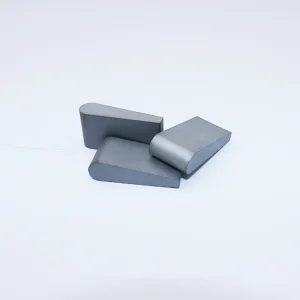
Engineered Carbide Tamping Tines for Railway Ballast
View Product Details ➔
SPUB63B Wholesale Lathe Round Carbide Turning Inserts
View Product Details ➔
Cemented Carbide Gripper Inserts & Tips for Core Drilling
View Product Details ➔
Non-Magnetic Cemented Carbide Rods with Nickel Binder
View Product Details ➔Engineering Synthesis: Titanium vs. Tungsten Carbide
Evaluating operational thresholds, hardness benchmarks, wear mechanisms, and thermomechanical behavior to settle the wholesale selection dilemma.
Surface Hardness & Abrasion Resistance
While Titanium (Grade 5 Ti-6Al-4V) delivers approximately 36 HRC (350 HV), Tungsten Carbide (WC-Co/Ni matrix) reaches extreme operational hardness levels between 85 to 92 HRA (upwards of 1600–2200 HV). For extreme sliding friction, abrasive slurries, high-velocity metal chip shearing, or severe mechanical gouging, tungsten carbide outlasts standard titanium by factors greater than 20:1.
Strength-to-Weight vs. Structural Mass
Titanium is celebrated for its unmatched strength-to-weight ratio, registering a low density of ~4.51 g/cm³. Tungsten carbide operates at the opposite physical spectrum with an ultra-dense profile of 13.5 to 15.0 g/cm³. When component lightness is critical—such as in aeronautical structures or mobile surgical tools—titanium wins. When kinetic mass, mass dampening, or anti-chatter rigidity is needed, tungsten dominates.
Thermal Integrity & Thermal Expansion
Tungsten holds the highest melting point of any metallic element at 3,422°C (with cemented carbide composites retaining structural rigidity beyond 800°C), alongside a low coefficient of thermal expansion (4.5–5.5 µm/m·K). Titanium experiences structural degradation and aggressive oxidation at temperatures above 400°C, making tungsten carbide the only choice for high-temperature tooling.
| Property Dimension | Commercial Titanium (Gr. 5 Ti-6Al-4V) | Cemented Tungsten Carbide (YG6–YG20 / Ni) | Engineering Selection Verdict |
|---|---|---|---|
| Vickers Hardness (HV) | 330 – 390 HV | 1,400 – 2,200 HV | Carbide Wins: Wear Resistance |
| Volumetric Density | 4.43 – 4.51 g/cm³ | 13.8 – 15.1 g/cm³ | Titanium Wins: Lightweighting |
| Young’s Elastic Modulus | 110 – 115 GPa | 550 – 650 GPa | Carbide Wins: Deflection Rigidity |
| Melting / Softening Point | ~1,660°C (Softens >450°C) | >2,800°C (Hot-Hardness preserved) | Carbide Wins: Continuous Cutting |
| Biocompatibility / Implantation | Superior Osseointegration (FDA/ISO Class) | Corrosion inert (Nickel binder variants) | Titanium Wins: In-Vivo Medical |
| Fracture Toughness (K1C) | 50 – 75 MPa·m½ | 8 – 18 MPa·m½ | Titanium Wins: Tensile Elastic Shock |
Global Industrial Status: Sourcing, Geopolitics & Solutions
How tier-1 aerospace suppliers, deep drilling contractors, and precision machining networks manage total lifecycle costs and volatile supply dynamics.
Subsurface Energy & Mineral Extraction
Directional drilling tools, Measurement While Drilling (MWD/LWD) housings, and tricone drill bits operate in intense mechanical shear environments. While titanium drill string housings provide non-magnetic resilience in sensitive survey fields, downhole cutting teeth and high-wear jet nozzles strictly mandate tungsten carbide blanks to survive thousands of meters of abrasive granite and hard shale.
Aerospace & Defense Symbiosis
Commercial jet engine airframes and nacelles rely on titanium alloys for their critical weight savings and resistance to chloride stress corrosion. Conversely, the machining of these identical titanium components is entirely impossible without ultra-fine grain tungsten carbide end mills, inserts, and drills coated with CVD/PVD systems to prevent thermal edge chipping.
Primary Metals & Cold Forming Tooling
Heavy steel mills utilize SPUB and SNMX series carbide scarfing inserts to condition red-hot continuously cast steel slabs at elevated temperatures. In cold stamping, header punches, and progressive extrusion dies, carbide dies deliver multi-million stroke cycles without losing dimensional tolerance, significantly outperforming titanium alloys.
Localized Technical Support, Compliance & Quality Architecture
International procurement requires full supply chain traceability, conflict-free mineral transparency, and localized engineering support to ensure production lines run without disruption.
100% Conflict-Free Sourcing
Our tungsten raw material origin aligns fully with OECD Due Diligence Guidance and RMI (Responsible Minerals Initiative) verification. We rely exclusively on certified virgin ore reserves from Jiangxi mines, guaranteeing no conflict-tainted secondary powders enter production.
HIP-Sintering Void Elimination
All cemented carbide blanks undergo Hot Isostatic Pressing (Sinter-HIP) at up to 100 bar pressure. This process consolidates micro-porosity to Class A00–A02 standards, eliminating inner voids that trigger catastrophic fractures under mechanical shock.
Global Fulfillment & Consignment
Serving OEM networks across the United States, Germany, Canada, and Australia, we support customer-tailored buffer inventories, JIT delivery schemes, multimodal sea-air logistics, and localized customs clearance paperwork (C/O, Form A).
Micron Metrology Verification
Using laser micrometers, metallographic microscopic analysis, and precision coordinate measuring machines (CMM), ground carbide rods achieve h6 diameter tolerances with runout controlled to within 0.002 mm.
Localized Application Scenarios: Where Each Metal Dominates
Real-world operational trade-offs determine material selection across key manufacturing sectors.
Surgical & Medical Orthopedics
Titanium Selection: Titanium remains the gold standard for bone screws, spinal cages, and femoral implants due to its biocompatibility and Young's modulus matching natural human cortical bone.
Tungsten Carbide Selection: Needle holder jaw inserts, precision bone cutting saw blades, and tungsten-tipped shears benefit from carbide's long-lasting sharpness and non-dulling edge retention.
Heavy Infrastructure & Railway Ballast
Tungsten Carbide Selection: Railway ballast tamping tines experience extreme cyclical impacts against abrasive basalt rocks. Tough YG15/YG20 tungsten carbide plates brazed directly onto tine heads protect maintenance tampers, extending their working lifespan from 40 hours to over 350 operational hours.
Semiconductor & Battery Tooling
Non-Magnetic Carbide Selection: Advanced battery electrode slitting knives require zero magnetic contamination to avoid short-circuiting thin lithium foil layers. Nickel-bonded non-magnetic tungsten carbide provides micron-sharp edges without ferromagnetic cobalt interference.
Technological Roadmap & Future Materials Outlook
Examining additive manufacturing of refractory metals, binderless ultra-hard matrixes, and sustainable powder recycling.
Submicron & Nano-Grained Hardmetals
Refining tungsten carbide grain sizes down to 0.2 µm using secondary grain growth inhibitors (VC, Cr3C2) bridges the gap between hardness and fracture toughness. This delivers cutting blanks capable of machining hardened steels (up to 65 HRC) without edge micro-chipping.
Additive Powder Bed Fusion (LPBF / BJ)
Binder jetting and electron beam powder-bed fusion are overcoming the traditional geometrical limits of tungsten carbide and titanium alloys. Engineers can now print complex conformal cooling channels inside carbide milling cutters to improve heat extraction during high-speed cutting.
Circular Mineral Economy & Upcycling
Advanced zinc-recovery and chemical conversion technologies now convert end-of-life carbide inserts and scrap tooling back into high-purity virgin ammonium paratungstate (APT), reducing industrial carbon footprints while preserving critical supply chain security.
Frequently Asked Engineering & Sourcing Questions
Key technical considerations overseas procurement directors ask when choosing between titanium and tungsten alloys.
❓ Is titanium stronger than tungsten carbide?
It depends on the type of strength. In specific tensile strength (strength-to-weight ratio), titanium alloys outperform carbide because of their low density. However, in compressive strength, torsional rigidity (elastic modulus), and indentation hardness, tungsten carbide easily exceeds titanium, sustaining over 4,000 MPa of compressive force without deformation.
❓ Which metal is better for wear parts in high-friction machinery?
Tungsten carbide is the clear choice. Titanium has poor tribological properties and suffers from galling and fretting wear under metal-to-metal contact unless treated with complex surface coatings. Tungsten carbide provides a dense, hard abrasive barrier that outlasts titanium components in high-friction applications.
❓ Can tungsten carbide replace titanium in aerospace brackets?
No. Tungsten carbide is over three times denser than steel and more than three times the weight of titanium (~14.5 g/cm³ vs. 4.5 g/cm³). Adding such dense material into non-wear airframe structures would compromise fuel efficiency. Titanium remains the preferred material for lightweight structural aerospace parts.
❓ How does non-magnetic tungsten carbide differ from standard grades?
Standard carbide uses cobalt (Co), which is ferromagnetic. When tooling needs to operate near sensitive electronics or magnetic sensors, nickel (Ni) replaces cobalt. This produces an inert non-magnetic carbide rod or component while maintaining high wear resistance.
❓ Can Zhongfu fabricate customized carbide parts directly from customer drawings?
Yes. We specialize in custom precision fabrication. By reviewing your 2D/3D CAD models, our engineering team optimizes binder percentages, grain sizes, and geometry, delivering custom plates, rods, inserts, and wear dies that precisely meet your operating parameters.
❓ What is the typical technical evaluation turnaround time?
Our on-site metallurgical engineering team reviews all incoming design drawings, production specifications, and requests for quotes within 8 business hours, providing complete manufacturability feedback and grade recommendations.
High-Performance Inserts, Rods & Specialty Blanks
Supplying heavy manufacturing, CNC milling centers, and wear-part producers worldwide with factory-direct pricing and guaranteed performance.

Nickel-Based Tungsten Carbide Rods for Corrosive Machinery
View Product Details ➔
SPUB63 Tungsten Indexable Brazing Inserts for Woodworking
View Product Details ➔
1x1x0.375" CVD Coating Carbide Tube Scarfing Insert
View Product Details ➔
Non-Magnetic Cemented Carbide Pin Plug Gauge Rods
View Product Details ➔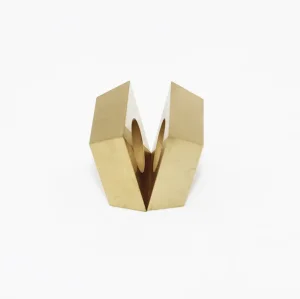
Square Hard Alloy Cutting Inserts for Metal Processing
View Product Details ➔
SPUB63 Carbide Turning & Cutting Inserts
View Product Details ➔
Factory-Direct Carbide Turning Inserts for Heavy Lathes
View Product Details ➔
SPUB86C Customized CNC Diamond Metal Cutting Inserts
View Product Details ➔Request Comprehensive Grade Datasheets & Wholesale Quotations
Speak directly with our senior metallurgical engineers to select the optimal carbide formulations, verify drawing tolerances, and secure wholesale volume pricing for your production pipeline.