
High-Demand Tungsten Carbide Wear Solutions
Explore standard and customizable Sinter-HIP tungsten carbide plates, indexable threading inserts, tube scarfing blades, and drilling grippers engineered for maximum abrasive and erosive mitigation.

China OEM Customizable HIP Processed Square Tungsten Carbide Plate, Polished Flat Blank
Technical Specifications
Wholesale Factory direct sale tungsten carbide turning inserts Manufacturer, Factory
Technical Specifications
Buy Wholesale high quality tungsten wolfram carbide grooving inserts milling Manufacturers, Suppliers
Technical Specifications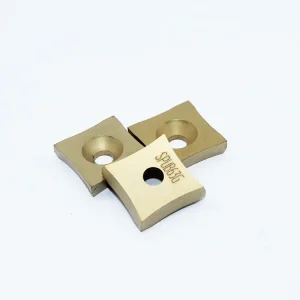
Wholesale Wear resistant SPUB 63G customize imported carbide threading inserts Factory, Factories
Technical Specifications
Buy Cemented tungsten carbide gripper inserts/tips for mining and diamond drilling Factory, Factories
Technical Specifications
Wholesale China best price custom tungsten carbide steel cutters concrete scarifier blade Supplier, Factory
Technical Specifications
Wholesale Wholesale SPUB63B tungsten carbide insert box used carbide inserts price Supplier, Factories
Technical Specifications
China SPUB-63 Steel Pipe Scarfing Tools Tube Scarfing Inserts Supplier, Suppliers
Technical SpecificationsThe Tribological Frontier: Cemented Carbides in Severe Wear Environments
A comprehensive treatise on why global heavy industries are transitioning from quenched alloy steels and hardfacing overlays to metallurgically tailored Sinter-HIP tungsten carbide composites.
In modern high-throughput manufacturing, mineral extraction, and continuous metallurgical conditioning, mechanical wear is the primary driver of unscheduled operational downtime and asset degradation. The global tribology deficit accounts for billions of dollars in lost industrial capacity annually. Traditional maintenance regimes relied on sacrificial structural steels (such as AR400, AR500, or Manganese alloys), flame-sprayed ceramics, and chromium-carbide overlay plates (CCO). However, as operating velocities, hydrostatic pressures, and operating temperatures escalate, these legacy solutions suffer from severe plastic deformation, micro-spalling, and catastrophic delamination.
As a specialized wholesale wear resistant parts supplier, Jiangxi Zhongfu Cemented Carbide Co., Ltd. architects solutions derived from the fundamental science of metal-matrix composites (MMC). Cemented tungsten carbide (WC-Co / WC-Ni) represents the zenith of wear protection due to its unique dual-phase microstructure: an ultra-hard refractory ceramic skeleton composed of stoichiometric hexagonal tungsten monocarbide crystals, interlocked and cemented by a ductile transition-metal binder phase (typically cobalt or nickel). This synergetic metallurgical configuration yields a material that simultaneously delivers extreme Vickers microhardness (up to 2200 HV30) and exceptional fracture toughness ($K_{1C}$ reaching 10 to 18 MPa·m½)—a balance unobtainable in monolithic ceramics or tool steels.
Total Cost of Ownership (TCO) vs. Initial Procurement Price
Industrial procurement audits reveal that the initial purchase price of a wear component accounts for less than 8% of its lifecycle cost. The remaining 92% is consumed by machine changeover labor, structural frame recalibration, secondary tool failure, and unrecoverable production outages. Upgrading to HIP-processed cemented carbide parts consistently yields an 8x to 25x increase in operational lifespan, fundamentally transforming procurement from an expense overhead into a bottom-line profit driver.
China Factory Supply Chain Resilience & Processing Superiority
How Jiangxi Zhongfu leverages localized mineral dominance, closed-loop vertical integration, and hyper-modern powder metallurgy infrastructure to guarantee quality, cost stability, and rapid dispatch.
Geographic Raw Material Proximity
Situated in Jiangxi Province—the absolute epicenter of the global tungsten belt—our foundry benefits from uninterrupted access to top-tier Ammonium Paratungstate (APT) and high-purity tungsten blue oxide. Unlike Western converters vulnerable to transoceanic ore transit disruptions, our production line secures virgin raw material with zero logistics latency and zero scrap contamination.
Sinter-HIP Densification
Monolithic vacuum sintering routinely leaves micro-voids, binder pooling, and subsurface micro-porosity (A04/B04 class), creating stress concentration zones that rupture under high mechanical shock. We subject 100% of our wear components to 10 MPa overpressure Hot Isostatic Pressing (Sinter-HIP) at 1,450°C, collapsing internal voids to achieve theoretical density (99.98%) and extreme transverse rupture strength.
Agile Tooling & Micro-Grinding
Our 5,000 m² Nanchang facility operates automated multi-axis CNC surface grinding, optical profile grinding (PG), wire electrical discharge machining (EDM), and centerless OD grinding lines. We consistently deliver tight dimensional tolerances within ±0.002 mm (h6) and mirror surface micro-finishes down to Ra 0.05 µm for fluid seals, choke trims, and precision punch dies.
Cemented Carbide Tribological Grade Selector
Calibrating cobalt binder volume and tungsten carbide grain morphology to optimize the inverse relationship between abrasion resistance and impact fracture toughness.
| Carbide Grade | Binder Phase | Grain Size (µm) | Density (g/cm³) | Hardness (HRA / HV) | TRS (MPa) | Primary Industrial Service |
|---|---|---|---|---|---|---|
| YG6X | 6% Cobalt | 0.8 (Sub-micron) | 14.95 | 91.5 / 1650 | 2200 | High-velocity wire drawing dies, paper slitter blades, precision nozzles |
| YG6 | 6% Cobalt | 1.2 – 1.6 (Medium) | 14.90 | 90.5 / 1520 | 2400 | Wear guide plates, sand blast tips, light-impact metal machining |
| YG8 | 8% Cobalt | 1.6 – 2.2 (Medium-Coarse) | 14.70 | 89.5 / 1420 | 2700 | Concrete scarifier blades, rotary drilling grippers, scrap shear inserts |
| YG11C | 11% Cobalt | 2.5 – 3.5 (Coarse) | 14.40 | 87.0 / 1250 | 3100 | Percussion rock drill inserts, road milling picks, trenching teeth |
| YG15 | 15% Cobalt | 1.8 – 2.4 (Medium) | 14.05 | 87.5 / 1280 | 3200 | Heavy cold heading dies, bolt forming punches, metal extrusion dies |
| YG20 | 20% Cobalt | 2.2 – 3.0 (Coarse) | 13.55 | 85.5 / 1120 | 3400 | Severe impact stamping, rotary shear knifes for thick slab steel, blanking |
| YN6 / YN8 | 6% - 8% Nickel | 1.2 – 2.0 (Medium) | 14.65 | 89.0 / 1380 | 2300 | Non-magnetic MWD/LWD components, acid slurry valve trims, offshore seals |
Fine Grain vs. Coarse Grain Wear Mechanics
In two-body sliding abrasion without shock, sub-micron WC grains (0.5 – 0.9 µm) minimize binder undercut, forcing the abrasive media to plane across diamond-hard ceramic facets. In severe three-body slurry or high-shock pounding (e.g., downhole drilling or ballast tamping), coarse grain structures (2.5 – 4.0 µm) blunt micro-crack propagation via tortuous grain-boundary deflection, preventing premature catastrophic chipping.
Localized Application Engineering Across Major Continents
From North American shale basins to European ERW pipe mills and Australian iron ore terminals, our wholesale wear resistant parts operate at the heart of heavy industry.
ERW Steel Pipe Scarfing (North America / EU)
During Electric Resistance Welded (ERW) pipe fabrication, red-hot weld beads must be continuously pared flush at line speeds exceeding 120 m/min. Our SPUB-63, SPUB-86, SNMX, and SNMG scarfing inserts incorporate specialized TiAlN PVD coatings and optimized micro-grooves that resist extreme thermal cycling, notch cracking, and catastrophic edge breakdown.
Deep Directional Drilling & MWD (Permian Basin / Gulf)
High-angle horizontal drilling exposes mud pulser rotors, flow restrictors, and bottom-hole assemblies to ultra-high-velocity abrasive drilling mud. We formulate nickel-bonded non-magnetic tungsten carbide parts ($µ_r < 1.005$) that provide flawless erosion resistance without interfering with sensitive borehole magnetic steering instrumentation.
Heavy Aggregates & Scarifying (Australia / LatAm)
In asphalt cold planers, concrete floor scarifiers, and rotary hammer crushers, standard steel cutter flails disintegrate within hours. Our custom tungsten carbide tipped scarifier blades and brazed mining picks utilize resilient YG8/YG11C compositions that absorb brutal rock aggregate impact while maintaining clean cutting edges.
Progressive Stamping & EDM Tooling (Japan / Germany)
Precision stamping of motor laminations and battery casing foils demands dimensional consistency over tens of millions of strokes. Our 100×100×60 mm dense block stock and pre-shaped punches are specially treated to eliminate residual stresses, preventing micro-cracking and wire drift during Wire EDM processing.
Metallurgical Roadmap: The Next Decade of Hardmetal Innovation
Pioneering advancements in grain boundary engineering, binderless ceramics, and smart generative tribology shaping our 2026–2035 product roadmap.
Binderless Nano-Carbides
For chemical slurries and semiconductor etching where cobalt or nickel binder leaching creates premature surface pitting, our laboratory has commercialized near-binderless WC formulations (< 0.5% metallic binder). Sintered via Field Assisted Sintering Technology (FAST/SPS), these grades exhibit diamond-like microhardness (HV > 2500) and complete immunity to galvanic corrosion.
Functionally Graded Hardmetals
Historically, metallurgists were forced to compromise between surface wear hardness and core toughness. Our newest gradient sintering technology controls carbon activity during the liquid phase to synthesize a hard, fine-grained, cobalt-depleted exterior (HV 1800) seamlessly transitioning into a tough, cobalt-enriched interior core (TRS > 3500 MPa), eliminating split fractures under shock loads.
High-Entropy Alloy (HEA) Binders
Replacing traditional cobalt binders with Fe-Co-Ni-Cr-Mn High-Entropy Alloys unlocks unprecedented high-temperature performance. Our HEA-bonded carbide parts retain their yield strength up to 850°C—far exceeding conventional WC-Co which undergoes severe plastic softening above 550°C—making them premier candidates for high-speed hot rolling and dry metal forming.
Strict Metrology, Traceability & Cross-Border Compliance
Full conformance to European Union and American import safety benchmarks, guaranteeing flawless metallurgical integrity from ingots to international doorsteps.
CMRT Conflict-Free Tungsten
We source 100% of our tungsten concentrate under strict compliance with the Responsible Minerals Initiative (RMI) standards. Comprehensive Conflict Minerals Reporting Templates (CMRT) are provided to multinational OEM supply chain auditors.
RoHS & REACH Compliance
All finished cemented carbide components, nickel-bonded variants, and protective packaging materials are fully verified free of SVHC substances under EU REACH Regulation (EC 1907/2006) and RoHS Directive 2011/65/EU.
Microstructural Metrology
Every sintered batch is sampled for metallurgical inspection. We utilize optical and electron metallographic microscopes to guarantee porosity levels below ISO A02-B02 standards, absence of harmful eta-phase ($\text{Co}_3\text{W}_3\text{C}$), and zero free-carbon inclusions.
Expedited Global Logistics
With established fulfillment pathways across air freight (DHL, FedEx, UPS) and major sea freight hubs (Shanghai, Ningbo, Shenzhen), standard stock orders dispatch in 24 hours, while custom OEM blanks ship in 12 to 21 working days.
Frequently Asked Engineering Questions
Definitive answers directly from our metallurgical engineering team regarding customization, grade matching, machining allowances, and mechanical thresholds.
How do I determine whether my application requires a Cobalt (WC-Co) or Nickel (WC-Ni) binder?
Cobalt is the ideal binder for purely mechanical environments requiring maximum transverse rupture strength (TRS) and resistance to impact, such as metal stamping, tube scarfing, and rock drilling. However, cobalt is ferromagnetic and rapidly leaches in acidic solutions ($pH < 6$). Nickel binders should be specified when non-magnetic properties are mandatory (such as downhole MWD tools and sensor housings) or when operating in corrosive environments (including marine saltwater, sour gas containing $\text{H}_2\text{S}$, and chemical slurries).
What grinding allowances and shrinkage factors should be calculated for custom carbide blanks?
Tungsten carbide undergoes volumetric shrinkage of approximately 18% to 22% (linear) during the Sinter-HIP densification cycle. For sintered blanks intended for finish grinding by toolmakers, we typically provide an as-sintered grinding allowance of +0.3 mm to +0.8 mm depending on part geometry. For finished components, our internal diamond grinding lines deliver final tolerances within ±0.002 mm, eliminating any need for customer secondary processing.
How can Wire EDM micro-cracking be mitigated on large tungsten carbide die plates?
Wire electrical discharge machining creates a recast "white layer" characterized by high tensile stresses, micro-cracks, and cobalt depletion. To prevent delamination, choose a high-toughness, fine-grained grade with slightly higher binder content (e.g., YG15 or YG20). Furthermore, apply low-energy trim cuts, followed by mechanical polishing to remove the recast layer, and perform thermal stress-relief baking at 180°C–220°C for 2 hours.
What are the minimum order quantities (MOQ) and production lead times for custom drawings?
Because we maintain fully configurable hydraulic powder presses and rapid CNC green-machining cells, our MOQ for custom prototype samples is just 5 to 10 pieces. For standard production tooling, our MOQ begins at 50 pieces. Tooling design and mold fabrication take 3 to 5 working days, while pressing, Sinter-HIP processing, and finish grinding are fulfilled within 12 to 18 business days.
Precision Carbide Rods, Heavy Blocks & Indexable Cutters
Explore solid carbide ground blanks, heavy thick-plate stock for wire EDM die manufacturing, chuck jaw gripper inserts, and high-precision scarfing inserts.

Wholesale Tungsten Carbide Plate 100×100×60 mm — Thick Block Stock for EDM, Die & Wear Parts
Technical Specifications
Buy SPUB86C customized tungsten carbide cnc diamond metal cutting inserts tools Factory, Factories
Technical Specifications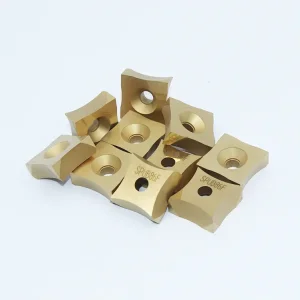
China Factory sale tungsten carbide insert cutting tools turning tool Manufacturer, Supplier
Technical Specifications
Wholesale Cemented carbide metal insert_cutting_tool SPUB86B/86C/86D/86E/86F/86G/86H/86K/86M
Technical Specifications
China SPUB86 P40 tungsten carbide scarfing inserts for welded steel pipe Manufacturer, Factory
Technical Specifications
China Tungsten Carbide Round Rod H6 Ground Ø1-40mm Solid Carbide Blanks Manufacturer, Supplier
Technical Specifications
China High quality SPUB-63 series machine cutter carbide cnc cutting tools turning Manufacturer, Factories
Technical Specifications
China Best price YG8 tungsten carbide gripper inserts for chuck jaw Suppliers, Factories
Technical SpecificationsRequest Engineering Analysis & Wholesale Quotation
Upload your 2D/3D component drawings (PDF, STEP, DWG) along with current operational wear parameters. Our metallurgical specialists deliver a comprehensive Design for Manufacturability (DFM) evaluation, optimal powder formulation recommendations, and factory-direct volume pricing within 8 business hours.