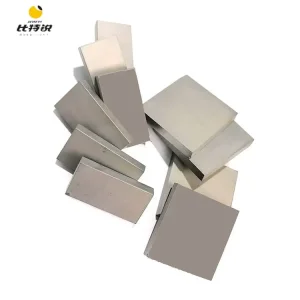
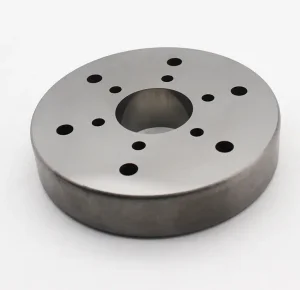
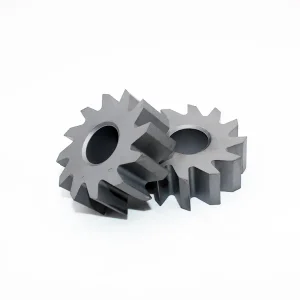
Direct-from-Factory Precision Carbide Components
Engineered sintered carbide tools conforming to rigorous ISO standards, designed for extreme mechanical stress, thermal shock, and abrasion resistance.



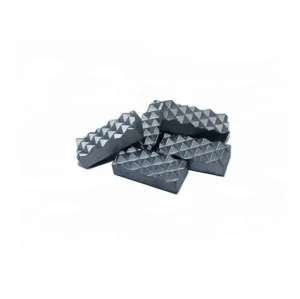


Demystifying the Tungsten Carbide Grade Chart
In-depth structural breakdown of chemical composition, binder phase ratios, and metallurgical classification for tier-1 industrial supply chains.
The Cobalt Trade-Off Matrix
Global procurement teams evaluating a tungsten chart must fundamentally reconcile the trade-off between hardness and transverse rupture strength (TRS). As cobalt (Co) concentration increases from 6% (YG6) to 20% (YG20), hardness shifts inversely from ~90.5 HRA down to ~85.5 HRA, whereas fracture toughness multiplies from 9.0 to over 16.0 MPa·m½. Engineering teams must map their machine tool velocity, impact frequency, and shear strain against this curve to select optimal carbide compositions.
Sub-Micron vs. Coarse Grain
Grain boundary engineering is the second critical axis within standard manufacturer charts. Ultrafine/nano-grain structures (0.2–0.5 µm) produce exceptional hot hardness, superior edge retention, and compressive strength exceeding 4,500 MPa, ideal for solid micro-drills and electronic tooling. Conversely, coarse-grain WC (2.5–5.0 µm) provides crack deflection barriers essential in rock excavation, heavy stamping dies, and rotary tamping tips exposed to violent cyclic loading.
Binder Phase Innovations
Modern charts feature specialized binder alloys beyond basic cobalt. Nickel-bonded cemented carbide forms a completely austenitic, non-magnetic phase ideal for downhole measurement while drilling (MWD/LWD) equipment and semiconductor magnetic molding. Nickel-chromium and cobalt-chromium-ruthenium alloys offer exceptional acid and alkaline resistance in aggressive chemical environments where standard Co-bonded tools fail prematurely.
| ISO / Chinese Grade | WC Matrix Grain Size (µm) | Binder Ratio (wt%) | Density (g/cm³) | Hardness (HRA) | Transverse Rupture Strength (MPa) | Primary Industrial Sector |
|---|---|---|---|---|---|---|
| YG6 / K10–K20 | 1.0 – 1.4 (Medium) | 6% Co | 14.8 – 15.0 | 90.5 | 1900 – 2100 | Cast iron turning, wire drawing dies, wear liners |
| YG8 / K20–K30 | 1.4 – 2.0 (Medium-Coarse) | 8% Co | 14.6 – 14.8 | 89.5 | 2200 – 2400 | Geotechnical drilling, scarfing inserts, shear blades |
| YG15 / K40 | 1.8 – 2.5 (Coarse) | 15% Co | 13.9 – 14.1 | 87.0 | 2800 – 3100 | Cold heading punches, cold extrusion dies, roll rings |
| YG20 / G50 | 2.0 – 3.0 (Coarse) | 20% Co | 13.4 – 13.6 | 85.5 | 3200 – 3500 | Heavy impact stamping dies, blanking punches, shredders |
| ZF-Ni10 (Non-Mag) | 1.2 – 1.8 (Medium) | 10% Ni | 14.5 – 14.7 | 88.5 | 2300 – 2500 | MWD drill housings, non-magnetic sensor sleeves, pump rings |
Macro Solutions Across Critical Industrial Sectors
Targeted material solutions engineered to eliminate system bottlenecks, reduce machine downtime, and optimize lifecycle costs across capital-intensive sectors.
High-Speed Tube & Steel Mills
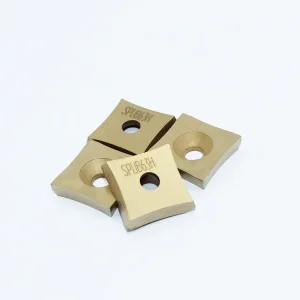
Continuous pipe welding applications rely on our SPUB63, SPUB86, and SNMX internal/external scarfing inserts. Sintered with HIP technology and coated via multi-layer CVD/PVD (TiN/AlTiN), these inserts withstand localized weld temperatures reaching 950°C, offering steady burr removal without chipping or thermal cracking.
Oilfield & Directional Drilling
Downhole steering instruments require non-magnetic components with relative magnetic permeability (µr) consistently below 1.005. Our custom nickel-bonded tungsten carbide rods and sleeves resist severe abrasive mud erosion while ensuring uncompromised transmission of geomagnetic and gravity sensor telemetry.
Cold Heading & High-Impact Tooling
Cold metal deformation places extreme strain on punch tips and drawing dies. By pairing selected Co binder formulations (15% to 20%) with strict HIP sintering schedules, our blanks exhibit yield strength over 3,000 MPa, preventing premature micro-spalling and die burst during high-speed fastener forming.
Aerospace & High-Nickel Milling
Milling Inconel, titanium alloys, and carbon-fiber laminates demands extremely sharp tool edges without chipping. Our sub-micron carbide rods (ground to h6 precision) provide the substrate stiffness and micro-edge stability needed to suppress regenerative chatter and maximize spindle efficiency.
Technology Roadmap: Advanced Sintering & Surface Engineering
Continuous evolution of powder metallurgy—moving from empirical trial to predictive phase equilibrium modeling and near-atomic precision manufacturing.
Overpressure Sinter-HIP (60–100 Bar)
Traditional vacuum sintering leaves micro-porosity (A02–B02), which can serve as stress concentration points under heavy impact. Our 10 MPa overpressure Sinter-HIP furnaces introduce pure argon at the liquidus transition (1,380°C–1,440°C), closing internal voids and bringing porosity down to near-zero levels (ISO A00, B00, C00).
Gradient Cemented Carbides (Functional Zones)
By controlling carbon potential and atmosphere during sintering, we fabricate functional gradient carbide tools. These feature a cobalt-enriched outer layer for maximum crack blunting and edge toughness, backed by an ultra-hard, wear-resistant interior—giving single-piece inserts dual structural properties.
Nanostructured CVD/PVD Hard Coatings
Inserts undergo high-energy pulse magnetron sputtering (HiPIMS) and medium-temperature CVD, applying 3–12 µm coatings of TiAlSiN, AlCrN, or cubic diamond. These coatings create thermal oxidation barriers exceeding 1,100°C, lowering friction coefficients and significantly extending continuous dry-cutting life.
Global Supply Assurance, Compliance & Traceability
Meeting tier-1 OEM expectations through verified non-conflict raw materials, comprehensive metrological inspection, and responsible manufacturing.
100% Virgin Material Traceability
We source only high-purity ammonium paratungstate (APT) and pure cobalt powders, strictly avoiding unsorted recycled scrap in our structural wear grades. Each batch includes traceable chemical assays, sieve analysis, and F.S.S.S. particle size distribution reports, ensuring batch-to-batch consistency and predictable tool performance.
Rigorous Metallurgical Metrology
Every production lot is verified for coercive force (Hc), magnetic saturation (4πσ), Rockwell A hardness, and micro-porosity using high-resolution optical and scanning electron microscopy. Finished components undergo dimensional inspection via coordinate measuring machines (CMM) and laser micrometers to maintain ±0.005 mm tolerances.
ESG & Conflict-Free Minerals
We comply fully with RMAP (Responsible Minerals Assurance Process) guidelines, ensuring all tungsten, tantalum, and cobalt minerals are responsibly sourced from certified ethical mines. Our facilities also employ high-efficiency particulate extraction and closed-loop coolant systems to minimize environmental impact.
Procurement & Technical FAQ
Detailed technical answers addressing core considerations in tungsten carbide grade selection, RFQ parameters, and global manufacturing operations.
How do I correlate a factory's proprietary tungsten carbide grade chart with international ISO/ASTM standards?
What specific drawing parameters does your engineering team require to evaluate a custom RFQ?
Why is overpressure Sinter-HIP preferred over conventional vacuum sintering for wear components?
When should a nickel binder be selected over a traditional cobalt binder in tungsten carbide components?
What typical production lead times apply for custom vs. standard catalog items?
Industrial Wear Parts, Plates, Toolholders & Inserts
Explore our complete catalog of HIP-sintered blanks, mining inserts, precision tooling, and custom-formed wear components ready for global delivery.