
Featured Cemented Carbide Components & Tooling Blanks
Precision-sintered blanks, tungsten carbide square plates, brazed tips, and micro-grain indexable cutting components calibrated for extreme wear environments.
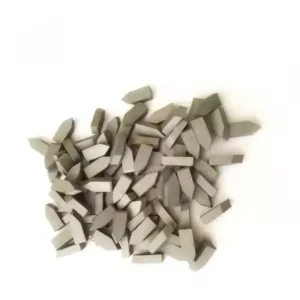
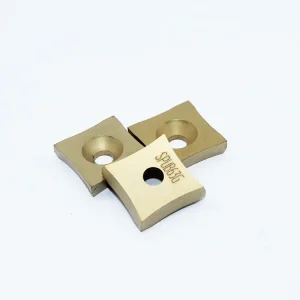



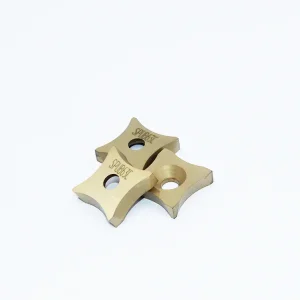
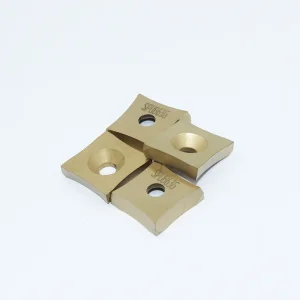

Metallurgical Integrity: The Physics of Tungsten Carbide Square Plates
In modern industrial fabrication, tungsten carbide square plates—frequently specified as cemented carbide flat blanks, rectangular blocks, and wear plates—serve as the critical backbone for high-stress progressive tooling, fine-blanking dies, EDM cutting blocks, and severe-wear guide surfaces. The mechanical integrity of a sintered tungsten carbide plate depends strictly upon the metallurgical equilibrium established between hard tungsten carbide (WC) grain crystals and a ductile metallic binder phase (predominantly Cobalt [Co] or Nickel [Ni]).
Unlike standard carbon steels or tool steels that succumb to rapid thermal softening above 400°C, high-grade tungsten carbide retains compressive strength and abrasive resistance at temperatures exceeding 800°C. However, the operational life of square plates in wire electrical discharge machining (WEDM) and heavy dynamic stamping is highly susceptible to microscopic defects. Internal micro-porosity, irregular grain growth, and cobalt lake clustering act as localized stress concentrators, causing premature micro-chipping, catastrophic plate fracture, and transverse fatigue cracks under continuous cyclic loading.
Sub-Micron Grain Refinement
Utilizing high-purity virgin Ammonium Paratungstate (APT) refined down to 0.4–0.8 µm grain morphology. Sub-micron grains dramatically elevate hardness without sacrificing Transverse Rupture Strength (TRS), preventing flaking during micro-punching operations.
Optimized Binder Distribution
By preventing carbon deficit (which generates brittle Eta-phase η: Co3W3C) and carbon excess (which generates free graphite clusters), our precise chemical balancing guarantees complete homogeneity of cobalt binder pools across the entire plate thickness.
Residual Stress Relief Annealing
Thick tungsten carbide square plates (thickness > 15 mm) endure multi-stage thermal stress-relieving cycles post-sintering. This thermal normalization minimizes residual shrinkage tension, eliminating core warping during subsequent precision grinding or center-hole wire EDM cutting.
Global Trends Reshaping Tungsten Carbide Square Plate Engineering
The global market for cemented carbide plates is pivoting from generic wear-strip stock to engineered metallurgical substrates designed for automated die shops, gigafactory battery tooling, and semiconductor packaging.
EV Battery Foil Slitting
Slitting ultra-thin copper and aluminum foils (down to 4.5 µm) requires tungsten carbide square cutting plates and slitter knives with zero micro-notch tolerance. Ultrafine-grain sub-micron grades deliver mirror edge retention with edge sharpness radii under 1.5 µm.
Corrosion-Resistant Hybrid Binders
Traditional Co-bonded plates suffer severe electrochemical pitting during water-based Wire EDM or when cutting acidic/synthetic biomass. The rise of Ni-Cr and Co-Ni-Cr mixed binder systems provides a 10x improvement in corrosion and oxidation resistance.
Large-Format Monolithic Blanks
Tooling engineers increasingly demand massive square blocks (up to 300 × 300 × 80 mm) to machine complex multi-cavity dies from a single piece, eliminating assembly tolerances and seam gaps associated with segmented carbide inserts.
Near-Net-Shape Isostatic Pressing
With diamond grinding wheels presenting high tooling expense, near-net shape cold isostatic pressing (CIP) allows plates with chamfers, mounting counterbores, and step profiles to be sintered directly, slashing post-processing time by up to 45%.
Tungsten Carbide Square Plate Grade Selection Matrix
Selecting the correct metallurgical grade requires balancing hardness (wear resistance) against Transverse Rupture Strength (TRS) and fracture toughness (K1c). Consult the engineering table below to match application dynamics.
| Carbide Grade | Binder (Co/Ni %) | Grain Size (µm) | Density (g/cm³) | Hardness (HRA) | TRS (N/mm²) | Target Application & Working Environment |
|---|---|---|---|---|---|---|
| YG6 (ISO K10) | 6.0% Co | 1.2 - 1.6 | 14.90 - 15.00 | 90.5 | ≥ 1900 | Precision wear plates, light stamping dies, non-ferrous metal slicing, drawing guide plates. |
| YG8 (ISO K20) | 8.0% Co | 1.4 - 1.8 | 14.65 - 14.80 | 89.5 | ≥ 2200 | General wear components, woodworking flat knives, secondary shearing plates, brick mold linings. |
| YG11 (ISO K30) | 11.0% Co | 1.8 - 2.4 | 14.30 - 14.50 | 88.0 | ≥ 2600 | Impact stamping plates, copper/aluminum bar cutting, medium-gauge sheet blanking dies. |
| YG15 (ISO K40) | 15.0% Co | 2.0 - 3.0 | 13.95 - 14.15 | 87.0 | ≥ 2900 | Heavy-duty stamping dies, thick steel sheet punching, cold heading die inserts, high-shock tooling. |
| YG20 (Heavy Impact) | 20.0% Co | 2.2 - 3.2 | 13.45 - 13.65 | 85.5 | ≥ 3200 | Extreme shock resistance, thick EDM blocks, cold forging dies, powder metallurgy compaction dies. |
| UF08 (Sub-Micron) | 8.0% Co + Cr/V | 0.5 - 0.7 | 14.60 - 14.75 | 92.5 | ≥ 2800 | Electronic lead frame stamping, lithium battery foil razor blades, PCB micro-cutters. |
| NM10 (Non-Magnetic) | 10.0% Ni Base | 1.4 - 2.0 | 14.40 - 14.60 | 88.5 | ≥ 2100 | Magnetic sensor tooling, semiconductor molding, MWD/LWD drilling components, corrosive wear plates. |
Macro Industry Solutions & Engineered Application Environments
Tungsten carbide square plates are critical consumables and core tooling elements in automated manufacturing ecosystems. Discover how our metallurgical formulas solve operational downtime in primary industry sectors.
Motor Core & Silicon Steel Lamination Dies
Progressive stamping dies for electrical vehicle drive motors and transformers cycle millions of times through abrasive silicon steel sheets. Our YG15 and UF08 plates resist edge rounding and micro-galling, achieving over 3,000,000 strokes between regrinds and maintaining burr heights under 0.01 mm.
Oilfield & Mineral Slurry Wear Linings
In high-pressure mud pump valve seats, centrifugal hydrocyclones, and chute liners, severe particle abrasion rapidly degrades conventional alloy steels. Solid carbide square plates configured in mosaic matrices provide unmatched erosion resistance against turbulent quartz and sand slurries.
Semiconductor & Non-Magnetic Encapsulation
Lead-frame stamping and IC packaging tools cannot permit magnetic interference or magnetic chip adhesion. Our Nickel-binder (NM10) tungsten carbide plates deliver relative magnetic permeability (µr) under 1.005 while maintaining 88.5 HRA hardness, protecting delicate microelectronics.
Global Procurement Strategy: Mitigating Supply Risk & Securing Compliance
Procurement directors and toolroom managers face critical challenges when qualifying overseas carbide manufacturers: batch-to-batch inconsistency, hidden porosity, shipping delays, and regulatory compliance. Here is how our operational framework de-risks international wholesale procurement.
100% Virgin Raw Material Guarantee
We reject recycled scrap powders and lower-grade reclaimed zinc-process carbides. Utilizing pure virgin tungsten powder yields stable shrinkage rates during sintering, guaranteeing predictable dimensional tolerances and avoiding unexpected tool failure under impact.
Certificates of Analysis (CoA) with Every Batch
Every shipment is accompanied by detailed metallurgical inspection documentation: Density testing (Archimedes method), Rockwell HRA hardness certification, magnetic saturation (4πσ) verification for binder phase balance, and coercive force (Hc) tests verifying grain size distribution.
International Compliance & Traceability
Fully compliant with international chemical and environmental mandates: RoHS, REACH (SVHC declaration), and OECD Due Diligence Guidance for Conflict-Free Minerals (CMRT reporting on Cobalt and Tungsten). Every square plate is laser-etched with batch lot tracking numbers.
Technology Roadmap: Advancing Hardmetal Sintering Science
Our metallurgical engineering team continually pioneers cutting-edge powder metallurgy advancements to solve the extreme wear, heat, and structural demands of tomorrow's precision tooling.
Binderless Nanocrystalline Hardmetals
Developing ultra-dense pure WC square plates sintered without cobalt or nickel metallic binders. Utilizing field-assisted sintering technology (FAST/SPS), binderless plates achieve hardness ratings above 94 HRA, providing immune corrosion resistance in chemical slurries and aggressive etching environments.
Functionally Graded Carbide (FGC) Architecture
Innovating plates engineered with a continuous metallurgical gradient: an ultra-hard, wear-resistant surface (92 HRA) transitioning seamlessly into a high-toughness, impact-absorbing core (86 HRA). This eliminates the classic trade-off between hardness and catastrophic brittle failure.
Smart Predictive Sintering Kinetics
Deploying AI-driven dilatometry modeling to predict microstructural shrinkage down to 0.05 mm precision. This closed-loop thermal analysis eliminates thermal distortion in large square plates (up to 300 mm length), significantly reducing required diamond-grinding stock allowances.
Frequently Asked Questions: Technical Engineering & Sourcing
Straightforward, technically rigorous answers compiled by our chief metallurgical engineers to guide your tooling design, wire EDM preparation, and wholesale ordering.
How do you prevent cracking when wire-EDM cutting tungsten carbide square plates?
Wire EDM generates intense localized thermal spikes, creating a fragile recast white layer (0.005–0.02 mm thick) plagued by high tensile stress and cobalt depletion. To prevent micro-cracking, we recommend: 1) Ordering plates with a higher cobalt fraction (e.g., YG15 or YG20) or fine-grain stress-relieved grades; 2) Performing multiple skim cuts at lower pulse energy; and 3) Stress-relieving the plate at 200°C–300°C for 1–2 hours immediately following EDM operations.
What is the standard dimensional tolerance for sintered blanks vs. precision ground plates?
As-sintered blanks carry standard powder metallurgy tolerances typically ranging from ±0.5 mm to ±1.2 mm depending on plate dimensions, with thickness stock allowances of +0.4 mm to +0.8 mm for finishing. For precision ground square plates, our CNC double-disc and creep-feed surface grinders deliver thickness and width tolerances down to ±0.005 mm, flatness ≤ 0.003 mm, and Ra 0.05 µm mirror finishes.
When should a buyer select Nickel-binder (non-magnetic) over Cobalt-binder plates?
Cobalt is ferromagnetic, meaning standard WC-Co square plates will interfere with magnetic sensors, attract grinding swarf, and corrode rapidly in acidic aqueous environments. Nickel-bonded (WC-Ni) plates offer non-magnetic permeability (µr < 1.005) and significantly higher resistance against electrochemical pitting, making them indispensable for semiconductor molding dies, MWD downhole logging tools, and water-jet cutting orifices.
What are the minimum order quantities (MOQ) and production lead times for custom plates?
For standard off-the-shelf plate sizes (e.g., 100×100 mm, 105×105 mm, 150×150 mm), our MOQ is as low as 2–5 pieces for prototype verification. For custom powder formulations, specialized stepped shapes, or non-standard dimensions, typical batch MOQs start at 10–20 pieces. Sinter-HIP blank lead times average 10–14 working days, while precision-ground plates require 15–20 days with express DHL/FedEx air freight support.
Specialized Industrial Inserts, Blocks & Wear Tooling
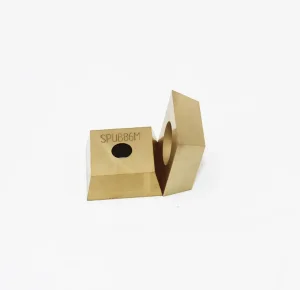
Review our advanced portfolio of scarfing inserts, EDM thick block stock, indexable threading inserts, and railway maintenance components manufactured with identical metallurgical rigor.







Request a Custom Plate Formulation & Wholesale Quotation
Submit your CAD prints (STEP, DWG, PDF) along with operating wear requirements. Our metallurgical engineering team provides comprehensive material grade optimization, DFM feedback, and formal volume pricing within 8 business hours.
Submit Technical RFQ