
Featured Industrial Cutting & Drilling Solutions (Batch I)
Explore certified cemented tungsten carbide solutions engineered with micro-grain substrates, ultra-dense matrix sintering, and application-specific geometry.
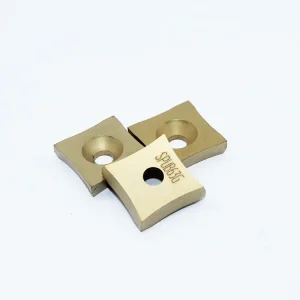
Wear Resistant SPUB 63G Customize Imported Carbide Threading Inserts
Explore Product
China SPUB-63 Steel Pipe Scarfing Tools Tube Scarfing Inserts Supplier
Explore Product
CVD Coating Tungsten Carbide Non-Standard Jaw Insert CNC
Explore Product
SPUB63 Tungsten Indexable Carbide Brazing Inserts Woodworking
Explore Product
Customized Cemented Carbide Water Jet Nozzle Seat Valve Parts
Explore Product
High-Quality Tungsten Carbide Rods for Precision Drilling & Milling
Explore Product
Tungsten Non-Magnetic Cemented Carbide Custom Wear Parts
Explore Product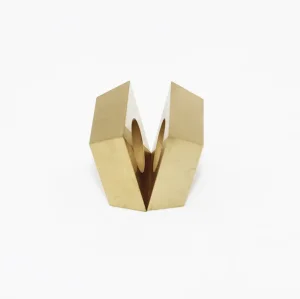
Square Hard Alloy Carbide Cutting Inserts for Metal Processing
Explore ProductGlobal Tungsten Carbide Drill Bit Market Dynamics & Supply Chain Geopolitics
Understanding the convergence of refractory metal upstream refining, advanced consolidation methodologies, and worldwide industrial consumption metrics.
Upstream APT Dominance & Vertical Integration
Over 80% of global Ammonium Paratungstate (APT) smelting and primary tungsten concentrates originate within China's Jiangxi and Hunan mining corridors. Direct factory integration across the entire value chain—from tungsten ore digestion and thermal carbothermic reduction into stoichiometric Tungsten Monocarbide (WC) powder through to multi-axis CNC grinding—insulates global B2B procurement teams from extreme raw material market fluctuations, export tariffs, and intermediate margin stacking.
Critical Minerals Compliance & ESG Traceability
Modern heavy manufacturing and defense tier-1 contractors demand audited supply chains meeting the European Union Critical Raw Materials Act and US Dodd-Frank Section 1502 guidelines. Certified manufacturers now employ closed-loop life-cycle management, combining non-conflict virgin tungsten concentrates with segregated zinc-reclamation secondary recycling, achieving cradle-to-gate carbon transparency while maintaining chemical purity levels exceeding 99.95%.
Tool Life Economics & Total Cost of Ownership (TCO)
In high-throughput automated CNC gantry cells and heavy geological drilling rigs, the baseline purchase price of a tungsten carbide drill bit represents less than 3% to 5% of aggregate operating expenditures. Tool failures, thermal micro-cracking, and flank degradation translate directly into catastrophic spindle downtime, unscheduled tool changer stoppages, and lost borehole integrity. Premium Sinter-HIP carbide grades deliver up to 340% extended tool longevity, drastically minimizing tool cost per meter penetrated.
Microstructural Engineering: Grain Sizing, Binder Phases & Sinter-HIP
Tungsten carbide (WC-Co) mechanical superiority stems from nanoscale phase boundary optimization, tailored cobalt binder mean free paths, and pressure consolidation kinetics.
| ISO / Industry Grade | Cobalt Binder (% Co) | Average WC Grain Size | Hardness (HRA / HV30) | Transverse Rupture Strength (TRS) | Primary Industrial Drilling Vector |
|---|---|---|---|---|---|
| K05 – K10 (Ultra-Fine) | 6.0% Co | 0.4 – 0.6 µm (Sub-Micron) | 92.8 – 93.6 HRA | 3,800 – 4,100 MPa | PCB micro-drilling, high-silicon aluminum, graphite, CFRP composite stacks |
| K20 – K30 (Fine-Medium) | 8.0% – 10.0% Co | 0.8 – 1.2 µm (Fine) | 90.5 – 91.8 HRA | 3,400 – 3,700 MPa | Cast iron gundrilling, structural alloy steel, stainless steel deep hole operations |
| P20 – P40 (Tough Grade) | 10.0% – 12.0% Co + TiC/TaC | 1.2 – 2.0 µm | 88.5 – 90.0 HRA | 2,900 – 3,300 MPa | Interrupted heavy cutting, tube scarfing, structural beam rotary hole drilling |
| Mining YG11C / YG15C | 11.0% – 15.0% Co | 2.5 – 4.5 µm (Coarse) | 85.5 – 87.5 HRA | 2,600 – 3,000 MPa | Down-the-hole (DTH) hammer bits, tri-cone rotary blast hole roller drilling |
| Non-Magnetic (Ni-Binder) | 6.0% – 9.0% Nickel (Ni) | 1.0 – 1.8 µm | 89.0 – 91.0 HRA | 2,400 – 2,800 MPa | Measurement-While-Drilling (MWD) downhole tools, magnetic sensor housing drilling |
Engineered Solutions Across Demanding Global Production Sectors
Customized tool blank geometries, internal through-coolant channel profiles, and advanced metallurgical coatings adapted to extreme mechanical stresses.
Aerospace Titanium & CFRP Hybrid Stack Drilling
Drilling multi-material stacks comprising carbon-fiber-reinforced polymer (CFRP) interleaved with titanium alloy (Ti-6Al-4V) introduces competing wear modes: abrasive diamond-tool wear coupled with severe thermal adhesion. Custom solid carbide drills utilize dual-margin helical flutes, high-rake shear cutting lips, and specialized PVD nano-composite AlTiSiN coatings to eradicate delamination, maintain exit hole roundness, and bypass work-hardening barriers.
Automotive Powertrain & EV Battery Enclosures
High-speed gundrilling of ductile cast irons, forged crankshafts, and ultra-thin aluminum structural battery pack trays necessitates high thermal stability and rapid chip evacuation. Helical twisted through-coolant channels integrated directly during the powder pressing stage deliver hydraulic flush pressures up to 70 Bar directly to the chisel edge, preventing micro-welding and extending drill life across high-volume transfer lines.
Geotechnical Mining, Deep Water Wells & Tunneling
Rock drill bits and blast hole hammer cutters demand specialized coarse-grained YG8, YG11C, and YG15C carbide grades characterized by high dynamic impact toughness (Charpy impact values > 8.5 J/cm²). These grades resist micro-spalling and impact shock loading when encountering hard quartz formations, iron ore veins, and granite strata under sustained hydraulic percussive cycling.
Localized Compliance, Logistics & Engineering Support
Bridging original factory manufacturing precision with regional compliance, on-site technical consulting, and zero-defect quality control across North America, Europe, and Asia-Pacific.
Comprehensive Metallurgical Certification
Every production run is accompanied by EN 10204 Type 3.1 inspection certificates. Comprehensive laboratory reports detail coercive force (Hc), magnetic saturation (4πσ), specific density verification via Archimedes balance testing, Rockwell A hardness, and digital scanning electron microscope (SEM) micrographs verifying porosity below ASTM B276 Class A02.
DDP Logistics & Safety Stock Consignment
To safeguard industrial assembly plants against supply chain shocks, we execute Delivered Duty Paid (DDP) multimodal maritime and air freight corridors with bonded warehouse safety stock allocation in Rotterdam, Houston, and Singapore. Flexible Kanban scheduling and Vendor-Managed Inventory (VMI) frameworks guarantee continuous manufacturing continuity.
Drawing-to-Tool Rapid Prototyping
Our engineering department provides rapid CAD/CAM manufacturability analysis within 8 hours of drawing submission. Equipped with advanced 5-axis Walter and ANCA CNC tool grinders, alongside automated pre-form presses, custom step drills, subland geometry tools, and specialized brazed rock drill inserts transition from 3D parametric models to certified production samples in under 12 days.
Heavy Wear, Tooling & Sintered Blanks Selection (Batch II)
Industrial thick plates, gear cutters, scarifier teeth, and indexable scrapers manufactured from 100% virgin sub-micron tungsten carbide powder stock.

Tungsten Carbide Plate 100×100×60 mm EDM Thick Block Stock
Explore Product
CNC Internal Turning Insert Scraping Blade for Steel Workpiece
Explore Product
Custom Carbide Spiral Bevel Gear Milling Cutters
Explore Product
Steel Pipe Scarfing Tools SPUB63J Tube Scarfing Inserts
Explore Product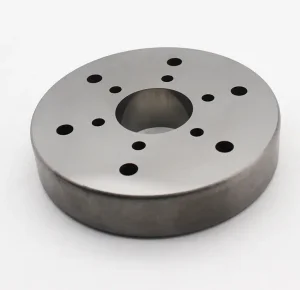
Customized Cemented Carbide Wear Parts for Roll Crushing
Explore Product
Tungsten Carbide Cutters Concrete Scarifier Milling Blades
Explore Product
SPUB86C P40 Uncoated Blank Cemented Carbide Tool Inserts
Explore Product
SPUB86C Customized CNC Diamond Metal Cutting Inserts
Explore ProductMetallurgical Innovation Roadmap & Sustainable Production Horizons
Pioneering advancements across binder chemistry, nanostructured grain controls, and high-performance physical vapor deposition architectures.
Nano-Grain WC Optimization
Deploying specialized grain growth inhibitors (VC, Cr3C2, TaC) in stoichiometric proportions under 0.8%wt to suppress grain coarsening during liquid-phase sintering, yielding homogeneous carbide matrices with hardness ratings exceeding 94 HRA without embrittlement.
Cobalt-Free & High-Entropy Matrices
Engineering sustainable, non-carcinogenic binders utilizing Nickel-Iron-Chromium (Ni-Fe-Cr) and High-Entropy Alloy (HEA) intermetallics to deliver unmatched corrosion resistance in offshore drilling muds and chemical processing environments.
Multi-Layered AlTiSiN / CVD Diamond
Integrating high-power impulse magnetron sputtering (HiPIMS) and microwave plasma CVD to deposit crystalline diamond coatings (thickness 6–12 µm), reducing tool-chip friction coefficients below 0.08 for dry high-speed machining of hypereutectic aluminum.
Binder Jet 3D Printing of Tool Blanks
Pioneering additive manufacturing of complex coolant channels, non-linear helical chip evacuation flutes, and variable core densities directly from WC-Co granules prior to final Sinter-HIP consolidation, enabling unmachinable geometries.
Frequently Asked Technical & Commercial Questions
Direct technical clarity on grade selection, OEM tooling lead times, coating performance, and global delivery guarantees.
What is the structural difference between Sinter-HIP and traditional vacuum sintering for drill bits?
Traditional vacuum sintering consolidates tungsten carbide blanks under low ambient pressures, which can leave isolated micro-pores (typically ASTM A04 or B02) within the core of the tool blank. Sinter-HIP integrates an isostatic hot pressing phase directly following liquid phase sintering, introducing pure Argon gas at pressures up to 100 bar (10 MPa) at 1,450°C. This collapses internal micro-voids, elevating transverse rupture strength by 20% to 35% and virtually eliminating premature catastrophic drill bit breakage under high torque and percussive shock.
How do you optimize tungsten carbide drill bit grades for high-silicon aluminum vs. hardened tool steel?
For abrasive, non-ferrous materials like high-silicon aluminum alloys (A380, A390) and composites, we engineer an ultra-fine sub-micron grain grade (0.4–0.6 µm WC) with low cobalt binder (6.0% Co), delivering exceptional hardness (up to 93.5 HRA) to combat abrasive edge rounding. Conversely, for hardened tool steels (HRC 45–60) or high-feed drilling, we increase the cobalt binder fraction to 8.0%–10.0% and formulate with grain growth inhibitors to balance high fracture toughness (K1c > 11 MPa·m½) against thermal spalling.
What are the minimum order quantities (MOQs) and prototype turnaround cycles?
For standard cylindrical ground rods (h6 tolerance) and catalog-standard indexable drill inserts (SPUB63, SPUB86, SNMX families), our factory maintains ready-to-ship stock with no MOQ constraints. For custom OEM solid carbide step drills, special brazed mining heads, or proprietary wear blocks made to technical drawings, initial prototype validation batches typically start at 10 to 50 pieces, with pre-production prototypes shipped via express air freight in 10 to 14 business days.
Why is a Nickel-bonded carbide grade chosen over Cobalt in certain drilling operations?
Cobalt is intrinsically ferromagnetic and susceptible to acid leach attack in corrosive subterranean or chemical environments. In Measurement-While-Drilling (MWD) and Logging-While-Drilling (LWD) downhole oil tools, magnetic interference compromises telemetry sensors. Nickel-bonded tungsten carbide provides low magnetic permeability (relative permeability µr approaching 1.0) along with exceptional resistance to pitting, hydrochloric solutions, and hydrogen embrittlement.
Request Custom Tooling Blueprints & Metallurgical Grade Data
Submit your 2D/3D part drawings (.STEP, .DWG, .PDF) or specific operational target parameters. Our metallurgical engineering team provides comprehensive manufacturability analysis, grade optimization, and transparent wholesale tiered pricing within 8 hours.