Engineered Sintered Carbide Solutions & Tooling Inserts
Explore our industrial-grade powdered metal tooling, scarfing profiles, and custom fabricated tungsten carbide components ready for global wholesale distribution.





Advanced Powder Metallurgy: The Evolution of Powdered Metal Rods
A comprehensive examination of consolidated carbide blanks, sinter-HIP kinetics, binder phase optimization, and micron-level concentricity standards.
In high-speed machining, precision mold finishing, micro-electronic PCB drilling, and extreme abrasive downhole environments, modern tooling substrates require structural integrity well beyond the performance boundaries of conventional melted and cast alloys. Powdered metal rods—predominantly manufactured from tungsten carbide (WC) suspended in a ductile cobalt (Co) or nickel (Ni) refractory binder matrix—represent the zenith of powdered metallurgical engineering. By consolidating virgin refractory metal powders below their absolute liquidus points under intense isostatic pressure, manufacturers create dense, homogeneous blanks with zero segregation, uniform crystalline orientation, and isotropic mechanical properties.
Unlike conventional ingot metallurgy, which suffers from macro-porosity, dendrite segregation, and chemical gradients during casting solidification, the liquid-phase sintering of powdered metal blanks yields a fully dense composite matrix. Through nanoscale grain refinement (down to 0.2 µm–0.4 µm) combined with balanced binder ratios (typically 6% to 12% weight composition), powdered metal rods achieve an optimal combination of high hardness (up to 94.0 HRA) and high transverse rupture strength (TRS exceeding 4,000 MPa). This structural balance prevents chipping under harmonic chatter while maintaining the sharp cutting edges required for machining hardened tool steels, aerospace titanium alloys, and abrasive composite laminates.
Years Metallurgical Experience
Integrated Production Floor
Centerless Ground Tolerance
Virgin Sub-Micron WC Powder
China Factory Direct Supply Chain & Upstream Raw Material Supremacy
Harnessing the strategic geographical nexus of Jiangxi's tungsten belt to deliver unmatched cost efficiency, uninterrupted raw material stability, and end-to-end quality tracing.
Vertically Integrated Refining
Situated in Jiangxi Province—the global epicenter of tungsten mining and ammonium paratungstate (APT) synthesis—our factory controls powder conversion directly from pure ore. We bypass intermediaries, directly managing the hydrogen reduction process to guarantee 99.95% purity tungsten powders with uniform Fischer sub-sieve sizer (FSSS) particle dimensions.
Continuous Batch Consistency
With automated ball milling cycles that operate up to 72 continuous hours using high-density cemented carbide balls, we ensure micro-homogeneity of the cobalt binder. Every production heat undergoes real-time monitoring of magnetic saturation (indicating precise carbon stoichiometry) and coercive force (verifying exact grain size boundaries).
Direct-to-Buyer Economic Leverage
By eliminating multiple tiers of regional tool stockists, trading agents, and offshore relabelers, our wholesale framework delivers factory-gate pricing. This economic edge lets OEM tool manufacturers and high-volume machine shops lower consumable rod blanks procurement costs by 28% to 42% while retaining h6 precision standards.
Global Enterprise Procurement Criteria: Precision Benchmarks
Detailed technical specifications ensuring that every solid carbide rod, single-hole coolant blank, and spiral twist channel blank interfaces seamlessly with high-speed multi-axis CNC grinding centers.
Procurement directors and chief tooling engineers at multinational industrial groups evaluate powdered metal rod stock against strict metrological criteria. Dimensional consistency along the entire longitudinal axis is critical. Runout or circular deviation in the sintered blank causes tool unbalance, accelerates diamond grinding wheel glazing, and leads to premature fluting failure during 5-axis Walter or Rollomatic grinding cycles.
Centerless Grinding & h6 Tolerances
Equipped with precision CNC centerless grinding machines featuring in-process laser gauging, our rods achieve outer diameter tolerances strictly within ISO h6 (e.g., +0/-0.008 mm for Ø6–Ø10 mm). Surface roughness is held to mirror-finish standards of Ra ≤ 0.15 µm (Rz ≤ 1.0 µm), minimizing chucking runout in shrink-fit hydraulic tool holders.
Total Indicator Reading (TIR) Runout
Longitudinal straightness and axial runout are held to strict standards: Total Indicator Reading (TIR) is held to less than 0.002 mm per 100 mm of rod length. This level of straightness prevents micro-vibrations in deep-hole drills and long-neck end mills operating at spindle speeds exceeding 24,000 RPM.
Near-Zero Porosity: A00, B00, C00
Utilizing high-pressure Sinter-HIP furnaces operating at 100 bar argon overpressure at 1,450°C, all internal microporosities are completely closed. Polished cross-sections inspected at 200x magnification consistently pass ISO 4505 metallographic standards, meeting the highest A00/B00/C00 pore distribution ratings with zero free graphite inclusion.
| Grade Designation | Cobalt Binder (% wt) | Grain Size (µm) | Density (g/cm³) | Hardness (HRA) | TRS (MPa) | Target Workpiece Applicability |
|---|---|---|---|---|---|---|
| ZF-Ultra-04 | 10.0% Co | 0.4 (Ultrafine) | 14.45 | 92.8 | 4,100 | Hardened steel (HRC ≤ 62), aerospace titanium, nickel superalloys |
| ZF-Nano-02 | 8.0% Co | 0.2–0.3 (Nano) | 14.65 | 94.0 | 3,800 | Micro PCB drills, graphite electrodes, hardened die steel (HRC ≤ 68) |
| ZF-Cast-08 | 6.0% Co | 0.8 (Sub-micron) | 14.95 | 92.5 | 3,200 | Grey cast iron, ductile nodular iron, non-ferrous aluminum-silicon turning |
| ZF-Tough-12 | 12.0% Co | 1.2 (Medium) | 14.20 | 90.2 | 4,400 | Interrupted cut roughing end mills, heavy feed slotting, high-impact punches |
| ZF-NonMag-Ni | 9.0% Nickel | 1.0 (Corrosion) | 14.50 | 89.5 | 3,100 | Non-magnetic MWD oilfield directional drilling, battery slurry wear rings |
Engineered Powdered Metal Rods: Industrial Use Cases
How customized tungsten carbide powdered metal cylinders withstand severe thermal fatigue, mechanical impact, abrasive wear, and high mechanical shock.
Aerospace Multi-Axis Fluting Tools
Machining complex CFRP-Titanium stacks (Ti-6Al-4V) requires extreme rod stiffness and high thermal conductivity to dissipate localized heat buildup away from the tool edge. Our ultrafine powdered metal rods maintain their edge integrity without micro-chipping, lowering burr formation on aerospace structural frames.
Semiconductor & PCB Micro-Machining
Modern telecommunication microelectronics and high-density interconnect (HDI) printed circuit boards require drill diameters as small as Ø0.05 mm. Sintered from our nano-particle powders, these blanks provide the high elastic modulus (E ≥ 600 GPa) needed to prevent drill deflection and hole runout at speeds up to 300,000 RPM.
Automotive Powertrain & EV Tooling
From fine reaming grey cast iron engine casings to machining hypereutectic aluminum motor housings, our powdered metal rods—especially our sub-micron grades—deliver consistent, wear-resistant tool edges that hold cycle tolerances across long production runs.
Cold Heading Punches & Stamping Dies
Powdered metal rods formulated with higher cobalt binder contents (12% to 15%) provide the impact toughness required for cold extrusion punches, metal wire drawing cores, and sheet metal perforating dies, handling high cyclic shock loads without catastrophic brittle fracturing.
Medical Instruments & Surgical Burs
Manufactured using biocompatible, medical-grade nickel binders or controlled cobalt matrices, our precision ground rods are fabricated into surgical drills, orthopedic bone reamers, and dental burs that retain their sharp cutting edges during repeated autoclaving cycles.
Localized Support Framework & International Compliance Assurance
Meeting global trade regulations through complete metallurgical certification, non-conflict raw material sourcing, and dedicated application engineering.
Global procurement requires complete regulatory transparency, lot traceability, and strong corporate environmental stewardship. Our factory operates under certified ISO 9001:2015 Quality Management and ISO 14001:2015 Environmental Management frameworks, backed by clean metallurgical practices.
RoHS & REACH Compliance
All powdered metal rod blanks, coatings, and binders are independently analyzed via inductively coupled plasma mass spectrometry (ICP-MS) to guarantee zero contamination with hazardous heavy metals. Shipments fully comply with European EU RoHS Directive 2011/65/EU and REACH (EC 1907/2006) SVHC chemical requirements.
Conflict-Free Mineral Transparency
Our raw tungsten ore and cobalt supplies are audited and sourced responsibly, aligning strictly with the Responsible Minerals Initiative (RMI) protocols. We provide formal Conflict Minerals Reporting Templates (CMRT) verifying that materials originate from ethical, non-conflict mine operations.
8-Hour FAE Technical Support
Our dedicated Field Application Engineering (FAE) group assists clients worldwide with drawing feasibility checks, shrinkage coefficient modeling, and grade recommendations. We deliver detailed engineering assessments and tooling quotes within 8 hours of receiving your 2D/3D component specifications.
Emerging Metallurgical Trends in Powdered Metal Rod Manufacturing
The next generation of high-performance tooling substrates: from gradient functional materials to additive binder-jet manufacturing.
Functionally Graded Sintered Layers
New vacuum sintering techniques make it possible to manufacture powdered metal rods with functionally graded compositions. By establishing a cobalt-depleted, extra-hard exterior shell (0.5 mm depth at ~94 HRA) around a cobalt-enriched, ductile core (~89 HRA), these rods deliver high surface wear resistance alongside core toughness that dampens harmonic vibrations.
PVD & CVD Coating Integration
To maximize tool performance, ground rods increasingly receive tailored PVD arc-evaporated and HiPIMS coatings (such as AlTiN, AlCrN, and diamond-like carbon DLC). Sintering formulations are optimized with specific dopants (e.g., TaC, NbC, VC) that control grain boundary growth during high-temperature (1,000°C) CVD chemical deposition cycles, preventing thermal substrate softening.
Complex Twisted Helical Coolant Channels
Advanced extrusion forming allows production of continuous powdered metal rods with 30° and 45° helical coolant ducts. Extruded with micron-level helix pitch accuracy, these channels maintain balanced internal coolant flow to the tool cutting lips, speeding up chip evacuation during deep pocket drilling.
Frequently Asked Questions on Powdered Metal Rods
Direct answers from our metallurgical quality assurance team covering order specifications, grain boundaries, delivery timelines, and custom geometries.
What is the difference between conventional cast alloy rods and powdered metal rods?
How does Sinter-HIP processing improve powdered metal rod performance?
What are the standard tolerances for h6 ground powdered metal rods?
Can you formulate custom carbide grades based on our drawing requirements?
What is your minimum order quantity (MOQ) and production lead time for wholesale orders?
How does the factory verify internal quality and grain size consistency?
Industrial Cutting Blanks, Tooling Plates & Custom Carbide Components
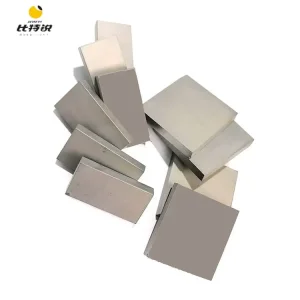
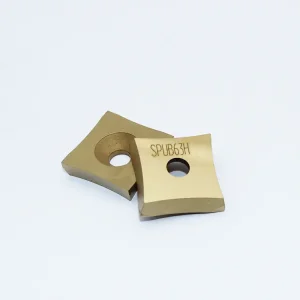
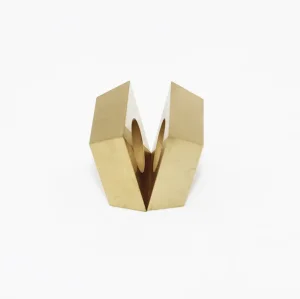
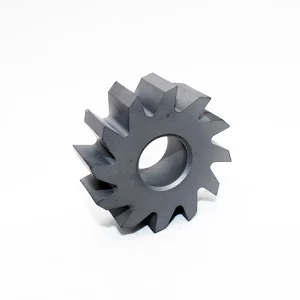
Factory-direct inventory featuring wear-resistant flat plates, gear milling blanks, precision turning tools, and custom alloy parts ready for high-demand industrial setups.