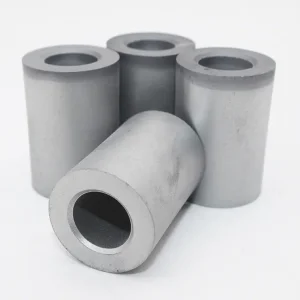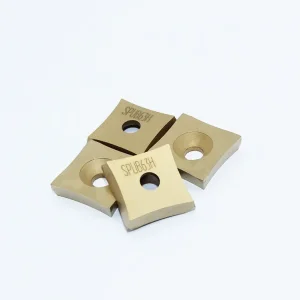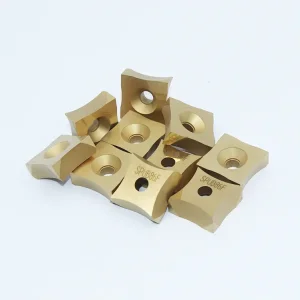
High-Precision Sintered Tungsten Carbide Components (Part I)
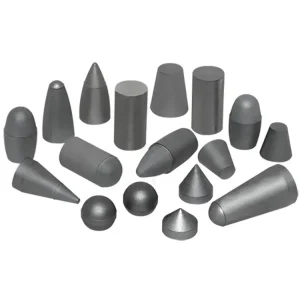
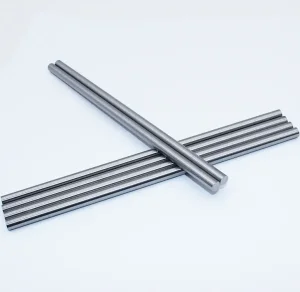
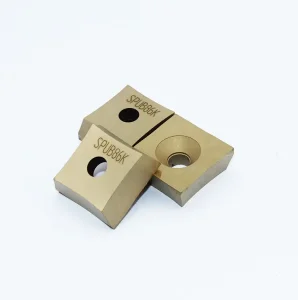
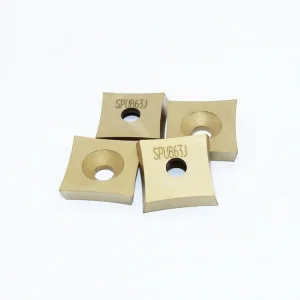
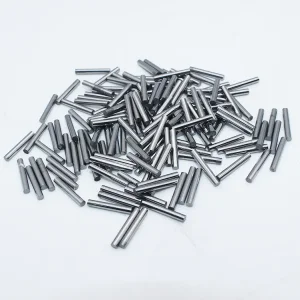
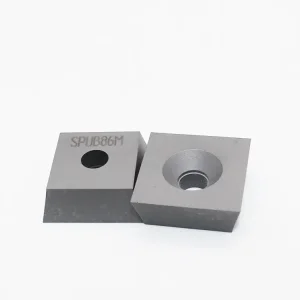
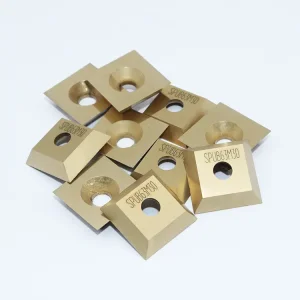
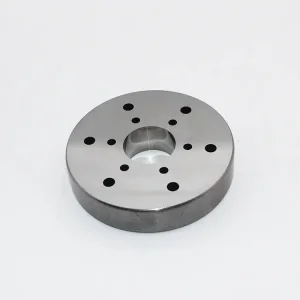
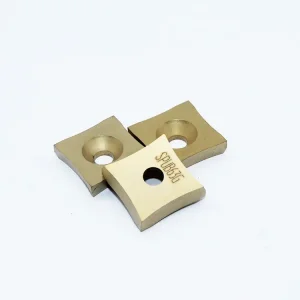
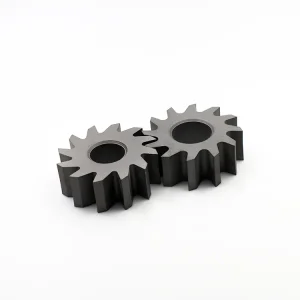
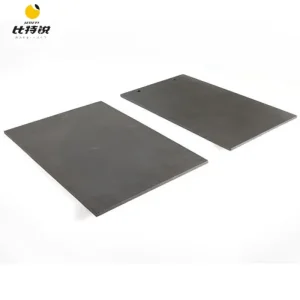
Explore our industrial-grade tungsten carbide blanks, scarfing inserts, high-density SiC plates, and precision rods manufactured via vacuum Sinter-HIP processing with micron-level tolerances.
Fun Facts About Tungsten: The Extreme Metallurgy That Powers Global Industry
Beyond consumer trivia, the elemental behavior of Wolfram (W, Atomic No. 74) governs modern machining, aerospace ballistics, and wear-resistant tool engineering. Here is why procurement engineers and metallurgists revere tungsten.
The "Heavy Stone" Swedish Etymology & Wolf Spume
The name tungsten originates from the Swedish words "tung sten", translating literally to "heavy stone". Meanwhile, its chemical symbol W derives from the German historical moniker Wolfram (wolf's spume or froth), coined by medieval tin miners in Saxony who noted that tungsten minerals "devoured tin like a predatory wolf devours a sheep" during furnace smelting.
Thermal Supremacy: Surviving Stellar Core Heat
Tungsten boasts an astronomical melting point of 3,422 °C (6,192 °F) and a boiling point surpassing 5,555 °C, approaching the actual surface temperature of the Sun. Because of this thermal endurance and an exceptionally low thermal expansion coefficient (4.5 μm/m·K), tungsten carbide tooling resists thermal deformation during high-speed CNC dry milling.
The Gold Counterfeit Paradox
Tungsten possesses an elemental density of 19.25 g/cm³, virtually identical to pure 24-karat gold (19.30 g/cm³). This identical density means a tungsten billet matches gold's weight to within 0.26%, making it notorious in bullion counterfeiting. In industrial engineering, however, this mass profile delivers compact ballast for aerospace trim weights and racecar chassis balancing.
Stiffness Double That of Structural Steel
With a Young's modulus of elasticity approaching 600 GPa (up to 650 GPa for low-binder carbide), cemented tungsten carbide is nearly three times stiffer than structural carbon steel (205 GPa) and titanium alloys (110 GPa). Boring bars and deep-hole gundrills made of solid carbide eliminate chattering and deflection over extended aspect ratios.
Non-Melting Powder Metallurgy (Liquid Phase Sintering)
No standard crucible can melt tungsten without melting the container itself. Therefore, 100% of industrial tungsten carbide parts are synthesized via powder metallurgy. Sub-micron tungsten monocarbide (WC) grains are blended with cobalt or nickel binders and consolidated under 10 MPa of argon gas in Sinter-HIP furnaces at 1,400 – 1,500 °C.
Kinetic Energy Penetration & Non-Toxicity
Due to its high density, hardness, and thermal resistance, tungsten alloy is chosen globally as kinetic armor-piercing sabots (APFSDS) and high-performance shot. Unlike lead, tungsten is non-toxic and environmentally stable, making it the preferred sustainable replacement in medical radiation shielding and downhole logging instruments.
The Chinese Factory Advantage: Raw Material Hegemony to Sintered Mastery
Global original equipment manufacturers (OEMs) and tooling wholesalers face constant geopolitical disruption. Understanding China's vertical integration in refractory metals is critical for resilient procurement strategies.
Jiangxi & Hunan: The Tungsten Capital of Earth
China holds over 80% of global mine production of tungsten ore (predominantly wolframite and scheelite), with Jiangxi Province hosting the richest deposits. Located in Nanchang, Jiangxi, our manufacturing ecosystem sits directly atop the raw material corridor, shielding wholesale partners from global shipping bottlenecks for Ammonium Paratungstate (APT).
Full Vertical Integration: APT to Finished h6 Parts
Unlike Western regrinders who purchase imported sintered rods at premium markups, our direct China factory controls every refinement step: blue tungsten oxide reduction, carbonization into pure WC crystals, spray drying towers, automatic CNC pressing, Sinter-HIP cycle control, and multi-axis centerless grinding.
100% Virgin Powder Integrity vs. Recycled Zinc Reclaim
A critical fun fact and commercial differentiator: Western markets frequently dilute grades with chemical or zinc-reclaimed tungsten scrap, causing unpredictable microporosity and early chipping. Our wholesale facility guarantees 100% virgin crystalline powder, yielding zero A02-grade microvoids under metallographic analysis.
| Cemented Carbide Grade | Binder Formulation (% Wt) | Grain Size Class (μm) | Hardness (HRA / HV30) | Transverse Rupture Strength (TRS) | Primary Industrial Application Vector |
|---|---|---|---|---|---|
| YG6 (ISO K10-K20) | 6.0% Cobalt | 1.0 – 1.4 μm (Fine) | 90.5 HRA (1520 HV30) | ≥ 2,400 MPa | Chilled cast iron, non-ferrous bar peeling, high-speed drawing dies |
| YG8 (ISO K20-K30) | 8.0% Cobalt | 1.4 – 2.0 μm (Medium) | 89.5 HRA (1410 HV30) | ≥ 2,800 MPa | Brazed tips for mining picks, stone cutting, rotary core drills |
| YG15 (ISO K40) | 15.0% Cobalt | 2.2 – 3.0 μm (Coarse) | 87.0 HRA (1200 HV30) | ≥ 3,200 MPa | Cold heading dies, punch matrices, heavy metal stamping blanks |
| YG20 (Heavy Impact) | 20.0% Cobalt | 2.5 – 3.5 μm (Coarse) | 85.5 HRA (1080 HV30) | ≥ 3,400 MPa | Forging hammer inserts, powder metallurgy core rods, wire nail punches |
| YN6 / YN8 (Non-Magnetic) | 6.0 – 8.0% Nickel Binder | 1.2 – 1.8 μm (Medium) | 88.5 – 90.0 HRA | ≥ 2,200 MPa | Downhole MWD/LWD sensor sleeves, semiconductor magnetic punch dies |
Total Compliance, Traceability & Localized Operational Support
Purchasing carbide across international borders demands rock-solid regulatory certainty. Here is how our wholesale supply system ensures seamless import compliance for North American, European, and Asia-Pacific buyers.
Conflict-Free & RMI / OECD Compliance
Tungsten is one of the designated "3TG" minerals (Tin, Tantalum, Tungsten, Gold). All our virgin tungsten powder is mined within certified domestic ores under transparent custody chains, adhering strictly to Responsible Minerals Initiative (RMI) and Dodd-Frank Act Section 1502 compliance, complete with validated CMRT reporting.
REACH, RoHS & Dual-Use Export Licensing
Custom precision carbide parts with outer diameters exceeding specific thresholds or non-magnetic properties can fall under dual-use customs classification. Our experienced export compliance desk handles MOFCOM export licensing, EU RoHS 3 exemptions, and REACH SVHC certifications, eliminating border detention risks.
Regional Consignment & Safety Buffer Stock
To insulate high-volume manufacturing lines from ocean freight fluctuations, we partner with overseas bonded distribution facilities in North America and Western Europe to maintain safety stock for high-turnover carbide scarfing inserts (SPUB, SNMX) and standard h6 ground tool rods.
Engineering Trends: How Tungsten Carbide Shapes Tomorrow's Manufacturing
From additive manufacturing of refractory components to nanograin ultra-tough coatings, the tungsten carbide sector is experiencing an unprecedented technological resurgence.
Submicron & Nano-Grain WC Tooling
Grain sizes compressed to 0.2 – 0.5 μm provide unmatched hardness (>93 HRA) without the typical embrittlement of low-binder alloys, allowing CNC machining of hardened dies up to 65 HRC without electrical discharge machining (EDM).
Binder-Phase Evolution: Cobalt-Free & Nickel-Alloy
Driven by EU health regulations and offshore oil drilling in corrosive H2S sour gas wells, nickel-chromium-bonded carbides provide exceptional cavitation erosion resistance and zero magnetic interference for MWD logging tools.
Semiconductor & EV Leadframe Tooling
Micro-drills for multilayer PCB vias require high-elasticity solid carbide blanks with runout accuracy within 0.002 mm, preventing drill wander at spindle speeds exceeding 300,000 RPM.
Extreme Scarfing & Centerless Bar Peeling
High-yield pipe mills rely on our heavy-duty indexable inserts (SPUB-63, SNMX-19) to shear red-hot continuous weld flash off API pipeline casing at line speeds exceeding 80 meters per minute.
Frequently Asked Questions: Global Wholesale & Metallurgy
Direct answers for tooling distributors, industrial machine builders, and purchasing directors qualifying a new cemented carbide partner.
Why is tungsten carbide classified as a composite rather than a simple metal alloy?
What makes Sinter-HIP furnaces mandatory for tier-1 tungsten carbide blanks?
How does nickel binder achieve non-magnetic properties in cemented carbide?
Can Zhongfu customize proprietary powder formulations based on customer drawings?
What are the lead times and minimum order quantities (MOQs) for export shipments?
High-Precision Sintered Tungsten Carbide Components (Part II)
Complete your tooling procurement with our heavy-duty wire drawing dies, nickel-bonded non-magnetic rods, wood and stone cutting blanks, and high-performance grooving inserts.