

Industrial Core Matrix
High-Performance YG8 & Tooling Components
Engineered with submicron powder selection and precision Hot Isostatic Pressing (HIP) sintering to resist extreme abrasive friction and mechanical impact.

China Wholesale SPUB63M30 tungsten carbide indexable cutting tools
Explore Specification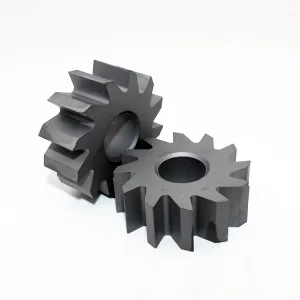
Customize good quality precision metal parts spur gear tiller cultivator parts
Explore Specification
Wholesale woodturning tungsten carbide turning tip inserts and cutter railway
Explore Specification
China Customized tungsten carbide insert for crushing roll wear parts
Explore Specification
Wholesale Steel Pipe Scarfing Tools SPUB63J Tube Scarfing Inserts
Explore Specification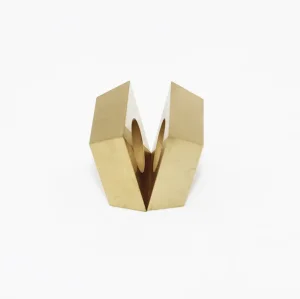
Carbide hard alloy blade square Cutting Inserts for Metal Processing
Explore Specification
Cemented carbide tips for railway track tamping pick center tooth
Explore Specification
Material Science Analysis
Metallurgical Architecture & Phase Optimization of Grade YG8
A rigorous examination of 92% Tungsten Carbide with 8% Cobalt binder matrix engineered for boundary-stress applications.
The Stoichiometric Sweet Spot
The standard composition of YG8 comprises 92% WC (Tungsten Carbide) and 8% Co (Cobalt) binder. This precise volumetric ratio bridges the brittle boundary of lower-binder grades (like YG6) and the softer profile of high-cobalt structural metals (like YG15).
- Nominal Density: 14.6 to 14.8 g/cm³
- Hardness: 89.0 to 90.0 HRA
- Transverse Rupture Strength: ≥ 2200 N/mm²
Grain Boundary Control
Our Jiangxi fabrication facilities deploy controlled carbo-thermal reduction processes to stabilize grain distribution between 1.4 µm and 2.4 µm. This medium-grain morphology prevents grain-boundary cleavage failure during intermittent cutting cycles.
- Elimination of brittle Eta (η) phase (Co₃W₃C)
- Carbon-saturation control within ±0.05%
- Suppressed micro-crack initiation thresholds
Hot Isostatic Pressing (HIP)
Sintering without pressure leaves residual micro-pores that degrade fatigue performance. Our manufacturing processes utilize overpressure sinter-HIP technology operating at 1450°C and 10 MPa of ultra-pure Argon pressure.
- Micro-porosity class reduced to A02-B02 (ISO 4505)
- Impact resistance elevated by upwards of 35%
- Homogeneous cobalt wetting over carbide facets
| Carbide Grade | Cobalt Content (wt%) | Density (g/cm³) | Hardness (HRA) | TRS (MPa) | Primary Mechanical Focus |
|---|---|---|---|---|---|
| YG6 (ISO K10-K20) | 6.0% | 14.95 | 90.5 | 1900 | Ultra-abrasion resistance; low continuous impact |
| YG8 (ISO K20-K30) | 8.0% | 14.70 | 89.5 | 2200 | Equilibrated wear resistance & dynamic impact toughness |
| YG11 (ISO K30-K40) | 11.0% | 14.40 | 88.0 | 2500 | Heavy mining rock breaking; percussive stress |
| YG15 (ISO K40) | 15.0% | 14.00 | 87.0 | 2800 | Deep stamping dies, cold heading dies, extreme shock loading |
Supply Chain Strategic Alignment
Global Enterprise Sourcing Architecture
Understanding procurement priorities across tier-one manufacturing ecosystems: why OEM engineering teams standardize on China-sourced YG8.
Cost-Per-Cycle (CPC) Arbitrage
Modern procurement officers are evaluating carbide spend based on Total Operational Cost (TOC) rather than upfront unit pricing. A high-integrity YG8 insert prevents machine downtime, tooling chatter, and mid-shift changeouts in automated CNC cells.
Supply Security & Raw Mineral Upstream
China holds over 80% of global tungsten reserves, primarily centered in Jiangxi and Hunan. Sourcing directly from integrated factories eliminates multiple layer-distributor margins and insulates buyers from volatile Ammonium Paratungstate (APT) price swings.
Virgin vs. Reclaimed Powder Verification
A critical point of failure in low-cost carbide sourcing is the silent blending of contaminated zinc-process recycled scrap powder. Zhongfu implements strict batch spectral analysis to ensure 100% virgin crystal structures.
24+
Years Cemented Carbide Experience
5,000 m²
High-Tech Production Facilities
80+
Proprietary Metallurgical Patents
< 8 hrs
Engineering Turnaround SLA
Field Implementations
Cross-Industry Engineering Solutions
YG8 grade tungsten carbide delivers calculated tribological solutions across volatile real-world working conditions.
Geotechnical & Mining
Brazed rotary and percussion tips for blast-hole drills and tricone bits. YG8 handles quartzite, granite, and fractured sedimentary formations without premature core fracture.
Railway Infrastructure
Tamping tines and ballast consolidating picks undergo constant high-frequency impact. YG8 cladding provides surface durability up to 3.5× longer than hard-faced alloy steel.
Steel Tube Scarfing
Heavy duty internal/external bead removal (SPUB series) demands extreme edge security against welded seams at elevated thermal windows exceeding 800°C.
Workholding Torque Inserts
Precision chuck jaw gripper teeth manufactured from diamond-ground YG8 provide secure clamping forces under high rotational speed without marring parts or micro-spalling.
R&D Horizons
Technical Roadmap & Metallurgy Evolution
Addressing thermal-shock challenges, grain refinement, and sustainable supply-chain integration.
Nano-Grain Grain Inhibitors
Modern research integrates VC (Vanadium Carbide) and Cr₃C₂ (Chromium Carbide) in ultra-fine percentages (≤0.5%) to arrest grain growth during the liquid-phase sintering step, advancing micro-hardness without sacrificing cobalt ductility.
High-Entropy Binders (HEB)
To reduce dependence on conventional cobalt networks and elevate corrosion resistance in harsh acid-mine drainage and marine settings, alternative Fe-Ni-Co-Cr matrix architectures are being deployed in test environments.
PVD/CVD Multi-Layer Coatings
Coupling the bulk mechanical toughness of HIP-sintered YG8 substrates with AlTiN, TiSiN, and Diamond-Like Carbon (DLC) functional skins. This elevates surface heat resilience past 1100°C in aggressive metalworking environments.
Verification Infrastructure
Localization Support, Quality Assurance & Compliance
Eliminating delivery risks through systematic metallurgical verification and international customs harmonization.
Full Metallurgical Traceability
Every production run leaves our facility backed by an EN 10204 3.1 inspection certificate detailing actual density, coercive force (Hc), magnetic saturation (4πσ), and Vickers/Rockwell hardness tests.
Global Trade Compliance
Exporting across the USA, EU, Australia, and ASEAN requires complete compliance alignment. We maintain comprehensive documentation for REACH, RoHS, and Dodd-Frank Conflict Minerals (3TG) reporting.
OEM Precision Ground Tolerances
From as-sintered blanks with standard tolerances to micron-accurate CNC cylindrical and surface grinding achieving h6, ISO tolerances, and Ra 0.2 mirror surface finishes according to buyer CAD models.
Engineering Help Desk
Frequently Asked Questions by Industrial Buyers
In-depth responses covering procurement, metallurgical grade equivalence, and processing specifications.
What is the international grade equivalence for Chinese YG8?
Under the ISO 513 classification system, YG8 maps closely to the ISO K20–K30 group for machining cast iron and non-ferrous metals, and matches US Industry Code C-2. It also aligns with European standards like Sandvik grade H10F/H8 or Plansee standards for tough wear components.
How does YG8 behave under high-temperature brazing?
YG8 exhibits stable brazing behavior when utilizing silver-copper (Ag-Cu) or pure copper alloys. Because thermal expansion of carbide (~5.0×10⁻⁶/K) is roughly half that of structural steel (~12.0×10⁻⁶/K), we recommend sandwich brazing foils (Copper-Invar-Copper) to relieve residual stresses and avoid cooling cracks.
What is the difference between YG6, YG8, and YG15?
The primary variable is the Cobalt binder percentage: YG6 (6% Co) provides superior hardness and wear resistance at the cost of shock tolerance; YG8 (8% Co) delivers balanced performance for high wear with medium shock; YG15 (15% Co) maximizes impact toughness, suited for stamping and cold-heading tooling.
Can you provide custom EDM blanks with zero stress cracks?
Yes. Wire electrical discharge machining (WEDM) can cause thermal shock micro-cracking if residual stresses remain from sintering. Our parts undergo a proprietary stress-relief thermal annealing cycle after HIP sintering to maintain geometric stability during WEDM wire cutting.
Industrial Catalog
Precision Ground Plates, Tool Blanks & Specialty Rods
Direct from our Jiangxi factory floor: fully traceable tungsten carbide parts meeting strict drawing specifications.

Wholesale SPUB63B tungsten carbide insert box industrial cutting grade
Explore Specification
Tungsten Carbide Plate 100×100×60 mm — Thick Block Stock for EDM
Explore Specification
High-quality tungsten carbide rods for precision drilling and milling
Explore Specification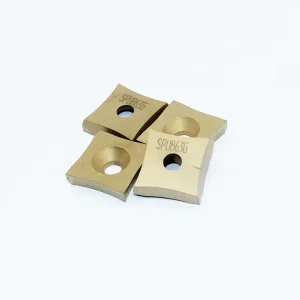
Wear resistant SPUB 63G tool holder insert carbide cutting inserts
Explore Specification
China Wholesale carbide insert cutting tools for CNC turning centers
Explore Specification
Nickel non magnetic cemented carbide rods with Nickel binder system
Explore Specification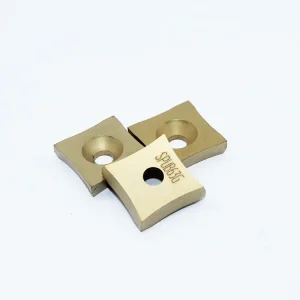
Wear resistant SPUB 63G customized carbide threading inserts
Explore Specification