
Featured Industrial Tungsten Carbide Solutions (Part I)
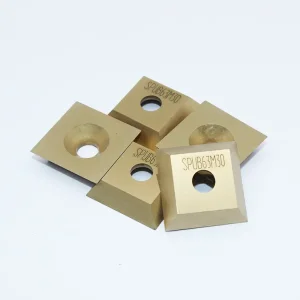
Explore our top-tier catalog of extreme-wear square inserts, tube scarfing blades, YG8 chuck jaw torque grippers, and nickel-bonded rods engineered to international DIN and ISO tolerances.
Who Discovered Tungsten? The Journey from 18th-Century Science to Modern Cemented Carbide
A complete historical timeline illustrating how element 74 evolved from mineralogical curiosity in Sweden and Spain into the backbone of 21st-century precision machining in Jiangxi, China.
In global industrial procurement, engineers and technical buyers frequently ask about the origin of tungsten when evaluating refractory material properties. Who discovered tungsten? The scientific discovery of tungsten traces back to 1781, when Swedish-German-Swedish pharmaceutical chemist Carl Wilhelm Scheele isolated tungstic acid from a white mineral then called "tung sten" (Swedish for "heavy stone", later renamed scheelite in his honor). Scheele hypothesized that a novel metallic element could be extracted from this acid. Two years later, in 1783 in Bergara, Spain, Basque brothers Juan José and Fausto Elhuyar successfully isolated elemental tungsten by reducing tungstic acid with pulverized charcoal. They named the new metallic element Wolfram, deriving from the German mining term wolf rahm ("wolf's froth"), referencing wolframite ore’s voracious appetite for tin during smelting.
Today, the query "China Who Discovered Tungsten Manufacturer & Manufacturers" represents the convergence of historical metallurgy and modern heavy industrial capability. While European scientists discovered the element, modern China—and specifically Jiangxi Province—became the geographic epicenter of global tungsten production, accounting for the highest concentration of wolframite deposits and advanced downstream powder metallurgy manufacturing. Jiangxi Zhongfu Cemented Carbide Co., Ltd. sits at the absolute center of this ecosystem, leveraging century-old refractory science to fabricate ultra-hard tools that empower aerospace, heavy pipe mills, oilfield exploration, and micro-precision electronics.
1. Elemental Wolfram Physics
Atomic number 74 delivers extreme electron binding energy. With modulus of elasticity exceeding 411 GPa, tungsten resists elastic deformation under violent mechanical loads far beyond titanium or tool steels.
2. Liquid-Phase HIP Sintering
By blending sub-micron WC powder with cobalt or nickel binders in computer-controlled Sinter-HIP autoclaves at 1,450 °C under 10 MPa argon pressure, micro-voids collapse to zero internal porosity.
3. Tailored Microstructure
Through precise carbon stoichiometry balance, Zhongfu eliminates brittle eta-phase (W₃Co₃C) and unwanted free graphite, guaranteeing fracture toughness alongside Vickers hardness up to HV30 1850.
China Factory Supply Chain Advantages in Cemented Carbide
Why sourcing directly from Nanchang, Jiangxi gives multinational procurement heads an unbeatable competitive edge in lead time, powder purity, and direct cost structure.
Global original equipment manufacturers (OEMs) and cutting-tool brands operate in an environment fraught with supply chain volatility. Tungsten is recognized as a strategic critical raw material across North America and the European Union. In this landscape, China represents over 80% of global refined tungsten supply, with Jiangxi Province hosting the richest deposits of scheelite and wolframite on the planet.
As a seasoned Chinese manufacturer based in Nanchang, Jiangxi Zhongfu Cemented Carbide Co., Ltd. is positioned at the apex of this vertical supply chain. Unlike Western converters who must ship raw Ammonium Paratungstate (APT) or tungsten oxides across oceans before synthesis, our facility processes fresh, 100% virgin tungsten powder sourced directly from regional smelters. This integration confers three indisputable procurement advantages:
1. Direct Mine-to-Furnace Economics
By eradicating intermediary trader margins and cross-continental freight overheads on bulk raw powders, Zhongfu passes on 18–32% real total cost of ownership (TCO) savings directly to global tool shops and wear part distributors.
2. Certified Powder Traceability
We reject contaminated secondary recycled black scrap. Every production batch starts from pure, certified virgin APT powder with strict Fischer sub-sieve sizer (FSSS) grain uniformity, ensuring zero batch-to-batch micro-crack anomalies.
3. Ultra-Agile Tooling Production
Our 5,000 m² factory integrates automated cold isostatic presses (CIP), multi-axis CNC wire-EDM profiling, and 6-axis surface/centerless grinding under one roof. Prototyping cycles compress from 12 weeks to under 15 working days.
Localized Engineering Support & Rigorous Regulatory Compliance
Navigating complex international material standards: How Zhongfu guarantees chemical compliance, conflict-free minerals integrity, and frictionless border customs clearance.
Procuring precision tungsten carbide components from an offshore factory requires more than matching a drawing dimension; it demands rigorous regulatory conformity, metallurgical verification, and seamless engineering communications. Multinational buyers in the United States, Germany, Mexico, Canada, and Australia rely on Jiangxi Zhongfu because we engineer our operational workflow around strict Western procurement protocols.
RoHS & REACH Compliance
Every shipment is accompanied by complete SGS/TUV chemical analysis certs verifying non-detectable levels of lead, mercury, hexavalent chromium, and restricted phthalates. Perfect for food processing, pharmaceutical, and electronic tooling.
RMI Conflict-Free Tungsten
Zhongfu strictly aligns with the Responsible Minerals Initiative (RMI) guidelines. Our raw materials originate exclusively from compliant, audited smelters, ensuring complete transparency for public ESG audits.
Dual-Language Engineering Desk
Misunderstandings on drawing geometric dimensioning and tolerancing (GD&T) cause catastrophic assembly failure. Our specialized bilingual metallurgical engineers interface directly via 2D/3D CAD/CAM models, responding within 8 hours.
Standard Cemented Carbide Grade Specification & Application Matrix
Selecting the optimal tungsten carbide formulation is a calculated trade-off between hardness (wear life) and cobalt content (fracture resistance). Use this field-tested metallurgical table to evaluate specs before submitting your inquiry:
| Carbide Grade | ISO Code | Binder Content (Co / Ni %) | Density (g/cm³) | Hardness (HRA / HV30) | TRS (MPa) | Typical Mechanical Field Applications |
|---|---|---|---|---|---|---|
| YG6 | K10–K20 | 6.0% Co | 14.90–15.00 | 90.5 HRA / 1650 HV | 1,900 | High-speed cast iron turning, non-ferrous metal slicing, wire drawing dies, wear plates |
| YG8 | K20–K30 | 8.0% Co | 14.65–14.80 | 89.5 HRA / 1520 HV | 2,200 | Chuck jaw torque grippers, rock drill button inserts, brazed tips, heavy pipe peeling |
| YG11C | P30–P40 | 11.0% Co (Coarse) | 14.30–14.50 | 87.0 HRA / 1300 HV | 2,700 | Heavy impact mining drill bits, railway ballast tamping tines, cold heading extrusion dies |
| YG15 | K40 | 15.0% Co | 13.90–14.15 | 87.0 HRA / 1280 HV | 2,800 | Silicon steel sheet stamping dies, progressive blanking punches, high-stress swaging tools |
| YG20 | G50 | 20.0% Co | 13.40–13.60 | 85.5 HRA / 1150 HV | 3,100 | Massive impact forging molds, heavy cold heading punches, thick EDM wire cutting blocks |
| Ni-Based NM | Non-Magnetic | 8.0–12.0% Ni Binder | 14.50–14.85 | 88.5 HRA / 1450 HV | 2,100 | Magnetic sensor housings, oilfield MWD/LWD directional tools, acid/alkali corrosive seal rings |
Localized Application Scenarios in Heavy Industrial Manufacturing
From continuous welded steel tube mills to subsea directional oil drilling: Discover how Zhongfu’s engineered carbide parts solve catastrophic friction, heat, and shock fatigue.
1. High-Frequency ERW Tube Scarfing
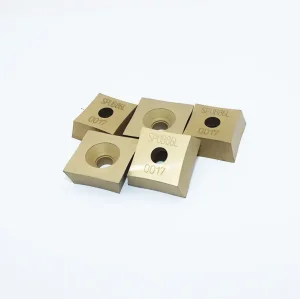
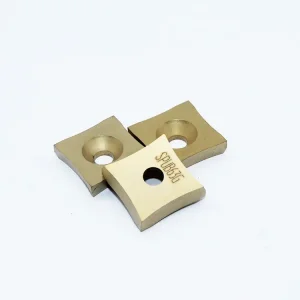
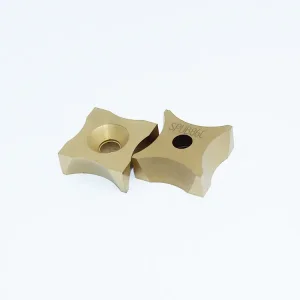
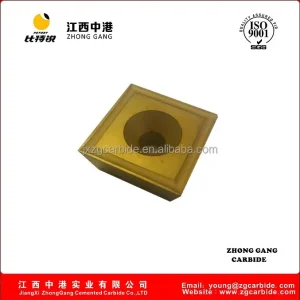
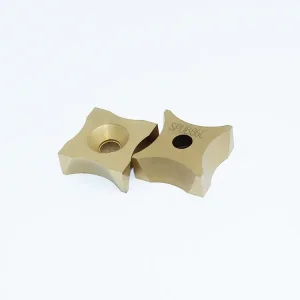
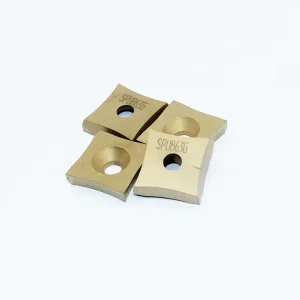
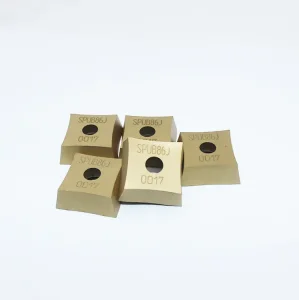
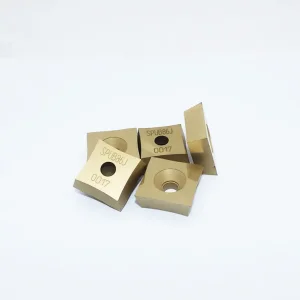
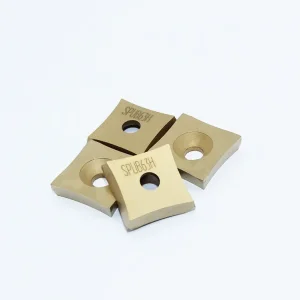
In electric resistance welded (ERW) tube lines, removing white-hot internal and external weld beads demands severe thermal shock resistance. Our SPUB 63, SPUB86C, and SNMX scarfing inserts with multilayer CVD coatings withstand continuous peeling at 1,000 °C without edge micro-chipping.
2. Chuck Jaw Hard Clamping Inserts
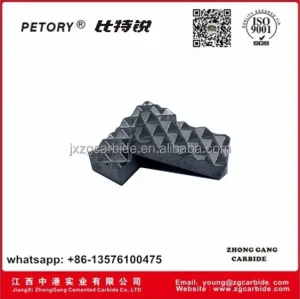
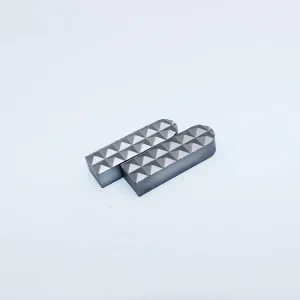
CNC lathe workholding requires exceptional grip force without crushing delicate forgings. Our YG8 torque gripper inserts feature precision-pressed pyramid serrations that bite deep into hardened alloy billets, preventing part slippage under aggressive spindle feeds.
3. MWD / LWD Downhole Directional Drilling
Modern horizontal oil and shale exploration tools utilize sensitive magnetometers to steer drill strings. Standard cobalt-bonded carbide distorts electromagnetic readings. Zhongfu’s nickel-binder non-magnetic carbide rods and bushings provide zero magnetic permeability (< 1.005 µ) plus extreme sand slurry erosion defense.
4. Railway Ballast Tamping & Road Scarifying
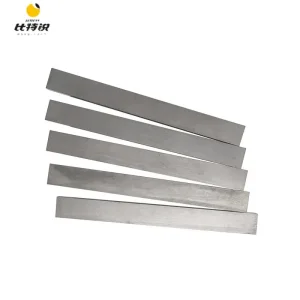
Railway track maintenance tamping tines experience brutal cyclic concussion against hard granite ballast. By brazing custom-shaped YG11C wear-resistant plates and strips onto steel tines, service life jumps from 80 track kilometers to over 350 track kilometers.
5. Solid Carbide End Mills & Micro Drills
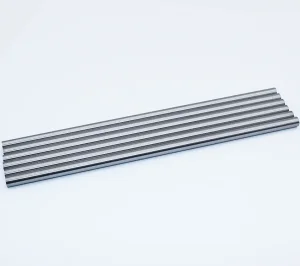
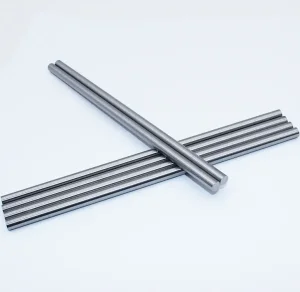
Printed circuit board (PCB) routing and aerospace carbon-fiber machining require extreme tool edge sharpness. We supply mirror-finished h6 ground solid carbide round rods (Ø1–40 mm) with sub-micron grain sizing (0.4–0.6 µm), ensuring exceptional transverse rupture strength.
6. High-Precision Cold Heading & EDM Dies
For fastener production plants striking stainless steel rivets at 400 strokes/min, our YG15 and YG20 cemented carbide blocks provide the perfect elastic modulus, resisting fatigue spalling while maintaining mirror surface finish through continuous wire-EDM cutting.
Technological Frontiers Shaping Tungsten Carbide Manufacturing
How additive manufacturing, nano-crystalline grain refinement, and circular metallurgical recycling are revolutionizing cemented carbide performance through 2030.
The industrial landscape for refractory carbide materials is advancing rapidly. Driven by the demands of lightweight high-strength alloys (such as Inconel 718, titanium aluminide, and carbon-fiber reinforced polymers), carbide manufacturers must innovate beyond conventional sintered blanks. At Jiangxi Zhongfu, our metallurgical laboratory focuses on four transformative engineering trends:
Nano-Grained Carbide (<0.2 µm)
By integrating rare-earth grain growth inhibitors (VC, Cr₃C₂), we suppress secondary recrystallization during sintering. Nano-grain carbide creates razor-sharp cutting tools that machine hardened steels (62+ HRC) with negligible tool deflection.
Binder Jetting 3D Printing of WC
Additive manufacturing enables internal conformal cooling channels within carbide drill heads and intricate hot-forming nozzles that were historically impossible to machine using standard dies or wire-EDM.
Functionally Graded Carbide (FGC)
Engineered with a cobalt-enriched, shock-absorbing core and an ultra-hard, cobalt-depleted exterior surface. FGC provides mining cutters with maximum impact survivability while preserving diamond-like abrasive wear longevity.
Heavy-Duty Carbide Inserts & Precision Wear Components (Part II)
From specialized welding pipe peeling inserts to CVD-coated CNC woodworking buttons and non-magnetic machinery rods, browse our precision-manufactured product portfolio.
Buyer & Engineer Technical Inquiries
Direct answers to the most critical technical questions regarding tungsten discovery, Chinese manufacturing capabilities, custom sintering, and export packaging.