
Precision Engineered Tungsten Inserts & Wear Parts
Explore our high-performance tungsten carbide inserts, scarfing tools, and custom non-magnetic components engineered for demanding industrial environments.






The Metallurgy & Material Science of Industrial Tungsten Use
Tungsten (elemental symbol W, atomic number 74) possesses the highest melting point of all refractory metals (3,422 °C), an extraordinary modulus of elasticity (550–650 GPa), and high thermal stability. However, pure tungsten is inherently brittle at room temperature. The modern industrial landscape relies primarily on Cemented Tungsten Carbide (WC-Co/Ni) and Heavy Tungsten Alloys (W-Ni-Fe / W-Ni-Cu) to harness its extraordinary physical properties for heavy tooling, mining, oil & gas exploration, and high-precision machining.
Microstructural Engineering & Sintering Dynamics
The performance of tungsten carbide in wear-critical applications is dictated by three primary metallurgical factors:
- Grain Size Distribution: From nano-grain (<0.2 µm) for extreme hardness (up to 93.5 HRA) to coarse grain (>3.0 µm) for high-impact rock drilling bits where toughness against fracture is essential.
- Binder Phase Chemistry: While cobalt (Co) remains the standard binder for high toughness, specialized nickel (Ni) and nickel-chromium (Ni-Cr) matrix formulations provide non-magnetic permeability (μr < 1.005) and superior corrosion resistance in acidic or marine environments.
- Grain Growth Inhibitors: Precise additions of Vanadium Carbide (VC) and Chromium Carbide (Cr3C2) suppress grain coalescence during liquid-phase sintering at 1,400–1,500 °C, yielding fine-grained, thermally resilient structures.
| Grade Standard | Composition (WC / Binder) | Density (g/cm³) | Hardness (HRA) | TRS (MPa) | Primary Use Case |
|---|---|---|---|---|---|
| YG6 (ISO K10-K20) | 94% WC / 6% Co | 14.8 – 15.0 | 90.5 – 91.5 | 2,200 – 2,600 | Steel tube scarfing, cast iron turning, wire drawing dies |
| YG8 (ISO K20-K30) | 92% WC / 8% Co | 14.6 – 14.8 | 89.5 – 90.5 | 2,600 – 3,000 | Chuck jaw grippers, woodworking knives, rock drill tips |
| YG15 (ISO K40) | 85% WC / 15% Co | 13.9 – 14.2 | 87.0 – 88.5 | 3,200 – 3,600 | Cold heading dies, high-impact stamping punches, EDM blocks |
| Non-Magnetic Ni-Binder | 90-94% WC / Ni-Cr | 14.5 – 14.9 | 88.0 – 90.5 | 2,000 – 2,500 | MWD/LWD oilwell sensors, water meter shafts, magnetic dies |
China's Manufacturing Superiority in Tungsten Processing
Understanding how localized resource abundance and fully integrated manufacturing hubs deliver unmatched cost-to-performance ratios for global enterprises.
Upstream Ore Control
China holds over 80% of global tungsten reserves, primarily centered in Jiangxi and Hunan provinces. Direct access to high-purity Ammonium Paratungstate (APT) ensures stable raw material pricing and uninterrupted production schedules.
End-to-End Pressing & Sintering
Leading Chinese factories operate advanced CNC multi-axial automatic presses and Overpressure Sinter-HIP furnaces, guaranteeing density consistency within ±0.02 g/cm³ across high-volume production batches.
Custom OEM Tooling Development
With localized mold fabrication and sub-micron grinding technology (h6 tolerance for carbide rods and complex profile geometries for SPUB scarfing inserts), lead times for custom tooling drawings are reduced by up to 50%.
Solving Core Procurement Challenges for Global Enterprises
How top-tier Chinese tungsten manufacturers eliminate common failure modes in industrial tooling procurement.
Batch Consistency & Traceability
Preventing catastrophic tool failure during automated CNC production through mandatory metallographic grain micro-inspection, coercivity testing, and magnetic saturation monitoring for every powder batch.
Optimized Total Cost of Ownership (TCO)
Industrial users buy edge retention and downtime reduction, not just carbide weight. By engineering grade formulations specifically tailored to thermal shock or impact, tool service life expands by 30% to 150%.
Export Compliance & Rapid Logistics
Full support for international shipping, custom tariff classification, dual-use mineral documentation, and fast-track air/sea freight routes directly from Chinese factories to overseas job sites.
Industrial Field Deployments of Tungsten Carbide
From automated steel mills to precision electronics manufacturing, see how specialized carbide grades perform in real-world environments.
1. High-Speed Tube Scarfing & Pipe Weld Removal
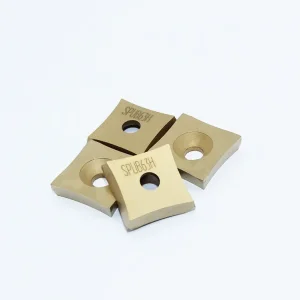
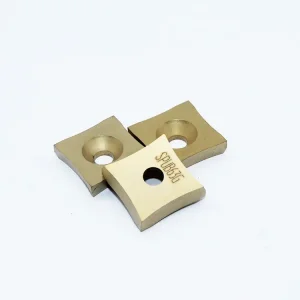
Continuous ERW (Electric Resistance Welded) pipe mills require high-performance indexable carbide inserts such as SPUB-63, SPUB86J, SNMX, and SNMG series. Operating at high temperatures, these inserts scrape the molten internal and external weld bead. Our CVD-coated carbide inserts withstand thermal fatigue, preventing premature edge chipping and maintaining clean tube finishes at line speeds exceeding 60 m/min.
2. Non-Magnetic Downhole Oilfield Tools (MWD/LWD)
In directional oil drilling, Measurement-While-Drilling (MWD) and Logging-While-Drilling (LWD) sensors operate in high-temperature, highly corrosive underground environments. Standard tungsten carbide containing ferromagnetic cobalt binder distorts sensor telemetry. Our Nickel-Binder Non-Magnetic Cemented Carbide Rods & Wear Sleeves deliver zero magnetic interference (μr < 1.005) while providing extreme resistance against abrasive drilling fluids and sand slurry erosion.
3. Woodworking, Milling & Composite Panel Processing
Hardwood, MDF, particle board, and modern carbon-fiber composites cause aggressive abrasive wear on standard tool steels. By utilizing ultra-fine grain micro-grain indexable inserts (such as SPUB63 woodworking blades and square thread inserts), tool manufacturers produce cutterheads that retain razor-sharp cutting edges up to 10 times longer than HSS tooling.
International Regulatory Standards & QA Protocols
Meeting strict environmental, trade, and engineering standards for effortless international integration.
REACH & RoHS 3 Compliance
Our manufacturing processes adhere strictly to EU REACH (EC 1907/2006) regulations and RoHS 3 directives. Heavy metals and hazardous substance levels are strictly controlled and documented.
RMAP Conflict-Free Minerals
100% of tungsten raw materials are ethically sourced through audited smelters compliant with the Responsible Minerals Assurance Process (RMAP), adhering to Dodd-Frank Act Section 1502 alignment.
ISO 9001:2015 Quality System
Comprehensive quality control from virgin APT powder analysis to density checks, hardness testing (Rockwell HRA), coercivity metrics, and 100% optical dimension verification.
Innovations Shaping the Tungsten Industry
Where advanced material science meets next-generation manufacturing demands.
1. Nanocrystalline Carbide Formulations
Sub-100nm grain structures are unlocking unprecedented combinations of extreme hardness (>94 HRA) and high toughness, enabling micro-drills for 5G semiconductor PCB routing and aerospace micro-machining.
2. Additive Manufacturing of Complex Carbide Components
Binder Jetting 3D printing of WC-Co allows engineers to create internal cooling channels inside carbide cutting inserts and wear components that were previously impossible via conventional pressing.
3. Closed-Loop Scrap Recycling (Green Carbide)
Advanced chemical digestion and zinc process reclamation enable 99.9% pure tungsten carbide powder recovery from worn tooling, reducing carbon footprint by 70% while maintaining virgin material performance.
Frequently Asked Questions by Industrial Buyers
Expert insights on material selection, customization options, and logistics capabilities.
Standard vacuum sintering leaves tiny residual microporosity inside the carbide blank. Sinter-HIP applies up to 100 bar of argon pressure at peak sintering temperature (approx. 1,450 °C). This liquid-phase pressure compacts remaining voids, resulting in virtually pore-free carbide (ISO 4505 A00 rating), significantly increasing transverse rupture strength and shock resistance.
Cobalt is inherently ferromagnetic. In applications like MWD downhole oil drilling tools, water meter shafts, or magnetic powder pressing dies, magnetic interference distorts sensor readouts or sticks to magnetic debris. Nickel binder replaces cobalt, yielding a completely non-magnetic part (μr < 1.005) with enhanced chemical resistance in acidic media.
For ground round rods, ground centerless accuracy achieves ISO h6 tolerance (±0.002 mm). For ground plates and custom blanks, surface roughness can reach Ra 0.2 μm, with parallelism and flatness maintained within ±0.005 mm depending on overall component dimensions.
Standard stocked blanks ship within 48 hours. Custom engineered parts requiring specialized mold press tooling typically take 12 to 18 working days from CAD drawing sign-off to finished Sinter-HIP component inspect and export dispatch.
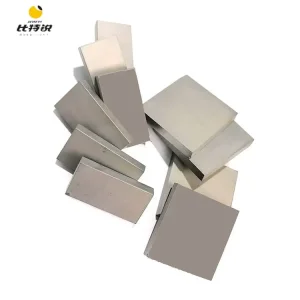
Specialized Tungsten Plates, Rods & Industrial Inserts
Explore our full spectrum of raw blanks, precision rods, gripper inserts, and custom scarfing blades.






Request a Direct Factory Quote or Grade Consultation
Send us your 2D/3D technical drawings (STEP, DWG, PDF) along with target wear requirements. Our metallurgical engineering team replies within 8 hours with grade recommendations, DDP shipping options, and competitive pricing.