
Precision Carbide Inserts, Ground Rods & Industrial Tool Blanks
Standard and custom sintered carbide components pressed from 100% virgin sub-micron powders and HIP sintered under 10 MPa argon pressure to eliminate internal microporosity.







The Strategic Role of China in the Global Tungsten Steel Supply Ecosystem
How raw material supremacy, vertical powder consolidation, and advanced HIP sintering technology establish China as the central pillar for worldwide cemented carbide supply chains.
Tungsten steel—metallurgically classified as cemented tungsten carbide (WC-Co/WC-Ni)—is universally recognized as the "teeth of modern manufacturing." In an era dominated by high-speed CNC milling, extreme deep-well petroleum drilling, and sub-micron semiconductor lead frame stamping, high-performance carbide is indispensable. As international procurement leaders audit their supply risks, understanding the metallurgical realities and geopolitical sourcing advantages of Chinese manufacturing is critical for operational resilience.
China commands over 80% of global upstream wolframite and scheelite mining and ammonium paratungstate (APT) synthesis. Located directly in Nanchang, Jiangxi, Jiangxi Zhongfu Cemented Carbide Co., Ltd. operates in the geographic nucleus of global tungsten refinement. This physical proximity shields OEM buyers from cross-border intermediate markups, volatile overseas shipping embargoes, and fluctuating intermediate mineral tariffs.
While secondary recyclers rely heavily on contaminated zinc-process zinc reclaim carbide dust, our factory commits strictly to 100% virgin synthesized WC powder. By maintaining precise stoichiometry during carburization, we guarantee near-zero free carbon (graphite inclusion) and eliminate brittle eta-phase (W3Co3C) structures, ensuring unmatched transverse rupture strength (TRS).
Modern factory audits look far beyond per-unit purchasing prices. Cemented carbide wear parts determine unscheduled assembly line stoppages, changeover intervals, and machine spindle damage. By delivering micron-level h6 tolerances and homogenous cobalt dispersion, Zhongfu extends component life cycles by 2.4× to 4× compared to generic suppliers.
Technological Innovations Driving the Next Generation of Hard Alloys
From sub-micron grain sizing to multi-layer nanostructured PVD/CVD barriers, explore how hard alloy manufacturing is breaking theoretical hardness-toughness trade-offs.
The Hall-Petch Frontier in Hardmetals: Historically, powder metallurgy engineers were constrained by an inverse relationship: increasing cobalt binder boosted fracture toughness at the direct expense of Vickers hardness. Today, Zhongfu utilizes specialized chemical grain growth inhibitors (VC, Cr3C2, TaC) to sinter nano-grain matrices (0.2–0.5 µm), unlocking simultaneous gains in both abrasive resistance and crack deflection.
Traditional vacuum sintering routinely leaves micro-voids, porosity classes (A04/B02), and subsurface fissures that fail prematurely under cyclical shear stress. Zhongfu deploys advanced Overpressure Sinter-HIP (Hot Isostatic Pressing) furnaces. In the final liquid-phase sintering window, our furnaces flood the thermal chamber with high-purity argon gas pressurized up to 10 MPa (100 bar). This collapse of microscopic pores produces 99.99% theoretical relative density, elevating transverse rupture strength to over 3,800 N/mm².
For high-stress applications such as scarfing welded tube beads and high-speed CNC milling, uncoated tungsten steel undergoes rapid thermal oxidation and crater wear at 800°C+. Zhongfu utilizes both physical vapor deposition (PVD) and chemical vapor deposition (CVD) to apply specialized coatings including TiAlN, AlTiSiN, and CVD multi-layer TiCN-Al2O3. These thermal barrier coatings limit atomic cobalt leaching, drop coefficients of friction below 0.35, and withstand cutting edge temperatures exceeding 1,150°C.
Conventional tungsten carbide uses cobalt as a metallic binder, imparting ferromagnetic properties that ruin magnetic resonance sensing, electronic leadframes, and MWD (Measurement While Drilling) sensors. Zhongfu's metallurgists have patented high-integrity Nickel-Chromium-Molybdenum (Ni-Cr-Mo) solid-solution binders. These yield parts with magnetic permeability values μr ≤ 1.005 while dramatically increasing pitting corrosion resistance in sulfuric, hydrochloric, and offshore saline operating conditions.
As ESG directives and European Corporate Sustainability Due Diligence Directives (CSDDD) mandate transparent supply chains, Zhongfu has pioneered chemical digestion processes that minimize volatile organic emissions during paraffin waxing and automated solvent de-binding. Our continuous-reduction calcination kilns run on clean electric hydro-grid power, ensuring minimal carbon footprint per kilogram of precision sintered alloy blanks.
Engineering Blueprints: Harsh Environments & Severe Duty Wear
Tailored chemical compositions and customized microstructural configurations designed to solve localized mechanical failure across global industrial sectors.
Failure Mechanism: High-frequency flash welded longitudinal pipes generate glowing thermal weld beads at 950°C+. Standard inserts suffer instant thermal shocking, chipping, and catastrophic crater edge deformation under continuous longitudinal scarfing.
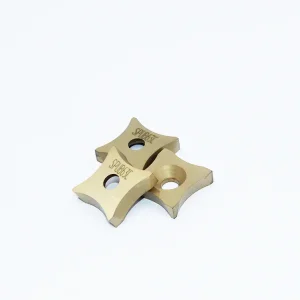
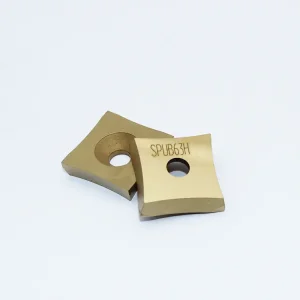
Zhongfu Engineered Solution: Our heavy-duty SPUB-63, SPUB-86, and SNMX custom rings feature coarse-grain WC skeletons with optimized binder doping. Combined with thick CVD TiCN/Al2O3 thermal-barrier coatings, tool life per cutting edge increases by over 320% across high-yield line-pipe manufacturing runs.
Failure Mechanism: Directional MWD/LWD drilling tools face violent abrasive sand erosion, high hydrostatic pressure, and violent multi-axial vibration. Conventional ferromagnetic cobalt tools distort electromagnetic logging pulses.
Zhongfu Engineered Solution: Our non-magnetic tungsten carbide valve trims, rotor sleeves, and nozzles leverage a refined nickel-chromium binder matrix (μr < 1.005). They provide rock-hard erosion protection (HRA 89–91) without disrupting downhole telemetry or gamma-ray drilling logging.
Failure Mechanism: Stamping electrical silicon steels, stainless steel terminal pins, and battery battery shells subjects die tooling to severe cyclic micro-chipping, galling, and lateral mechanical deflection.
Zhongfu Engineered Solution: High-cobalt (15%–20%) sub-micron grades YG15, YG20, and ZF-M30 provide an exceptional combination of compressive yield strength and impact toughness. Pre-ground to 0.002 mm parallelism, our plates and blocks eliminate wire EDM micro-cracking and die bursting.
Failure Mechanism: Drilling dense multilayer FR-4 copper circuit boards requires micro-drills as thin as Ø0.1 mm running at 150,000+ RPM. Minor grain size variations cause catastrophic drill shank breakage.
Zhongfu Engineered Solution: We produce 0.25 μm ultrafine nano-grain solid carbide rods held to tight ISO h6 diameter runouts. Homogeneous cobalt distribution ensures maximum edge retention, zero run-out wobble, and mirror-finished flute surfaces.
Failure Mechanism: Hydro-abrasive waterjet cutting nozzles handle 60,000 PSI garnet slurry blasting through micro-orifices, causing extreme venturi erosion and nozzle cone flaring.
Zhongfu Engineered Solution: Specialized ultra-dense nano-WC formulations with minimal cobalt content achieve HRA 93.5–94.2 hardness ratings. Zhongfu abrasive nozzles preserve sharp stream focus, maintaining dimensional cutting accuracy over hundreds of operating hours.
Failure Mechanism: Railway tamping tines and rock drill bits endure continuous percussive shock against granite stone ballast, causing rapid brazing separation and tip fracture.
Zhongfu Engineered Solution: Coarse-grain YG8 and YG11C brazed tips provide enhanced elastic deformation buffering. Combined with specialized silver-copper-nickel sandwich brazing foils, our tips withstand continuous percussive impacts without cracking.
Cemented Tungsten Carbide Grade Matrix & Mechanical Properties
Standard industrial formulations manufactured and certified by Jiangxi Zhongfu Cemented Carbide Co., Ltd. Custom binder ratios and dopants available upon engineering review.
| Alloy Grade | Binder Mass (% Co / Ni) | Density (g/cm³) | Hardness (HRA / HV) | TRS (N/mm²) | Grain Size (μm) | Primary Industrial Application |
|---|---|---|---|---|---|---|
| YG6X | 6.0% Cobalt | 14.95 ± 0.05 | 92.5 HRA / 1650 HV | 2,400 | 0.8 (Sub-micron) | Chilled cast iron finishing, non-ferrous metals, paper trimming blades |
| YG6 | 6.0% Cobalt | 14.90 ± 0.05 | 90.5 HRA / 1500 HV | 2,600 | 1.4 (Medium) | Wire drawing dies for steel wire, precision wear bushes, valve seats |
| YG8 | 8.0% Cobalt | 14.70 ± 0.05 | 89.5 HRA / 1400 HV | 2,900 | 1.8 (Medium-Coarse) | Mining drill chisel tips, stone processing cutters, brazed lathe tools |
| YG11C | 11.0% Cobalt | 14.40 ± 0.05 | 87.0 HRA / 1200 HV | 3,100 | 2.5 (Coarse) | Percussive rotary drill buttons, road planing picks, railway ballast tamping |
| YG15 | 15.0% Cobalt | 14.00 ± 0.05 | 87.2 HRA / 1220 HV | 3,300 | 1.2 (Medium) | Progressive stamping dies, cold-drawing punches, sheet metal shearing |
| YG20 | 20.0% Cobalt | 13.55 ± 0.05 | 85.5 HRA / 1050 HV | 3,600 | 1.8 (Medium-Coarse) | Heavy cold-heading dies, fastener bolt forming punches, shear blades |
| ZF-Nano05 | 10.0% Cobalt + Cr/V | 14.45 ± 0.05 | 93.0 HRA / 1750 HV | 3,900 | 0.4 (Ultra-Fine) | Solid carbide endmills, aerospace titanium/Inconel drills, h6 precision rods |
| ZF-NM12 | 12.0% Nickel Base | 14.40 ± 0.05 | 89.0 HRA / 1350 HV | 2,800 | 1.2 (Non-magnetic) | Magnetic sensor casings, MWD downhole parts, acid-resistant mechanical seal rings |
* All test bars tested in compliance with ASTM B406 / ISO 3327 transverse rupture strength protocols using HIP sintered specimens.
Full Lifecycle OEM/ODM Tooling & Quality Engineering
How Zhongfu partners with international procurement departments to engineer custom wear solutions, eliminate redesign delays, and secure stable tool lifecycles.
Submit your 2D CAD or 3D STEP drawings for direct engineering review. Within 8 hours, our technical team identifies stress risers, recommends optimal corner radii to mitigate sintered micro-cracking, and selects the ideal grade formulation for your operating environment.
Tungsten carbide diamond wheel grinding can cost up to 45% of total component production budgets. Our computerized CNC multi-axis automatic presses and custom cold isostatic pressing (CIP) tooling compact near-net blanks, drastically cutting final grinding time and waste.
Every shipment includes certified metallographic analysis. We inspect coercive force (Hc), magnetic saturation (4πσ), density, Vickers/Rockwell hardness, and microstructural porosity under optical and SEM electron microscopy before release.
Materials Science Roadmap: 2026 and Beyond
Discover how Zhongfu's advanced research team is developing next-generation superhard composites to solve the performance limits of classic cemented carbide.
Conventional cemented carbide has uniform cobalt binder distribution from surface to core. Under severe cutting and drilling friction, parts simultaneously experience high surface abrasion and high core impact stress. Zhongfu's development team is commercializing Cobalt-Gradient Technology, creating parts with a binder-depleted outer zone (elevated hardness >93 HRA) smoothly transitioning into a binder-rich core (high fracture toughness). This gives mining picks, drilling buttons, and indexable inserts exceptional thermal wear resistance while preventing body fracturing.
To prepare for rising cobalt raw material costs and tightening international environmental rules, Zhongfu is actively developing cobalt-free cemented carbides utilizing High-Entropy Alloy (HEA) binders (such as FeCoCrNiMn and AlCoCrFeNi). These complex metallic binder systems drastically inhibit high-temperature grain boundary sliding and binder extrusion during ultra-high-speed dry cutting, pushing maximum operating temperatures beyond 1,000°C without plastic deformation of cutting edges.
Optical glass molding lenses, severe acid chemical slurry valves, and high-frequency semiconductor wire bonding tips require near-diamond hardness and immunity to chemical leaching. By deploying Spark Plasma Sintering (SPS) and specialized pulsed electric fields, Zhongfu produces ultra-dense pure tungsten carbide components with less than 0.5% binder phase, delivering hardness ratings exceeding 2,200 HV and zero acid-leach degradation.
Complex conformal internal cooling channels inside micro-endmills and intricate fluid manifolds for severe-duty valves cannot be manufactured via traditional powder pressing and green machining. Zhongfu's advanced projects team is mastering Binder Jet 3D Printing combined with high-temperature liquid-phase vacuum consolidation. This process produces high-density hardmetal geometry with complex interior cavities, cutting lead times for specialized prototyping from weeks down to days.
Frequently Asked Questions: Technical Engineering & Global Sourcing
Direct, transparent answers from our metallurgical research directors and global export logistics specialists.
1. How does Jiangxi Zhongfu guarantee zero internal porosity and eliminate micro-cracks in thick tungsten carbide blocks?
We process all wear plates, blocks, and blanks in computer-controlled Sinter-HIP (Hot Isostatic Pressing) overpressure furnaces. Once the powder reaches the 1,420°C liquidus sintering threshold, the vacuum is displaced by an inert argon atmosphere pressurized up to 10 MPa (100 bar). This immense external hydrostatic pressure collapses microscopic gas pockets, bridging vacancies and driving structural density to >99.98% of theoretical maximum. Finished components achieve ISO porosity standards of A00/A02 and B00, preventing micro-chipping under cyclic wire-EDM wire cuts or high shock loads.
2. What is the difference between standard tungsten carbide and non-magnetic nickel-bonded carbide?
Standard cemented carbide uses metallic cobalt (Co) as the primary binding matrix, which has strong ferromagnetic properties. When used near magnetic fields—such as magnetic punch dies, downhole Measurement While Drilling (MWD) logging instruments, or precision electronic sensor assemblies—cobalt creates field distortions. Non-magnetic carbide replaces cobalt with a specialized Nickel-Chromium (Ni-Cr) solid-solution binder. This preserves extreme hardness (88.5–91.0 HRA) while dropping relative magnetic permeability (μr) down to ≤ 1.005, alongside delivering substantially superior corrosion resistance against aggressive chemical acids and saltwater.
3. How can international buyers avoid brittle failure when selecting grades for heavy cold heading or stamping dies?
Brittle failure in stamping and heading punches occurs when the alloy's fracture toughness (K1C) is insufficient to absorb cyclic mechanical impact. For severe-duty forming, low-cobalt grades (e.g., YG6 with 6% Co) should never be selected despite their higher surface hardness. Instead, buyers should select high-cobalt, medium-coarse grain grades like YG15, YG20, or custom ZF-M30 (15% to 20% binder content). These grades provide a thick, ductile metallic cobalt skeleton that blunts running micro-cracks, delivering Transverse Rupture Strengths exceeding 3,400 N/mm² while maintaining high compressive yield strength.
4. What are typical export lead times, and how are precision ground tolerances protected during international shipping?
Standard catalog blanks and ground rods (e.g., h6 solid bars) ship within 7 to 10 working days. Custom preformed components made to drawing require 18 to 25 working days, which includes CNC mold pressing, dewaxing, Sinter-HIP consolidation, and diamond surface grinding. Because mirror-finished ground carbide is susceptible to edge chipping and environmental oxidation during ocean freight, all items are treated with vapor corrosion inhibiting (VCI) oil, vacuum sealed in poly skin-packs, packed in shock-absorbing foam inserts, and crated in export-grade reinforced plywood cases.
5. Can Zhongfu produce custom formulations or reverse-engineer carbide parts from worn sample pieces?
Yes. Our in-house metallurgical testing laboratory features X-ray fluorescence (XRF) spectrometers, scanning electron microscopes (SEM), and energy-dispersive X-ray spectroscopy (EDS). If you provide a physical sample of a worn or failed component, our laboratory can analyze the exact percentage of binder, identify trace grain inhibitors (VC, Cr3C2, TaC/NbC), verify the original WC grain size distribution, and reproduce or optimize the formulation to exceed your baseline performance.
Tungsten Heavy Alloys, Custom Wear Parts & Brazing Tips
Precision engineered wear hardware, waterjet nozzles, high-density plates, and industrial cutting inserts manufactured for tight-tolerance tooling systems.







Optimize Your Tungsten Steel Component Tool Life
Partner directly with Jiangxi Zhongfu Cemented Carbide Co., Ltd. Our technical team provides grade formulation adjustments, finite element tooling analysis, and high-precision sample sintering within 8 business hours.