
High-Precision Tungsten Carbide Components & Tooling Inserts
Engineered with 100% virgin APT-derived tungsten carbide powders, sub-micron crystal controls, and vacuum Sinter-HIP consolidation for ultra-low porosity and peak tool life.
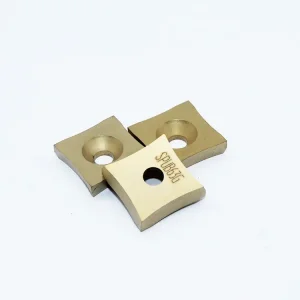
Wholesale Wear resistant SPUB 63 series carbide turning tube scarfing inserts Factory, Factories
Request Price
China Wholesale customized high precision hard alloy tungsten carbide cutting tool wear parts Suppliers, Factory
Request Price
China Best price YG8 tungsten carbide gripper inserts for chuck jaw Suppliers, Factories
Request Price
Wholesale Factory wholesale custom tungsten carbide spiral bevel gear milling cutters for sale Suppliers, Factory
Request Price
China SPUB86 P40 tungsten carbide scarfing inserts for welded steel pipe Manufacturer, Factory
Request Price
Buy Wholesale SPUB63M30 tungsten carbide welding inserts square for needle holders Suppliers, Factory
Request Price
Wholesale Wholesale SPUB63 tungsten indexable carbide brazing inserts woodworking tools Manufacturers, Supplier
Request Price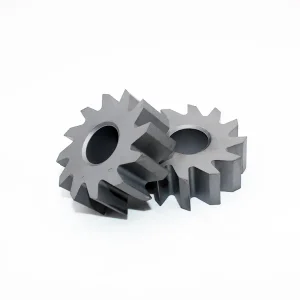
Buy Custom made transmission reverse idle gear starter gear spur gear set Manufacturer, Factory
Request PriceGlobal Tungsten Market Dynamics & Pricing Foundations
A rigorous industrial perspective on Ammonium Paratungstate (APT) feedstock pricing, supply restrictions, smelting energy, and cost-containment frameworks for B2B global purchasers.
APT Indexing & Upstream Raw Material Economics
Tungsten carbide pricing begins at the mineral separation level. China produces more than 80% of the world's primary tungsten concentrates, primarily Wolframite and Scheelite mined in Jiangxi and Hunan provinces. The baseline industrial metric is Ammonium Paratungstate (APT), quoted per metric ton unit (mtu, containing 10 kg of WO3).
Fluctuations in APT rates cascade directly into coarse and fine Tungsten Powder (W) and Tungsten Carbide (WC) powder costs. By partnering directly with an integrated manufacturer in Jiangxi, overseas buyers eliminate intermediary trading margins, buffering their unit costs against volatile Western warehouse markups.
Environmental Audits & Smelting Control Impact
Over the past five years, China’s strict national environmental and green manufacturing directives have permanently transformed the tungsten supply chain. Smelting operations using high-emission chemical precipitation have been closed or modernized into closed-loop systems with acid recovery and zero water-discharge policies.
While this structural discipline has established a resilient floor price for raw tungsten concentrates, it guarantees global supply continuity, superior chemical purity, and full traceability compliant with international RoHS and REACH declarations for tier-1 defense, automotive, and microelectronic clients.
Strategic Mineral Security & Export Tariff Structures
Tungsten (W, Atomic Number 74) possesses the highest melting point of all refractory metals (3,422 °C), exceptional density (19.25 g/cm³), and immense compressive stiffness. As a recognized critical strategic mineral, China manages tungsten through non-ferrous quotas and specialized customs duty classifications.
Purchasing finished cemented carbide components—such as scarfing blades, die blanks, precision rods, and indexable tips—remains fully compliant with current international trade regimes, providing buyers with an optimal price-to-performance ratio compared to raw scrap export tariffs.
Procurement Insight: Decoupling Material Cost from Life-Cycle Tool Expense
A frequent procurement pitfall is evaluating tungsten suppliers solely on price per kilogram ($/kg). In cemented carbide tooling, material degradation, cobalt binder leaching, or microporosity can cause premature fracture, line downtime, and loss of production tolerances. Evaluating parts on an Extended Tool Life Ratio (ETLR) demonstrates that high-purity, HIP-sintered Chinese carbide reduces machining cost per work-piece by up to 34% compared to low-cost scrap-blended alternatives.
Engineering Superiority: Why China’s Sintering Hubs Lead Global Output
Combining mineral proximity, automated multi-axis pressing, and computer-controlled Hot Isostatic Pressing (Sinter-HIP) to deliver microstructural perfection at volume.
Integrated Smelting-to-Finishing Supply Chain
Our manufacturing complex in Nanchang, Jiangxi sits immediately adjacent to the world's most concentrated tungsten extraction and refining zones. This geographic consolidation translates into unmatched technical efficiencies:
- Zero In-Transit Oxidation: Freshly reduced submicron tungsten powder moves immediately into ball milling and vacuum drying without long-distance oxidation exposure.
- Formulation Agility: Patented grain-growth inhibitor doping (Vanadium Carbide VC, Chromium Carbide Cr3C2, Tantalum-Niobium Carbide TaNbC) mixed precisely down to 0.05% weight ratios.
- Thermal Energy Synergies: High-efficiency continuous hydrogen reduction ovens and consolidated industrial power grids minimize conversion energy costs per kilogram.
Overpressure Sinter-HIP Metallurgical Integrity
Standard vacuum sintering often leaves micro-voids that initiate crack propagation under severe cyclical impact (such as tube scarfing or cold heading). Our plant employs advanced 100-bar overpressure Sinter-HIP furnaces:
- Near-Zero Porosity (A02/B00/C00): Argon gas overpressure at sintering temperatures collapses residual micropores, boosting transverse rupture strength (TRS) by 25–40%.
- Micron-Grade Dimensional Repeatability: Multi-zone thermal profiling keeps thermal variance across large batches within ±3 °C, preventing uneven shrinkage.
- Specialty Binder Systems: Expertise spanning traditional Co matrixes (YG6, YG8, YG15, YG20) and non-magnetic corrosion-resistant Nickel (Ni) formulations for specialized applications.
| Carbide Grade | Binder Content (wt%) | Grain Size (µm) | Density (g/cm³) | Hardness (HRA) | Transverse Rupture (TRS MPa) | Primary Industrial Use-Case |
|---|---|---|---|---|---|---|
| YG6 / K10 | 6.0% Co | 1.2 - 1.6 | 14.90 - 15.00 | 90.5 ± 0.3 | ≥ 1,900 | Turning Cast Iron & Wear Strips |
| YG8 / K20 | 8.0% Co | 1.4 - 2.0 | 14.65 - 14.80 | 89.5 ± 0.4 | ≥ 2,200 | Gripper Inserts & Mining Tips |
| YG15 / K40 | 15.0% Co | 1.8 - 2.4 | 13.90 - 14.15 | 87.0 ± 0.5 | ≥ 2,800 | Stamping Dies & Punch Blanks |
| P40 / Steel Grade | 10.5% Co + TiC/TaC | 1.5 - 2.2 | 13.00 - 13.25 | 88.5 ± 0.4 | ≥ 2,400 | SPUB Heavy Tube Scarfing |
| Ni-NonMag | 8.0% - 10.0% Ni | 1.0 - 1.4 | 14.50 - 14.75 | 88.5 ± 0.5 | ≥ 2,100 | MWD Drilling & Sensor Dies |
Mission-Critical Applications & In-Service Performance
From high-temperature steel mill scarifying to sub-surface oilfield directional drilling, our tungsten carbide is formulated to thrive in extreme operating environments.
Heavy Metallurgy: ERW Tube Scarfing
In electric resistance welded (ERW) steel pipe production, internal and external weld seams must be sheared immediately after high-frequency induction at temperatures exceeding 900 °C. Our SPUB63, SPUB86, and SNMX series scarfing inserts are crafted from high-toughness, heat-resistant P-series substrates with multi-layer TiAlN CVD/PVD coatings. They resist crater wear, thermal shock cracking, and catastrophic edge chipping during high-speed continuous line travel.
Downhole Energy: Oil & Gas MWD Tools
Measurement-While-Drilling (MWD) and Logging-While-Drilling (LWD) directional systems require wear protection directly alongside electromagnetic telemetry antennas. Conventional cobalt-bonded carbide distorts sensor signals. We engineer specialized Nickel-bonded (Ni) non-magnetic tungsten carbide wear bushings, erosion sleeves, and flow restrictor nozzles that maintain magnetic permeability (µr) below 1.05 while resisting harsh drilling mud erosion and hydrogen sulfide sour gas attacks.
High-Volume Toolmaking & Die Manufacturing
For industrial stamping, wire drawing, and cold heading operations, downtime for die-replacement destroys profit margins. Our precision-ground carbide blanks, YG15 and YG20 cold-heading punches, and chuck jaw gripper inserts deliver extreme compressive yield strength (> 4,000 MPa). This structural integrity prevents micro-spalling under repeated cyclic pressure spikes, prolonging tool life beyond several million punch cycles.
Technological Frontiers: Nano-Grain Powders & Closed-Loop Refining
How progressive China factories are revolutionizing powder metallurgy through micro-alloying, energy-efficient sinter cycles, and circular material recovery.
Ultra-Fine & Nano-Grain Tungsten Carbide
The modern micro-electronics and aerospace industries demand carbide cutting tools capable of machining hardened alloys (>60 HRC) and composite carbon fibers with zero burring. By mastering chemical reduction synthesis at the 0.2 – 0.4 µm level, our plant synthesizes ultrafine grain structures that break the historical trade-off between hardness and fracture toughness, delivering HRA ratings exceeding 93.0 while maintaining extreme chip-defiance.
Hydro-Metallurgical Scrap Recovery
Global environmental transparency demands a closed loop. Leading Chinese producers have deployed hydrometallurgical digestion systems capable of extracting 99.9% chemically pure sodium tungstate from spent end mills, scarfing scraps, and grinding sludge. This circular capability insulates primary industrial clients from unexpected market squeezes while providing eco-certified products with a significantly lower carbon footprint per finished kilogram.
Multi-Arc CVD/PVD Nanocomposite Coatings
A precision substrate requires a tailored surface barrier. Our integrated coating lines apply advanced high-adhesion PVD and CVD coatings, including AlTiN, TiSiN, and diamond-like carbon (DLC). In high-speed steel tube scarfing, these nano-laminated surface protections create thermal barriers exceeding 1,100 °C, preventing thermal dissipation into the carbide core and tripling continuous in-cut cutting hours.
Global Enterprise Sourcing: Hedging, MOQs & Total Cost of Ownership
A blueprint for international supply managers seeking predictable lead times, locked raw material pricing, and rigorous quality auditing from China.
Framework for Mitigating Tungsten Market Volatility
Given the reliance of global manufacturing on Chinese refractory ore, global procurement directors must adopt strategic hedging protocols rather than spot-market purchasing:
- Index-Linked Quarterly Price Fixing: Align order releases with rolling 90-day APT index ceilings to protect budgetary forecasts against sudden short-term price spikes.
- Blank Buffer Consignment Warehousing: Keep semi-finished Sinter-HIP carbide blanks in stock at our Jiangxi production facility, performing EDM cutting and precision grinding upon order release.
- Consolidated Container Shipping: Combine bulky plate blanks with high-value finished scarfing inserts to balance ocean freight logistics costs against unit air-express fees.
Factory Quality Control Standards Checklist
Every batch shipped from our Nanchang production facility is accompanied by full metallurgical test records and non-destructive inspection data:
- Microstructure & Porosity Evaluation: High-resolution optical and scanning electron microscopy (SEM) in strict adherence to ISO 4499 and ASTM B276 standards.
- Magnetic Saturation & Coercive Force Analysis: Rigorous Foerster Koerzimat testing to confirm the exact carbon-to-cobalt metallurgical window and eliminate brittle eta (η) phases.
- Dimensional Metrology: Keyence 3D optical comparators and CMM profiling ensuring tight tolerances (±0.005 mm) on critical internal insert radii and scarfing steps.
Engineered Precision Blanks, Inserts & Heavy-Duty Components
Explore our extensive line of custom blanks, indexable threading inserts, rotary tooling, and transmission components manufactured to precise client drawings.

Buy Square Tungsten insert carbide manufacturer threading carbide blank inserts Manufacturer, Manufacturers
Request Price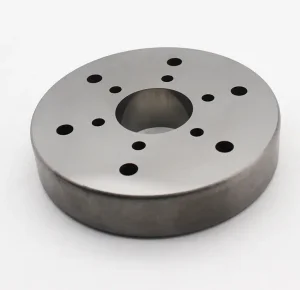
Buy Customized tungsten cemented carbide wear parts for roll crushing Manufacturer, Manufacturers
Request Price
Wholesale Custom 60 knife variable speed fixed gear cast iron truck large metal gear Manufacturers, Factory
Request Price
China Wholesale insert carbide manufacturer threading carbide blank inserts Manufacturers, Factory
Request Price
China SPUB63J CVD coating tungsten carbide od scarfing insert Manufacturers, Suppliers
Request Price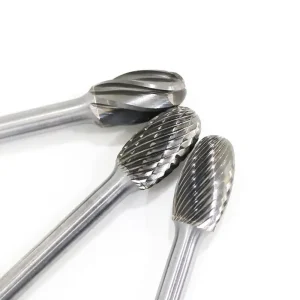
Wholesale Oval cutting tool tungsten carbide rotary file shank diameter Factory, Factories
Request Price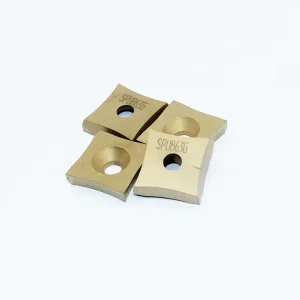
Buy Wear resistant SPUB 63G tool holder insert carbide cutting inserts turning tools Manufacturer, Supplier
Request Price
China Best price CVD coating tungsten carbide non standard carbide jaw insert cnc Manufacturer, Factory
Request PriceFrequently Asked Questions: Commercial, Metallurgical & Logistics
In-depth responses curated by our chief metallurgists and international trade operations directors for global technical buyers.
Our pricing model is transparent and derived directly from the fundamental input cost of Ammonium Paratungstate (APT) plus Cobalt (Co) or Nickel (Ni) binder rates on the Shanghai Metals Market, combined with fixed conversion fees (ball milling, spray granulation, automated pressing, Sinter-HIP processing, and CNC precision grinding). For custom-engineered components, tooling inserts, and wear plates, quotes are offered on an FOB Shanghai/Shenzhen or CIF/DAP destination airport/seaport basis, holding pricing firm for up to 30 days during periods of low raw-material volatility.
Conventional vacuum sintering heats powder blanks to liquid-phase temperatures under vacuum. While this consolidates the material to roughly 99% theoretical density, micro-voids and isolated gas pores frequently remain. In our 100-bar overpressure Sinter-HIP process, high-purity argon gas is injected into the furnace during the molten-binder phase. This uniform isostatic pressure forces the binder metal into any remaining voids, eliminating micro-porosity to achieve an A00-B00 classification. The resulting carbide demonstrates up to 35% higher Transverse Rupture Strength (TRS), preventing catastrophic edge chipping under severe shock loads.
Yes. While standard wear tooling uses cobalt as the binding matrix (YG grades), cobalt is ferromagnetic and susceptible to leaching in acidic environments (such as offshore seawater or wet gas exploration). We manufacture custom-engineered nickel-bonded (Ni) cemented carbide formulations. These deliver absolute non-magnetic characteristics (magnetic permeability µr < 1.05) combined with superior resistance to pitting corrosion in chloride-heavy and sour gas drilling applications.
For standard catalog items such as SPUB63/SPUB86 scarfing inserts, YG8 gripper tips, and standard square blanks, our MOQ is as low as 20 to 50 pieces, with immediate warehouse shipment available. For custom-machined or proprietary drawing-based carbide wear parts requiring dedicated hydraulic tooling or precision EDM profile grinding, typical pilot batch MOQs start at 50 to 100 units. Tooling and pressing lead times range from 12 to 18 business days, while expedited pilot air-freight samples can be delivered within 7 to 10 days.
Every production run undergoes strict quality release testing. We provide mill inspection certificates detailing chemical composition, density, Rockwell hardness (HRA), transverse rupture strength (TRS), and saturation magnetization. Furthermore, critical aerospace and heavy-duty scarfing blanks undergo non-destructive ultrasonic immersion testing to guarantee 100% absence of subsurface voids, inclusions, or micro-cracks before CNC precision finishing and export packing.