
Direct OEM Supply Portfolio
Precision Tooling & Heavy-Wear Carbide Components
Explore standard and specialized sintered carbide cutting inserts, nickel-bonded rod blanks, and railway maintenance tips manufactured under ISO-compliant HIP processing.

Wholesale Nickel based tungsten carbide rods with nickel binder for machinery Manufacturer, Factories
View Product Details
China Tungsten carbide tamping tines for railway construction equipment Suppliers, Factory
View Product Details
Buy Tungsten carbide tamping tines use tip wearing part for Railway Industry Supplier, Suppliers
View Product Details
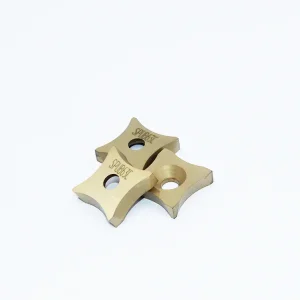
Wholesale Best price woodturning tungsten carbide turning tip inserts and cutter railway Manufacturer, Suppliers
View Product Details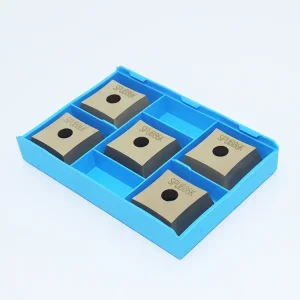
China Best price SPUB86K CVD coating tungsten carbide lathe cutting tool insert Manufacturer, Manufacturers
View Product Details
Wholesale Custom 60 knife variable speed fixed gear cast iron truck large metal gear Manufacturers, Factory
View Product Details
China Factory wholesale Tungsten square original carbide cutting inserts Manufacturer, Manufacturers
View Product Details
Executive Procurement Insights
Global Enterprise Demand Drivers for Tungsten Carbide Tips
Analyzing the shift from transactional purchasing toward lifecycle total-cost-of-ownership (TCO) optimization across heavy manufacturing and civil infrastructure.
In modern industrial manufacturing, tooling and wear-part expenditures account for less than 3% to 5% of total plant operational budgets, yet tooling failure or premature edge rounding dictates more than 75% of unscheduled machining downtime. As heavy industries across North America, the European Union, Southeast Asia, and South America accelerate productivity requirements, international procurement teams no longer qualify suppliers purely on initial unit piece cost. Instead, technical vendor selection pivots on microstructural consistency, edge fracture toughness, thermal shock mitigation, and metallurgical traceability.
Jiangxi Zhongfu Cemented Carbide Co., Ltd. (Zhongfu Carbide) addresses these demanding enterprise criteria by bridging specialized formulation science with mass-scale powder metallurgy. Situated directly within Jiangxi Province—the epicentre of global tungsten reserves and refined ammonium paratungstate (APT) synthesis—our factory ensures a completely closed-loop supply ecosystem. Global buyers within railway ballast engineering, high-volume rotary drilling, mechanical steel scarfing, and CNC metal processing require reliable metallurgical solutions tailored specifically against four critical wear phenomena: severe abrasive degradation, high-stress micro-chipping, interfacial thermo-mechanical fatigue, and chemical oxidation.
Abrasive Friction Mitigation
Controlled coarse-to-medium WC grain size distribution limits two-body and three-body abrasive cutting in mineral drilling, trenching, and stone quarrying operations.
Thermal Crack Resistance
Proprietary cobalt/nickel binder ratios maintain high inter-granular bonding strength under cyclic operational cutting temperatures exceeding 800°C.
Impact Shock Tolerance
Formulations such as YG15 to YG20 deliver high transverse rupture strength (TRS > 2800 MPa), absorbing catastrophic impacts during dynamic railway ballast tamping.
Corrosion & Magnetism Neutrality
Nickel-bonded non-magnetic grades eliminate galvanic pitting and magnetic interference in directional MWD/LWD offshore oil exploration and chemical valve seats.
Macro Application Framework
Engineered Solutions Across Industrial Verticals
Bridging powder composition, sintering metallurgy, and geometric tool tip profiles with real-world operating environments.
Railway Infrastructure & Track Maintenance
Continuous vibration and repetitive impact against granite ballast causes catastrophic failure in conventional steel tines. Zhongfu supplies vacuum-brazed tungsten carbide tamping tines and wear caps utilizing high-toughness, coarse-grain WC-Co alloys (YG11C/YG15). These components increase operational ballast tamping life from 80–120 track kilometers up to over 450 track kilometers before replacement, directly reducing line-block track possession costs for railway authorities.
Steel Mills: Tube & Slab Scarfing Systems
In hot and cold continuous rolling mills, removing metallurgical scale, decarburization layers, and weld beads demands superior hot hardness. Our square and radius scarfing inserts—including standard geometries such as SPUB63, SPUB86, SNMX15, SNMX19, SNMX25, and SNMG1907—incorporate multilayer CVD/PVD coatings over gradient-sintered substrates. This resists notch wear and micro-welding during heavy-feed metal peeling at high linear speeds.
Directional Downhole Drilling & Subsea Flow Control
Subsea and horizontal drilling strings employ Measurement While Drilling (MWD) and Logging While Drilling (LWD) sensors that are disrupted by ferromagnetic tooling. Zhongfu provides proprietary nickel-binder non-magnetic tungsten carbide blanks, choke valve trims, and orifice sleeves. With magnetic permeability below μ ≤ 1.005 and high resistance to acidic H2S/CO2 environments, tool integrity is guaranteed under high pressure-high temperature (HPHT) regimes.
Metallurgical Quality Governance
End-to-End Production Process from Virgin Powder to Finished Tip
Strict physical and chemical quality control protocols deployed across every transformation stage at our Nanchang manufacturing facility.
A frequent failure mode for imported tungsten carbide tips is structural brittleness resulting from recycled scrap powders containing trace iron, silicon, or irregular grain boundaries. Zhongfu Carbide operates under an absolute standard: 100% virgin tungsten powder synthesized from prime ammonium paratungstate. Through automated closed-loop ball milling in an alcohol-water medium with paraffin waxing agents, we guarantee homogenous cobalt/nickel distribution without oxidation.
Compaction is performed using programmable high-tonnage multi-axial hydraulic and CNC electric presses. The green compacts then undergo Overpressure Hot Isostatic Sintering (Sinter-HIP) at 1,450°C and 10 MPa (100 bar) argon atmosphere. This pressure collapses internal micro-voids, increasing mechanical density to near theoretical limits (porosity level A00-A02, B00). Every production heat is metallographically qualified for magnetic saturation (Com), coercive force (Hc), and Rockwell A hardness before secondary grinding or profile EDM.
PHASE 01
Virgin WC-Co Formulation
Formulation blending using sub-micron to coarse virgin tungsten carbide particles, premium cobalt, and grain growth inhibitors (VC, Cr3C2).
PHASE 02
Spray Drying & Pressing
Closed-circuit spray drying towers generate spherical granules with superior flowability, pressed to near-net shapes under CNC tonnage control.
PHASE 03
Vacuum Sinter-HIP
Integrated dewaxing and 100 bar argon overpressure sintering eliminates micro-porosity, optimizing crystal cohesion and fracture toughness.
PHASE 04
Precision Grinding (h6)
Centerless, surface, and optical profile CNC diamond grinding holds outer tolerances to ±0.002 mm, providing mirror-polished rake faces.
PHASE 05
Metallographic QC
Automated hardness testing (HRA), coercive force magnetometry, and scanning electron microscopy (SEM) microstructure verification.
Technical Material Reference
Engineering Grade Selection Matrix for Cemented Carbides
Shortlist optimal substrate formulations based on binder content, mechanical hardness, density, and operating load characteristics.
| Alloy Grade | Binder Composition | Density (g/cm³) | Hardness (HRA) | TRS (MPa) | WC Grain Matrix | Target Industrial Application |
|---|---|---|---|---|---|---|
| YG6 ISO K10-K20 | 6.0% Co | 14.90 ± 0.10 | 90.5 ± 0.5 | ≥ 1900 | Fine (1.0–1.4 μm) | Chilled cast iron, non-ferrous metal finishing, wear guides, wire drawing dies. |
| YG8 ISO K20-K30 | 8.0% Co | 14.70 ± 0.10 | 89.5 ± 0.5 | ≥ 2200 | Medium (1.4–1.8 μm) | Brazed cutting tips, stone carving, woodturning knives, water well rotary drill bits. |
| YG11C Mining Grade | 11.0% Co | 14.40 ± 0.10 | 87.0 ± 0.5 | ≥ 2600 | Coarse (2.5–3.5 μm) | Railway ballast tamping tines, road milling picks, downhole percussion button bits. |
| YG15 ISO K40 | 15.0% Co | 14.05 ± 0.15 | 87.0 ± 0.5 | ≥ 2800 | Medium-Coarse | Heavy cold stamping punches, cold heading dies, wear-resistant shear blades. |
| YG20 Impact Die | 20.0% Co | 13.55 ± 0.15 | 85.5 ± 0.5 | ≥ 3000 | Coarse (> 3.0 μm) | Severe impact stamping molds, cold forging dies, high-stress laminating punches. |
| NM-10Ni Non-Magnetic | 10.0% Ni Base | 14.50 ± 0.15 | 88.5 ± 0.5 | ≥ 2100 | Medium (1.2–1.6 μm) | MWD/LWD oil exploration parts, magnetic sensor housings, chemical pump valve rings. |
*Note: Custom chemical doping with Tantalum Carbide (TaC) or Niobium Carbide (NbC) can be engineered on request to suppress thermal crater wear and high-temperature plastic deformation.
Future-Forward Metallurgy
Technological Roadmap: Next-Generation Cemented Carbide Engineering
Strategic advancements in material science designed to address next-generation titanium machining, clean energy extraction, and circular manufacturing.
Functionally Graded Materials (FGM)
By controlling nitrogen and carbon chemical potentials during HIP cycles, Zhongfu engineers graded cobalt diffusion: an ultra-hard, cobalt-depleted exterior surface (0.5–1.0 mm) that resists high cutting speeds, coupled with a cobalt-enriched core that provides high bulk fracture toughness to stop running cracks.
Nano-Grain (0.2–0.4 μm) Synthetics
For micro-endmills, electronic circuit board (PCB) drilling, and aerospace composite trim tools, our nano-grain WC platforms eliminate micro-chipping along the cutting edge. Combined with specialized Chromium Carbide (Cr3C2) grain inhibitors, edge sharpness is maintained down to cutting radii under 2 microns.
Closed-Loop Chemical Zinc Recycling
Complying with global Scope 3 emissions standards, Zhongfu has implemented closed-loop zinc recovery technology that processes decommissioned carbide scrap. Unlike mechanical crushing, the zinc process gently separates the cobalt binder without damaging native WC crystal morphology, reducing overall manufacturing carbon footprints by up to 40%.
Industrial Governance & Assurance
Enterprise Commercial Landscape, Supply Stability & Compliance
Risk mitigation models, geographic resource dominance, and stringent quality assurance documentation for international corporate buyers.
Supply Chain Hegemony
China holds over 55% of global tungsten reserves and produces upwards of 80% of refined world tungsten materials. Based in Jiangxi, Zhongfu provides international buyers with complete independence from raw material allocation bottlenecks, volatile spot-market markups, and intermediary trading disruptions.
Global Standards Verification
Every shipment is backed by ISO 9001:2015 certifications, raw chemical assay sheets, metallographic grain inspection reports, and Conflict Minerals (Dodd-Frank Section 1502) statements. Products fully comply with European RoHS 3 and REACH SVHC regulations for restricted elements.
Export Packaging & Rapid DFM
Heavy tungsten components are vacuum-sealed in moisture-barrier polymer casing and cushioned in reinforced export wooden crates to prevent micro-chipping during transoceanic shipping. Our in-house technical engineering team provides full Design for Manufacturability (DFM) reviews within 8 hours.
Heavy Tooling & Custom Blanks
High-Performance Rods, Plates & Milling Cutters
Standard and custom-engineered cemented tungsten carbide components engineered for heavy manufacturing, abrasive cutting, and extreme-wear tooling.

China SPUB63B wholesale lathe round tungsten carbide turning inserts Supplier, Factory
View Product Details
China High-quality tungsten carbide rods for precision drilling and milling Manufacturer, Factories
View Product Details
Wholesale Wholesale SPUB63B tungsten carbide insert box used carbide inserts price Supplier, Factories
View Product Details
Buy Wholesale tungsten non-magnetic cemented carbide wear parts Supplier, Suppliers
View Product Details
Buy Premium Bright Surface Tungsten Heavy Alloy Sheets & Pure Tungsten Plates for Industrial Applications Manufacturer, Factories
View Product Details
Wholesale Factory wholesale custom tungsten carbide spiral bevel gear milling cutters for sale Suppliers, Factory
View Product Details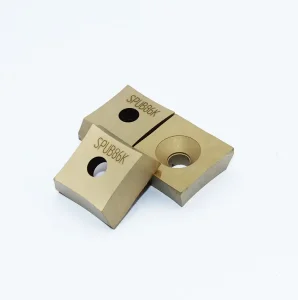
Wholesale Carbide scarfing inserts SPUB86B/86C/86D/86E/86F/86G/86H/86K/86M Manufacturers, Factories
View Product Details
Buy Wholesale sintered cemented carbide stone wood diamond cutting tools Supplier, Factories
View Product Details
Technical Knowledge Base
Frequently Asked Engineering & Procurement Questions
Direct technical answers addressing carbide metallurgy, customized fabrication capabilities, grade conversions, and global order logistics.
How does Zhongfu ensure absolute elimination of internal voids in carbide tips?
We utilize Overpressure Sinter-HIP technology operating at 1,450°C and 100 bar (10 MPa) argon pressure. Unlike legacy vacuum sintering, Sinter-HIP applies hydraulic pressure when the cobalt binder phase is liquid, closing microscopic porosity (achieving ratings ≤ A02, B00) and preventing sudden edge chipping under high shock loads.
Can you manufacture custom carbide wear tips directly from customer 2D/3D drawings?
Yes. Custom OEM/ODM manufacturing represents over 65% of our overall production. Overseas clients can send CAD files (.DWG, .DXF, .STEP, .IGES). Our engineering team reviews shrinkage factors, tolerances, edge preparations, and binder formulations, returning a complete DFM report and price quotation within 8 hours.
Why is nickel binder selected instead of cobalt for non-magnetic carbide wear parts?
Cobalt is ferromagnetic. Under magnetic fields, standard WC-Co components produce electromagnetic distortion, causing signal interference in Measurement While Drilling (MWD) downhole tools. Nickel binders exhibit zero magnetic susceptibility (μ ≤ 1.005) and offer superior corrosion resistance in acidic or chlorine-rich chemical flow control valves.
What is the metallurgical difference between YG6, YG8, and YG15 grades?
The number designates cobalt content by weight percentage. YG6 contains 6% Co and offers high hardness (90.5 HRA) and wear resistance for smooth cutting. YG8 contains 8% Co, balancing toughness and hardness for brazed tips. YG15 contains 15% Co, trading slight surface hardness (87.0 HRA) for high transverse rupture strength (>2800 MPa) to resist heavy impacts.
How do you resolve thermal shock cracking during silver brazing of carbide tips?
Carbide has a thermal expansion coefficient roughly one-third that of steel tool shanks (5.0–6.0 × 10⁻⁶/K vs. 12.0 × 10⁻⁶/K). We recommend using tri-metal sandwich brazing shims (Copper-Silver-Copper), controlled induction heating under 750°C, and slow cooling in vermiculite or an annealing furnace to prevent high tensile residual stresses.
What surface finishes and dimensional tolerances can your grinding shop achieve?
Our CNC diamond profile and centerless grinding units consistently produce h6 outer diameter tolerances on solid carbide rods and ±0.005 mm on custom brazed tip blanks. For precision sealing rings, valve faces, and mirror-finished scarfing inserts, our lapping and polishing stations achieve surface roughness down to Ra 0.05–0.1 μm.