
Precision Carbide Sheets, Tooling Inserts & Sintered Blanks
Explore our hot-selling wear-resistant solutions engineered with micron-level dimensional stability, controlled cobalt binders, and sub-zero internal porosity.

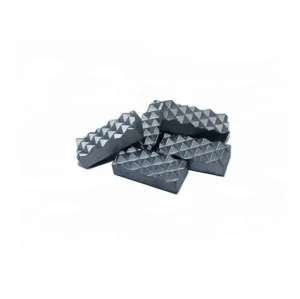






The Global Commercial & Industrial Landscape of Tungsten Carbide Sheets
A comprehensive examination of refractory metallurgy, global supply chain centralization in Jiangxi, China, and advanced material engineering for heavy tooling environments.
Supply Chain Concentration & Raw Material Security
Tungsten carbide (WC-Co/WC-Ni) represents the backbone of modern abrasive wear mitigation. China commands over 80% of global upstream tungsten ore reserves, with Nanchang, Jiangxi functioning as the global metallurgy capital. Sourcing directly from Jiangxi Zhongfu Cemented Carbide Co., Ltd. ensures total traceability of ammonium paratungstate (APT), eliminating secondary scrap contamination and volatile middleman pricing.
- Direct access to primary virgin tungsten ore feeds
- Stringent restriction of recycled scrap to eliminate internal micro-cracks
- Stable strategic reserves shielding global partners from pricing shocks
Advanced Sinter-HIP Consolidation Technology
Standard vacuum sintering often leaves residual microscopic pores (A02 to B04 class) that act as stress concentrators during high-load blanking or Wire Electrical Discharge Machining (WEDM). Zhongfu deploys ultra-high pressure Hot Isostatic Pressing (HIP) at 10 MPa and 1,450°C. This collapses internal gaseous voids, yielding near-theoretical metallurgical density (14.6 to 15.0 g/cm³) and eliminating premature delamination.
- Near-zero porosity conforming to ISO 4505 metallographic standards
- Transverse Rupture Strength (TRS) exceeding 3,200 MPa in high-impact grades
- Optimized grain boundary cohesion preventing edge chipping
Sub-Micron Grain Sizing vs. Binder Alloying
The industrial paradigm has shifted from basic hardness specifications to nuanced binder phase customization. By fine-tuning grain distribution between sub-micron (0.4–0.8 µm) and coarse crystalline phases (2.0–3.5 µm), our metallurgists maximize abrasive resistance without causing brittle catastrophic failure under cyclic stamping loads.
- Sub-micron WC crystallites for razor-sharp micro-slitting applications
- Coarse-grain matrices tailored for dynamic quarry and railway impacts
- Parametric cobalt and nickel ratio formulation for chemical inertness
Cemented Carbide Sheet Grade Selection & Performance Matrix
Reference data for metallurgical engineers and procurement executives. Evaluate density, binder percentage, hardness, and fracture toughness before drawing finalization.
| Alloy Grade | Binder (Co/Ni %) | Grain Size Class | Density (g/cm³) | Hardness (HRA / HV30) | TRS (MPa) | Recommended Industrial Applications |
|---|---|---|---|---|---|---|
| YG6 (ISO K10-K20) | 6.0% Co | Fine (0.8–1.2 µm) | 14.85 – 15.00 | 90.5 HRA / 1550 HV | 2,100 | Chilled cast iron machining, high-speed drawing dies, abrasive powder compacting plates, razor scrapers. |
| YG8 (ISO K20-K30) | 8.0% Co | Medium (1.2–1.8 µm) | 14.60 – 14.80 | 89.5 HRA / 1420 HV | 2,500 | Heavy wear plates, cold punching blanks, woodworking planers, rock drilling bits, brazed cutting tool tips. |
| YG15 (ISO K40) | 15.0% Co | Medium-Coarse (1.8–2.5 µm) | 13.90 – 14.15 | 87.0 HRA / 1180 HV | 3,000 | Progressive stamping dies for silicon steel, automotive lead frames, high-impact cold heading punches. |
| YG20 (High-Impact) | 20.0% Co | Coarse (2.2–3.2 µm) | 13.45 – 13.65 | 85.5 HRA / 1050 HV | 3,400 | Extreme-impact stamping matrices, thick EDM block stock, heavy-gauge plate blanking, nut-forming tooling. |
| NM-10 (Non-Magnetic) | 10.0% Ni-Cr | Sub-micron (0.6–1.0 µm) | 14.40 – 14.60 | 89.0 HRA / 1380 HV | 2,300 | Semiconductor magnet molding dies, MWD/LWD drilling components, radar instruments, corrosive battery slurry pumps. |
| UF-06 (Ultra-Fine) | 6.5% Co + Inhibitors | Ultra-Fine (0.4–0.6 µm) | 14.90 – 15.05 | 92.8 HRA / 1850 HV | 3,800 | High-precision PCB routing plates, lithium-ion battery slitting shears, electronic micro-punches. |
Mission-Critical Application Scenarios for Tungsten Carbide Sheets
Engineered for high abrasive friction, dynamic physical shock, and corrosive chemical environments across heavy industries.
1. Stamping & Progressive Blanking Dies
Thick carbide sheets (YG15 / YG20) serve as core die plates for stator/rotor lamination stamping. Sub-zero internal stress ensures EDM wire-cutting stability down to ±0.002 mm without spontaneous fracturing, multiplying die service life to over 50 million cycles between sharpenings.
2. EV Lithium Battery Slitting Knives
Transitioning toward electric vehicle cells requires ultra-fine grain carbide strips capable of razor-sharp edge retention. Zhongfu UF-06 carbide sheets resist abrasive aluminum and copper foil burring, eliminating micro-burrs that induce internal short-circuits in energy storage cells.
3. Heavy Metallurgical Scarfing & Rolling
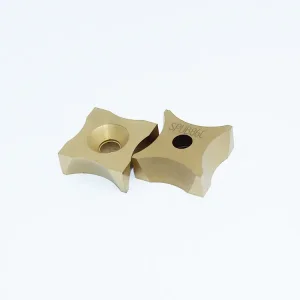
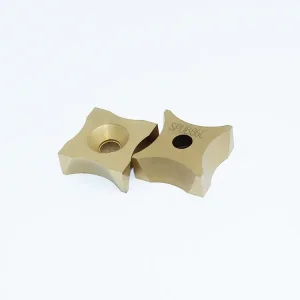
Seamless steel pipe manufacturing and hot slab deburring subject tools to continuous thermal shocks. SPUB63, SPUB86, and custom square wear plates withstand rapid heating and mechanical abrasion, stripping weld beads and surface scale under aggressive metallurgical feeds.
4. Oilfield Valves & Downhole MWD Tools
Non-magnetic nickel-bonded carbide sheets (NM-10) are installed in measurement-while-drilling (MWD) logging housings and flow restrictors. Resisting magnetic interference from sensitive telemetry, they simultaneously defy sour gas ($H_2S$) and turbulent slurry cavitation.
Technology Roadmap: From Refractory Powder to Precision Ground Plate
A transparent overview of the 5-stage production process that ensures repeatable physical density, isotropic grain uniformity, and minimal post-grinding distortion.
Wet Ball Milling & Spray Drying
High-purity WC and metallic Co/Ni powders are blended in alcohol-solvent ball mills with grain growth inhibitors (VC, Cr3C2). Automated spray-drying towers produce spherical, free-flowing granules with consistent apparent density.
Bi-Directional Hydraulic Compaction
Large-format carbide plates are formed on computer-monitored hydraulic presses (up to 500 tons) or cold isostatic presses (CIP) up to 200 MPa, preventing density gradient variations that cause green-body warping.
High-Pressure Overpressure HIP Sintering
Combined dewaxing, vacuum pre-sintering, and argon-gas pressure sintering at 1,450°C and 100 bar. This eliminates porosity, collapses micro-voids, and achieves 99.98% of theoretical metallurgical density.
Diamond Grinding & Stress Annealing
Surface grinding on high-precision reciprocal grinders utilizing resin-bonded diamond wheels. Vacuum stress-relief annealing reduces surface residual stress, ensuring absolute flatness tolerances down to ≤0.005 mm.
The Macroeconomic Advantage: Total Cost of Ownership (TCO) in B2B Tooling
Procurement teams frequently make the mistake of evaluating tungsten carbide sheet purchases based on initial raw purchase price per kilogram rather than cycle life. A substandard carbide plate that chips prematurely causes unplanned assembly-line downtime, expensive diamond wheel re-dressing, and damaged steel die housings.
By standardizing on Zhongfu HIP-sintered tungsten carbide sheets, tool manufacturers achieve up to a 3.8x expansion in tool uptime between regrinds. Our tight thickness tolerances (±0.01 mm for ground sheets, +0.5 mm for as-sintered blanks) eliminate up to 40% of preliminary rough diamond grinding, saving substantial labor and diamond consumable overhead for our customers in over 20 countries.
Frequently Asked Questions: Sourcing & Machining Tungsten Carbide Sheets
Direct technical answers from our senior metallurgical engineering department to help buyers eliminate costly engineering misunderstandings.
How do you prevent micro-cracking during Wire EDM cutting of thick carbide plates?
Carbide blocks cut via Wire EDM (WEDM) frequently suffer from the recast "white layer" containing tensile residual stress and thermal micro-cracks. Zhongfu prevents this through vacuum stress-relief annealing post-sintering, coupled with our tight grain distribution. When wire cutting, we recommend multiple fine-trim skimming passes with lower discharge energy and anti-corrosion deionized water dielectric to prevent cobalt leaching.
What is the fundamental difference between cobalt (Co) and nickel (Ni) binder sheets?
Cobalt is ferromagnetic and provides superior wettability and Transverse Rupture Strength (TRS) with tungsten carbide, making WC-Co alloys the gold standard for stamping, cutting tools, and extreme impact. Nickel is non-ferromagnetic and offers remarkable corrosion resistance in acidic or saline media. WC-Ni sheets are essential when components operate near magnetometers (oilfield MWD/LWD) or in battery slurry pumps where magnetic contamination must be zero.
Can you provide custom non-standard dimensions and near-net shape blanks?
Yes. Custom tooling blanks represent over 60% of our daily throughput. Our in-house mold facility and CNC green-machining workshops can machine pre-sintered blanks with bolt holes, stepped countersinks, chamfers, and complex 2D profiles directly from CAD drawings. This drastically lowers final diamond grinding stock removal, conserving expensive machining hours at your shop.
What surface finishes and flatness tolerances are achievable on ground plates?
For as-sintered sheets, standard thickness tolerance is typically +0.5/-0.0 mm. For precision-ground plates processed on our high-precision surface grinders, we routinely deliver thickness tolerances of ±0.005 mm, parallelism within 0.005 mm, and surface finish roughness down to Ra 0.2 µm. Mirror-polished lapping down to Ra 0.05 µm is available upon request.
How does Zhongfu guarantee 100% virgin powder purity and zero internal voids?
Every powder batch undergoes Fisher sub-sieve sizer (FSSS) verification, carbon-oxygen thermal analysis, and magnetic coercivity ($H_c$) testing. Sintered sheets are batch-tested via metallographic microscope cross-section examination (up to 1,500x magnification) to guarantee compliance with ISO 4505 porosity ratings (A00, B00). Ultrasonic C-scan non-destructive testing is deployed on heavy block stock exceeding 30 mm thickness.
What is the standard production lead time and export packaging protocol?
Standard blank sizes (such as 100×100, 105×105, 150×150, 200×200 mm) in YG6/YG8/YG15/YG20 grades are stocked in semi-finished blanks for dispatch within 3–5 working days. Custom formulations and precision-ground orders require 15–20 working days. For international air and sea freight, parts are vacuum-sealed in anti-corrosion VCI bags, cushioned in shock-absorbent high-density EVA foam, and secured inside reinforced plywood export crates.
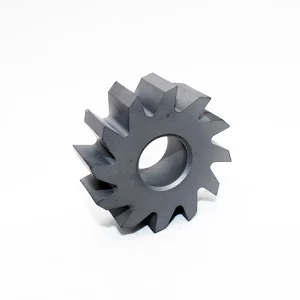
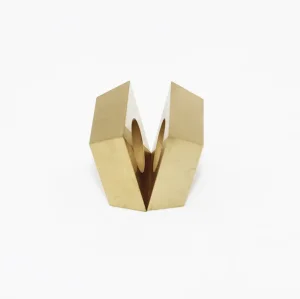
Precision Scarfing Inserts, Turning Tools & Engineered Wear Parts
High-performance tungsten carbide inserts, custom mechanical gearing, and scrapers engineered for extreme metal processing environments.




Request a Technical Drawing Review & Mill-Direct Quotation
Send your 2D CAD (DWG, DXF, PDF) or 3D STEP models with required hardness, working tolerances, and operating medium. Our metallurgical team responds with grade optimizations and cost calculations within 8 hours.