
High-Performance Tungsten Carbide Tooling Solutions
Direct from our Nanchang production hub: Explore our core range of wear-resistant carbide blanks, CNC inserts, precision ground rods, and specialized wear components trusted worldwide.
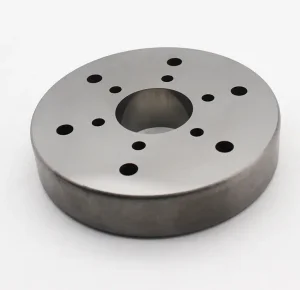
Buy Customized tungsten cemented carbide wear parts for roll crushing Manufacturer, Manufacturers
View Product Specs
China Best price CVD coating tungsten carbide non standard carbide jaw insert cnc Manufacturer, Factory
View Product Specs
China Factory supply non-magnetic carbide pin for jewelry industry Supplier, Factory
View Product Specs
Wholesale China Non-magnetic Solid Cemented Carbide Pin Plug Gauges Rod Manufacturers, Factories
View Product Specs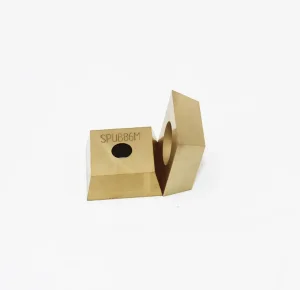
China High quality SPUB86M china indexable tungsten carbide_inserts Manufacturer, Supplier
View Product Specs
China Best price SPUB86J CVD coating boxes woodworking tungsten carbide button insert Manufacturer, Supplier
View Product Specs
China Carbide Cutting Rods for Tungsten Alloy Cutting Tool Components Suppliers, Factories
View Product Specs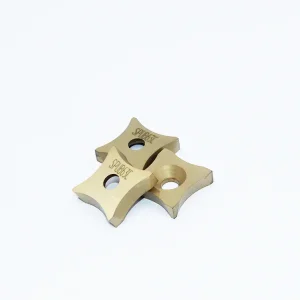
Wholesale Best price SPUB-63C tungsten scrap brake lathe carbide cutting inserts tools Supplier, Suppliers
View Product SpecsIn the fast-evolving landscape of industrial ceramics, studio pottery manufacturing, and high-precision clay sculpting, tungsten carbide pottery tools represent a transformative technological leap over traditional carbon steel and high-speed steel (HSS) instruments. As ceramics shift from artisanal hobbyist studios to automated commercial lines, sanitaryware production, and advanced technical ceramic green-machining, tool wear has emerged as the critical bottleneck in yield quality and manufacturing velocity.
TCO & Operational ROI
Carbide tools run 50 times longer without re-sharpening. This drastically lowers downtime for ceramic manufacturers, eliminating frequent blade changeouts on automated profiling wheels.
Defect-Free Trimming
Sharp tungsten carbide edges shear greenware and leather-hard clay cleanly without dragging, smudging, or chattering, keeping pore structures open for better glaze adhesion and drying.
Extreme Clay Abrasiveness
Formulated specifically to resist severe abrasive wear from grog, quartz, flint, and coarse alumina silicates suspended in stoneware, porcelain, and refractory castables.
Custom Geometry Engineering
We produce specialized ribbon blades, loop scrapers, fluting profiles, bevel trimmers, and CNC-held fettling inserts built to proprietary CAD specifications.
Metallurgical Architecture: Why Cemented Carbide Outperforms Traditional Tooling
A deep dive into powder synthesis, Sinter-HIP densification, grain boundary engineering, and why abrasive clay bodies quickly destroy inferior steels.
Clay in its leather-hard, semi-dry, or bone-dry stage is not merely soft earth; from a tribological standpoint, ceramic clay bodies are dense suspensions of microscopic abrasive mineral crystals. Typical stoneware and porcelain bodies contain significant volume fractions of free silica (quartz) with a Mohs hardness of 7, calcined alumina (Mohs 9), feldspar (Mohs 6–6.5), and grog (fired refractory ceramic particles).
When traditional high-carbon steel (hardness 55–60 HRC, approx. 600–700 HV) or high-speed steel tools (hardness 62–65 HRC) engage a spinning clay body on a potter's wheel or automated lathe, the harder mineral grains scrape against the metal edge. This abrasive action gouges microscopic micro-furrows, rounds the cutting apex, and generates high localized frictional heat. Within 15 to 30 minutes of continuous turning, a steel tool develops a blunt micro-flat edge, causing tool chatter, surface tearing, raised burrs, and non-uniform wall thicknesses.
In contrast, cemented tungsten carbide (WC-Co) produced at Jiangxi Zhongfu incorporates submicron to fine-grain tungsten monocarbide grains bonded within a ductile cobalt or nickel matrix. Tungsten carbide possesses a microhardness exceeding 1600 to 2200 HV (89.5 to 93.0 HRA), far surpassing silica and rivaling corundum. Because the abrasive minerals in clay cannot indent or scratch the tungsten carbide crystals, the sharp apex remains intact for hundreds of hours of high-precision trimming, profiling, fluting, and carving.
| Tool Material Matrix | Vickers Hardness (HV) | Rockwell Hardness | Abrasion Resistance Index | Clay Trimming Service Life | Edge Retention Under Grog Load |
|---|---|---|---|---|---|
| Standard Carbon Tool Steel (1095 / SK5) | 650 – 750 HV | 58 – 62 HRC | 1.0x (Baseline) | 2 – 6 hours | Poor (Rapid Dulling) |
| High-Speed Steel (HSS M2 / W18) | 800 – 920 HV | 63 – 66 HRC | 3.2x | 12 – 24 hours | Moderate |
| Zhongfu YG6X Submicron Carbide | 1650 – 1800 HV | 91.5 – 92.5 HRA | 48x – 65x | 300 – 600 hours | Superior (Zero Chatter) |
| Zhongfu YG8 / YG10 Impact Ceramic Grade | 1500 – 1650 HV | 89.5 – 90.5 HRA | 35x – 45x | 250 – 500 hours | Exceptional Shock Toughness |
| Zhongfu Ni-Bonded Non-Magnetic Grade | 1550 – 1700 HV | 90.0 – 91.5 HRA | 40x – 55x | 280 – 550 hours | Corrosion & Acid Proof |
China Factory 4.0: Supply Chain Resilience, Sinter-HIP Tech & Capacity Advantage
How our Jiangxi-based integrated manufacturing complex delivers unbeatable lead times, customized alloys, and consistent lot-to-lot metallurgical excellence.
China is the world's undisputed center for tungsten resources and primary processing, holding more than 60% of global reserves. Located strategically in Jiangxi Province—the historic heart of China's rare earth and refractory metal belt—Jiangxi Zhongfu Cemented Carbide Co., Ltd. leverages a direct, uninterrupted supply of ultra-high-purity virgin ammonium paratungstate (APT). This raw material autonomy protects our international OEM partners from geopolitical supply bottlenecks and volatile price fluctuations.
Our 5,000+ m² modern facility operates strictly under Industry 4.0 digitised parameters:
Spray Drying & Nanoscale Blending
Automated closed-loop attritor milling and nitrogen-shielded spray-drying towers produce free-flowing, spherical WC granules with precise grain size distributions (0.4 µm to 2.5 µm), ensuring zero segregation or micro-voids.
Overpressure Sinter-HIP Systems
We employ advanced 100-bar Sinter-HIP furnaces combining thermal sintering with isostatic argon pressure. This closes all residual internal micro-porosity (A00, B00, C00), preventing microscopic chipping along tool cutting edges.
Sub-Micron CNC Profile Grinding
Our CNC multi-axis grinders, optical profile grinders, and Sodick slow-wire electrical discharge machines (WEDM) shape intricate pottery loops, ergonomic hand scrapers, and customized shanks down to ±0.002 mm tolerances.
By consolidating every stage—from proprietary powder formulating, pressing, high-pressure HIP sintering, diamond grinding, to laser etching and ultrasonic cleaning—under one roof, we eliminate third-party markup. Global brands sourcing from us achieve a 30% to 50% reduction in procurement costs while gaining tools that outperform Western counterparts in continuous abrasive service.
Global Procurement Trends & Precision Industrial Application Scenarios
From premier North American pottery tool brands to European sanitaryware conglomerates, discover how cemented carbide parts drive productivity across industries.
Studio Pottery & Sculpting
Master ceramic artists, production potters, and boutique tool labels require ultra-sharp ribbon loop trimmers and carving gouges. Carbide maintains a razor edge, producing thin, ribbon-like shavings from grogged stoneware without tearing delicate vessel walls.
Sanitaryware & Vitrified Tile
Automated fettling operations for porcelain toilets, basins, and architectural tiles run 24/7. Zhongfu custom-ground carbide scraper blades trim greenware seams smoothly, keeping ceramic assembly lines operating with minimal operator intervention.
Advanced Technical Ceramics
Precision green-state profiling of high-purity zirconia (ZrO2), alumina (Al2O3), and silicon carbide components before final sintering. Carbide tools eliminate micro-cracking and subsurface damage in medical, dental, and aerospace parts.
Refractory & Heavy Clay Fettling
Shaping high-alumina kiln furniture, refractory bricks, crucibles, and heavy terracotta conduits. Zhongfu tough-binder carbide grades (YG15–YG20) withstand abrasive impacts from coarse 20-mesh grog without chipping or structural fracture.
Frequently Asked Questions for Industrial Buyers & Brand Owners
Authoritative answers on carbide grade selection, brazing integrity, custom profile manufacturing, and supply chain logistics.
Why is tungsten carbide superior to steel for pottery and ceramic sculpting tools?
Pottery clays contain quartz, grog, and feldspar that quickly dull traditional steel tools within hours. Tungsten carbide features a hardness between 89.5 and 92.5 HRA, offering up to 50 times longer edge retention. This creates smoother trimming, prevents surface tearing, and keeps clay pore structures open for superior glaze adhesion.
Can Zhongfu manufacture custom blade profiles and loop shapes from our CAD drawings?
Yes. Custom tooling is our primary OEM service. Simply provide a 2D DXF/DWG or 3D STEP file with tolerances and critical cutting bevel angles. Our engineering group reviews manufacturability within 8 hours, offering CNC diamond-ground profiles, vacuum brazed shanks, and custom laser branding.
Which cemented carbide grade is best suited for clay trimming and fettling tools?
For fine porcelain and smooth studio clays, our submicron YG6X (approx. 92.0 HRA) delivers an exceptionally sharp edge. For heavily grogged stoneware, sculpture clay, or heavy refractory bodies, we recommend YG8 or YG10, which provides the added cobalt binder toughness needed to prevent micro-chipping on coarse particles.
How do you braze delicate carbide cutting loops to stainless or brass tool shanks?
We use high-frequency induction silver brazing with active-flux alloys under controlled temperatures. This creates a high-tensile bond (shear strength > 250 MPa) between the carbide loop and the shank, preventing separation even under aggressive wheel trimming forces.
What is your minimum order quantity (MOQ) and production lead time?
For standard catalog blanks, rods, and inserts, our MOQ is as low as 10 to 50 pieces, with immediate dispatch from stock. For custom OEM profiles or private-label pottery tool assemblies, initial prototype orders typically start at 100 pieces, with full production completed in 2 to 4 weeks.
Do you supply non-magnetic or corrosion-resistant carbide grades for wet ceramic work?
Yes. While cobalt-bonded grades are standard, we also manufacture nickel-bonded (WC-Ni) non-magnetic grades. Nickel-matrix carbide offers complete resistance to oxidation, rust, and acidic clay additives, ensuring tools remain pristine even in damp studio conditions.
Specialized Wear Parts, Brazed Inserts & Sintered Blanks
Expand your industrial tooling capacity with our proven range of scarfing inserts, brazed turning tips, flat wear plates, and tungsten rods engineered for the most demanding machining conditions.

Buy Tungsten carbide tamping tines use tip wearing part for Railway Industry Supplier, Suppliers
View Product Specs
Wholesale Customized tungsten non-magnetic carbide scarifier cutter/through hole wear parts Manufacturers, Factories
View Product Specs
Buy SPUB-63 External Scarfing Inserts for Tubes Machining and High Frequency Pipes Suppliers, Factory
View Product Specs
Buy 1*1*0.375“ CVD coating tungsten carbide tube scarfing insert Supplier, Factory
View Product Specs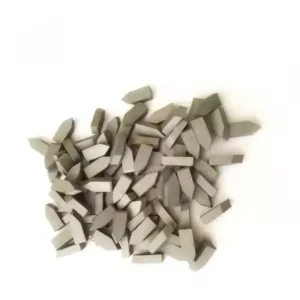
Wholesale Customized carbide welding tips for turning milling cutters Manufacturer, Manufacturers
View Product Specs
China Wholesale SPUB63M30 tungsten carbide the cutter indexable cutting tools Supplier, Suppliers
View Product Specs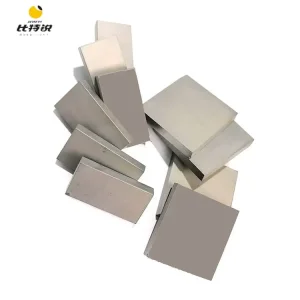
Buy Tungsten Carbide Plate HIP-Sintered Wear-Resistant Flat Blanks in YG6–YG20 Grades Supplier, Suppliers
View Product Specs
Wholesale Industrial Tungsten Alloy Rod Tungsten Material For Stainless Steel Machining Wear‑Resistant Solid Tungsten Bar Supplier, Suppliers
View Product SpecsReady to Scale Your Tool Performance With Factory-Direct Carbide?
Whether you require standard sintered blanks, custom-ground ceramic trimming loops, or high-volume private label manufacturing, our metallurgical engineers reply to your drawings and specifications within 8 hours.