
High-Precision Tungsten Carbide Bits & Tooling Inserts
Explore our flagship precision-engineered cemented carbide cutting tips, scarfing tools, and solid drill blanks manufactured directly in our Nanchang production hub.

China Wholesale customized high precision hard alloy tungsten carbide cutting tool wear parts Suppliers, Factory
View Specifications
China SPUB-63 Steel Pipe Scarfing Tools Tube Scarfing Inserts Supplier, Suppliers
View Specifications
China Wholesale carbide insert cutting tools cnc Supplier, Factory
View Specifications
Buy Square Tungsten insert carbide manufacturer threading carbide blank inserts Manufacturer, Manufacturers
View Specifications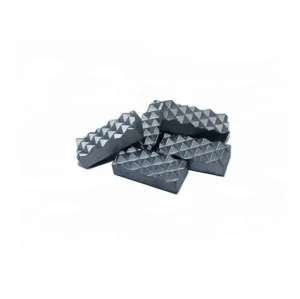
Buy YG8 carbide gripper inserts Manufacturers, Factory
View Specifications
China High-quality tungsten carbide rods for precision drilling and milling Manufacturer, Factories
View Specifications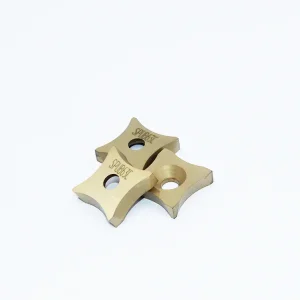
Wholesale Best price SPUB-63C tungsten scrap brake lathe carbide cutting inserts tools Supplier, Suppliers
View Specifications
Wholesale Nickel based tungsten carbide rods with nickel binder for machinery Manufacturer, Factories
View SpecificationsChina Factory Direct Supply Chain: Upstream Control & Cost Predictability
Operating in Jiangxi—the world's most concentrated tungsten corridor—our factory guarantees continuous virgin ore supply, stable pricing, and advanced powder metallurgy.
Geographic Upstream Moat
Over 80% of primary global tungsten reserves and chemical processing centers (APT) originate in Jiangxi and neighboring provinces. Our direct proximity eliminates maritime raw material transit delays, stabilizes raw material hedging against LME fluctuations, and provides uncompromised access to 100% virgin submicron Tungsten Carbide (WC) powder free of unrefined recycled scrap.
Vertical In-House Manufacturing
From ball-milling slurry preparation, spray drying tower granulation, 500-ton multi-axial CNC presses, to 100-bar high-pressure Sinter-HIP furnaces, our 5,000 m² facility executes every thermodynamic stage in-house. This closed-loop quality control prevents micro-void formation and achieves near-theoretical density (14.5–15.0 g/cm³) across all cobalt/nickel binder ratios.
Rapid Customization & Tooling Agility
Standard catalog suppliers impose 8 to 12-week lead times on non-standard geometry. Utilizing internal wire-EDM, profile CNC grinding, and optical curve measuring, we produce custom carbide bit geometries, tube scarfing rings (SPUB/SNMX series), and specialized gripper inserts with drawing confirmation in under 8 hours and sample delivery in 15 days.
Global Enterprise Sourcing: Mitigating TCO in Extreme Wear Applications
Why Tier-1 industrial buyers in drilling, structural steel fabrication, and CNC machining look beyond purchase price to Total Cost of Ownership (TCO) metrics.
The True Economics of Tungsten Carbide Bits & Tool Wear
In geotechnical drilling, subsea oil exploration, and high-frequency tube welding, the procurement cost of a carbide insert or drill bit tip accounts for less than 3% to 5% of total operational expenditure. The overwhelming cost drivers are downtime for tool changeover, drill rig standby rates, workpiece scrappage due to thermal fracturing, and secondary finishing operations necessitated by insert wear degradation.
Zhongfu Carbide addresses these pain points at the metallurgical level. By employing Hot Isostatic Pressing (Sinter-HIP) at 1450°C and 100 bar Ar pressure, we close micro-porosities (evaluated to ISO 4499 Type A00-B00 criteria). This uniform micro-structure prevents catastrophic edge chipping under cyclic shock loading, effectively doubling runout life and allowing drilling contractors to achieve deeper penetration per bit run without unplanned pulling of the drill string.
Cemented Carbide Grade Engineering Selection Guide
Selecting the optimal balance between transverse rupture strength (TRS), hardness (HRA), and binder binder phase chemistry.
| Carbide Grade | Binder Type & % | Density (g/cm³) | Hardness (HRA) | TRS (N/mm²) | Grain Size (µm) | Recommended Industrial Applications |
|---|---|---|---|---|---|---|
| YG6 (ISO K10-K20) | 6% Cobalt | 14.85 - 15.00 | 90.5 - 91.5 | ≥ 1900 | 1.0 - 1.4 (Medium) | Precision machining of chilled cast iron, non-ferrous alloys, drawing dies, and low-shock wear plates. |
| YG8 (ISO K20-K30) | 8% Cobalt | 14.60 - 14.80 | 89.5 - 90.5 | ≥ 2200 | 1.2 - 1.8 (Medium-Coarse) | Brazed drill tips, rock drilling button inserts, coal mining picks, lathe welding blades, tube scarfing inserts. |
| YG11C (Heavy Impact) | 11% Cobalt | 14.30 - 14.50 | 87.0 - 88.0 | ≥ 2700 | 2.2 - 3.2 (Coarse) | Rotary percussive down-the-hole (DTH) drill bits, high-stress geological prospecting, heavy stamp shearing. |
| YG15 (Forming Grade) | 15% Cobalt | 13.90 - 14.15 | 86.5 - 87.5 | ≥ 3000 | 1.6 - 2.4 (Coarse) | Cold heading dies, punch matrices, high-impact stamping of thick steel plates, hydraulic valve components. |
| YG20 (Extreme Shock) | 20% Cobalt | 13.40 - 13.65 | 84.5 - 86.0 | ≥ 3300 | 2.0 - 3.0 (Coarse) | Heavy forging dies, cold-extrusions, wire flattening rollers, extreme cyclic impact tool blocks. |
| Ni-Based Binder Grade | 8-10% Nickel | 14.45 - 14.75 | 88.5 - 90.0 | ≥ 2100 | 1.0 - 1.5 (Submicron) | Non-Magnetic MWD/LWD drilling components, corrosive fluid seal rings, sensor housings. |
The Future of Tungsten Carbide Manufacturing
Anticipating next-generation material science demands: Nanocrystalline matrices, CVD/PVD high-entropy coatings, and closed-loop sustainability.
Ultrafine & Nano-Grain WC
By controlling grain growth through vanadium carbide (VC) and chromium carbide (Cr3C2) inhibitors during vacuum ball-milling, we produce ultrafine grain structures (<0.4 µm). This delivers an unprecedented combination of high hardness (>93 HRA) and robust transverse rupture strength for high-speed micro-drills and electronic tooling.
Multi-Layer AlTiN / TiSiN Coatings
For high-heat dry cutting and abrasive pipe scarfing, our proprietary CVD and arc-PVD surface technologies apply multi-nanolayer ceramic coatings with oxidation thresholds reaching 1100°C. These nanostructured barriers drastically reduce thermal transfer to the carbide substrate and prevent edge build-up.
Near-Net Shape Sintering
Utilizing high-precision multi-cavity tungsten carbide tooling and finite element method (FEM) shrinkage simulations, we achieve near-net sintering with dimensional allowances within ±0.15 mm. This minimizes diamond wheel grinding allowances, significantly cutting machining costs on intricate bit geometries.
Decarbonized Closed-Loop Sintering
Transitioning toward low-carbon metallurgy, our production plant operates vacuum sintering systems driven by clean energy grids, paired with hydrometallurgical zinc-melt and chemical digestion recycling that recovers tungsten scrap to high-purity crystalline powder with equivalent performance to virgin ore.
Localized Application Scenarios: Field-Proven Performance
Engineered to resist catastrophic fracture, severe adhesive friction, and corrosive downhole fluids across world-class industrial sectors.
Oil & Gas Drilling / Directional MWD-LWD
Drilling high-angle shale wells and deep offshore strata requires drill bit buttons with uncompromising fracture toughness. In directional drilling, our nickel-bonded non-magnetic carbide components protect sensitive electromagnetic telemetry systems from magnetic interference while enduring caustic drilling mud and high-pressure sand wash.
Steel Pipe Scarfing & Weld Seam Planing
For high-frequency longitudinal welded pipe mills, scarfing inserts like the SPUB-63, SPUB-86, and SNMX lines must endure instantaneous thermal shock up to 900°C combined with aggressive mechanical vibration. Our specialized TiC/TaNbC-doped grades prevent thermal crazing and guarantee smooth outer pipe deburring.
High-Speed Railway Tamping & Heavy Earthmoving
Ballast tamping tines and road scarifier picks encounter severe quartz and granite impact wear. By combining ductile YG8 and YG11C blanks with automated vacuum brazing, our carbide inserts endure millions of vibrating strike cycles without detachment or premature catastrophic spalling.
Export Compliance, Technical Assurances & Global Logistics
Ensuring complete traceability, regulatory adherence, and localized engineering consultation for international procurement divisions.
Responsible Minerals & ESG Certifications
Our raw materials comply strictly with the Dodd-Frank Act Section 1502 for Conflict-Free Minerals (3TG). We provide fully audited Conflict Minerals Reporting Templates (CMRT), RoHS 3 (EU 2015/863), and REACH SVHC certifications, giving global OEMs full regulatory compliance across North America and Europe.
Full Metallurgical Traceability
Every shipment is accompanied by a certified 3.1 Inspection Certificate detailing chemical composition, exact cobalt binder percentage, magnetic saturation (4πσ), coercive force (Hc), and micro-Vickers hardness. Retained sample coupons for every batch are archived in our laboratory for 36 months.
Global DDP Delivery & Inventory Hubs
With integrated logistics partners in Hamburg, Chicago, Monterrey, and Melbourne, we offer flexible incoterms from EXW and FOB to DDP direct to your factory warehouse. Consignment inventory models and safety buffer warehousing are available for long-term supply agreements.
Engineering Questions & Sourcing Inquiries
Comprehensive answers straight from our metallurgists and international export engineers.
What parameters should be provided for custom carbide bit manufacturing?
How does Hot Isostatic Pressing (Sinter-HIP) elevate carbide bit performance?
When should Nickel-bonded tungsten carbide be selected over Cobalt binder?
What is your typical production lead time for OEM and bulk orders?
Can you optimize the cobalt binder percentage to reduce tool chipping?
What quality assurance protocols verify grain size and porosity?
Specialized Wear Parts, Scarfing Inserts & Blanks
Precision-ground blanks, tube scarfing indexables, and custom carbide jaw inserts engineered for demanding industrial machining operations.
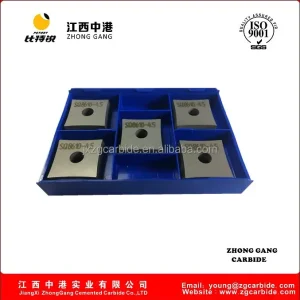
Wholesale carbide OD tube scarfing insert SDUW for weld bead steel tube Manufacturer, Factories
View Specifications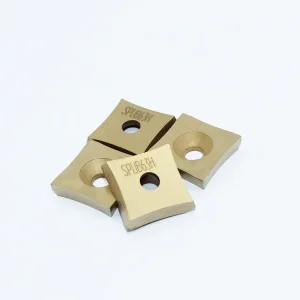
Buy Wholesale woodworking blades tungsten carbide insert milling inserts inconel Manufacturers, Suppliers
View Specifications
Wholesale China best price straight toothed steel small pinion gears Manufacturers, Supplier
View Specifications
China Square Tungsten special carbide carbide tools button insert Supplier, Suppliers
View Specifications
China Best price CVD coating tungsten carbide non standard carbide jaw insert cnc Manufacturer, Factory
View Specifications
China Wholesale SPUB63M30 tungsten carbide the cutter indexable cutting tools Supplier, Suppliers
View Specifications
Wholesale Cemented carbide metal insert_cutting_tool SPUB86B/86C/86D/86E/86F/86G/86H/86K/86M Manufacturers, Factory
View Specifications