
High-Performance Industrial Cutters & Sintered Carbide Blanks
Engineered from 100% virgin metallurgical compounds and sintered under advanced HIP (Hot Isostatic Pressing) protocols to deliver superior hardness, thermal shock endurance, and mechanical stability across deep-well drilling and high-speed CNC milling.

China Wholesale SPUB-63 series carbide wood insert milling carbide insert Supplier, Suppliers
Explore Specs
Wholesale Factory sale customized carbide milling jar tungsten carbide bowl/ jar/mortar Manufacturer, Factory
Explore Specs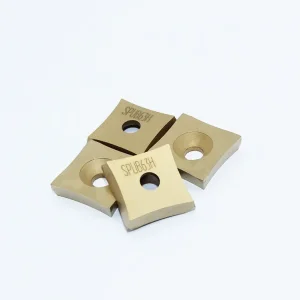
Buy SPUB-63 welding tube scarfing insert,Welding Pipe peeling insert Manufacturer, Manufacturers
Explore Specs
China High quality SPUB-63 series machine cutter carbide cnc cutting tools turning Manufacturer, Factories
Explore Specs
Wholesale Wholesale SPUB63B tungsten carbide insert box used carbide inserts price Supplier, Factories
Explore Specs
Wholesale Factory wholesale custom tungsten carbide spiral bevel gear milling cutters for sale Suppliers, Factory
Explore Specs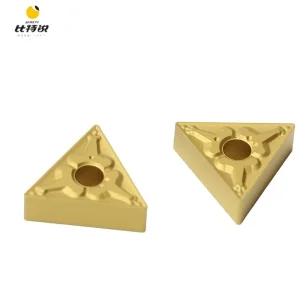
China Tungsten Carbide Bar Peeling Insert Hard Alloy Cutting for Centerless Lathe Steel Rod Manufacturer, Suppliers
Explore Specs
China Wholesale SPUB63M30 tin coating scarfing insert carbide od scarfing insert Manufacturer, Factories
Explore SpecsMarket Megatrends: Next-Generation Strong Drill Bits Engineering
The international drilling and rotary tool sector is pivoting toward nano-composite metallurgy and ultra-tough binders. Rapid growth in geothermal power exploration, deep-reservoir mining, titanium aerospace machining, and advanced carbon-fiber composites demands drill bits engineered to withstand severe abrasive, thermal, and axial stresses.
Sub-Micron Grain Matrix Architecture
Standard coarse carbide grades often suffer micro-chipping during intermittent heavy cutting. Our modern drill bits utilize sub-micron (0.2–0.6 µm) tungsten carbide powder uniformly dispersed with balanced cobalt and nickel phases, enhancing micro-hardness (up to 92.5 HRA) while maintaining high transverse rupture strength.
Advanced CVD & PVD Surface Multi-Coatings
Modern strong drill bits require advanced tribological surface protection. Using specialized multi-layer TiAlN, AlCrN, and diamond-like carbon (DLC) vapor deposition, our cutters exhibit friction coefficients below 0.3, resisting chemical wear, edge oxidation, and crater wear up to 1,100°C.
Optimized Core Geometry & Dynamic Coolant Paths
Breakthroughs in 5-axis tool grinding allow custom web-thinning, high-shear rake angles, and internal through-tool twisted coolant channels. This accelerates chip evacuation, reduces tool deflection, suppresses thermal stress build-up, and minimizes drill bit failure during high-feed hole making.
China Factory 4.0: End-to-End Vertical Integration
Jiangxi Zhongfu Cemented Carbide Co., Ltd. is positioned in Jiangxi Province—the hub of global tungsten supply. Our 5,000+ m² facility combines mineral extraction, virgin powder formulation, pressing, sinter-HIP processing, and sub-micron grinding for complete batch-to-batch traceability.
100% Virgin Powder Formulation
Zero recycled material policy ensures predictable metallurgical integrity. We formulate refined tungsten carbide (WC) combined with high-purity cobalt (Co) or specialized corrosion-resistant nickel (Ni) binders. Patented doping protocols prevent abnormal grain growth during high-temperature consolidation.
Overpressure Sinter-HIP Consolidation
Our programmable vacuum sinter-HIP furnaces operate at temperatures up to 1,450°C and 100 bar isostatic gas pressure. This eliminates internal micro-voids and micro-porosity (A02/B02 standards), providing maximum structural density and superior fatigue crack resistance under cyclic torsional shock.
Sub-Micron CNC Precision Finishing
Equipped with advanced CNC grinding centers, optical contour projectors, and metallographic analytical suites, we consistently produce h6 tolerance drill rod shanks, mirror-like flutes (Ra < 0.1 µm), and balanced geometries that minimize spindle vibration and maximize drilling accuracy.
| Carbide Grade | Cobalt Binder (%) | Density (g/cm³) | Hardness (HRA) | TRS (MPa) | Target Drilling / Industrial Application |
|---|---|---|---|---|---|
| YG6 (K10–K20) | 6.0% | 14.90 – 15.00 | 90.5 – 91.5 | ≥ 1,900 | Cast iron hole-making, high-abrasion non-ferrous drilling, wear inserts |
| YG8 (K20–K30) | 8.0% | 14.65 – 14.80 | 89.5 – 90.5 | ≥ 2,200 | Masonry & downhole bits, heavy rock drilling, percussive brazed tips |
| YG15 (K40) | 15.0% | 13.95 – 14.15 | 87.0 – 88.0 | ≥ 2,800 | Heavy-impact drilling heads, stamping dies, wire-drawing punches |
| YG20 (Impact) | 20.0% | 13.40 – 13.60 | 85.5 – 86.5 | ≥ 3,100 | Extreme percussive rock excavation, cold heading tools, deep well tooling |
| Ni-Bonded (Non-Mag) | Nickel Binder | 14.50 – 14.90 | 88.0 – 90.0 | ≥ 2,100 | MWD/LWD downhole steering tools, subsea exploration, corrosive environments |
Engineered Field Applications: Built for Severe Environments
Zhongfu carbide drill bits and specialized wear tools are engineered to solve high cycle-time, extreme temperature, and abrasive wear challenges across vital industrial sectors globally.
Geotechnical Exploration & Water Well Drilling
Our YG8 and YG11C brazed rock bits resist violent axial shocks when penetrating hard granite and abrasive sandstone. Field trials indicate an average 35% longer tool life and a 22% higher rate of penetration (ROP) compared to standard grade inserts, substantially reducing downhole pull-out-of-hole (POOH) frequency.
High-Precision Aerospace & Titanium Machining
Machining Inconel 718 and Ti-6Al-4V demands rigid tooling resistant to work-hardening. Zhongfu nano-grain solid carbide drills maintain balanced edge sharpness and thermal stability, preventing burr formation and maintaining H7 hole tolerances across extended production runs.
Tube & Pipe Manufacturing: Internal Scarfing
Featuring our signature SPUB-63 and SNMX scarfing series, our engineered radius cutting profiles peel weld seams on ERW pipes smoothly. They resist weld spatter buildup and chip-edge degradation, ensuring non-stop operations in high-capacity automated steel pipe mills worldwide.
Specialty Carbide Tooling, Wear Plates & Brazed Solutions
Explore our expanded collection of certified tungsten carbide tooling components, precision gripper jaws, cold heading dies, and wear plates built for reliable heavy-duty performance.

Buy YG8 carbide gripper inserts for chuck jaw Manufacturers, Supplier
Explore Specs
Buy Customized Tungsten Carbide Cold Heading molds/punch dies/wire drawing dies Manufacturers, Suppliers
Explore Specs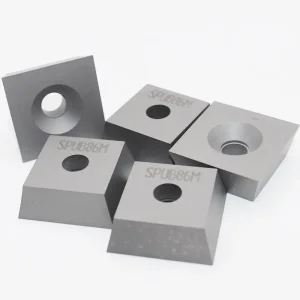
China Factory wholesale boxes tungsten woodworking carbide button inserts Supplier, Factories
Explore Specs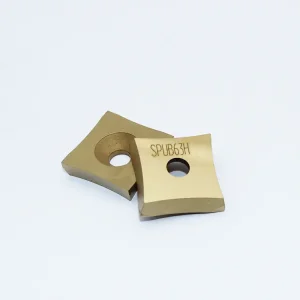
Buy Wholesale SPUB63H square tungsten carbide cemented cutting turning lathe tools Manufacturers, Factories
Explore Specs
China Factory supply SPUB86 CVD coating radius tungsten carbide tips brazed insert Manufacturer, Factory
Explore Specs
China Wholesale insert carbide manufacturer threading carbide blank inserts Manufacturers, Factory
Explore Specs
Buy Premium Bright Surface Tungsten Heavy Alloy Sheets & Pure Tungsten Plates for Industrial Applications Manufacturer, Factories
Explore Specs
China Tungsten Carbide tamping tines for railway construction equipment Suppliers, Factory
Explore SpecsFrequently Asked Questions by Industrial Sourcing Teams
Clear, data-driven answers to help tooling engineers and procurement managers evaluate metallurgy, customized toll manufacturing, and logistics.
What makes a drill bit qualify as a "Strong Drill Bit" in industrial drilling?
A "strong" drill bit is defined by its ability to balance high fracture toughness (TRS ≥ 2,000 MPa) with high red-hardness (90–92 HRA). By utilizing sub-micron virgin WC powders consolidated through vacuum Sinter-HIP processing, our drill bits resist catastrophic breakage under severe torque, axial vibration, and temperatures above 800°C.
Can you manufacture custom-geometry drill bits directly from 2D/3D technical drawings?
Yes. Custom tooling comprises over 65% of our manufacturing volume. Our engineering department reviews STEP, IGES, and CAD files within 8 hours. We adjust blank sizing, flute relief angles, and cobalt/nickel matrix ratios to match your specific rock hardness, metal alloy, or composite workpiece specifications.
Why is the Sinter-HIP process critical compared to standard vacuum sintering?
Standard vacuum sintering often leaves micropores within the tungsten carbide core, which act as crack-initiation sites during high-pressure drilling. Our overpressure Sinter-HIP furnaces apply 100 bar of inert gas at sintering heat, consolidating the cemented carbide to theoretical density and near-zero porosity (A00, B00), increasing fatigue endurance by up to 40%.
When should a facility specify nickel-bonded non-magnetic carbide instead of cobalt?
Standard cobalt binders are ferromagnetic, which distorts telemetry signals in downhole directional drilling (MWD/LWD systems) and sensor applications. Nickel-bonded carbide grades are non-magnetic (permeability μ < 1.005) while providing superior resistance to acid, alkali, and saline corrosion.
How does Jiangxi Zhongfu ensure tight quality assurance across bulk export orders?
Each batch undergoes rigorous QA testing: coercive force (Hc) testing to verify grain distribution, saturation magnetization (Com) checks for carbon stoichiometry balance, metallographic microscope analysis for porosity, and ultrasonic non-destructive testing before precision grinding and worldwide dispatch.