
Featured Straight Turning & Carbide Components (Part I)
Direct from our Jiangxi factory floor: sintered-to-size and precision-ground carbide inserts, tool blanks, and gripping components engineered to withstand extreme thermomechanical shear in heavy-duty turning setups.

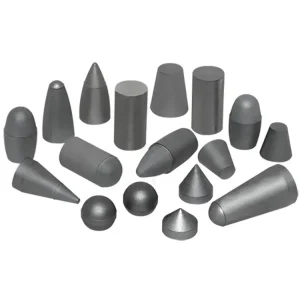






The Global Commercial & Mechanical Landscape of Straight Turning
Straight turning—also classified in computer-numerical machining as external longitudinal cylindrical turning—forms the foundational subtractive methodology across global automotive drive-shaft fabrication, aerospace structural landing gear turning, heavy rail axle production, and offshore downhole tubular manufacturing.
Kinematics and Thermomechanical Realities
In standard straight turning, the cutting tool advances parallel to the longitudinal rotational axis of the workpiece, removing material across predetermined radial depths of cut (ap) and feeds per revolution (fn). Unlike interrupted face milling, longitudinal straight turning exerts a continuous thermal, mechanical, and tribological load on the cutting wedge.
At surface cutting speeds (vc) surpassing 220 m/min in alloy steels, localized shear-zone temperatures routinely eclipse 950°C. Under these severe parameters, inferior grade tooling experiences rapid crater wear along the rake face, plastic deformation of the nose radius, and adhesive flank degradation.
Jiangxi Zhongfu addresses these failure modes at the crystal level. Utilizing high-purity virgin tungsten carbide (WC) bound with tight volumetric fractions of cobalt (Co) or specialized nickel (Ni) phases, our turning geometries withstand prolonged shear cycles while holding micron-level diametrical tolerances across 2000 mm bar lengths.
Evolution Toward Unmanned CNC Machining
Global machine shops face acute skilled labor shortages, driving rapid migration to lights-out turning cells and multi-axis mill-turn centers. This shift alters the baseline qualification metrics for straight turning suppliers:
- Predictable Flank Wear (VB): Sudden insert catastrophic fracturing causes severe spindle collision hazards and scrap-part rates. Predictable, linear flank wear allows computerized tool monitoring systems to accurately trigger index indexing cycles.
- Dynamic Chip Evacuation: Continuous stringy swarf can bind the chuck, damage workpiece surface topography, and jam automatic conveyor units. Controlled 3D pressed chip-breaker grooves force tight curled chip evacuation under wide feeds.
- Harmonic Dampening: Extended length-to-diameter (L/D) ratios in slender shaft turning necessitate optimized rake and clearance angles to minimize regenerative chatter and surface scalloping.
China Factory Efficiency & Supply-Chain Dominance
Why global equipment builders, tier-1 CNC job shops, and cutting tool distributors partner directly with our Jiangxi manufacturing center for their custom and standard straight turning requirements.
Geographic Tungsten Integration
Situated directly in Jiangxi—the epicenter of global tungsten ore reserves and Ammonium Paratungstate (APT) processing—Zhongfu commands uncompromised upstream control over raw material grain integrity, avoiding non-virgin scrap contamination.
Sinter-HIP Overpressure Consolidation
Our facility operates computer-regulated vacuum Sinter-HIP furnaces applying 10 MPa overpressure argon gas during the liquid-phase cobalt sintering window. This closes sub-surface microporosities to near-zero, tripling transverse rupture strength.
Formulation-Driven Metallurgy
We do not simply match catalog outer dimensions. Zhongfu alters tungsten grain sizing (from 0.25 µm nano-structures up to 4.0 µm coarse grades) and binder percentages to create customized toughness-versus-hardness profiles for specific workpieces.
Quality Assurance Protocol: Every production batch undergoes comprehensive testing, including Vickers micro-hardness (HV30), magnetic saturation testing (4πσ) to verify carbon balance, coercive force checks (Hc) to ensure grain size consistency, and metallographic micro-structure analysis per ISO 4499 standards.
| Carbide Grade | Cobalt / Binder (%) | Density (g/cm³) | Hardness (HRA) | TRS (N/mm²) | Recommended Turning Regime |
|---|---|---|---|---|---|
| YG6 (ISO K10-K20) | 6.0% Co | 14.85 – 15.00 | 90.5 – 91.5 | 1,900 | High-speed finishing of chilled cast iron, non-ferrous bars, and brass turnings. |
| YG8 (ISO K20-K30) | 8.0% Co | 14.60 – 14.80 | 89.0 – 90.0 | 2,200 | Semi-roughing to heavy roughing of plain carbon steels, heavy forgings, and railway tires. |
| YG15 (ISO K40) | 15.0% Co | 13.90 – 14.15 | 86.5 – 87.5 | 2,800 | Severe interrupted longitudinal turning, mill scale skin passes, high mechanical impact. |
| Ni-Bonded (Non-Mag) | 8.0 - 12.0% Ni | 14.40 – 14.80 | 88.0 – 90.0 | 2,100 | Downhole LWD/MWD drill string tools, medical sensor shafts, and aggressive corrosive turnings. |
| CVD Multi-Layer Coated | Gradient WC Substrate | 14.50 – 14.90 | 92.0 – 93.0 | 2,400 | Continuous longitudinal straight turning of alloy steels (4140, 8620) at vc > 250 m/min. |
Localized Machining Scenarios & Tribological Coatings
Straight turning requires matching the physical cutting tool geometry and chemical coating barrier to the precise physical metallurgy of the incoming workpiece stock.
Material Workpiece Matching
ISO P Steels (Continuous Bar Stock): In carbon and alloy steels (e.g., AISI 1045, 4140, 4340), continuous contact promotes intense crater wear. Our CVD-coated inserts feature thick alpha-alumina (Al2O3) thermal barriers overlaid on columnar TiCN, preventing heat transfer from cutting chips into the substrate.
ISO M Stainless & Duplex Grades: Austenitic alloys (304, 316) work-harden immediately upon tool contact. Zhongfu utilizes ultra-sharp ground geometries with positive rake angles to shear rather than burnish the surface, accompanied by PVD AlTiN coatings that minimize burr formation and notch wear at the depth-of-cut line.
ISO S Heat Resistant Superalloys (Inconel, Titanium): Extremely poor thermal conductivity means heat concentrates within 0.2 mm of the cutting nose. Our straight turning inserts feature high-pressure through-coolant channeling aimed precisely at the secondary shear zone, mitigating flank build-up.
Edge Preparation & Honing Dynamics
The cutting edge radius (ER or honing) dictates edge strength versus cutting pressure:
- F-Hone (Sharp Edge, < 10 µm): Essential for thin-walled tube straight turning, aluminum alloys, and miniature Swiss-lathe operations where deflection forces must be kept minimal.
- E-Hone (Rounded Edge, 25 – 45 µm): The international standard for general steel cylindrical turning. Provides an ideal balance of mechanical support to prevent micro-chipping while preserving edge cleanliness.
- T-Land (Chamfered Edge, 0.1 – 0.3 mm × 20°): Engineered specifically for heavy roughing passes, forged scale removal, and interrupted longitudinal turning cuts where raw mechanical impact exceeds thermal limits.
Strategic Procurement & Engineering FAQ
Clear, data-backed engineering answers addressing common questions regarding straight turning insert selection, supplier auditing, dimensional tolerance controls, and custom drawing production.
Straight turning (longitudinal cylindrical turning) involves continuous cut engagement along the Z-axis of the lathe, resulting in uninterrupted thermal accumulation and directional lateral forces against the tool shank. Profiling involves variable approach angles (kappa) requiring versatile clearance faces (e.g., VBMT or DCMT geometries), whereas straight turning prioritizes maximum insert bulk strength and multiple cutting corners (such as WNMG, CNMG, SNMG, and SPUB shapes) to minimize tooling expenditure per component.
We implement optical comparator profile inspection, multi-axis automated CNC profile grinding machines, and robotic pick-and-place pressing units. Every insert lot undergoes statistical process control (SPC) with Cpk values exceeding 1.33 for critical dimensions, including inscribed circle (IC), thickness (S), and corner radius (RE). Sinter-HIP shrinkage rates are modeled per powder lot to maintain tolerance standards without secondary grinding where near-net sintering is required.
Conventional tungsten carbide uses cobalt as the binding matrix. Because cobalt is ferromagnetic, it magnetizes during grinding and electrical discharge machining (EDM), subsequently collecting metallic swarf that causes severe surface scoring. In sensitive electronics, magnetic sensor housings, downhole measurement-while-drilling (MWD) tools, and jewelry components, our nickel-bonded non-magnetic carbide grades provide zero magnetic interference while maintaining wear resistance equivalent to HRA 89.5.
Our direct engineering office reviews 2D/3D customer drawings (CAD, STEP, PDF) within 8 business hours. Prototype tooling and custom press dies are manufactured in-house within 10 to 14 days. Production batches of custom blanks, brazed tips, or ground inserts ship within 20 to 25 days, supported by complete material test certificates (MTC) detailing density, hardness, coercive force, and microstructure analysis.
Featured Straight Turning & Carbide Components (Part II)
Explore specialized carbide plate stock, tool holders, heavy-feed peeling inserts, and custom wear parts engineered for industrial wear resistance and lathe productivity.

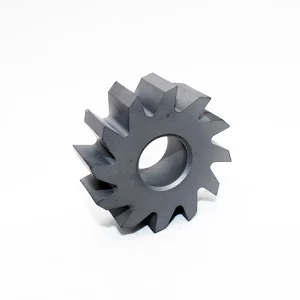






Partner with Jiangxi Zhongfu Cemented Carbide Co., Ltd.
Connect directly with our powder metallurgy specialists and tool design engineers. Whether qualifying standard ISO straight turning inserts or formulating custom nickel-bonded wear parts from technical drawings, our Nanchang facility provides reliable factory-direct manufacturing, volume scalability, and responsive technical service.