
Engineered Wear Solutions: Flagship Products Showcase
Pre-machined blanks, heavy-duty chuck inserts, and customized tooling manufactured directly from virgin tungsten carbide matrix formulations.

China YG8 Standard tungsten carbide torque gripper inserts for chuck jaws Factory, Factories
View Product Specs
Wholesale Customized Cemented Carbide Plate — Factory-Direct Tungsten Carbide Blanks in Any Size, Shape & Grade Factory, Factories
View Product Specs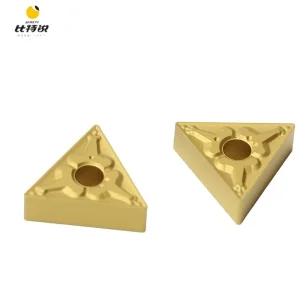
China Tungsten Carbide Bar Peeling Insert Hard Alloy Cutting for Centerless Lathe Steel Rod Manufacturer, Suppliers
View Product Specs
Buy YG8 carbide gripper inserts for chuck jaw Manufacturers, Supplier
View Product Specs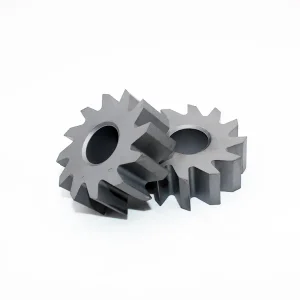
Buy Custom made transmission reverse idle gear starter gear spur gear set Manufacturer, Factory
View Product Specs
Wholesale Customized tungsten cemented carbide hardware parts water jet nozzle seat valve Factory, Factories
View Product Specs
China Wholesale carbide insert cutting tools cnc Supplier, Factory
View Product Specs
Wholesale Industrial Tungsten Alloy Rod Tungsten Material For Stainless Steel Machining Wear‑Resistant Solid Tungsten Bar Supplier, Suppliers
View Product SpecsGlobal Raw Tungsten Trends & Supply Security Dynamics
Analyzing critical mineral dependencies, upstream Ammonium Paratungstate (APT) markets, and the evolution of refractory metals across international defense and industrial applications.
Supply Concentration & Ore Geopolitics
Tungsten (Wolfram, W, atomic number 74) remains listed as an indispensable critical raw material by the US Geological Survey (USGS) and the European Union. With over 80% of global mine output and chemical processing capacity consolidated in China—principally within the Jiangxi and Hunan mineral belts—procurement leaders face complex trade controls, strict environmental quotas, and increasing raw ore extraction thresholds.
Refining Complexity: APT to Tungsten Carbide
Converting wolframite or scheelite concentrates into industrial-grade tungsten carbide requires multi-phase chemical hydrometallurgy. Pure Ammonium Paratungstate (APT) is converted to blue/yellow tungsten oxides, subjected to high-temperature hydrogen reduction to generate pure sub-micron tungsten metal powder, and sequentially carburized with precise carbon black stoichometry to form high-hardness WC particles.
Conflict-Free & ESG Traceability Demands
Global aerospace, defense, and automotive enterprises now impose stringent compliance protocols under OECD Due Diligence Guidelines, Dodd-Frank Act Section 1502, and EU Conflict Minerals Regulations. Direct tier-1 partnerships with certified Chinese primary smelters ensure full batch-level chemical provenance, eliminating unverified scrap cycles and ethical compliance friction.
China Factory 4.0: Metallurgical Precision & Supply Chain Resilience
How Jiangxi Zhongfu Cemented Carbide Co., Ltd. and Chinese advanced powder metallurgy facilities transform raw mineral sovereignty into ultra-dense, defect-free tooling blanks.
Automated Micro-Grain Wet Milling
Uniformity in cemented carbide begins at the molecular-crystallographic interface. Using automated horizontal attritor mills with high-purity ethanol slurry, raw tungsten powder is milled alongside precise cobalt or nickel binders for 48 to 72 hours. This ensures uniform grain size distribution (D50 down to 0.4 µm) and zero carbon-segregation micro-defects.
10 MPa Sinter-HIP Consolidation
Standard vacuum sintering often leaves microporosities (A04/B02) that propagate stress fractures under shock loading. Zhongfu deploys state-of-the-art 100-bar (10 MPa) Sinter-HIP furnaces, combining thermal debinding, liquid-phase sintering at 1,450°C, and argon gas overpressure in an uninterrupted cycle to eliminate microscopic voids entirely.
In-Line Metallographic & Hc Verification
Every single powder batch and sintered heat is verified via magnetic saturation (4πσ) and coercive force (Hc) testing to quantify free cobalt distribution and prevent eta-phase (Co3W3C) brittleness. Digital micro-hardness testers (HRA / HV30) guarantee that every bar, plate, and custom preform conforms strictly to ISO 513 classifications.
Enterprise Sourcing: How Global Buyers Evaluate Chinese Manufacturers
Evaluating Total Cost of Ownership (TCO), metallurgical consistency, lead-time elasticity, and supply risk mitigation for large-scale industrial purchasers.
Mitigating Price Volatility in Wolfram Sourcing
Tungsten spot pricing fluctuates based on domestic Chinese environmental inspections, mining quota allocations from the Ministry of Natural Resources, and export tax categorizations. High-volume industrial consumers cannot operate on reactive spot purchases without risking severe margin compression.
By establishing long-term supply framework agreements with direct Chinese manufacturers located in Nanchang, Jiangxi, procurement teams gain dual advantages: direct upstream index pricing anchored to Ammonium Paratungstate (APT) market benchmarks, and secured monthly raw-material allocation quotas. This insulates tooling operations against sudden global geopolitical bottlenecks.
- Upstream Integrated Hedging: Direct link to primary smelters shields finished parts from intermediate broker margins.
- Buffer Stock Warehousing: Strategic raw sintered blanks kept in bonded safety stocks for swift secondary grinding.
- Flexible Payment Terms: Transparent L/C, CAD, and open account credit terms for established tier-1 global tooling suppliers.
Total Cost of Ownership (TCO) vs. Raw Unit Cost
In high-speed CNC milling, deep-hole oil exploration, and high-pressure water jet cutting, tooling purchase price represents less than 15% of total operational expenditure. The true driver of cost is unplanned machine downtime, abrasive chipping, and premature tool failure.
Jiangxi Zhongfu focuses on optimizing the microstructural longevity of every tungsten blank. Through ultra-pure virgin carbide formulation and HIP consolidation, our tools exhibit up to 35% higher wear resistance and transverse rupture strength (TRS) exceeding 3,800 N/mm² in high-cobalt grades. This dramatically extends machine service intervals across automated production lines.
- Extended Mean Time Between Replacement (MTBR): Reduces tooling exchange downtime across unmanned shifts.
- Tolerances Down to h6: Centerless grinding on round bars minimizes finishing allowances for end mill manufacturers.
- Near-Net Shape Preforms: Drastically reduces diamond wheel grinding wear in client tooling shops.
Cemented Tungsten Carbide Grade Matrix & Mechanical Properties
Comprehensive metallurgical classification balancing cobalt binder fractions, tungsten carbide grain sizing, hardness (HRA), and fracture toughness.
| ISO Grade | Grade Code | Binder (Co / Ni %) | WC Grain Size (µm) | Density (g/cm³) | Hardness (HRA) | TRS (N/mm²) | Recommended Applications |
|---|---|---|---|---|---|---|---|
| K05–K10 | YG6X | 6.0% Co | 0.6 (Submicron) | 14.95 | 92.5 | 2,400 | Chilled cast iron, non-ferrous finishing, micro-drills, precision wear parts |
| K10–K20 | YG6 | 6.0% Co | 1.2 (Medium) | 14.90 | 90.5 | 2,600 | Semi-finishing lathe tools, wire drawing dies, wear plates, nozzle seats |
| K20–K30 | YG8 | 8.0% Co | 1.6 (Medium-Coarse) | 14.70 | 89.5 | 2,800 | Chuck torque grippers, rock drill tips, heavy steel pipe scarfing inserts |
| K30–K40 | YG15 | 15.0% Co | 1.8 (Coarse) | 14.00 | 87.0 | 3,400 | Cold heading dies, punching dies, high-impact forming punches, shearing blades |
| Impact / G | YG20 | 20.0% Co | 2.2 (Coarse) | 13.50 | 85.5 | 3,800 | Heavy stamping molds, cold forging dies, high-shock rotary mining components |
| Non-Mag | NM-10 | 10.0% Ni | 1.0 (Fine) | 14.45 | 89.0 | 2,500 | MWD/LWD oil exploration, magnetic sensor housings, semiconductor handling |
| Nano Tool | ZF-05 | 10.0% Co + Cr/V | 0.4 (Ultrafine) | 14.40 | 92.8 | 4,100 | Solid carbide end mills for hardened steel (HRC > 60), aerospace titanium |
Cobalt Binder Mechanics
Cobalt acts as the ductile binder phase between rigid hexagonal WC crystals. Lower cobalt contents (3%–6%) yield superior hardness and heat deformation resistance for finishing cuts, while higher cobalt fractions (12%–20%) buffer micro-crack propagation under heavy cyclic impacts.
Nickel-Bonded Non-Magnetic Carbide
For applications where ferromagnetic interference causes systemic signal errors—such as Measurement-While-Drilling (MWD) logging tools or rare-earth magnet compacting dies—Zhongfu substitutes cobalt with high-purity nickel binders, achieving relative magnetic permeability µr < 1.005.
Grain Growth Inhibitors (Cr3C2 / VC)
To retain ultrafine grain structures below 0.5 µm during high-temperature liquid-phase sintering, we incorporate trace chromium carbide and vanadium carbide inhibitors. This prevents secondary recrystallization, ensuring exceptional edge sharpness and chip resistance.
High-Stress Industrial Applications & Global Use Cases
From deep-sea drilling to supersonic aerospace machining, discover how precision raw tungsten blanks power modern industrial infrastructure.
Aerospace & High-Temp Alloys
Machining Inconel 718, titanium grade 5 (Ti-6Al-4V), and carbon-fiber reinforced polymers (CFRP) requires cutting edges that maintain extreme hardness above 800°C. Our nano-grain tungsten carbide rods offer high thermal conductivity and chemical inertness, minimizing crater wear during high-speed turbine blade milling.
Heavy Steel Tube Scarfing
In longitudinal ERW welded steel tube production, removing high-temperature interior and exterior weld beads demands extreme thermal shock resistance. Our SPUB63, SPUB86, and SNMX series scarfing inserts operate at red heat conditions, resisting continuous thermal cracking and mechanical peeling forces.
Downhole Oil & Gas Drilling Tools
Directional drilling strings subject mud motor components, radial bearings, and MWD pulser rotors to extreme slurry abrasion and hydrostatic pressures. Custom HIP-sintered valve seats, choke beans, and non-magnetic stabilizer sleeves survive abrasive sand erosion for thousands of downhole hours.
Precision Tooling, Scarfing Inserts & Nickel Blanks
Explore customized HIP-processed plates, centerless lathe cutters, and non-magnetic alloy rods engineered to strict international tolerances.

China OEM Customizable HIP Processed Square Tungsten Carbide Plate, Polished Flat Blank for Industrial Cutting Tools Manufacturer, Factories
View Product Specs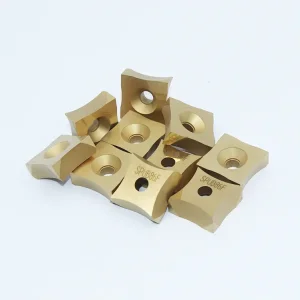
China Factory sale tungsten carbide insert cutting tools turning tool Manufacturer, Supplier
View Product Specs
Wholesale SPUB63B wholesale ISO TiN tungsten carbide scarfing insert Supplier, Factory
View Product Specs
China Wholesale SPUB63M30 tin coating scarfing insert carbide od scarfing insert Manufacturer, Factories
View Product Specs
Wholesale China best price custom tungsten carbide steel cutters concrete scarifier blade Supplier, Factory
View Product Specs
Buy Wholesale high quality tungsten wolfram carbide grooving inserts milling Manufacturers, Suppliers
View Product Specs
China SPUB86 P40 tungsten carbide scarfing inserts for welded steel pipe Manufacturer, Factory
View Product Specs
China Nickel non magnetic cemented carbide rods with Nickel binder Manufacturer, Manufacturers
View Product SpecsFrequently Asked Procurement & Metallurgical Questions
In-depth responses to critical technical queries raised by global procurement directors, quality assurance managers, and mechanical design engineers.
How does Zhongfu guarantee 100% virgin tungsten without scrap contamination?
Every incoming batch of Ammonium Paratungstate (APT) and tungsten metal powder undergoes strict Inductively Coupled Plasma Mass Spectrometry (ICP-MS) elemental assay. Recycled zinc-process scrap powder carries elevated trace contaminants (such as iron, titanium, and calcium) that severely weaken Transverse Rupture Strength (TRS). We supply certified chemical mill test certificates with every batch, validating chemical purity above 99.95%.
What is the practical difference between standard vacuum sintering and 100-bar Sinter-HIP?
Standard vacuum sintering relies strictly on liquid-phase surface tension to consolidate WC-Co particles, frequently leaving microscopic residual pores (ISO porosity ratings A04–A08). Sinter-HIP applies 10 MPa (100 bar) of pressurized argon gas during the final liquid sintering window. This immense isostatic force compresses residual micropores down to zero (A00–A02), eliminating internal stress raisers and doubling fatigue life in impact applications.
Can you manufacture tungsten wear parts directly from complex 3D CAD step files?
Yes. Our in-house engineering facility utilizes CNC multi-axis green-machining centers alongside precision EDM wire cutting. We accept SolidWorks, STEP, IGES, and AutoCAD drawings. When processing complex custom geometries, our engineers calculate precise shrinkage factors (typically 18% to 22% volumetric shrinkage during liquid-phase sintering) to deliver near-net preforms with minimal diamond grinding allowances.
What dimensional grinding tolerances can be achieved on round rods and plates?
For solid tungsten carbide round rods, our automated centerless grinders deliver h6 diameter tolerances, runout within 0.002 mm, and surface finishes down to Ra 0.05 µm (mirror polished). For cemented carbide plates and EDM blocks, high-precision surface grinders achieve thickness tolerances within ±0.01 mm with parallelism and flatness within 0.005 mm across a 200 mm length.
How do nickel-binder grades perform under corrosive operating conditions?
Cobalt binders dissolve rapidly in acidic and marine environments due to electrochemical galvanic attack between the cobalt phase and adjacent WC grains. In contrast, our nickel-bonded grades form an inert, passivating surface oxide layer that resists acidic, caustic, and seawater erosion across a wide pH range (pH 2 to pH 12), making them ideal for subsea flow-control chokes and chemical metering valves.
What are your typical prototype and production volume delivery lead times?
Because Jiangxi Zhongfu operates directly within China's primary tungsten raw material base, we maintain comprehensive ready-to-press powder stocks. Custom tooling prototypes and green-machined blanks are typically delivered within 10 to 14 business days. High-volume production runs (thousands of scarfing inserts or standard h6 ground rods) are completed and dispatched via air or ocean freight within 3 to 4 weeks.
Initiate an Engineering Review or Custom Grade Inquiry
Connect directly with Jiangxi Zhongfu's senior powder metallurgists. We evaluate your working parameters, abrasive loads, and thermal shock profiles to recommend the exact carbide grade for maximum operating lifespan.