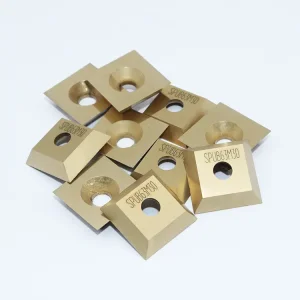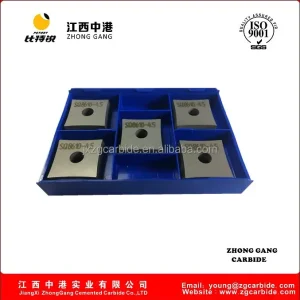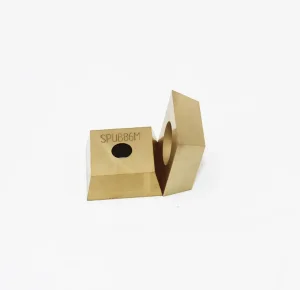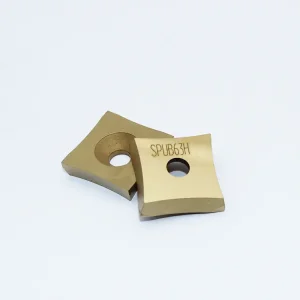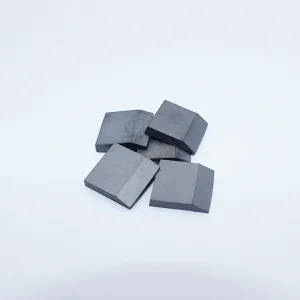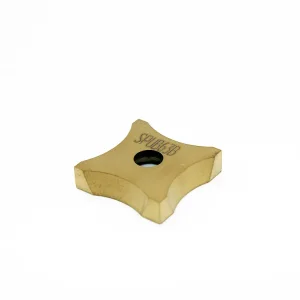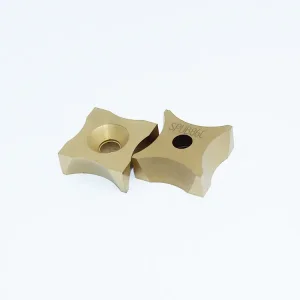
Industrial Scarfing & Carbide Cutting Insert Series
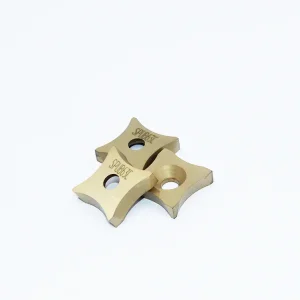
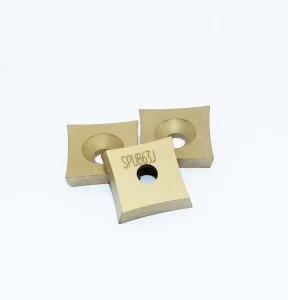
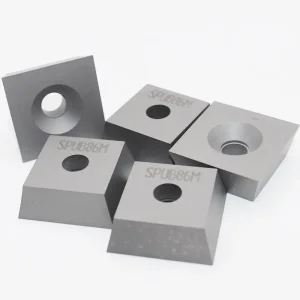
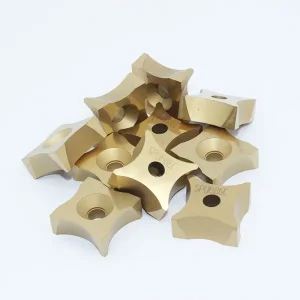
Engineered for high wear resistance, zero edge chipping, and continuous duty operations across steel processing, tube machining, and CNC plotting systems.
Technical Manufacturing Rigor & Global Footprint
Combining 24 years of metallurgical formulation expertise with precision vacuum-sintering infrastructure to serve international industrial procurement networks.
100% Virgin Powder Metallurgy
We strictly prohibit the use of recycled scrap carbide. Every batch is formulated from high-purity virgin ammonium paratungstate (APT), yielding a dense, ultra-fine microstructure with near-zero porosity and high rupture strength under heavy mechanical stress.
Sub-Micron Profile Grinding
Our multi-axis CNC surface grinding and optical profile conditioning equipment produce cutting edges with micro-chamfers verified down to R0.005 mm, minimizing initial drag coefficient and optimizing cutting feed rates for high-speed digital cutting beds.
Proprietary PVD/CVD Thin Film Coatings
Specialized coatings including TiAlN, DLC (Diamond-Like Carbon), and AlCrN reduce edge build-up and friction when processing abrasive packaging composites, adhesive-backed reflective vinyls, and technical gaskets, multiplying blade longevity up to 400%.
China Factory Supply Chain Strategic Advantages
A comprehensive examination of raw material vertical integration, capacity scaling, and competitive cost optimization for international tier-1 distributors.
Upstream Tungsten Ore Proximity
Located in Jiangxi Province—the global epicenter of tungsten mining and extraction—our facility maintains direct access to primary ore resources. This vertical proximity insulates overseas procurement managers from raw material spot market volatility and guarantees uninterrupted production volumes.
End-to-End In-House Tooling
From custom powder preparation, ball milling, and Sinter-HIP densification to high-precision CNC profile grinding and automated optical inspection (AOI), all operational phases are contained within our 5,000 m² factory floor, eliminating subcontractor delays and quality drift.
Total Cost of Ownership Reductions
By coupling lean manufacturing methodologies with factory-direct export agreements, we systematically drive down unit procurement expenses while simultaneously extending cutting edge operational duty cycles. This delivers lower total cost per cut for converters and packaging printers.
Flexible OEM/ODM Engineering
Whether you require proprietary shank profiles, offset angles, dual-edge beveling, or specific ceramic composite matrices, our metallurgical engineering staff delivers comprehensive DFM (Design for Manufacturability) analysis and pilot prototypes within 7 working days.
Tungsten Carbide Material Grades for Cutting & Plotter Applications
Selecting the optimal balance between binder content, tungsten carbide grain sizing, and structural toughness to match machine cutting parameters.
| Grade Designation | Grain Size Class | Binder (Co/Ni %) | Hardness (HRA) | Transverse Rupture Strength (TRS) | Primary Industrial Use-Cases |
|---|---|---|---|---|---|
| ZF-Micro02 (Ultra-Fine) | 0.2 – 0.4 μm | 8.0% Co | 93.0 ± 0.5 | 3,800 MPa | Plotter drag blades, vinyl graphic cutting, fine packaging stencils |
| ZF-Fine05 (Micro-Grain) | 0.5 – 0.7 μm | 10.0% Co | 91.8 ± 0.5 | 4,100 MPa | Oscillating knife blades, corrugated board, carbon fiber fabrics |
| YG6X (Precision Machining) | 0.8 – 1.0 μm | 6.0% Co | 92.0 ± 0.5 | 2,400 MPa | Chilled cast iron finishing, non-ferrous metal slicing, edge scarfing |
| YG8 / YG8C (Tough Grade) | 1.2 – 2.0 μm | 8.0% Co | 89.5 ± 0.5 | 2,800 MPa | Brazed tools, high-impact rock drilling, railway tamping tine caps |
| ZF-NonMag (Corrosion/Non-Magnetic) | Sub-micron | 9.5% Ni Binder | 90.5 ± 0.5 | 3,200 MPa | Downhole electronic sensors, corrosive chemical gasket cutting, cleanrooms |
Localized Application Scenarios & Field Performance
Demonstrated operational reliability across demanding converting facilities, packaging printing hubs, and automated textile manufacturing floors.
Digital Signage & Self-Adhesive Vinyl Converting
Plotter drag blades operating at 30°, 45°, and 60° cut geometry. Used for micro-lettering down to 2 mm height without lifting corners on high-tack reflective traffic films, cast automotive wraps, and window graphics.
Corrugated Packaging & Folding Carton Prototyping
Heavy-duty oscillating cutting knives applied on flatbed CNC tables (e.g., Zünd, Kongsberg, Colex compatible). Zero blade deviation when processing triple-wall corrugated, honeycomb paper core, and solid cardboard.
Technical Textiles & Composite Pre-Pregs
Decagonal rotary blades and micro-serrated straight blades engineered for ultra-clean trimming of aramid fibers, Kevlar, fiberglass, multi-layer carbon fabric, and rubber gaskets with zero fraying and minimum thread-pull defects.
Global Compliance, Quality Assurance & Future Tech Trends
Meeting stringent environmental and regulatory criteria while deploying advanced coatings to lead next-generation automated cutting workflows.
RoHS & REACH International Compliance
All carbide compositions adhere strictly to EU RoHS 2011/65/EU and REACH (EC 1907/2006) mandates. Materials are certifiably free from prohibited hazardous substances, ensuring smooth customs processing and green-tier enterprise compliance across the EU and North American markets.
Industry Trend: Nanostructured Geometries
The global shift toward high-speed digital finishing machines requires blades with higher heat resistance and lower friction coefficients. We are investing in sub-0.2 μm nano-grain cemented carbide blends that resist localized thermal softening under continuous 1,200 mm/s cutting speeds.
Localized Buffer Stocks & Logistics Security
To eliminate transatlantic supply chain latency, we partner with regional distributor logistics hubs across North America, Germany, and Australia. We support blanket purchasing orders (BPO) with guaranteed 48-hour localized dispatch, eliminating unplanned converting machine downtime.
Frequently Asked Procurement & Technical Questions
Practical answers addressing custom tolerances, shank configurations, order quantities, and material certifications.
Can you manufacture plotter blades according to custom CAD drawings?
Yes. Custom engineering accounts for over 60% of our production volume. Provide your 2D DXF/DWG or 3D STEP files detailing blade angles, offset, shank diameter, and overall length. Our technical department will return a comprehensive DFM proposal and cost estimate within 8 hours.
What is the standard tolerance achieved on carbide blade cutting edges?
Our computerized optical centerless and flat surface grinders routinely hold dimensional shank tolerances to ±0.002 mm (h6 class) and cutting edge profile angles within ±0.5°. Edge hone sharpness is inspected via 1000x metallographic video microscopy to prevent microscopic edge burrs.
How do you verify material purity and eliminate premature blade chipping?
We use 100% virgin tungsten powder with strictly controlled grain distribution. Every sintering heat lot undergoes Sinter-HIP processing under 100 bar argon gas, collapsing microscopic void space. Microstructure density, magnetic saturation, and coercive force are verified prior to final cutting edge grinding.
What are your typical Minimum Order Quantities (MOQ) and production lead times?
Standard profile blades (e.g., Roland, Graphtec, Mimaki, Summa configurations) maintain an MOQ of 500 pieces with ex-stock availability. Fully customized or OEM-branded tool profiles require an MOQ of 1,000 to 2,000 pieces, with prototype samples shipped within 7–10 days and mass production completed within 20 days.
Comprehensive Tooling & Carbide Industrial Catalog
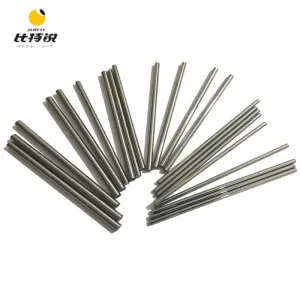
Explore our extended series of turning inserts, carbide round blanks, railway tamping teeth, and specialty OD scarfing tools.